
Two Services, One Workup
What Functional Wellness Means at Howarth Plastic Surgery
Functional Wellness at Howarth Plastic Surgery, the Scottsdale practice of board-certified plastic surgeon Ashley Howarth, MD, FACS, offers two physician-directed medical services built on the same medical evaluation and fasting lab panel: bioidentical hormone replacement for confirmed hormone deficiency in women and men, and medical weight loss with prescribed GLP-1 medication when clinically appropriate, plus nutrition and habit coaching. Neither is sold from a menu: each is prescribed only when labs confirm it, both are monitored every 3 to 6 months, and because hormone and weight change show in the mirror, the same physician who directs the medical plan evaluates the aesthetic one.
Functional Wellness at Howarth Plastic Surgery, the Scottsdale practice of board-certified plastic surgeon Ashley Howarth, MD, FACS, is two physician-directed medical services that share one starting point. Bioidentical hormone replacement treats confirmed hormone deficiency: perimenopause and menopause symptoms in women, and low testosterone in men. Medical weight loss treats excess weight with prescribed GLP-1 receptor agonist medication when it is clinically appropriate, plus nutrition and habit coaching. Both begin with the same medical evaluation and the same fasting lab panel, because the symptoms that bring people in, fatigue, poor sleep, weight that will not move, low mood, low libido, brain fog, are shared by hormone decline, excess weight, thyroid disease, iron deficiency, sleep apnea, and depression, and the labs decide which. Neither service is sold from a menu. A hormone is prescribed only when a deficiency is confirmed and the contraindications are cleared; a weight loss medication is prescribed only when the evaluation supports it. Both are monitored with labs and a symptom review every 3 to 6 months.
What makes wellness at a plastic surgery practice different is where it leads. Hormone change and weight change both show in the mirror, and the same physician who directs the medical plan evaluates the aesthetic one. Menopause thins skin and hair, so the hormone evaluation connects to the dry skin and hair thinning guides. Major weight loss leaves loose skin at the abdomen, arms, and thighs and hollows the face, so the weight loss program connects to body contouring, the skin laxity guide, and dermal fillers or PRF EZ Gel for facial volume. The honest framing runs in both directions: hormones do not produce weight loss, weight loss medication does not fix hot flashes, and neither one tightens skin. The tables below place the two services side by side and then match the symptom people arrive with to the path it usually takes.

Why Patients Come to Wellness
What Patients Who Ask About Wellness Notice
Most people who ask Howarth Plastic Surgery about wellness are not asking about a hormone or a medication by name. They are describing a year or two in which several things changed at once and no single appointment has connected them. These are the findings the team hears most, and each one belongs to more than one diagnosis.
- Tired by mid-afternoon no matter how much sleep the night before
- Weight at the waist that ignores the same diet and workouts that used to work
- Waking hot, or waking at 3 a.m. and staying awake
- A shorter fuse, a flatter mood, and words that will not come
- Low libido, dryness, or fewer morning erections
- Hair at the part thinning and skin that looks older than the person feels
Each of these can be hormonal, metabolic, or something else entirely, and the point of a lab-first evaluation is to find out which before anything is prescribed. Some patients leave with a hormone plan, some with a weight loss plan, some with both, and some with a referral and no prescription at all.


Where to Start
How the Wellness Evaluation Decides Between Services
The choice between hormone replacement, medical weight loss, both, or neither is made at a wellness consultation at Howarth Plastic Surgery, not on this page. A licensed provider under Dr. Howarth’s direction takes a full history, including menstrual or erectile history, weight history, sleep and snoring, mood, medications, supplements, and personal and family history of breast, endometrial, prostate, or medullary thyroid cancer, blood clots, pancreatitis, stroke, and heart attack, records weight, blood pressure, waist circumference, and body mass index, and orders a fasting morning lab panel: estradiol, FSH, total and free testosterone, SHBG, TSH and free T4, a complete blood count, ferritin, fasting glucose and HbA1c, a lipid panel, vitamin D, B12, and PSA in men. The results answer three questions in order. Is there a confirmed hormone deficiency, which points to BHRT? Is excess weight the main driver, with a body mass index and metabolic picture that justify medication, which points to medical weight loss? Or is the cause thyroid disease, iron deficiency, sleep apnea, or depression, which points to a referral before either service? When both services apply they are started a few weeks apart on one lab schedule.
Dr. Ashley Howarth, MD, FACS is a board-certified plastic surgeon and an instructor in plastic surgery at Mayo Clinic. Functional Wellness is a service of her practice, Howarth Plastic Surgery, at 7373 N. Scottsdale Road, Suite C150, Scottsdale, Arizona 85253.

Four Questions That Choose the Service
How Wellness Care Is Chosen at Howarth Plastic Surgery
What the Labs Confirm
Before any hormone is prescribed, lab work rules out thyroid disease, iron deficiency, and sleep apnea to confirm that symptoms like fatigue, hot flashes, or low libido are actually caused by a hormone deficiency.
The first question is whether there is a deficiency to replace. A woman with hot flashes, night sweats, and broken sleep and a rising FSH has a hormonal diagnosis; a man with low libido and fatigue has one only if total testosterone is low on two separate fasting mornings, as the Endocrine Society’s 2018 guideline requires. Fatigue with a high TSH is thyroid disease; fatigue with a low ferritin is iron deficiency; fatigue with loud snoring is a sleep study. BHRT is prescribed only in the first two cases, and the others are referred first, because a hormone written for a thyroid problem delays the right treatment.
Whether Weight Is the Driver
When excess weight itself is driving symptoms like poor sleep and low energy, medical weight loss prescribes a GLP-1 medication that produced a mean 15 percent weight loss in clinical trial data, not for a few vanity pounds, and not for patients with certain contraindications.
The second question is whether excess weight, rather than a hormone, explains the symptoms. Weight at the waist, prediabetes, poor sleep, low energy, and in men a suppressed testosterone can all follow from excess weight itself, and treating the weight can resolve them. Medical weight loss prescribes a GLP-1 receptor agonist when the body mass index and medical picture support it; in the STEP 1 trial semaglutide 2.4 mg produced a mean loss of about 15 percent of body weight at 68 weeks alongside lifestyle intervention. It is not prescribed for a few vanity pounds, and it is not started in anyone with a personal or family history of medullary thyroid carcinoma, a history of pancreatitis, or a planned pregnancy.
How the Two Run Together
Patients who qualify for both services typically start hormone therapy first and add weight loss medication a few weeks later, coordinated under one lab schedule with protein intake and resistance training built into the plan.
Many patients in their forties and fifties qualify for both, and the two services are designed to coordinate. Hormone therapy is usually started first so sleep and hot flashes settle, and the weight loss medication is added a few weeks later so nausea or breast tenderness can be traced to its source. One lab schedule covers both: rechecks at 6 to 12 weeks, then every 3 to 6 months, with hematocrit and PSA for men on testosterone and glucose, lipids, and weight for everyone on GLP-1 therapy. Protein intake and resistance training are part of every weight loss plan, because muscle preservation matters more when a medication reduces appetite, and it matters for the body contouring decision later.
Where It Leads: Skin, Face, and Body
Because hormone loss thins skin and hair and rapid weight loss hollows the face and loosens skin elsewhere, this practice pairs wellness care with treatments like PRF hair restoration, dermal fillers, and body contouring once weight has been stable for about six months.
The fourth question is what the mirror will show, and a plastic surgeon’s practice answers it honestly. Estrogen loss thins skin and hair, so the dry skin and hair thinning guides, PRF hair restoration, and MOXI treat the tissue that hormones alone will not restore. Rapid weight loss hollows the face and loosens the skin of the abdomen, arms, and thighs; dermal fillers and PRF EZ Gel address the face, and body contouring with Dr. Howarth addresses the rest once weight has been stable for about six months. The skin laxity guide explains why no medication, and no laser, tightens skin the way surgery does.
Side by Side
The Two Wellness Services Compared
Bioidentical hormone replacement and medical weight loss at Howarth Plastic Surgery, who each is for, how each starts, how each is monitored, and where each leads, plus how they coordinate with each other and with aesthetic care. Individual plans are set after labs.
| Service | Who it is for | How it starts | Monitoring | Where it leads |
|---|---|---|---|---|
| Bioidentical hormone replacement | Symptomatic women in perimenopause or menopause without contraindications; men with symptoms plus low testosterone on two morning draws | Medical history, contraindication screen, and a fasting lab panel; a second morning draw for men; results visit; delivery method chosen at the consultation | Labs and symptom log at 6 to 12 weeks, then every 3 to 6 months; hematocrit and PSA in men; annual decision to continue | Relief of hot flashes, sleep, mood, and libido symptoms; hair and skin concerns directed to the concern guides, PRF, and MOXI |
| Medical weight loss | Adults with obesity, or overweight with a weight-related condition, and no medullary thyroid, MEN2, or pancreatitis history | Same evaluation and lab panel; a prescribed GLP-1 receptor agonist when appropriate, titrated over weeks; protein target, resistance training, and coaching from day one | Weight, glucose, and lipids every 3 to 6 months; side effect review at each titration; maintenance plan once weight plateaus | Substantial weight loss; body contouring evaluation once weight is stable for about six months; fillers or PRF EZ Gel for facial volume |
| Both services together | Patients in their forties and fifties with a confirmed hormone deficiency and excess weight that meets medication criteria | Hormone therapy first, the weight loss medication added a few weeks later so side effects can be attributed | One lab schedule covering both, every 3 to 6 months | Symptom relief and weight loss on one plan; the same aesthetic checkpoints |
| Wellness with aesthetic and surgical care | Any wellness patient whose concern is also the skin, face, or body | The wellness evaluation flags the aesthetic concern; the same physician evaluates it | Aesthetic plan timed to stable weight and, for lasers, to laser season | Body contouring, facial surgery, physician-performed resurfacing, injectables, and the Sciton lasers |
By Symptom
Which Wellness Path for Which Symptom
The symptoms and goals that bring patients to Howarth Plastic Surgery for wellness care, the path each usually takes once the labs are back, and the first step. The path changes when the labs point to a non-hormonal cause.
| Symptom or goal | Likely path | First step |
|---|---|---|
| Hot flashes, night sweats, broken sleep | BHRT when labs confirm perimenopause or menopause and there is no contraindication; non-hormonal options after a hormone-sensitive cancer | Fasting lab panel with estradiol and FSH; cancer, bleeding, and clotting history |
| Low libido, dryness, or erectile change | BHRT: local or systemic estradiol in women; testosterone in men only after two low morning draws | Two fasting morning testosterone draws for men; estradiol, FSH, and SHBG for women |
| Fatigue and brain fog | Depends on the labs: BHRT if a deficiency is confirmed; treatment of thyroid disease, iron deficiency, or sleep apnea if that is the cause; weight loss if weight is the driver | Full panel including TSH, ferritin, HbA1c, and a sleep apnea screen |
| Weight at the waist that will not move | Medical weight loss when body mass index and the metabolic picture support medication; coaching alone below that threshold; BHRT alongside if a deficiency coexists | Weight, waist, body mass index, HbA1c, lipids, and the medullary thyroid and pancreatitis history |
| Mood change and irritability | BHRT when deficiency and sleep loss drive it; referral for mental health care when they do not | Symptom timeline against the menstrual history; sleep review; lab panel |
| Hair thinning and dry, crepey skin | Treat iron or thyroid causes first; BHRT for the deficiency, not for the hair or skin alone; hair thinning and dry skin guides, PRF, and MOXI for the tissue itself | Ferritin, TSH, estradiol, and a scalp and skin examination |
| Loose skin after major weight loss | Body contouring with Dr. Howarth once weight has been stable for about six months; no medication or laser tightens a skin apron | Weight stability confirmed over six months; surgical consultation |
| A hollow, older-looking face after weight loss | Dermal fillers or PRF EZ Gel for volume; facelift evaluation when descent has followed the volume loss | Facial assessment once weight has plateaued |
From Symptoms to a Plan
How a Wellness Plan Is Built at Howarth Plastic Surgery
A wellness plan at Howarth Plastic Surgery is built in three steps: an evaluation that records your history and draws a full lab panel, a results visit where the labs are explained and the service or services are chosen, and a monitoring schedule that keeps both the numbers and the symptoms in view. The first visit takes about 45 to 60 minutes; the results visit about 30.
History, measurements, and a fasting lab panel
A licensed provider under Dr. Howarth’s direction records your symptoms and their timeline, weight and cycle or erectile history, sleep, mood, medications, and the cancer, clotting, pancreatitis, and thyroid history that decides candidacy for each service, measures weight, blood pressure, waist, and body mass index, and orders the shared lab panel, drawn fasting in the morning.
Labs explained, service chosen, plan written
You learn what the labs show and what they rule out. If a hormone deficiency is confirmed, BHRT is planned with the delivery method chosen for you. If weight is the driver and the medical picture supports medication, the weight loss program is planned. If both apply, they are sequenced. If the cause is thyroid, iron, or sleep, you leave with a referral and the results in hand.
One schedule for both services, and an aesthetic checkpoint
Labs and a symptom or weight review at 6 to 12 weeks, then every 3 to 6 months, then at least annually, with hematocrit and PSA for men on testosterone and glucose and lipids on GLP-1 therapy. When weight has been stable for about six months, or when skin and hair concerns persist, the same physician evaluates the aesthetic and surgical options.
Clear Information. Informed Choices.
The Trade-Offs Between Wellness Services
Both wellness services are prescription medicine with real benefits and real risks, and the trade-offs are specific to each. Systemic estrogen relieves hot flashes, night sweats, and vaginal dryness and protects bone, and it raises the risk of blood clots and stroke, more by mouth than through the skin, with a small increase in breast cancer risk with long combined use; The Menopause Society’s 2022 position is that for symptomatic women under 60 or within 10 years of menopause onset without contraindications the benefits most likely outweigh the risks. Testosterone in men relieves the symptoms of confirmed hypogonadism and raises hematocrit, can worsen sleep apnea and urinary symptoms, and suppresses fertility. GLP-1 medications produce substantial weight loss and commonly cause nausea and other digestive symptoms, carry a warning about thyroid C-cell tumors from animal studies, are avoided after pancreatitis, and can cost muscle as well as fat if protein and training are neglected. Neither service is a substitute for the treatment of thyroid disease, sleep apnea, or depression, and neither one tightens skin. That is why Howarth Plastic Surgery screens every patient against the contraindications, confirms the diagnosis with labs, sequences the two services when both apply, and rechecks every 3 to 6 months.
Possible Side Effects Include
- Breast tenderness, bloating, spotting, or headache in the first weeks of estrogen
- Acne, fluid retention, or a rise in hematocrit with testosterone
- Nausea, constipation, reflux, or reduced appetite beyond the intended effect with GLP-1 medication
- Facial volume loss and loose skin after rapid weight loss
- Rarely, a blood clot or stroke with systemic estrogen, or pancreatitis or gallbladder disease with GLP-1 therapy
What Treatment Cannot Guarantee
- Weight loss from hormone therapy alone
- Relief of hot flashes from weight loss medication alone
- Safe hormone therapy after a hormone-sensitive cancer
- Tighter skin from any medication
- A substitute for treating thyroid disease, sleep apnea, or depression
The First Year
What the First Year of Wellness Care Looks Like
Neither wellness service has downtime, but both have a timeline, and the two run at different speeds. Hormone symptoms change over weeks; weight changes over months; the aesthetic questions that follow weight loss arrive at the end of the year. The ladder below shows the sequence most patients at Howarth Plastic Surgery follow when both BHRT and medical weight loss are indicated; a patient on one service follows only that rung.
Hormone therapy starts at the dose and route chosen at the consultation, with a daily log. Night sweats and hot flashes typically ease within 2 to 6 weeks, and nighttime progesterone often improves sleep within the first month. Men on testosterone may notice energy and mood first. The weight loss medication, if planned, is added a few weeks in so early side effects can be attributed to the right prescription.
Labs and the log are reviewed at 6 to 12 weeks and hormone doses are adjusted if needed. The GLP-1 medication is titrated upward on its own schedule as nausea allows, with a protein target and a resistance training plan in place from the start. Weight typically begins to move within the first month of medication; the pace varies widely and is tracked at each visit.
Mood, concentration, and daytime energy usually settle by month 3 as sleep consolidates; libido and, in men, muscle response take 3 to 6 months. Weight continues to fall through this window in most patients on GLP-1 therapy. Labs are repeated every 3 to 6 months, including hematocrit and PSA for men on testosterone and glucose and lipids for everyone on weight loss medication. This is when hair and skin that were hormonal begin to improve, and when facial hollowing from weight loss may first be noticed.
Once symptoms are controlled and weight has plateaued, monitoring moves toward every 6 months and then annually, with a yearly decision about continuing each medication. When weight has been stable for about six months, Dr. Howarth evaluates loose skin for body contouring and the face for dermal fillers or PRF EZ Gel. Screening with your primary care physician stays current throughout.
Surgeon-Directed Care
More Tools in the Toolbox: Why a Plastic Surgeon Directs Wellness Care
Functional Wellness is a service of Howarth Plastic Surgery, the Scottsdale practice of Ashley Howarth, MD, FACS, a board-certified plastic surgeon, a Fellow of the American College of Surgeons, and an instructor in plastic surgery at Mayo Clinic. A surgeon’s habit is to make the diagnosis before choosing the treatment, and wellness care at this practice runs on that habit. The symptoms that bring people in do not belong to one diagnosis; fatigue and weight gain can be menopause, low testosterone, hypothyroidism, iron deficiency, sleep apnea, depression, or simply excess weight, and Dr. Howarth’s protocol requires the labs and the history to sort them before a hormone or a weight loss medication is written. It also requires that contraindications be treated as absolute: a hormone-sensitive cancer history ends the hormone conversation, a medullary thyroid or pancreatitis history ends the GLP-1 conversation, and the patient is told why and referred to the right specialist. A surgeon who screens bleeding and clotting risk before every operation does the same before a prescription that changes both.
The second thing a plastic surgeon adds is the ability to see the whole arc. Wellness care changes the body, and the body is what a plastic surgeon evaluates every day. Rapid weight loss leaves skin that no medication tightens, and the honest next step is body contouring once weight is stable, evaluated by the same physician who directed the loss. Menopause thins the skin and the hair, and the answer is often MOXI, PRF, or physician-performed laser skin resurfacing rather than a higher estradiol dose. A hollowed face after weight loss is a volume problem, treated with fillers or, when descent has followed, a facelift. Because every one of those options is under one roof, no patient is sold hormones for a weight problem, weight loss for a hormone problem, or either one for a problem that needs surgery. A licensed provider under Dr. Howarth’s direction delivers the day-to-day care; she sets the protocol and decides who is a candidate. More tools in the toolbox, and an honest answer about which one you need.

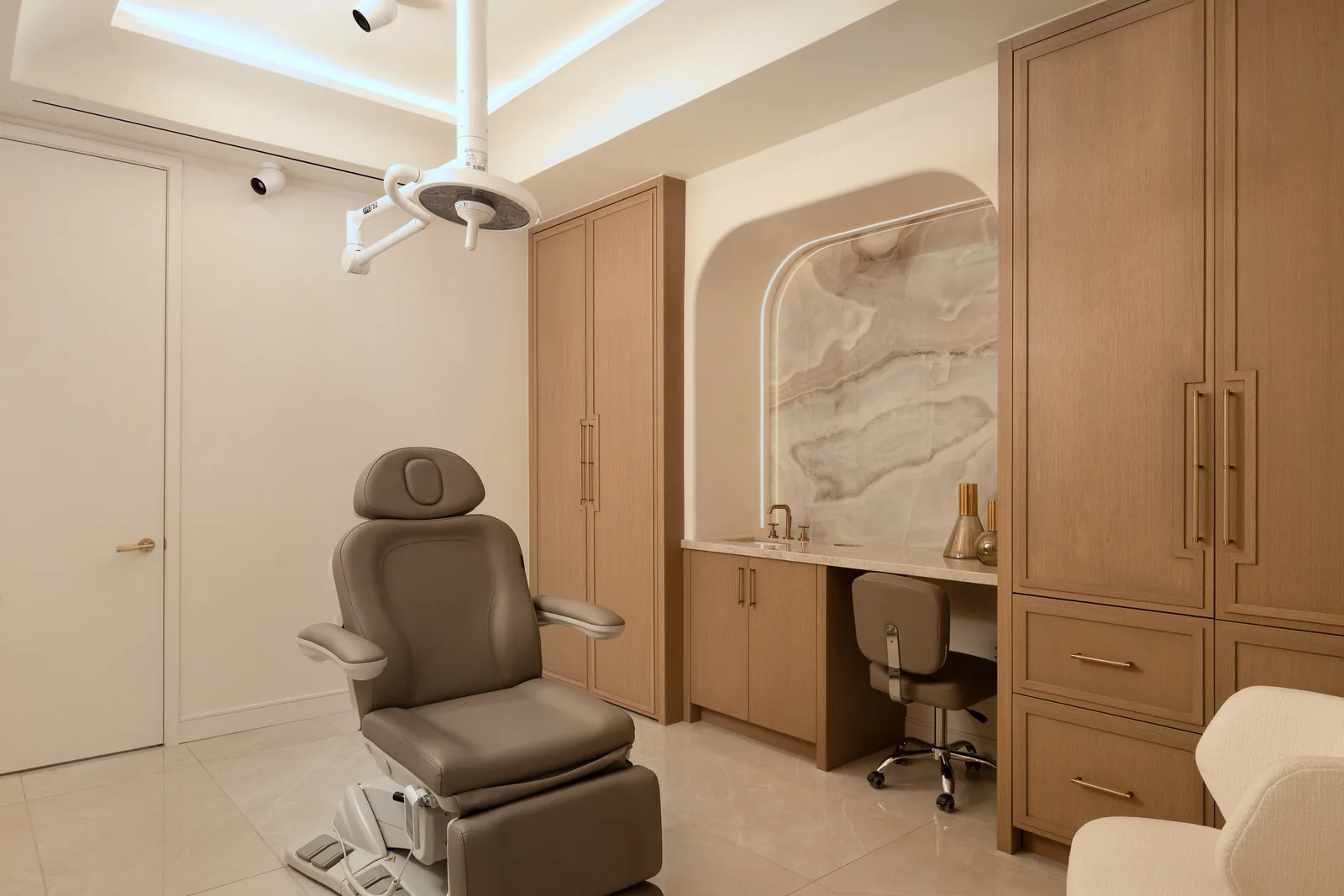
SCOTTSDALE · MODERN OFFICE SETTING
Before & After
Wellness Care, Before and After Treatment
Wellness results are measured in numbers and logs before they are visible in photographs: nights without a hot flash, a testosterone level moved into range, an HbA1c back to normal, a weight curve that finally bends. Howarth Plastic Surgery reviews those numbers with you at every recheck. Where the results become visible, the practice maintains before-and-after galleries for body contouring after weight loss, PRF hair restoration, and MOXI, and the team can show you the cases that match your situation during your visit.
Patient Case Summaries
Selected Functional Wellness Case Summaries
These deidentified case summaries illustrate how the wellness team at Howarth Plastic Surgery, under Dr. Howarth’s direction, decides between bioidentical hormone replacement, medical weight loss, both, or neither in Scottsdale. Each one shows a decision and the reason for it: a woman whose menopause symptoms and weight were treated in sequence, a man whose fatigue was sleep apnea rather than low testosterone, a patient who did not meet the threshold for weight loss medication, a patient whose weight loss led to body contouring, a woman whose hair and skin complaints were iron and thyroid rather than hormones, and a breast cancer survivor for whom one service was appropriate and the other was not. Each summary connects the patient’s presentation and assessment with the decision made.
Case 01
Both, in sequence
Hot flashes, poor sleep, and 35 pounds at the waist: hormones first, then weight loss medication
Patient presentation
A woman in her early fifties, three years past menopause and a long-term Scottsdale resident, reported hot flashes, waking at 3 a.m., low mood, and a weight gain of about 35 pounds over five years that had settled at her waist despite regular walking.
Skin assessment
Labs confirmed postmenopausal estrogen deficiency with no contraindication, an HbA1c in the prediabetic range, normal thyroid, and a body mass index in the obese range. Both services were indicated; sleep was the more disruptive symptom.
Procedure performed
Transdermal estradiol with nighttime progesterone first, then four weeks later a prescribed GLP-1 receptor agonist with a protein target, resistance training twice a week, and nutrition coaching, all on one lab schedule.
Clinical rationale
Hormone therapy resolves the vasomotor and sleep symptoms but does not produce weight loss; starting it first and adding the weight loss medication a month later meant nausea and breast tenderness could each be traced to its source.
Follow-up
She slept through the night by week four, lost a meaningful share of her excess weight over the following year with her HbA1c back in the normal range, and was evaluated for an abdominoplasty once her weight had been stable for six months.
Case 02
Sleep apnea, not testosterone
A man asking for testosterone whose fatigue was untreated sleep apnea
Patient presentation
A man in his late forties who had moved to Scottsdale a year earlier reported daytime exhaustion, low libido, and irritability, and asked to start testosterone after an online questionnaire told him his levels were probably low.
Skin assessment
His first fasting morning testosterone was at the low end of normal and the second was within range, so hypogonadism was not confirmed. His partner reported loud snoring and pauses in breathing, his neck circumference and blood pressure were elevated, and he had gained 20 pounds since the move.
Recommendation
No testosterone. Referral for a sleep study, which confirmed moderate obstructive sleep apnea, and enrollment in the medical weight loss program with nutrition coaching once treatment for the apnea had started.
Clinical rationale
The Endocrine Society’s guideline requires unequivocally low testosterone on two separate mornings before treatment, and untreated severe sleep apnea is itself a reason not to start; sleep apnea and weight gain both lower testosterone and explain fatigue on their own.
Follow-up
On treatment for his apnea and after losing weight over eight months his energy and libido returned and his repeat testosterone was mid-normal; he never needed hormone therapy.
Case 03
Below the threshold
A request for a weight loss injection that did not meet the criteria for medication
Patient presentation
A woman in her thirties with a body mass index of 24 asked for a GLP-1 prescription to lose the 10 pounds she had gained during a stressful year, having seen the medication discussed widely online.
Skin assessment
The assessment found a normal body mass index, normal glucose, lipids, and thyroid, no weight-related medical condition, and a pattern of skipped meals and poor sleep during the stressful period. She did not meet the eligibility criteria used in the STEP trials or in the practice’s program.
Recommendation
No prescription. Nutrition and habit coaching within the wellness program, a sleep plan, and a follow-up weight and lab check in three months, with an explanation of the criteria under which medication is considered.
Clinical rationale
GLP-1 medications are prescribed for obesity or overweight with a weight-related condition, carry side effects and contraindications, and cost muscle as well as fat; a physician-directed program declines to prescribe them for a normal-weight patient and says so plainly.
Follow-up
She regained her routine over three months and returned to her prior weight without medication; she remains a skincare patient at the practice.
Case 04
Weight loss to surgery
Ninety pounds lost on GLP-1 therapy, then an abdominoplasty for the skin that remained
Patient presentation
A man in his forties with a body mass index above 35 and prediabetes enrolled in the medical weight loss program and, eighteen months later, asked what could be done about the loose skin across his abdomen and flanks and the hollowing in his cheeks.
Skin assessment
He had lost about 90 pounds on a prescribed GLP-1 receptor agonist with a protein target and resistance training, his HbA1c had normalized, and his weight had been stable for seven months. The examination showed an abdominal skin apron with good muscle tone beneath it and moderate mid-face volume loss.
Procedure performed
Abdominoplasty with flank liposuction performed by Dr. Howarth, followed three months later by dermal filler to the mid-face, with the weight loss medication continued at a maintenance dose under the same monitoring schedule.
Clinical rationale
No medication and no laser tightens a skin apron after major weight loss; surgery is the honest answer, and it is timed to a stable weight so the result holds. A hollowed face after weight loss is a volume problem treated with filler, not a reason to regain weight.
Follow-up
His abdomen healed without complication, his weight has held within a few pounds for a year, and he continues rechecks every six months.
Case 05
Iron and thyroid
Hair shedding and dry skin that were iron deficiency and thyroid disease, not menopause
Patient presentation
A woman in her mid forties reported heavy hair shedding in the shower, dry and dull skin, fatigue, and heavier periods, and asked whether she needed hormone replacement because a friend’s hair had improved on it.
Skin assessment
Her estradiol and FSH were consistent with normal ovarian function. Ferritin was markedly low, hemoglobin was slightly low, and TSH was elevated. The scalp showed diffuse shedding without scarring. The picture was iron deficiency from heavy periods plus early hypothyroidism.
Recommendation
No hormone replacement. Referral to her primary care physician and gynecologist for thyroid treatment, iron replacement, and evaluation of the heavy bleeding, with the practice’s hair thinning and dry skin guides and a PRF hair restoration consultation offered once the iron had been corrected.
Clinical rationale
Iron deficiency and hypothyroidism are the two most common non-hormonal causes of diffuse shedding and dry skin, and the lab panel exists to find them; estradiol would not have corrected either and would have delayed the diagnosis of the bleeding.
Follow-up
Her shedding slowed over four months of iron and thyroid treatment, and she began a PRF series the following season for the density that remained.
Case 06
One service, not the other
A breast cancer survivor for whom weight loss medication was appropriate and hormones were not
Patient presentation
A woman in her late fifties, four years past treatment for estrogen receptor positive breast cancer, reported hot flashes, a 30 pound weight gain during and after treatment, and a new diagnosis of prediabetes, and asked whether bioidentical hormones would help both.
Skin assessment
The hormone-sensitive cancer history was an absolute contraindication to systemic estrogen at Howarth Plastic Surgery, regardless of how a hormone is made or delivered. Her body mass index and prediabetes met the criteria for medical weight loss, and she had no personal or family history of medullary thyroid carcinoma or pancreatitis.
Recommendation
No hormone therapy, with a written summary sent to her oncologist about non-hormonal treatment for hot flashes. Enrollment in the medical weight loss program with a prescribed GLP-1 receptor agonist, protein and training targets, and rechecks every three months coordinated with her oncology follow-up.
Clinical rationale
Bioidentical does not mean safe after a hormone-sensitive cancer, and The Menopause Society, ACOG, and the FDA make no exception for compounded preparations; weight loss, by contrast, was medically indicated and independent of her hormone status.
Follow-up
Her oncologist started a non-hormonal medication for the flashes, and over a year she lost a meaningful share of her excess weight with her HbA1c back in range.
From First Visit to a Plan You Can Keep
Booking, Planning, and Follow-Up at Howarth Plastic Surgery
Functional Wellness at Howarth Plastic Surgery is a medical practice with a spa’s convenience. Established patients book online. New patients can book online or request a consultation, and the team responds usually the same day.

Online booking or a consultation request
Book a wellness consultation directly online, or request a consultation and describe your symptoms, your weight history, and any cancer, clotting, thyroid, or pancreatitis history. Arrive fasting in the morning if you would like labs drawn at the first visit.
The service, or services, settled in writing
You leave the results visit with a written plan: whether BHRT, medical weight loss, both in sequence, or a referral; the medications and starting doses; the risks specific to your history; the protein and training targets; and the dates of your rechecks.
Rechecks every 3 to 6 months, and an aesthetic checkpoint
Labs and a review at 6 to 12 weeks, then every 3 to 6 months, then at least annually, with an evaluation for body contouring, fillers, or skin and hair treatment when weight is stable or concerns persist. A-List members have the next recheck scheduled before they leave the last one.
Your Questions, Answered
Functional Wellness Frequently Asked Questions
Functional Wellness at Howarth Plastic Surgery is two physician-directed medical services, bioidentical hormone replacement and medical weight loss, that share one evaluation and one fasting lab panel. Each is prescribed only when the labs and history support it, monitored every 3 to 6 months, and connected to the skin, face, and body care the same board-certified plastic surgeon provides.
Two: bioidentical hormone replacement, which treats perimenopause and menopause symptoms in women and confirmed low testosterone in men with estradiol, progesterone, and testosterone, and medical weight loss, which prescribes GLP-1 receptor agonist medication when clinically appropriate alongside nutrition and habit coaching. Both are provided by a licensed provider under Dr. Howarth’s direction at the Scottsdale office.
The labs decide. Hot flashes, night sweats, and vaginal dryness with a rising FSH, or low testosterone on two fasting morning draws, point to hormone replacement. Excess weight with a body mass index and metabolic picture that justify medication points to medical weight loss. Many patients in their forties and fifties need both, started a few weeks apart, and some need neither because the cause is thyroid, iron, or sleep apnea.
Yes, and many patients at Howarth Plastic Surgery do. Hormone therapy is usually started first so sleep and hot flashes settle, and the GLP-1 medication is added a few weeks later so side effects can be traced to the right prescription. One lab schedule covers both: rechecks at 6 to 12 weeks, then every 3 to 6 months, with hematocrit and PSA for men on testosterone and glucose and lipids for everyone on weight loss medication.
For symptomatic women under 60 or within 10 years of menopause onset without contraindications, The Menopause Society’s 2022 position statement concludes the benefits most likely outweigh the risks. Risks include blood clots and stroke with systemic estrogen and a small rise in breast cancer risk with long combined use. Bioidentical does not mean safer: the FDA states it has no evidence that compounded hormones are safer or more effective than approved ones.
Medical weight loss with a GLP-1 medication is considered for adults whose body mass index and medical picture support it, typically obesity or overweight with a weight-related condition such as prediabetes, and who have no personal or family history of medullary thyroid carcinoma, no pancreatitis history, and no planned pregnancy. It is not prescribed for a normal-weight patient who wants to lose a few pounds, and coaching is offered instead.
Not on its own. Hormone therapy relieves hot flashes, night sweats, and broken sleep, and better sleep makes weight management easier, but estradiol and progesterone do not produce weight loss, and testosterone changes body composition only with training. Weight at the waist after menopause is evaluated for medical weight loss, which in the STEP 1 trial produced a mean loss of about 15 percent of body weight at 68 weeks with semaglutide 2.4 mg.
A fasting morning panel: estradiol, FSH, total and free testosterone, SHBG, TSH and free T4, a complete blood count, ferritin, fasting glucose and HbA1c, a lipid panel, vitamin D, B12, and PSA in men. Men with a low testosterone return for a second morning draw. The panel confirms a deficiency and excludes thyroid disease, anemia, and prediabetes before any hormone or weight loss medication is prescribed.
Rapid weight loss leaves loose skin at the abdomen, arms, thighs, and breasts and hollows the face, because the skin does not shrink with the fat beneath it. No medication and no laser tightens a skin apron; body contouring surgery with Dr. Howarth is the honest answer, evaluated once weight has been stable for about six months. Facial hollowing is treated with dermal fillers or PRF EZ Gel.
Book a wellness consultation at Howarth Plastic Surgery in Scottsdale online or by request. The first visit is a medical history, measurements, and a fasting morning lab panel. At the results visit a licensed provider under Dr. Howarth’s direction explains what the labs show and writes the plan: hormone replacement, medical weight loss, both in sequence, or a referral to the right specialist when the cause is something else.
Concerns Treated
Concerns This Treatment Addresses
These guides explain each concern and where this treatment fits among the options at Aesthetica by Ashley Howarth MD in Scottsdale.
- Bioidentical Hormone Replacement Estradiol, progesterone, and testosterone for confirmed deficiency, labs first
- Medical Weight Loss Physician-directed GLP-1 therapy with nutrition and habit coaching
- Hair Thinning When shedding is hormonal, iron, or thyroid, and when PRF is the answer
- Dry & Dehydrated Skin Estrogen loss, the desert, and what treats the skin itself
- Skin Laxity Why no medication tightens skin, and what does
- Body Contouring Surgery after major weight loss, evaluated by the same physician
BEGIN HERE
Request a Consultation
Tell us what you are considering. A member of our patient care team will follow up with consultation availability and next steps.

Megan S.
Patient Coordinator
Prefer to talk or text?
Selected References