
Non-Ablative Fractional, 1927 nm
What MOXI Laser Is
MOXI is Sciton’s 1927 nm non-ablative fractional laser, delivering microscopic columns of heat into the upper dermis to treat diffuse sun-related pigment, dullness, rough texture, and the first fine lines, and it is the laser most often chosen for prejuvenation. Because it targets water rather than melanin, it can be used across all skin types, including Fitzpatrick IV to VI, with downtime of just 1 to 2 days of pinkness followed by 3 to 5 days of sandpaper-like mends, typically in a series of three sessions about four weeks apart during laser season, October to April.
MOXI is Sciton’s 1927 nm non-ablative fractional laser. It delivers a grid of microscopic columns of heat into the upper dermis, about 100 to 200 microns deep according to Sciton, without removing the skin surface, and the skin responds by shedding damaged pigment and building new collagen. It treats diffuse sun-related pigment, early sun damage, melasma when it is approached cautiously, dullness and rough texture, and the first fine lines, and it is the laser most often chosen for prejuvenation, meaning treatment that begins before visible damage sets in. At Aesthetica by Ashley Howarth MD, the med spa of Howarth Plastic Surgery in Scottsdale, MOXI runs on the Sciton mJOULE platform beside BBL HERO, so the two are combined in one visit when color and texture both need work. Because the 1927 nm wavelength is absorbed by water rather than melanin, MOXI can be used across skin types, including Fitzpatrick IV to VI at conservative settings, where broadband light carries more risk. Downtime is 1 to 2 days of pinkness followed by 3 to 5 days of fine bronzed flecks, called mends, that feel like sandpaper and shed on their own.
Sciton offers MOXI at three levels: Level 1 to prevent and refresh, Level 2 to revitalize and maintain, and Level 3 to transform and renew, with density and energy rising at each step. Most Scottsdale patients complete a series of three sessions about four weeks apart, then return once or twice a year. Sciton states that MOXI can be performed on all skin types at any time of year; in Arizona, where the summer UV index regularly reaches 11 or higher, Aesthetica by Ashley Howarth MD still schedules most MOXI series during laser season, October to April, and limits summer treatment to Level 1 on patients who can commit to strict sun avoidance. For skin that needs more than MOXI can deliver, the same platform family carries HALO for deeper texture and fine lines, and the team can compare Sciton lasers at the assessment.

Why Patients Ask for MOXI
What Patients Who Choose MOXI Notice
Most people who ask Aesthetica by Ashley Howarth MD about MOXI are not describing a single spot. They describe skin that has lost its evenness after years of Arizona sun, or skin that still looks good and that they want to keep that way without a week of peeling. The common findings are these.
- A mottled, uneven tone across the cheeks rather than discrete spots
- A dull, tired look that moisturizer no longer fixes
- Early fine lines beside the eyes and on the upper cheeks
- Melasma that darkens every summer
- Rough or slightly sandy texture under makeup
- Darker skin that other offices declined to treat with light
MOXI answers these concerns with a light, repeatable treatment rather than a single aggressive one. Tone and glow improve within two weeks of each session, and the result builds over a series, provided daily mineral sunscreen continues.


Surgeon-Directed Care
More Tools in the Toolbox: Why a Plastic Surgeon Directs Non-Ablative Laser Treatment
Aesthetica by Ashley Howarth MD is the medical aesthetics practice of Ashley Howarth, MD, FACS, a board-certified plastic surgeon and instructor in plastic surgery at Mayo Clinic. MOXI is often described as the laser anyone can have, and that is exactly why it needs a physician’s protocol behind it. The decisions that matter are made before the handpiece is picked up: whether a patch of pigment is sun damage, melasma, or a lesion that needs a dermatologist; what level and density a Fitzpatrick V patient’s skin can take without trading one pigment problem for another; whether melasma has been prepared with topical therapy long enough to treat; and whether the concern in the mirror is pigment at all, or early laxity that a laser will not fix. Dr. Howarth sets those rules, and the physician-led team performs MOXI under them.
Aesthetica by Ashley Howarth MD is the med spa of a plastic surgery practice, and that changes what can be offered. MOXI is the lightest instrument on a platform that also carries BBL for color, HALO for texture and lines, and ProFractional and Contour TRL for scars and etched wrinkles, so the plan can start light and step up, or skip MOXI when it is not the right tool. When nonsurgical treatment reaches its limit, the same physician evaluates the next step, from physician-performed laser skin resurfacing to eyelid surgery, facelift, and neck lift. A surgeon directing the plan means more tools in the toolbox, and an honest answer about which one you need.

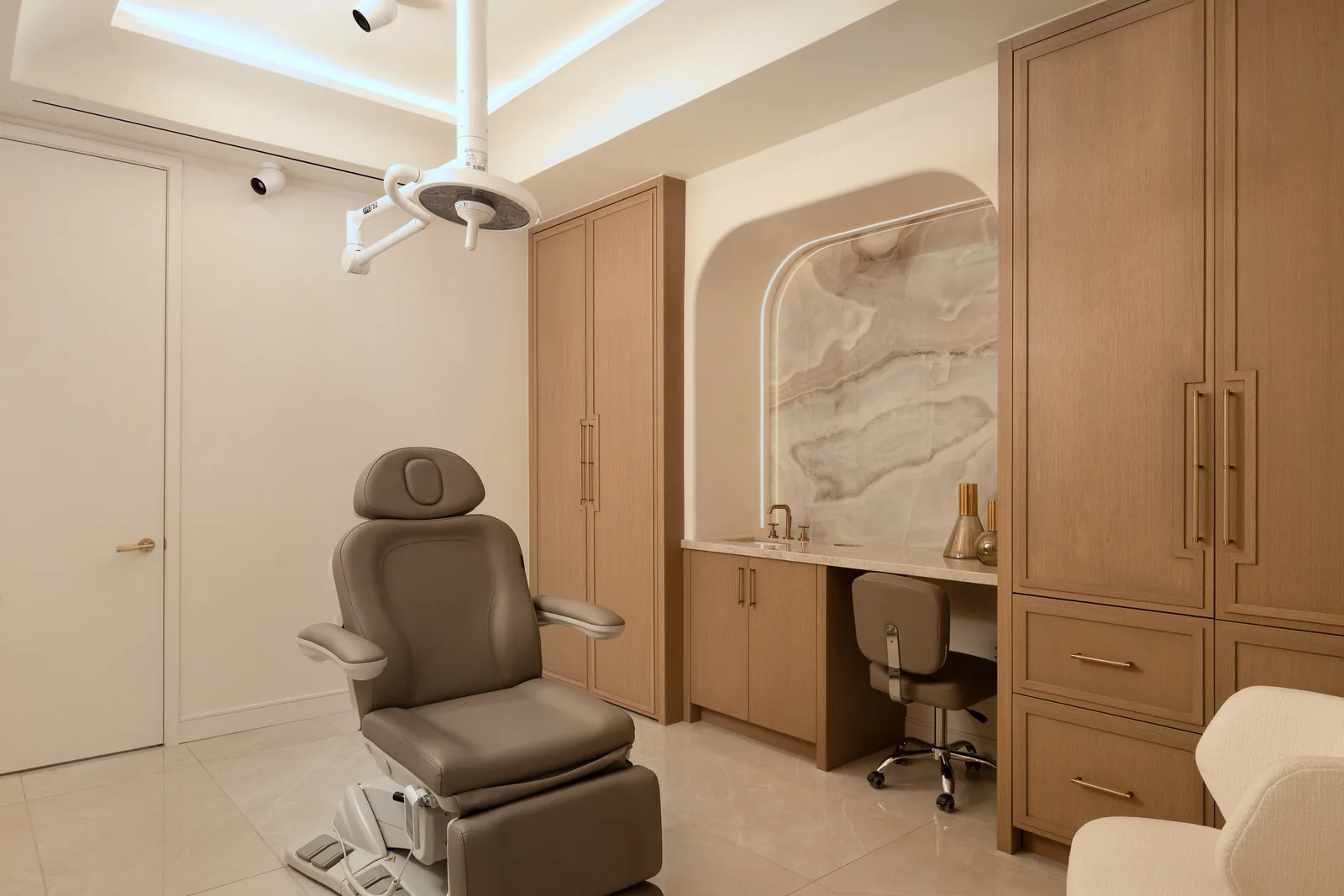
SCOTTSDALE · MODERN OFFICE SETTING
Where to Start
Who MOXI Is For, and What Happens First
MOXI at Aesthetica by Ashley Howarth MD is for adults of any skin type with diffuse sun-related pigment, uneven tone, dullness, early texture change, mild melasma, or healthy skin they want to maintain, who can accept 1 to 2 days of pinkness and a few days of fine flaking and can protect the treated skin from sun for two to four weeks afterward. The skin assessment comes first. A member of the physician-led team records your Fitzpatrick skin type and recent sun exposure, separates diffuse sun damage from melasma and from any lesion that needs a dermatologist, reviews retinoid, isotretinoin, and photosensitizing medication use, and asks about cold sores. Fair to medium skin with diffuse pigment or dullness starts at Level 1 or 2, often paired with BBL HERO in the same visit. Fitzpatrick IV to VI skin starts at conservative density after a test area, without BBL at the first visit. Melasma starts with topical therapy for six to eight weeks before the first MOXI pass. Skin with established fine lines, enlarged pores, or scarring is usually better served by HALO, and the team says so.
Dr. Ashley Howarth, MD, FACS is a board-certified plastic surgeon and an instructor in plastic surgery at Mayo Clinic. Aesthetica by Ashley Howarth MD is the medical aesthetics brand of her practice, Howarth Plastic Surgery, at 7373 N. Scottsdale Road, Suite C150, Scottsdale, Arizona 85253.

Three Levels, One Wavelength
How MOXI Is Used in Scottsdale
MOXI Level 1: Prevent and Refresh
Level 1, MOXI’s lightest setting, is the prejuvenation option for patients with little visible damage and the only level considered outside laser season, with mends shedding within three to five days.
Level 1 is the lightest MOXI setting, the one Sciton names Prevent and Refresh. At Aesthetica by Ashley Howarth MD it is the prejuvenation setting for patients in their twenties and thirties with little visible damage, the starting level for Fitzpatrick IV to VI skin, and the only level considered outside laser season. Pinkness settles in about a day and the fine mends shed within three to five days. Patients who want a maintenance rhythm pair a Level 1 session each fall and spring with summer HydraFacial.
MOXI Level 2 and 3: Correction
Levels 2 and 3 raise density and energy to correct diffuse sun-related pigment, dullness, and early fine lines over a series of three sessions about four weeks apart.
Level 2, Revitalize and Maintain, and Level 3, Transform and Renew, raise density and energy for diffuse sun-related pigment, dullness and early texture change, and the first fine lines on fair to medium skin. A correction series is three sessions about four weeks apart between October and April. Level 3 produces more visible bronzing and a slightly longer sandpaper phase. When the concern is etched lines, pores, or scarring, the team moves the plan to HALO rather than pushing MOXI past what it does well.
MOXI + BBL in One Visit
MOXI and BBL HERO share the same Sciton platform and are most often combined in one roughly 45-minute visit, with BBL treating color first and MOXI following for diffuse pigment and texture.
MOXI and BBL HERO share the Sciton mJOULE platform, and the pairing is the most common plan at Aesthetica by Ashley Howarth MD for fair to medium skin: BBL treats color, the discrete brown spots and redness that melanin and hemoglobin absorb, and MOXI treats the diffuse pigment, dullness, and texture that light does not reach. The BBL pass goes first, then the MOXI pass, in about 45 minutes, adding roughly a day of pinkness to the BBL recovery. The combination is scheduled October to April on untanned skin.
MOXI for Melasma and Darker Skin
Because it targets water rather than melanin, MOXI is the only Sciton laser considered for melasma and the preferred option for Fitzpatrick IV to VI skin, used only after weeks of topical preparation.
MOXI’s 1927 nm wavelength targets water rather than melanin, which is why it is the Sciton laser chosen for Fitzpatrick IV to VI skin and the only one considered for melasma. Published series of low-energy 1927 nm fractional treatment in darker skin types report improvement in post-inflammatory hyperpigmentation with low rates of new darkening. The rules at Aesthetica by Ashley Howarth MD are conservative: melasma is prepared with six to eight weeks of topical therapy first, MOXI is used at Level 1 or low Level 2, BBL is left out, and the patient understands that heat and sun can bring melasma back. Sun-related pigment on darker skin follows the same low-density approach, often with chemical peels between sessions.
At a Glance
MOXI at a Glance
How MOXI is planned by concern at Aesthetica by Ashley Howarth MD, using Sciton’s three levels; the level, density, and any pairing are set at the skin assessment.
| Concern | MOXI level or pairing | Sessions | Downtime | Scottsdale season |
|---|---|---|---|---|
| Diffuse pigment and early sun damage | Level 2 to 3 on fair to medium skin | 3, four weeks apart; then 1 to 2 a year | 1 to 2 days pink, 3 to 5 days of mends | October to April |
| Melasma, treated cautiously | Level 1 to low Level 2 after 6 to 8 weeks of topical therapy; no BBL | 3, four weeks apart; ongoing topical program | 1 to 2 days pink, light mends | Late winter, finishing before spring heat |
| Darker skin types, Fitzpatrick IV to VI | Level 1 after a test area, rising to low Level 2; no BBL at the first visit | 3 to 4 at conservative density | 1 to 2 days pink, 3 to 5 days of mends | October to April |
| Prejuvenation, twenties and thirties | Level 1, Prevent and Refresh | 1 each fall and spring | About 1 day pink, mends by day 3 | October and March; Level 1 only in summer with strict sun avoidance |
| Spots plus dullness: MOXI + BBL | BBL HERO pass first, then MOXI Level 2, same visit | 3 combined visits, four weeks apart | BBL spots flake 7 to 14 days; MOXI adds about a day of pinkness | October to April |
| Dullness, rough texture, and enlarged pores | Level 2 to 3; pores and established texture move to HALO | 3, four weeks apart | 1 to 2 days pink, 3 to 5 days of mends | October to April |
Which Laser
MOXI vs BBL vs HALO
How the three most-requested Sciton treatments at Aesthetica by Ashley Howarth MD differ, so you can see why the team pairs or separates them; the full seven-treatment comparison is on the Sciton laser comparison page.
| MOXI | BBL HERO | HALO | |
|---|---|---|---|
| Type | 1927 nm non-ablative fractional laser | Broadband light, IPL class, not a laser; filters 420 to 800 nm | Hybrid fractional laser, 1470 nm non-ablative plus 2940 nm ablative erbium |
| What it targets | Water in the upper dermis: diffuse pigment, dullness, early texture, melasma cautiously | Melanin and hemoglobin: discrete brown spots, freckling, redness, vessels | Water at two depths: texture, pores, fine lines, sun damage, mild scars |
| Skin types | All types; Fitzpatrick IV to VI at conservative settings | I to IV routinely; V with caution; VI generally not treated | I to IV routinely; V with reduced density; Sciton lists I to VI |
| Downtime | 1 to 2 days pink, 3 to 5 days of fine mends | Spots darken and flake 7 to 14 days on the face; little redness | 5 to 7 days: sunburn-like, then sandpaper, then peeling |
| Sessions | 3, four weeks apart; then 1 to 2 a year | 2 to 3, four weeks apart; then 1 to 2 a year | 1 to 2; then every 1 to 2 years |
| Best used when | The concern is diffuse, the skin is darker, or downtime must stay under a week | The concern is color: spots and redness on untanned fair to medium skin | Texture, pores, and lines need a stronger single treatment and a week of peeling is acceptable |
A Visit Built Around Your Skin Type
What to Expect at a MOXI Visit at Aesthetica by Ashley Howarth MD
A MOXI visit at Aesthetica by Ashley Howarth MD has three parts: an examination that sets the level and density for your skin type, numbing followed by a short laser pass, and a written sun plan. The whole visit takes about an hour, most of it numbing.
Skin type, pigment pattern, and the level chosen
The team records your Fitzpatrick skin type and recent sun exposure, distinguishes diffuse sun damage from melasma, flags any lesion that needs a dermatologist first, and sets the MOXI level and density, plus whether BBL is added. Tanned skin postpones treatment.
Numbing cream, protective eyewear, and a pass that feels like warm prickling
Numbing cream sits for 30 to 45 minutes. The handpiece glides over the skin with a single-use tip, delivering a warm prickling sensation. Sciton lists the laser pass at about 8 to 10 minutes; plan on 15 to 30 minutes in the room for a full face, longer with BBL. Skin is pink when you leave.
A sun plan in writing
You leave with mineral SPF 30 or higher to reapply every two hours outdoors, a bland moisturizer, instructions not to scrub the mends, a hat-and-shade plan for two weeks, and the date of your next session in the series.
Clear Information. Informed Choices.
Safety and Limitations of MOXI
MOXI is the gentlest laser on the Sciton platform, and most side effects are expected and short. The one that matters most in Arizona is post-inflammatory hyperpigmentation, a new darkening of treated skin that is more likely on tanned skin, on darker skin types treated at too high a density, on melasma treated too aggressively, and on skin exposed to sun while healing. That risk is why the team screens skin type, schedules most series between October and April, starts Fitzpatrick IV to VI skin at Level 1 after a test area, and prepares melasma with topical therapy first. Sciton describes MOXI as suitable for all skin types; the settings are what keep that true.
Possible Side Effects Include
- Pinkness and warmth for 1 to 2 days
- Fine bronzed mends with a sandpaper feel for 3 to 5 days
- Mild swelling, especially under the eyes, on the first morning
- Post-inflammatory hyperpigmentation, especially with sun or tanned skin
- Rarely, cold sore reactivation, acne flare, or a small area of blistering
What Treatment Cannot Guarantee
- A cure for melasma, which can recur with heat and sun
- Removal of discrete brown spots or vessels, which need BBL
- Improvement of etched lines, pores, or scars, which need HALO or ProFractional
- A complete result from a single session
- A substitute for skin cancer screening
What Happens After MOXI
Recovery After MOXI
Recovery from MOXI is measured in days, not a week. Skin is pink, then lightly bronzed with fine flecks that shed on their own, and the glow shows at about two weeks. The timeline below is for a Level 2 face treatment; Level 1 is shorter and Level 3 a day or two longer. When BBL is added in the same visit, treated brown spots also darken and flake over 7 to 14 days.
The skin feels like a mild sunburn for a few hours and looks pink. Mineral sunscreen goes on before leaving the office. No makeup for the rest of the day; a gentle cleanser and a bland moisturizer that night. Sleeping with the head slightly raised limits morning puffiness.
Pinkness fades within one to two days and makeup is fine from the second day. Tiny bronzed flecks, the mends, surface and give the skin a sandpaper feel, then shed by day five. Do not scrub or exfoliate; let them go on their own. Retinoids and acids stay paused. Hats, shade, and reapplied SPF 30 or higher every two hours outdoors.
By two weeks the surface is smooth and the tone is visibly more even, the change most patients describe as glow. Sun protection stays strict through week four. The second session in the series falls at about four weeks, once the skin is calm and still untanned.
After three sessions diffuse pigment is lighter, dullness is reduced, and early lines are softer, with collagen remodeling continuing for 2 to 3 months. The result holds as long as daily sunscreen continues. Most Scottsdale patients return for 1 to 2 MOXI sessions a year in laser season and use HydraFacial through the summer. Read more in the Skin in Arizona guide.
Before & After
MOXI, Before and After Treatment
MOXI results are best judged in photographs taken in the same light before the first session and four weeks after the third, because the change is in overall tone and glow rather than in a single spot. Aesthetica by Ashley Howarth MD maintains before-and-after galleries for MOXI, BBL, and HALO, and the team can show you cases that match your skin type, whether the concern is diffuse pigment, melasma, or dullness, and the time of year during your visit.
Patient Case Summaries
Selected MOXI Laser Case Summaries
These deidentified case summaries illustrate how the physician-led team at Aesthetica by Ashley Howarth MD plans MOXI treatment in Scottsdale. They include a darker skin type where MOXI was chosen over BBL, melasma prepared with topical therapy before any laser, a same-visit MOXI and BBL combination, prejuvenation in a patient in her thirties, a summer request that was deferred, and a long-running maintenance series. Each summary connects the patient’s concern and skin assessment with the treatment performed or the recommendation made.
Case 01
Fitzpatrick V
Diffuse sun-related pigment on Fitzpatrick V skin treated with MOXI instead of BBL
Patient presentation
A woman in her forties with deep brown skin who had lived in Scottsdale for two decades asked for BBL, which a friend with fair skin had used, for uneven darker patches across her cheeks and forehead.
Skin assessment
The assessment found diffuse sun-related and post-inflammatory hyperpigmentation on Fitzpatrick V skin, no melasma pattern, and no discrete lentigines that light would target. Broadband light at this skin type carries a meaningful risk of further darkening, and the pigment was diffuse rather than in spots. She was untanned in January.
Procedure performed
A test area at MOXI Level 1, then three full-face MOXI sessions at Level 1 rising to low Level 2 density, four weeks apart, with a topical brightening routine between sessions and no BBL.
Clinical rationale
The 1927 nm wavelength is absorbed by water rather than melanin, and published series of low-energy 1927 nm fractional treatment in darker skin types report improvement in hyperpigmentation with low rates of new darkening, which made MOXI at conservative density the safer tool for this skin type.
Follow-up
After three sessions the patches were noticeably lighter and the tone more even; she returns for one MOXI session each winter and uses tinted mineral sunscreen daily.
Case 02
Melasma first topical
Melasma treated with eight weeks of topical therapy before a low-level MOXI series
Patient presentation
A woman in her thirties, a recent arrival from the Pacific Northwest, noticed symmetric tan patches on her upper cheeks and upper lip that had appeared over her first Arizona summer and asked for a laser to remove them.
Skin assessment
The pattern was classic melasma on Fitzpatrick III skin, worsened by heat and sun, with no history of hormonal contraception change. Melasma responds poorly to aggressive laser treatment and can darken with heat, so the honest answer was that no laser should come first.
Recommendation
Eight weeks of a physician-directed topical program, a brightening agent, a retinoid, and daily tinted mineral SPF, then three MOXI sessions at Level 1 four weeks apart in late winter, with BBL deliberately left out.
Clinical rationale
Topical suppression first reduces the pigment load and tests whether the melasma is controllable before any heat is added; the 1927 nm wavelength at low energy is the fractional laser with the most published melasma data, and it is used as an adjunct to topical therapy rather than a replacement for it.
Follow-up
The patches faded substantially by spring; she continues the topical program year-round, avoids midday sun, and has a single Level 1 MOXI session each winter with the understanding that melasma can recur.
Case 03
MOXI + BBL
Discrete brown spots and diffuse dullness treated with BBL and MOXI in one visit
Patient presentation
A man in his fifties, a long-term Scottsdale golfer, reported both distinct brown spots on his temples and cheeks and a general sallow, uneven look that made him appear tired.
Skin assessment
The assessment found discrete solar lentigines that broadband light targets well, plus diffuse mottled pigment and dullness between them that light does not address, on Fitzpatrick II skin. One irregular lesion on the left cheek was photographed and referred to a dermatologist before treatment. He was untanned in November.
Procedure performed
After dermatologist clearance, three combined visits four weeks apart: a BBL HERO pass with the 515 and 560 nm filters for the spots, followed in the same session by a MOXI pass at Level 2 for the diffuse pigment and texture.
Clinical rationale
BBL and MOXI address different targets, melanin in discrete spots versus water in the diffuse upper dermis, and sharing the Sciton mJOULE platform lets both be done in about 45 minutes with only about a day of added pinkness.
Follow-up
After the series the spots had flaked away and the overall tone was even and brighter; he returns each November for a combined maintenance visit and wears a wide-brimmed hat on the course.
Case 04
Prejuvenation
A woman in her thirties with healthy skin starting a MOXI prejuvenation rhythm
Patient presentation
A woman in her thirties with fair skin and no visible sun damage asked what she could do now to keep her skin from looking like her mother’s, a long-term Arizona resident with heavy photodamage.
Skin assessment
The assessment found even tone on Fitzpatrick II skin with faint early lines beside the eyes and slight dullness, no lentigines, and no melasma. There was nothing to correct, which is the situation Sciton describes as the prejuvenation demographic for Level 1.
Procedure performed
A single MOXI Level 1 session in the fall, repeated each October and March, with daily mineral SPF, a retinoid, and summer HydraFacial rather than any laser between May and September.
Clinical rationale
Level 1 MOXI stimulates collagen and clears early pigment before it is visible, with about a day of pinkness, and a twice-yearly rhythm timed to laser season fits Arizona’s sun calendar better than a correction series would.
Follow-up
Two years on, her skin tone is unchanged in photographs and she describes the visits as maintenance rather than repair.
Case 05
Summer timing
A request for a MOXI series in June that waited until October
Patient presentation
A woman in her forties asked for a three-session MOXI series in June to brighten her face before a late-August wedding.
Skin assessment
Her skin was tanned from a spring of hiking, she could not realistically avoid sun for two to four weeks after each session, and a series of three would run through the hottest, highest-UV months of the year. Sciton states that MOXI can be performed any time of year, but on tanned skin in an Arizona June the risk of post-inflammatory hyperpigmentation before an event outweighed the benefit.
Recommendation
Two HydraFacial treatments with a brightening booster in June and July, a corrected tinted mineral SPF habit, and a three-session MOXI series booked to begin in October once the tan had faded.
Clinical rationale
Hydration and superficial care are safe in full sun and improve glow enough for photographs; a fractional laser series on tanned skin in summer was more likely to leave marks than remove them, so the series waited for laser season.
Follow-up
She was pleased with her skin at the wedding and completed the MOXI series between October and December, adding BBL at the third visit for a few spots that had become visible once her tan faded.
Case 06
Maintenance series
Six years of twice-yearly MOXI after an initial correction series
Patient presentation
A woman in her sixties who had completed a MOXI correction series years earlier asked whether continuing twice-yearly sessions was still worthwhile, since her skin looked even and she wondered if she should move to something stronger.
Skin assessment
Her face showed even tone, minimal new pigment, and fine lines that had stayed soft on Fitzpatrick II skin, with no etched wrinkles or laxity that would call for HALO or a physician-performed resurfacing plan. She was untanned in October.
Procedure performed
A MOXI Level 2 maintenance session each October and each March, with a BBL pass added at the October visit for the few spots that appear each summer, and HydraFacial in June and August.
Clinical rationale
A maintenance plan keeps working when the skin has nothing new to correct, and stepping up to a deeper laser without a concern that needs it adds downtime without a matching benefit; the team’s answer was to keep the rhythm that was working.
Follow-up
Her skin has stayed even through six years of maintenance, and she describes the October visit as the appointment she does not skip.
From First Visit to a Plan You Can Keep
Booking, Planning, and Follow-Up at Aesthetica by Ashley Howarth MD
Aesthetica by Ashley Howarth MD is a medical practice with a spa’s convenience. Established patients book online. New patients can book online or request a consultation, and the team responds usually the same day.

Online booking or a consultation request
Book a skin assessment directly online, or request a consultation and describe the pigment, dullness, or texture you notice, where it is, and when it appeared. Either path starts with the same examination of your skin.
A series, not a single appointment
You leave your first visit with a written plan: which MOXI level; how many sessions; which months they fall in; whether BBL is added in the same visit or HALO is the better tool; and the sunscreen and home routine that protects the result.
Maintenance timed to laser season
Most Scottsdale MOXI plans repeat annually: a fall session, sometimes a second in late winter, summer HydraFacial, year-round mineral sunscreen. A-List members have the next season scheduled before they leave the last one.
Your Questions, Answered
MOXI Laser Frequently Asked Questions
MOXI is Sciton’s 1927 nm non-ablative fractional laser, delivered on the mJOULE platform. It places microscopic columns of heat about 100 to 200 microns into the skin without removing the surface, which clears diffuse pigment and stimulates collagen. It comes in three levels, from a light prejuvenation setting to a correction setting, with 1 to 2 days of pinkness and a few days of fine flaking.
MOXI treats diffuse sun-related pigment, uneven tone, early sun damage, dullness, mild texture change, the first fine lines, and melasma when it is approached cautiously after topical therapy. Sciton lists the face, neck, chest, hands, arms, and legs. It does not remove discrete brown spots or vessels, which need BBL, or improve etched lines, pores, and scars, which need HALO or ProFractional.
The 1927 nm wavelength is absorbed by water in skin cells, so each fractional pulse creates a tiny column of heated tissue surrounded by untouched skin. The body clears the damaged, pigmented cells upward as fine bronzed flecks called mends over 3 to 5 days, and the intact skin around each column speeds healing and drives new collagen over the following 2 to 3 months.
Yes, with conservative settings. Because MOXI targets water rather than melanin, it is the Sciton laser chosen for Fitzpatrick IV to VI skin at Aesthetica by Ashley Howarth MD, where broadband light carries more risk. Darker skin starts at Level 1 after a test area, without BBL, on untanned skin between October and April, and published series of low-energy 1927 nm treatment in darker skin report low rates of new darkening.
Most patients complete a correction series of three MOXI sessions about four weeks apart, then return for 1 to 2 maintenance sessions a year. Prejuvenation patients with little to correct often skip the series and simply have a Level 1 session each fall and spring. Darker skin types and melasma may need an extra low-level session rather than a higher setting.
Very little. Skin is pink and warm for 1 to 2 days, then fine bronzed flecks called mends surface and give the skin a sandpaper feel for 3 to 5 days before shedding on their own. Makeup can go on from the second day and most patients work the next morning. The real requirement is two to four weeks of strict sun protection afterward.
Most patients describe MOXI as warm prickling rather than pain. Numbing cream is applied for 30 to 45 minutes first, the handpiece glides with a single-use tip, and the laser pass itself takes about 8 to 10 minutes according to Sciton. Higher levels feel warmer. The skin feels like a mild sunburn for a few hours afterward and then settles.
Tone looks brighter and more even about two weeks after each session, once the mends have shed, which is the change patients call glow. Pigment continues to lighten across the three-session series, and collagen remodeling adds smoothness over the following 2 to 3 months. Photographs before the first session and four weeks after the third show the change most clearly.
Yes. MOXI and BBL HERO share the Sciton mJOULE platform, and the same-visit pairing is the most common plan at Aesthetica by Ashley Howarth MD for fair to medium skin: BBL for discrete brown spots and redness, MOXI for diffuse pigment and texture. MOXI is also alternated with HALO, followed by HydraFacial in summer, and combined with Botox or fillers at a separate visit.
Pigment that MOXI clears does not return, but new pigment forms wherever sun exposure continues, and in Scottsdale that is about 300 days a year. With daily broad-spectrum mineral SPF 30 or higher, most patients hold their result with 1 to 2 MOXI sessions a year timed to laser season, October to April. Without sunscreen, tone can drift back within a single summer. See the Skin in Arizona guide.
Concerns Treated
Concerns This Treatment Addresses
These guides explain each concern and where this treatment fits among the options at Aesthetica by Ashley Howarth MD in Scottsdale.
- Sun Damage & Brown Spots Diffuse pigment with MOXI, discrete spots with BBL
- Melasma Topical therapy first, then low-level MOXI
- Skin Texture, Pores & Dullness Dullness and early texture, the core MOXI concern
- Fine Lines & Wrinkles Early lines with MOXI, deeper lines with HALO
- Skin in Arizona Why timing matters in the desert
- Sciton Laser Comparison Which laser fits which concern
BEGIN HERE
Request a Consultation
Tell us what you are considering. A member of our patient care team will follow up with consultation availability and next steps.

Megan S.
Patient Coordinator
Prefer to talk or text?
Selected References