
Three Problems, One Order
What Causes Acne and Acne Scars, and What Treats Them in Arizona
Acne, the dark marks it leaves behind, and the scars that remain are three separate problems treated in order at Aesthetica by Ashley Howarth MD: active acne is controlled first with HydraFacial, medical facials, chemical peels, and BBL HERO broadband light, and only afterward are scars resurfaced with ProFractional, HALO, or SkinPen microneedling. Scars are never resurfaced while acne is still active, and prescription control, including isotretinoin, is coordinated with a dermatologist first.
Acne, the dark marks it leaves behind, and the scars that remain are three separate problems, and they are treated in that order. Acne is a disease of the oil gland and hair follicle: excess oil, dead cells that block the pore, acne bacteria, and inflammation. Adult and hormonal acne, most common in women along the jaw and chin, follows the same mechanism with a hormonal driver. When an inflamed lesion heals, it can leave a flat dark mark called post-inflammatory hyperpigmentation, and Arizona’s sun, at a summer UV index of 11 or higher, darkens those marks and makes them last longer, especially on darker skin types. When the inflammation destroys collagen beneath the pore, it leaves an atrophic scar: a narrow ice pick scar, a sharp-edged boxcar scar, or a soft rolling depression. At Aesthetica by Ashley Howarth MD, the med spa of Howarth Plastic Surgery in Scottsdale, active acne is controlled first with HydraFacial, medical facials, chemical peels, and BBL HERO broadband light, and scars are then resurfaced with ProFractional, HALO, or SkinPen microneedling.
Two rules shape every acne plan here. First, scars are not resurfaced while acne is still active, because new breakouts make new scars and inflamed skin heals unpredictably. Patients who need prescription control, including isotretinoin, are referred to a dermatologist first, and resurfacing waits until after the course is finished, typically 6 to 12 months. Second, laser and light treatments run on the Scottsdale calendar, October to April, on untanned skin with two to four weeks of sun avoidance afterward. SkinPen microneedling and HydraFacial are the year-round treatments. This page explains each step, what to expect, and how skin type and the desert climate change the plan.

Breakouts, Marks, and Scars
What Acne Patients Notice in Scottsdale
Acne concerns at Aesthetica by Ashley Howarth MD arrive at every stage, from a new hormonal pattern in a woman in her thirties to scars that have been present since high school. Most patients describe some combination of the following.
- Breakouts along the jaw and chin that track the monthly cycle
- Congestion and blackheads that heavy sunscreen seems to worsen
- Dark marks that outlast the pimple by months and darken in summer
- Pitted or ice pick scars on the cheeks and temples
- Rolling, uneven texture that shows in side light and in photos
- Redness where old breakouts healed
A pattern we see often in Arizona: acne that improves in the sun for a few weeks, then rebounds worse, with dark marks that were not there before. Sun is not an acne treatment. It thickens the surface, traps oil, and stains every healing lesion.


Surgeon-Directed Care
More Tools in the Toolbox: Why a Plastic Surgeon Directs This Care
Aesthetica by Ashley Howarth MD is the medical aesthetics practice of Ashley Howarth, MD, FACS, a board-certified plastic surgeon and instructor in plastic surgery at Mayo Clinic. Scar treatment is a wound-healing problem, and wound healing is the core of plastic surgery. Dr. Howarth sets the resurfacing protocols, chooses the depth and density of each ProFractional and HALO treatment, and trains the team on SkinPen and peel protocols by skin type. She is also the physician who decides when acne is a medical problem that needs a dermatologist and a prescription before a cosmetic treatment can help, and when a scar is not an acne scar at all. Acne is a disease, its scars are wounds, and both deserve a physician’s judgment before the first treatment.
Aesthetica by Ashley Howarth MD is the med spa of a plastic surgery practice, and that changes what can be offered. Most skin concerns are treated without surgery, and most patients never need it. When skin care and nonsurgical treatment reach their limit, the conversation does not end at the door: the same physician evaluates the next step, from deep laser skin resurfacing performed by Dr. Howarth to eyelid surgery, facelift, and neck lift. A surgeon directing the plan means more tools in the toolbox, and an honest answer about which one you need.

SCOTTSDALE · MODERN OFFICE SETTING
Where to Start
Who This Is For, and What Happens at the Skin Assessment
Acne and scar treatment at Aesthetica by Ashley Howarth MD is for adults with active breakouts that facials and over-the-counter products have not controlled, for anyone with dark marks or redness left by past acne, and for anyone with scars they want improved. The skin assessment comes first. A member of the physician-led team grades the acne (comedonal, inflammatory, cystic), maps the scars by type under angled light, documents skin type and any post-inflammatory pigment, and reviews medications, including any current or past isotretinoin. Patients with moderate to severe inflammatory or cystic acne are referred to a dermatologist for prescription control before any scar plan; that referral is the honest first step, not a delay. Patients with controlled acne and scars leave with a resurfacing sequence timed to the Scottsdale calendar and their skin type.
Dr. Ashley Howarth, MD, FACS is a board-certified plastic surgeon and an instructor in plastic surgery at Mayo Clinic. Aesthetica by Ashley Howarth MD is the medical aesthetics brand of her practice, Howarth Plastic Surgery, at 7373 N. Scottsdale Road, Suite C150, Scottsdale, Arizona 85253.

Matched to the Stage, Not the Menu
Which Treatment Corrects Which Stage of Acne
Active Acne and Congestion
HydraFacial with the clarifying protocol clears blocked pores and delivers salicylic acid without irritation, with a published series of six treatments over 12 weeks shown to improve active acne.
HydraFacial with the clarifying protocol clears blocked pores by vortex extraction and delivers salicylic acid without irritation; a published series of six treatments over 12 weeks improved active acne. Medical facials and superficial salicylic or glycolic chemical peels in a series of 3 to 6 keep pores clear and thin the buildup that traps oil. These are year-round treatments.
Inflammatory Acne and Redness
BBL HERO with acne-specific filters targets the bacteria driving inflammation and the redness left behind, run as a series of 4 to 6 sessions on untanned skin between October and April.
Sciton BBL HERO broadband light, using acne-specific filters, targets the bacteria that drive inflammation and the redness left where lesions healed. It is a series of 4 to 6 sessions on untanned skin, so it runs October to April. Moderate to severe or cystic acne is referred to a dermatologist for prescription therapy, and light treatment supports that care rather than replacing it.
Boxcar and Rolling Scars
ProFractional drills microscopic channels to lift the scar floor with new collagen over 3 to 4 sessions, while HALO adds full-surface resurfacing for generally sun-damaged skin.
Sciton ProFractional is the ablative fractional erbium laser for atrophic scars. It drills microscopic channels to a chosen depth, and the skin fills them with new collagen, lifting the scar floor over 3 to 4 sessions. HALO adds full-surface resurfacing when scars sit in generally uneven, sun-damaged skin. Both are laser-season treatments.
Scars on Darker Skin, and Year-Round Options
SkinPen microneedling stimulates collagen beneath rolling and shallow boxcar scars without heat or light, making it the preferred option for Fitzpatrick IV to VI skin and safe for summer use.
SkinPen microneedling stimulates collagen beneath rolling and shallow boxcar scars without heat or light, which makes it the preferred scar treatment for Fitzpatrick IV to VI skin and the one that can proceed in summer with strict sun avoidance. A series of 3 to 6 sessions, four to six weeks apart, with 1 to 3 days of redness. Ice pick scars respond least to any resurfacing and may need a scar-specific technique.
Planning at a Glance
Sessions, Downtime, and Season
Sessions, downtime, and the months each acne and scar treatment is scheduled in Scottsdale. Individual plans are set at the skin assessment.
| Treatment | Sessions | Downtime | Scottsdale season |
|---|---|---|---|
| HydraFacial (clarifying) | Series every 2 to 4 weeks | None | Year-round; the summer acne treatment |
| Chemical peels | Series of 3 to 6 | 1 to 5 days of flaking, by depth | Year-round; superficial peels in summer |
| BBL HERO (acne filters) | 4 to 6 | Minimal; mild redness for hours | October to April |
| SkinPen microneedling | 3 to 6, four to six weeks apart | 1 to 3 days of redness | Year-round with sun avoidance |
| ProFractional | 3 to 4, four to eight weeks apart | 3 to 7 days of redness and flaking | October to April |
| HALO | 1 to 3 | 5 to 7 days | October to April; none after mid-April |
A Visit Built Around the Stage of Acne
What to Expect at an Acne Visit at Aesthetica by Ashley Howarth MD
Acne visits at Aesthetica by Ashley Howarth MD start by settling one question: is the acne still active? The answer decides everything else, because scar resurfacing on breaking-out skin makes new scars and dark marks.
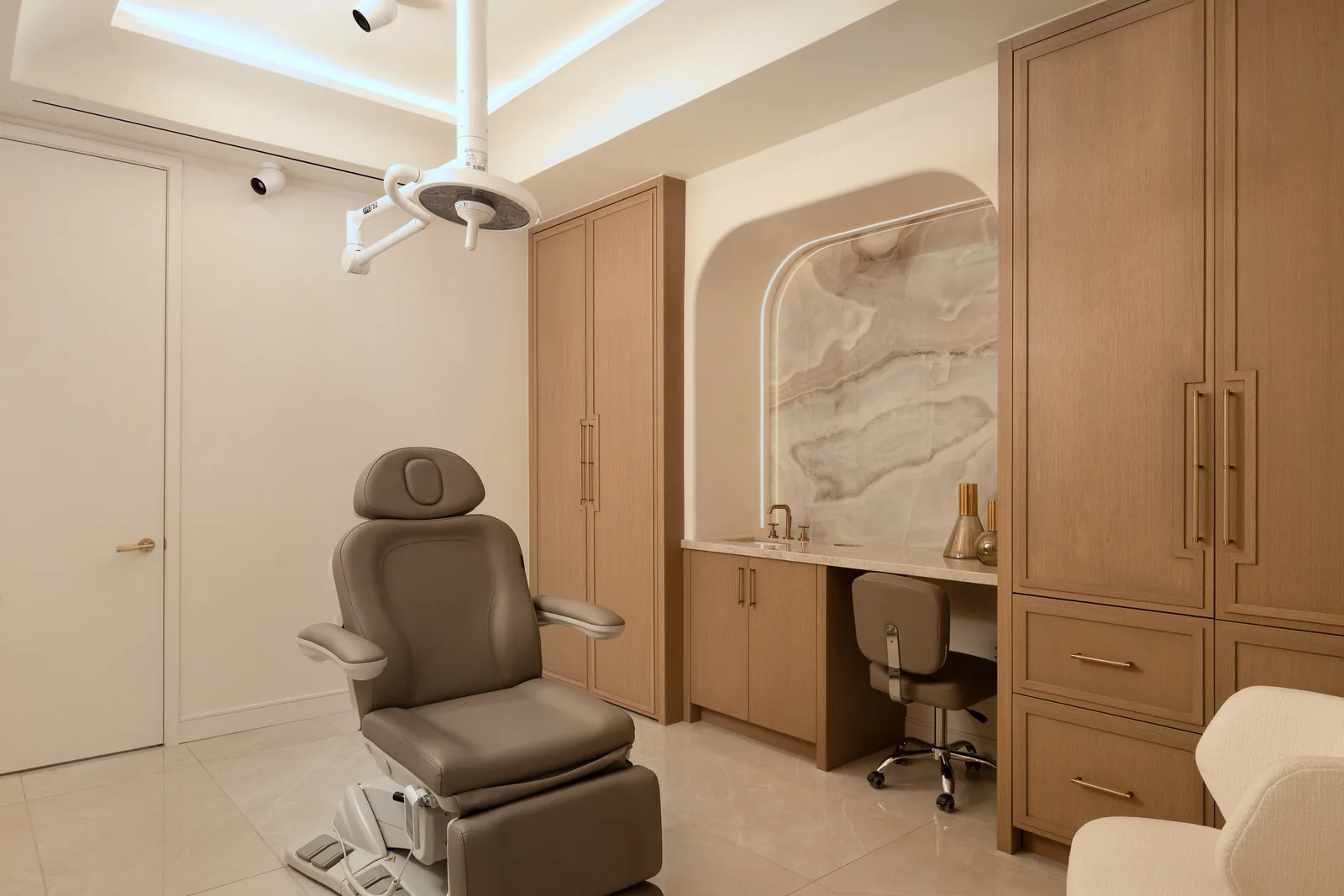
Acne grade, scar map, skin type, medications
The team grades active lesions, maps scars by type under angled light, documents skin type and any post-inflammatory pigment, and reviews medications including isotretinoin, retinoids, and hormonal therapy. Recent sun exposure and tanning are recorded because they postpone light and laser treatment.
The treatment for this stage
Active acne is treated the same day with a clarifying HydraFacial or a superficial peel, or referred for prescription control. Controlled acne with scars proceeds to SkinPen in any season, or to ProFractional or HALO in laser season with topical numbing and a 45 to 60 minute treatment.
A skin and sun plan in writing
You leave with specific instructions: a non-comedogenic mineral SPF 30 or higher reapplied every two hours outdoors, which products to pause and when to restart them, how to care for healing skin without picking, and the date of the next session.
Clear Information. Informed Choices.
Safety and Limitations of Acne and Scar Treatment in a High-UV Climate
Acne and scar treatments are safe when matched to the stage of acne, the skin type, and the season. Most side effects are expected parts of healing. The one that matters most in Arizona, and most on darker skin, is post-inflammatory hyperpigmentation: the same dark staining that follows a pimple can follow a laser channel if the skin is tanned, exposed to sun while healing, or treated too aggressively for its type. Pretreatment with pigment-suppressing topicals, conservative settings, SkinPen instead of laser where appropriate, and the October to April calendar are how it is avoided.
Possible Side Effects Include
- Redness, swelling, and pinpoint bleeding for 1 to 7 days depending on treatment
- A temporary acne flare after resurfacing or peels
- Post-inflammatory hyperpigmentation, more likely on darker skin and with sun exposure
- Dryness, flaking, and sensitivity to skincare products
- Rarely, infection, prolonged redness, cold sore reactivation, or new scarring
What Treatment Cannot Guarantee
- Complete removal of scars; atrophic scars are improved, typically by a visible fraction, not erased
- Improvement of ice pick scars with resurfacing alone
- Control of hormonal or cystic acne without medical therapy
- A result from one session, or a result that survives a return to breaking out
- A result identical to another patient's
What Healing Looks Like
After ProFractional or SkinPen for Acne Scars: A Timeline
Scar treatments work by creating controlled injury that the skin repairs with new collagen beneath the scar. Visible healing takes days; the collagen that lifts the scar builds for months. The timeline below is for ProFractional, the deeper treatment. SkinPen follows the same sequence with 1 to 3 days of redness instead of a week, and HALO sits between the two.
After ProFractional the treated areas are red and swollen with a grid of tiny channels and a sunburned feel for several hours. After SkinPen the skin is flushed like a mild sunburn. Cool compresses, a bland healing ointment or moisturizer, no makeup, and no active skincare.
ProFractional channels form fine bronze crusts that flake over 3 to 7 days; the surface feels rough and looks like a fading sunburn. No picking, since picking a channel is how a treatment makes a mark. SkinPen redness fades to pink by day 2 and skin feels dry and tight for a few days. Mineral sunscreen indoors and out from day 2.
The surface is healed and often looks better than baseline from swelling alone; that early improvement settles, and the true collagen response begins. Sun avoidance continues through week four. The next session is scheduled at four to eight weeks for ProFractional and four to six weeks for SkinPen, when the previous round has finished remodeling enough to build on.
Scar depth improves progressively over the series and continues to improve for 3 to 6 months after the last session as collagen matures. Photographs in angled light at each visit track the change. A maintenance session the following season, HydraFacial through summer to keep acne controlled, and daily sunscreen protect the result.
Before & After
Acne and Acne Scars, Before and After Treatment
Scar results are best judged in angled light, where depressions cast shadows, in photographs taken months apart under the same conditions. Aesthetica by Ashley Howarth MD maintains before-and-after galleries for ProFractional, HALO, SkinPen microneedling, and skin treatments, and the team can show you cases that match your scar type and skin type during your visit.
Patient Case Summaries
Selected Acne & Acne Scars Case Summaries
These deidentified case summaries illustrate how the physician-led team at Aesthetica by Ashley Howarth MD sequences acne and scar treatment around the stage of acne, skin type, and the Arizona climate. They include adult hormonal acne, post-inflammatory marks on darker skin, boxcar and rolling scars, summer timing, and a consultation in which the recommendation was to see a dermatologist first. Each summary connects the patient’s concern and skin assessment with the treatment performed or the recommendation made.
Case 01
Adult hormonal acne
Jawline breakouts in a woman in her thirties, controlled without a laser
Patient presentation
A woman in her thirties, a long-term Scottsdale resident, described breakouts along her jaw and chin that tracked her cycle, with congestion across her nose and a heavy mineral sunscreen habit.
Skin assessment
The assessment showed mild to moderate inflammatory acne with comedones, no cysts, fair skin, and faint pink marks from recent lesions. No scarring. The visit was in June.
Procedure performed
A series of six clarifying HydraFacials at two-week intervals over 12 weeks, a superficial salicylic acid peel at weeks 4 and 8, a change to a lighter non-comedogenic mineral SPF, and a home routine built around a retinoid started at night.
Clinical rationale
Mild to moderate acne without cysts responds to consistent pore clearing and exfoliation, and these treatments are safe in full summer sun. Hormonal acne that did not settle would have been referred for prescription options.
Follow-up
By week 12 active lesions were reduced to occasional premenstrual spots, the pink marks had faded, and she moved to a monthly HydraFacial with a BBL series for residual redness planned for the fall.
Case 02
Darker skin type
Dark marks that outlasted the acne on Fitzpatrick V skin
Patient presentation
A man in his twenties with deep brown skin (Fitzpatrick V) who had moved to Arizona a year earlier reported that his acne was mostly controlled but every healed lesion left a dark mark that lasted months and got darker each summer.
Skin assessment
The team documented post-inflammatory hyperpigmentation across both cheeks, a few active comedones, no cysts, and no atrophic scarring. His skin type made him highly susceptible to further pigment from any inflammatory treatment.
Procedure performed
A pigment-suppressing topical program and strict tinted mineral SPF 30 started immediately, followed by a series of four superficial salicylic and mandelic acid peels at three-week intervals beginning in October, with a HydraFacial between peels.
Clinical rationale
On darker skin the safest correction of post-inflammatory marks is suppressing pigment production, protecting from UV and visible light, and gently accelerating turnover. Light and laser treatments were avoided because they risk adding pigment to the marks they treat.
Follow-up
Over four months the marks lightened substantially and new lesions healed without staining. He continues the topical program and sunscreen year-round, with peels each winter.
Case 03
Boxcar and rolling scars
Fifteen-year-old cheek scars on fair skin, treated in laser season
Patient presentation
A woman in her forties with fair skin whose acne had resolved in her twenties asked about the pitted and uneven cheeks she had covered with makeup for fifteen years.
Skin assessment
Angled-light mapping showed predominantly shallow boxcar and rolling scars on both cheeks with a few ice pick scars near the temples. No active acne, no isotretinoin history, untanned in November.
Procedure performed
Three ProFractional sessions at six-week intervals from November to March, with the final session combined with HALO for the surrounding sun-damaged texture, topical numbing, and two to four weeks of sun avoidance after each.
Clinical rationale
Boxcar and rolling scars respond to ablative fractional resurfacing that lifts the scar floor with new collagen; fair, untanned skin in peak laser season allows effective depths with low pigment risk. Ice pick scars were counseled as the least responsive.
Follow-up
At six months after the last session the boxcar and rolling scars were visibly shallower and makeup was optional; the ice pick scars were improved less, as expected, and a scar-specific follow-up plan was discussed.
Case 04
Summer timing
Scar treatment requested in June, started with SkinPen instead of laser
Patient presentation
A woman in her twenties with olive skin (Fitzpatrick IV) asked in June to begin scar treatment for rolling scars on her cheeks before starting a new job in the fall.
Skin assessment
The assessment showed rolling and a few shallow boxcar scars, acne controlled for over a year, no isotretinoin in the past year, and lightly tanned skin. A laser series in summer on Fitzpatrick IV skin was judged too high a pigment risk.
Procedure performed
A series of four SkinPen microneedling sessions at five-week intervals from June to September with strict sun avoidance and mineral SPF 50, followed by two ProFractional sessions in December and February.
Clinical rationale
SkinPen builds collagen beneath rolling scars without heat or light, so it can start in summer on a darker skin type with sun avoidance. Ablative laser was reserved for laser season on untanned skin.
Follow-up
The rolling scars had softened by September, and the winter ProFractional sessions deepened the correction. She maintains with an annual SkinPen series.
Case 05
Maintenance visit
A returning patient with a new flare and a plan that paused resurfacing
Patient presentation
A man in his thirties who had completed a ProFractional series two winters earlier returned for a maintenance session with several new inflamed lesions on his jaw after a stressful move.
Skin assessment
The scars remained improved, but the active inflammatory lesions meant resurfacing that day would risk new scars and dark marks. Fair skin, untanned, January.
Recommendation
The ProFractional maintenance session was postponed. A clarifying HydraFacial that day, a superficial peel three weeks later, resumption of his nightly retinoid, and a re-check at six weeks with resurfacing rescheduled for March if the skin was clear.
Clinical rationale
Scar resurfacing is performed on controlled acne only. A short delay to clear a flare protects the result of the original series and prevents new scars.
Follow-up
The flare cleared within five weeks, and the maintenance ProFractional was performed in March before the season closed.
Case 06
Honest guidance
Cystic acne that needed a dermatologist and a prescription before any scar treatment
Patient presentation
A woman in her twenties asked to have her acne scars treated with laser. She had painful, deep nodules along both cheeks and jaw that had been active for two years despite facials and over-the-counter products.
Skin assessment
The assessment showed moderate to severe nodulocystic acne with new atrophic scars forming, and dark marks on medium-brown skin (Fitzpatrick IV). Any resurfacing on actively cystic skin would have produced new scars and pigment while the disease continued to make more.
Recommendation
Referral to a dermatologist for prescription control, with isotretinoin among the likely options. No scar treatment scheduled. Sunscreen and a gentle non-comedogenic routine in the meantime, and an open invitation to return once the acne was controlled and any isotretinoin course had been finished for the interval Dr. Howarth requires, typically 6 to 12 months.
Clinical rationale
Cystic acne is a medical disease that a cosmetic treatment cannot control, and every month it remains active adds scars. Prescription therapy stops the scarring; resurfacing after the skin has recovered from the medication treats what remains. Treating scars first would have wasted her time and money and made things worse.
Follow-up
She completed prescription therapy under the dermatologist’s care and returned the following year with clear skin for a scar map and a ProFractional and SkinPen plan timed to laser season.
From First Visit to a Plan You Can Keep
Booking, Planning, and Follow-Up at Aesthetica by Ashley Howarth MD
Aesthetica by Ashley Howarth MD is a medical practice with a spa’s convenience. Established medspa patients book online. New patients can book online or request a consultation, and the team responds usually the same day.

Online booking or a consultation request
Book a skin visit directly online, or request a consultation and tell us whether your concern is active breakouts, dark marks, scars, or all three. Either path starts with the same skin assessment.
Control first, then correct
You leave your first visit with a written plan: how the acne is being controlled or where it is being referred, which scar treatment comes first and how many sessions, when they fall on the Scottsdale calendar, and the home routine that keeps pores clear between visits.
Maintenance timed to the seasons
Most acne plans repeat annually: scar resurfacing in the cooler months, HydraFacial through summer to keep acne controlled, and daily sunscreen year-round. A-List members have the next season scheduled before they leave the last one.
Your Questions, Answered
Acne & Acne Scars Frequently Asked Questions
It depends on the scar type and your skin type. For boxcar and rolling scars on fair to medium skin, ProFractional ablative fractional laser in 3 to 4 sessions during laser season, October to April, is the most effective option at Aesthetica by Ashley Howarth MD in Scottsdale. For darker skin types or summer starts, SkinPen microneedling in 3 to 6 sessions builds collagen without heat or light. Ice pick scars respond least to resurfacing.
No. Scar resurfacing is performed on controlled acne only. Resurfacing inflamed skin risks new scars and dark marks, and active acne keeps producing new scars behind the treatment. Active acne is controlled first with HydraFacial, peels, broadband light, or a dermatologist’s prescription, and scar treatment begins once the skin has been clear or nearly clear for several months.
The long-standing norm is to wait 6 to 12 months after finishing isotretinoin before ablative laser resurfacing or microneedling, because of concern about impaired healing. A 2017 consensus from the American Society for Dermatologic Surgery found that wait can be shorter for many procedures. Dr. Howarth sets the interval for each patient based on the procedure and the skin; bring your treatment dates to the assessment.
ProFractional is an ablative fractional erbium laser that drills microscopic channels to a chosen depth so new collagen lifts the floor of individual scars; it is the scar-specific tool. HALO is a hybrid fractional laser that resurfaces the whole surface for texture, tone, and sun damage, and improves shallow scars along the way. They are often combined when scars sit in generally uneven, sun-damaged skin.
Yes, for rolling and shallow boxcar scars. SkinPen creates thousands of controlled micro-injuries that trigger new collagen beneath the scar, with 1 to 3 days of redness and no heat or light. A series of 3 to 6 sessions four to six weeks apart is typical. It is the preferred scar treatment for Fitzpatrick IV to VI skin and the one that can proceed in an Arizona summer with strict sun avoidance.
Yes. Sun briefly dries lesions, then thickens the surface and traps oil, so acne rebounds. More important, ultraviolet light at Arizona’s summer UV index of 11 or higher darkens post-inflammatory marks and makes them last months longer, especially on darker skin types. Daily non-comedogenic mineral SPF 30 or higher is part of every acne plan at Aesthetica by Ashley Howarth MD.
Yes, for mild to moderate acne and congestion. The clarifying HydraFacial protocol extracts blocked pores by vortex suction and delivers salicylic acid without the irritation of scrubbing. A published 2022 study of six treatments over 12 weeks reported improvement in active acne. It is safe in any season, which makes it the summer acne treatment in Scottsdale. Cystic acne needs a dermatologist’s prescription.
Broadband light such as Sciton BBL HERO, using acne-specific filters, targets the bacteria that drive inflammatory acne and the redness left where lesions healed, and published trials of intense pulsed light show reduction in inflammatory lesions. It is a series of 4 to 6 sessions on untanned skin, so it runs October to April, and it supports medical therapy rather than replacing it for moderate to severe acne.
Yes, with the right choices. Fitzpatrick IV to VI skin has a higher risk of post-inflammatory hyperpigmentation after heat-based resurfacing, and the Arizona sun raises it further. The physician-led team favors SkinPen microneedling, superficial peels, pigment-suppressing topicals started two to four weeks beforehand, conservative laser settings when laser is used, and strict laser-season timing.
Established med spa patients can book online. New patients can book online or request a consultation through this page; the team responds usually the same day. Aesthetica by Ashley Howarth MD, the med spa of Howarth Plastic Surgery, is located at 7373 N. Scottsdale Road, Suite C150, Scottsdale, Arizona 85253, and can be reached by call or text at 480.535.5021.
Related Care
Treatments for Arizona Skin
These pages explain the treatments named in this guide. Concern-specific guides for sun damage, redness, melasma, dryness, and texture are being added to this section.
- ProFractional Therapy Ablative fractional laser for atrophic scars
- SkinPen Microneedling Collagen for scars, all skin types, year-round
- HALO Hybrid Fractional Laser Resurfacing for scars in sun-damaged skin
- HydraFacial Clarifying treatment for active acne
- Chemical Peels Acne control and post-inflammatory marks
- Skin in Arizona Why timing matters in the desert
BEGIN HERE
Request a Consultation
Tell us what you are considering. A member of our patient care team will follow up with consultation availability and next steps.

Megan S.
Patient Coordinator
Prefer to talk or text?
Selected References