
Procedure Overview
What Is Labiaplasty?
Labiaplasty is surgery to reduce or reshape the labia minora—the inner folds of the vulva. Procedures involving the labia majora, or outer folds, and the clitoral hood are evaluated separately and are not automatically part of labia minora reduction.
Women may seek consultation for physical symptoms, appearance concerns, or both. Labia vary widely in size, shape, color, and symmetry, and most variations are normal. [1]
Dr. Howarth determines whether surgery is appropriate only after an individualized consultation and physical examination.

Personal Concerns. Individual Decisions.
Reasons Women Consider Labiaplasty
Women consider labiaplasty for different reasons. Some experience rubbing, pinching, pulling, or discomfort with clothing, exercise, or sexual activity. Others have a defined concern about size, asymmetry, appearance, or changes after childbirth or over time. Seeking information does not mean surgery is necessary.
- Rubbing or pinching in fitted clothing
- Irritation during cycling or exercise
- Discomfort during sexual activity
- Changes after childbirth or over time
- Concern about size, asymmetry, or appearance
A sentence we often hear afterward: “I should have done this years ago.”


A Thoughtful Conversation
Labiaplasty Candidacy, Alternatives, and Consultation
Potential candidates for labiaplasty are healthy adults with persistent physical symptoms or a clearly defined appearance concern, realistic expectations, and the ability to follow postoperative instructions. Normal asymmetry or variation alone does not make surgery necessary.
During consultation, Dr. Howarth reviews your health history, symptoms, anatomy, goals, and expectations. She explains appropriate options, incision placement, recovery, risks, and limitations. She will also explain when reassurance or waiting may be the better choice.
When Surgery May Not Be the Right Choice
The purpose of consultation is to identify the most appropriate next step—not to presume that an operation is needed. Dr. Howarth may recommend waiting, further evaluation, a different setting or approach, nonsurgical care, or no surgery when that is the more appropriate recommendation.

PRIVACY AND DISCRETION
Privacy During Labiaplasty Consultation and Care
Questions about labiaplasty are personal. The practice handles consultation requests and care information according to its privacy practices. When you contact the practice, you can indicate how you prefer to be reached and whether a voicemail may be left.
Planned for Your Anatomy
Labiaplasty Techniques and Related Procedures
Trim Technique
Removes a measured amount of tissue along the outer edge of the labia minora. It may be considered when reducing overall length or changing the outer edge is part of the surgical plan.
Wedge Technique
Removes a wedge-shaped segment of labial tissue, then brings the remaining edges together. It can preserve more of the natural outer border, although the incision location and healing pattern differ from a trim. [2]
Clitoral Hood Reduction
Reduces selected folds beside the clitoral hood when that tissue contributes to the patient’s concern or to visual balance. This is a related procedure and is not routinely necessary.
Labia Majora Treatment
Concerns involving the outer labia require a separate assessment. Depending on whether the concern involves excess tissue, laxity, or volume, treatment may differ from labia minora reduction.
COMFORT, DISCRETION, AND A CLEAR PLAN
What to Expect on the Day of Labiaplasty
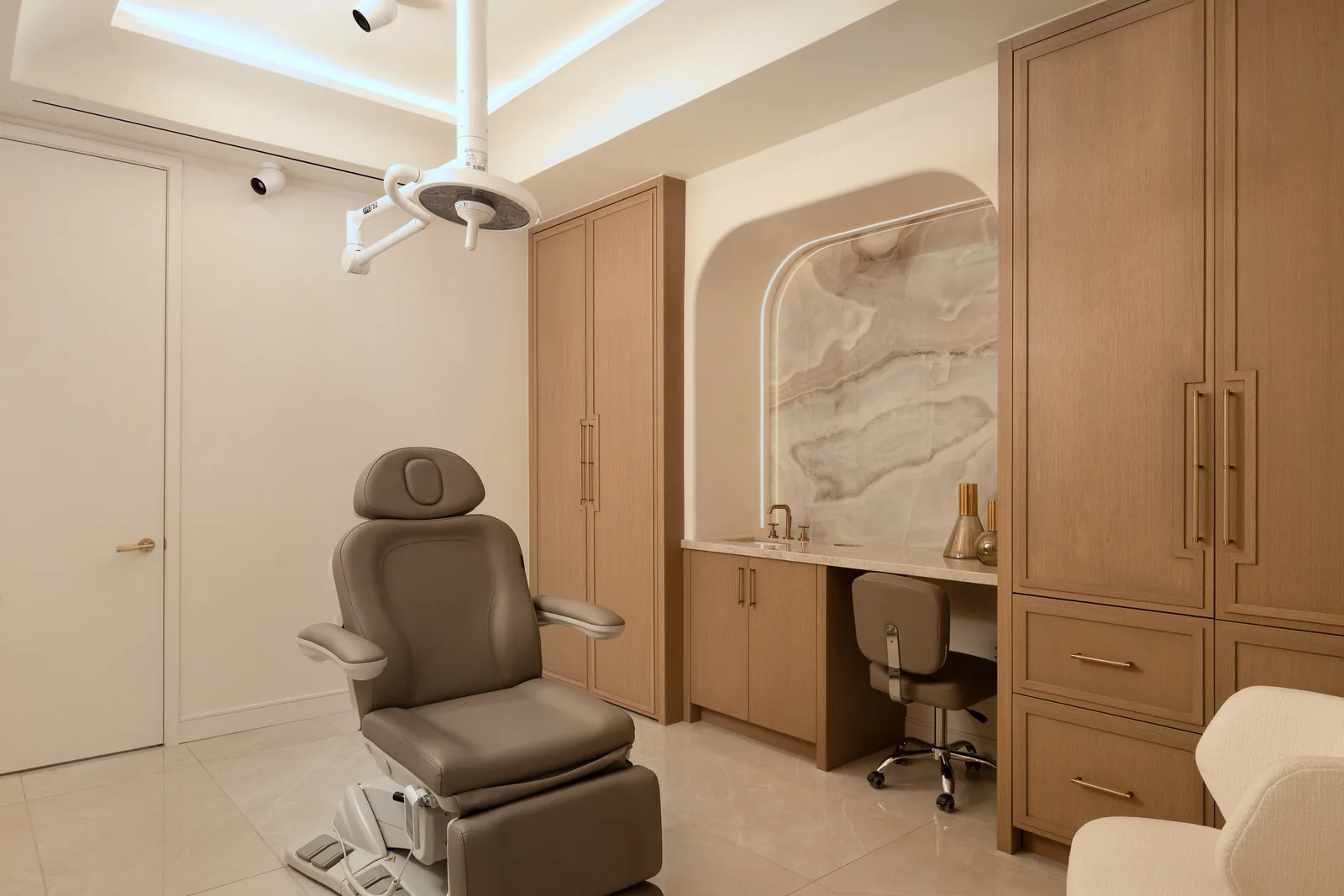
Labiaplasty is generally performed as an outpatient procedure. Depending on the plan established after consultation and examination, some patients may be candidates for treatment in Dr. Howarth’s Scottsdale office procedure room using local anesthesia; other surgical plans may require sedation in an appropriate surgical setting. Dr. Howarth performs the procedure and reviews the operative plan with you before surgery begins.
Your plan, confirmed with you
Dr. Howarth reviews the planned changes and surgical markings with you and confirms the operative plan. The clinical team verifies the preparation and medication instructions specific to your procedure. The anesthesia plan and applicable risks are reviewed before the procedure begins.
Care matched to your surgical plan
Dr. Howarth performs the procedure using the technique discussed with you. Anesthesia and monitoring depend on your health history, the extent of surgery, and whether another procedure is being performed.
Clear instructions and a direct next step
Before discharge, the clinical team reviews written instructions for hygiene, medications, activity limits, warning signs, when and how to contact the practice, and the timing of follow-up. Any transportation and responsible-adult requirements are explained in advance based on the anesthesia and surgical plan.
CLEAR INFORMATION. INFORMED CHOICES.
Labiaplasty Safety, Risks, and Limitations
Labiaplasty is surgery and carries potential complications. [3] Careful patient selection, individualized surgical planning, and appropriate postoperative care are intended to reduce risk, but complications cannot be eliminated. Before surgery, Dr. Howarth reviews how anatomy, health history, the proposed technique, nicotine exposure, medications, and the recovery plan may affect individual risk. Informed consent also includes what labiaplasty may change, what it cannot guarantee, and when an alternative—or no surgery—may be the better choice. When sedation is planned, the applicable anesthesia risks are reviewed separately.
Swelling, bruising, tenderness, and temporary discomfort are expected during early healing.
Possible Complications Include
- Bleeding or hematoma
- Infection, delayed healing, wound separation, or tissue loss
- Unfavorable healing, adhesions, asymmetry, or contour irregularity
- Persistent pain, altered sensation, or pain with intercourse
- Under- or overcorrection, dissatisfaction, or the need for revision surgery
- Anesthesia-related complications, depending on the anesthesia plan
What Surgery Cannot Guarantee
- Perfect symmetry or a specific appearance
- Complete relief of every symptom
- Improved libido, sensation, or sexual satisfaction
- A result unaffected by aging, pregnancy, childbirth, or other tissue changes
- Treatment of vaginal laxity or concerns outside the external labial anatomy
HEALING HAPPENS IN STAGES
Labiaplasty Recovery
Recovery after labiaplasty varies with the procedure, the demands of daily life, and individual healing. The stages below are a general overview rather than a schedule. Your surgeon will provide instructions based on your procedure and progress.
Swelling, tenderness, and bruising are common early. Most patients plan for a quieter start while following their postoperative instructions.
Comfort, work demands, and individual healing guide the return to everyday routines. Physically demanding activities may require more time.
Exercise, intimacy, and activities that create pressure or friction usually resume later, after healing has progressed and your surgeon provides clearance.
Swelling and firmness continue to settle as healing progresses. The final shape becomes easier to assess as the tissues recover over time.
Care That Begins With Listening
Choosing a Labiaplasty Surgeon
Choosing a labiaplasty surgeon involves more than reviewing a technique. Look for appropriate board certification, experience evaluating vulvar anatomy, familiarity with more than one surgical approach, balanced counseling about normal variation and alternatives, and a clear plan for follow-up and complications.
Ashley Howarth, MD, is a board-certified plastic surgeon in Scottsdale, an Instructor in Plastic Surgery at Mayo Clinic, and a coauthor of the peer-reviewed article “Labiaplasty” in the Journal of Women’s Health. Plastic and reconstructive surgery residents rotate with her to gain experience in aesthetic surgery.
Dr. Howarth’s approach is anatomy-led rather than based on a standardized appearance. She considers your symptoms, tissue characteristics, goals, and whether surgery is likely to offer meaningful benefit before recommending any technique. Dr. Howarth performs the procedure herself.
TRAINING
PLASTIC SURGERY
COAUTHOR

Research & Women’s Health
Published Labiaplasty Research
Dr. Howarth is a coauthor of Labiaplasty, a peer-reviewed article published in the Journal of Women’s Health with colleagues including plastic surgeons from Mayo Clinic Arizona. The article is indexed in PubMed and places her work within the broader women’s health literature.
The publication reflects the same principle used in consultation: labiaplasty is an individualized medical decision grounded in anatomy, symptoms, goals, normal variation, and whether surgery is appropriate.
SCOTTSDALE · MODERN OFFICE SETTING
BEFORE & AFTER GALLERIES
Private Labiaplasty Before & After Gallery
Labiaplasty before-and-after photographs can feel deeply personal. As both a woman and a surgeon, Ashley Howarth, MD, FACS, understands the trust involved in sharing them. Howarth Plastic Surgery in Scottsdale makes galleries of real patient results available by request through private before-and-after reviews.
Keeping labiaplasty before-and-after galleries off unrestricted public pages helps preserve patient dignity and clinical context while limiting casual viewing, unauthorized reposting, and collection by automated systems or AI agents.
During your private before-and-after review, you can see a range of labiaplasty results and discuss how starting anatomy, surgical choices, healing, and time influenced each outcome. These photographs can support an informed consultation, but individual results vary, and no image can predict your outcome.
PATIENT CASE SUMMARIES
Selected Labiaplasty Case Summaries
These deidentified case summaries illustrate how Ashley Howarth, MD, FACS, evaluates labiaplasty at Howarth Plastic Surgery in Scottsdale. They include functional discomfort, asymmetry, technique selection, and consultations in which no surgery is recommended or surgery is postponed. Each summary connects the patient’s concern and clinical evaluation with the procedure performed or recommendation made, the clinical reasoning, and follow-up. To protect patient privacy, select identifying details have been generalized or modified. The clinical concerns, treatment decisions, procedures, and follow-up remain faithful to the underlying patient records. Individual anatomy, healing, and results vary.
Case 01
Functional discomfort
Exercise and athleisure wear caused recurrent labial friction
Patient presentation
The patient was an athlete who reported recurrent rubbing and chafing during running and cycling, along with discomfort in swimsuits and other athleisure wear.
Clinical evaluation
Dr. Howarth mapped where the symptoms occurred, which labia minora tissue contributed, whether activity or clothing changed the pattern, and whether another condition required evaluation.
Procedure performed
Dr. Howarth performed a measured labia minora reduction after examination confirmed that the anatomy corresponded with the functional symptoms.
Clinical rationale
The purpose is to connect the operation to the documented concern rather than reduce tissue by a standard amount.
Follow-up
At follow-up, the incisions were healing appropriately, and the patient reported less friction as she gradually returned to exercise.
Case 02
Asymmetry
One-sided pinching during yoga prompted evaluation of labial asymmetry
Patient presentation
The patient reported one-sided pinching during yoga and in fitted leggings. One labium was longer and thicker than the other, creating both a visible difference and a localized functional symptom.
Clinical evaluation
Dr. Howarth compared length, thickness, edge character, tissue quality, symptom location, and the different amount of reduction each side could safely tolerate.
Procedure performed
Dr. Howarth performed side-specific labia minora reductions, tailoring the amount removed to the starting length, thickness, and tissue quality of each labium.
Clinical rationale
Equal treatment of unequal anatomy does not necessarily create balance.
Follow-up
As swelling settled, the side-specific reduction remained consistent with the planned endpoint; normal residual asymmetry was reviewed with the patient.
Case 03
Technique selection
Choosing a Technique to Preserve the Natural Edge
Patient presentation
The patient wanted to reduce the prominence of her labia minora while retaining their natural outer edge.
Clinical evaluation
Dr. Howarth assessed where the excess tissue was located, the shape and quality of the labial edge, and whether a trim or wedge approach better suited the patient’s anatomy and goal.
Procedure performed
Dr. Howarth performed a wedge reduction, removing a localized section of tissue while preserving the remaining outer edge.
Clinical rationale
The technique followed this patient’s anatomy and priorities. A wedge is one option, not the right technique for every patient.
Follow-up
At follow-up, Dr. Howarth assessed incision healing and reviewed how swelling could affect the final contour.
Case 04
Honest guidance
Reassurance or no surgery is the better recommendation
Patient presentation
Concern about normal variation without persistent symptoms or a clearly defined surgical goal.
Clinical evaluation
Normal anatomy, expectations, health history, and whether an operation is likely to create meaningful benefit.
Recommendation
Surgery was not recommended. Dr. Howarth provided reassurance about normal variation and advised observation rather than an operation unlikely to create meaningful benefit.
Clinical rationale
A trustworthy consultation includes the possibility that treatment is unnecessary or unlikely to improve the concern.
Follow-up
No operation was scheduled. Dr. Howarth recommended observation because examination did not identify a concern for which surgery was likely to offer meaningful benefit.
Case 05
Intimacy-related discomfort
Tugging during intimacy needs a broader evaluation
Patient presentation
A patient associates pulling or discomfort during intimacy with prominent inner-labia tissue.
Clinical evaluation
The location and timing of symptoms, labia minora anatomy, scar history, pelvic-floor symptoms, dryness, and other possible contributors to pain.
Procedure performed
A conservative labia minora reduction was performed after examination confirmed that the tissue plausibly corresponded with the reported pulling during intimacy.
Clinical rationale
Labiaplasty should not be presented as a guaranteed treatment for pain or sexual function, particularly when the source of symptoms is uncertain.
Follow-up
At follow-up, healing and sensation were assessed, and the patient described how the original pulling symptom had changed over time.
Case 06
Timing and life plans
The right plan may include waiting
Patient presentation
A patient is interested in labiaplasty but anticipates pregnancy, major weight change, or a period when postoperative restrictions would be difficult.
Clinical evaluation
Current anatomy and symptoms, the stability of the concern, practical recovery support, future plans, and whether delaying treatment changes the likely benefit.
Recommendation
Surgery was postponed until the patient’s recovery support and anticipated life changes allowed the treatment and postoperative restrictions to fit safely.
Clinical rationale
A technically possible operation is not automatically well timed; an individualized plan includes the patient’s life circumstances and tolerance for future change.
Follow-up
At reevaluation, the patient’s timing, recovery support, and life plans were reviewed before deciding whether to proceed with surgery.
FROM CONSULTATION TO CONFIDENCE
Labiaplasty Consultation and Patient Care Coordination
After you contact the practice, your patient care coordinator helps you understand the process, answers general questions about labiaplasty, preparation, and recovery, and organizes practical next steps. Questions specific to your health, anatomy, surgical plan, or recovery are answered by Dr. Howarth or her clinical team.

A thoughtful conversation
Your patient care coordinator can arrange an in-person or virtual consultation with Dr. Howarth and explain what information to have ready. The consultation focuses on your concerns, health history, and goals. An in-person physical examination is completed before the operative plan is finalized.
Clear information before you decide
After Dr. Howarth recommends a plan, your patient care coordinator can review the written cost estimate, available financing options, scheduling requirements, forms, and next steps. Your coordinator can explain the practice process and help you understand what is needed before you decide whether to schedule.
Practical details, clearly organized
If you are traveling to Scottsdale from elsewhere in Arizona or out of state, your patient care coordinator can help align required appointment dates and share planning guidance for consultation, surgery, and follow-up. Dr. Howarth and her clinical team provide individualized medical and recovery guidance.
PLANNING WITH CLARITY
Labiaplasty Cost, Financing, and Travel to Scottsdale
Labiaplasty Cost
At Howarth Plastic Surgery in Scottsdale, labiaplasty typically costs $7,500 to $16,000. This range reflects differences between unilateral, in-office, bilateral, and combined labiaplasty plans. Revision surgery or a plan involving additional procedures may cost more. Your final fee depends on the anatomy being addressed, the procedure Dr. Howarth recommends, anesthesia, and surgical setting. After consultation, you will receive a personalized written estimate for the recommended plan.
Financing Options
Howarth Plastic Surgery is a cash-pay practice and does not accept or bill insurance. Your patient care coordinator can review financing through PatientFi and CareCredit, subject to third-party approval.
Planning Care in Scottsdale
If you are traveling from elsewhere in Arizona or out of state, out-of-town patient information can help you plan around consultation, surgery, and follow-up. Required appointment dates, how long to remain nearby, and when travel may resume are individualized. An initial consultation may take place virtually, but an in-person examination is required before the operative plan is finalized.
Your Questions, Answered
Labiaplasty Frequently Asked Questions
Labiaplasty reduces or reshapes the labia minora, or inner folds of the vulva. Concerns involving the labia majora or clitoral hood are evaluated separately and are not automatically part of labia minora reduction.
The choice depends on your anatomy, tissue characteristics, symptoms, goals, and the tradeoffs of each approach. After an examination, Dr. Howarth explains which technique she recommends and why.
Some patients may be candidates for an office-based procedure with local anesthesia, while other surgical plans may benefit from sedation in an appropriate surgical setting. The plan is determined after consultation and examination.
Recovery happens in stages. Patients usually plan for a quieter early period followed by a gradual return to work, exercise, and intimacy. Timing varies with the procedure, daily demands, and individual healing.
Temporary changes in sensation can occur during healing, and altered sensation is a recognized surgical risk. Dr. Howarth discusses how the proposed technique relates to your anatomy, goals, and individual risks.
Labiaplasty incisions are usually well hidden within the natural folds of the labial tissue. Once healed, scarring is typically subtle, although appearance varies with technique and individual healing.
In some cases, labiaplasty may be combined with another procedure. Dr. Howarth considers your health history, anesthesia, total operative time, recovery needs, and goals before recommending a combined plan.
Pregnancy and childbirth may change labial tissue and affect a prior result. If you are considering pregnancy, Dr. Howarth can discuss how that may affect surgical timing.
No. Labiaplasty changes external labial tissue; it does not tighten the vaginal canal. During consultation, Dr. Howarth can determine whether labiaplasty addresses the concern you want to discuss.
At Howarth Plastic Surgery in Scottsdale, labiaplasty typically costs $7,500 to $16,000. This range reflects differences between unilateral, in-office, bilateral, and combined labiaplasty plans. Revision surgery or a plan involving additional procedures may cost more. Your final fee depends on the anatomy being addressed, the procedure Dr. Howarth recommends, anesthesia, and surgical setting. After consultation, you will receive a personalized written estimate for the recommended plan.
Related Care
Related Labiaplasty Procedures
These pages explain options that may be considered separately depending on your anatomy, goals, and surgical history. You can also review questions to ask at a labiaplasty consultation before your visit.
BEGIN HERE
Request a Consultation
Tell us what you are considering. A member of our patient care team will follow up with consultation availability and next steps.

Megan S.
Patient Coordinator
Prefer to talk or text?
Selected Medical References