
PROCEDURE OVERVIEW
What Is a Tummy Tuck?
A tummy tuck, or abdominoplasty, removes selected loose abdominal skin and may tighten the abdominal fascia when indicated. It is designed for contouring rather than weight loss, and the result depends on the tissues contributing to your concern.
Liposuction removes selected subcutaneous fat but does not remove substantial loose skin or tighten the abdominal wall. A scar-only concern may need a different evaluation.

EVERY DECISION IS PERSONAL
Why Women Consider Tummy Tuck Surgery
Women may consider a tummy tuck for skin that folds or hangs, abdominal-wall laxity after pregnancy or weight change, a changed navel or lower-abdominal contour, or a concern that liposuction alone would not address.
- Loose skin after pregnancy, aging, or weight change
- Abdominal-wall laxity contributing to contour
- Lower-abdominal skin, fat, navel, or scar concerns
- A mixed concern involving more than one tissue layer
- A defined goal and realistic expectations about the scar and recovery
A thoughtful examination separates skin, fat, fascia, the navel, and scars before a plan is recommended.


A THOUGHTFUL CONVERSATION
Tummy Tuck Candidacy, Alternatives, and Consultation
Candidacy depends on health, anatomy, nicotine exposure, weight stability, pregnancy plans, expectations, and the ability to complete a meaningful recovery. Tell Dr. Howarth about prior abdominal surgery, scars, hernia concerns, pain, medical conditions, medications, and future pregnancy plans.
Alternatives may include liposuction for selected fat with suitable skin, focused C-section scar evaluation, more time, weight stabilization, or another evaluation when the history or examination supports it. An in-person examination is completed before the operative plan is finalized.
When Surgery May Not Be the Right Choice
The purpose of consultation is to identify the most appropriate next step—not to presume that an operation is needed. Dr. Howarth may recommend waiting, further evaluation, a different setting or approach, nonsurgical care, or no surgery when that is the more appropriate recommendation.

PERSONAL DECISIONS. THOUGHTFUL CARE.
Privacy During Body Surgery Consultation and Care
Questions about body surgery can feel personal. When you contact us, you can indicate whether you prefer a call or text. Your consultation with Dr. Howarth is a thoughtful conversation about your anatomy, concerns, and goals.
JUDGMENT MATTERS
Choosing a Tummy Tuck Surgeon: Why Dr. Howarth
Choosing a tummy tuck surgeon involves more than comparing a scar or technique. Look for appropriate board certification, careful assessment of skin, fat, fascia, the navel, and prior scars, balanced counseling about alternatives, and a clear plan for recovery and complications.
Ashley Howarth, MD, FACS, is a board-certified plastic surgeon in Scottsdale, an Instructor in Plastic Surgery at Mayo Clinic, and a Fellow of the American College of Surgeons. Her background includes nine years of formal surgical training.
Dr. Howarth relates your goals to the tissues creating the concern, then explains whether focused, combined, or staged care is appropriate. Her recommendation connects incision placement, abdominal-wall planning, the navel, adjacent contours, and recovery rather than treating them as separate decisions.
Your consultation should leave you understanding what the operation may change, what it cannot promise, and why the recommended scope fits your anatomy, health, and goals.
PLASTIC SURGERY
OF SURGEONS

SCOTTSDALE · MODERN OFFICE SETTING
FROM CONSULTATION TO CONFIDENCE
Tummy Tuck Consultation and Patient Care Coordination
From your first inquiry, your patient care coordinator helps organize the practical next steps. Your coordinator can assist with scheduling, estimates, financing, forms, travel, and follow-up logistics. Dr. Howarth and her clinical team answer medical questions and make all clinical recommendations.

A thoughtful beginning.
Your patient care coordinator can arrange an in-person or virtual consultation with Dr. Howarth and explain what photographs, records, or other information to have ready. The consultation focuses on your concerns, health history, anatomy, and goals. An in-person physical examination is completed before the operative plan is finalized.
Clear information before you decide.
After Dr. Howarth recommends a plan, your patient care coordinator can review the written cost estimate, available financing options, scheduling requirements, forms, and next steps. Your coordinator can explain the practice process and help you understand what is needed before you decide whether to schedule.
Practical details, clearly organized.
If you are traveling to Scottsdale from elsewhere in Arizona or out of state, your patient care coordinator can help align required appointment dates and practical planning for consultation, surgery, and follow-up. Dr. Howarth and her clinical team provide individualized medical and recovery guidance.
PLANNED FOR YOUR ANATOMY
Tummy Tuck Options and Tradeoffs
Extent of Skin Treatment
The amount and distribution of loose skin help determine the possible operative scope and incision plan.
Abdominal-Wall Planning
Fascial plication may be considered when examination identifies laxity that fits surgical treatment.
Navel and Scar Planning
Navel involvement and incision placement depend on skin movement, anatomy, and prior scars.
Liposuction or Another Procedure
Selected fat or another concern may be addressed separately, together, or in stages when appropriate.
A CLEAR, INDIVIDUALIZED PLAN
What to Expect on the Day of Tummy Tuck Surgery
The final operation, setting, anesthesia, markings, preparation, transportation, and support plan are confirmed after consultation and health review. Dr. Howarth reviews the operative plan with you before surgery begins.
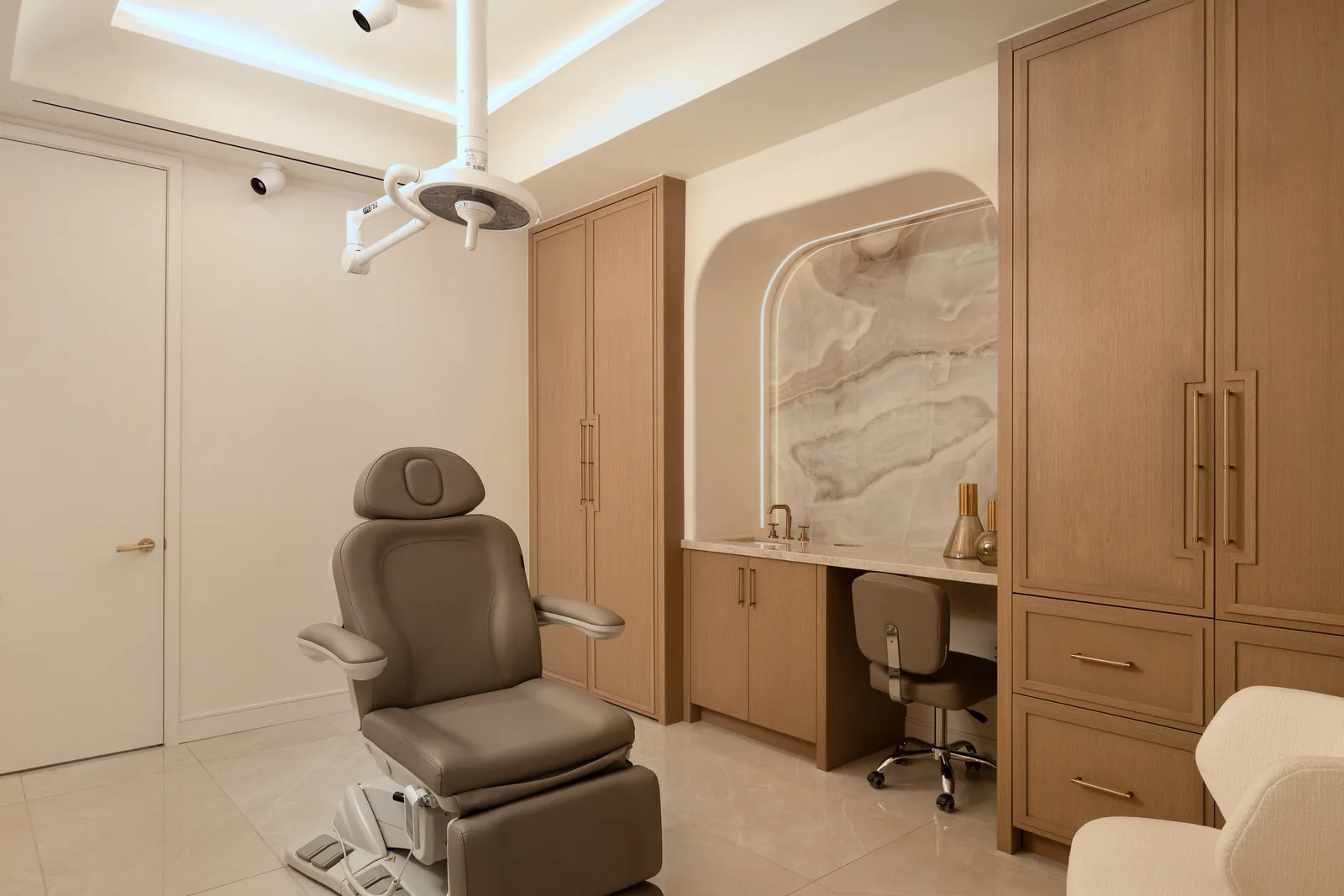
Your plan, confirmed with you.
Dr. Howarth reviews markings and the selected operation. The team confirms preparation, medications, fasting when required, transportation, and support.
Care matched to the confirmed operation.
Dr. Howarth treats the selected skin, fascia, navel, scar, or fat according to the individualized operative plan.
Clear instructions and a direct next step.
Before discharge, the team reviews mobility, incision care, garments or drains when applicable, medication, warning signs, and follow-up.
CLEAR INFORMATION. INFORMED CHOICES.
Tummy Tuck Safety, Risks, and Limitations
Tummy tuck surgery has general surgical risks and procedure-specific considerations. Risk varies with health, nicotine exposure, prior scars, operative extent, combined procedures, mobility, and healing. Dr. Howarth reviews how these factors apply to the proposed plan.
Possible Complications Include
- Bleeding, infection, or fluid collection
- Delayed healing, wound separation, or tissue loss
- Changes in scars, contour, symmetry, or sensation
- Persistent swelling, firmness, discomfort, or numbness
- Anesthesia or blood-clot complications
- The possibility of additional treatment
What Surgery Cannot Guarantee
- A perfectly flat abdomen
- Exact symmetry or a particular navel appearance
- An invisible or completely hidden scar
- Relief of pain or every functional symptom
- Results unchanged by pregnancy, weight change, aging, or healing
HEALING HAPPENS IN STAGES
Tummy Tuck Recovery
Recovery varies with the operative scope, incision, fascial work, possible liposuction, daily demands, and individual healing. These stages are a general overview; Dr. Howarth’s instructions guide each return to activity.
Comfortable movement first
Early care focuses on mobility, incision support, and the instructions for the confirmed operation.
Everyday activities, gradually
Work, driving, childcare, and travel depend on mobility, medication, follow-up, and healing.
Build back after clearance
Lifting, exercise, and caregiving resume gradually because skin and deeper tissues heal differently.
Healing continues
Swelling settles and scars mature; pregnancy, weight change, aging, and healing can influence results.
RESULTS WITH CONTEXT
Reviewing Tummy Tuck Results Thoughtfully
The most useful examples show the starting distribution of skin, fat, fascia, scars, and asymmetry, the exact operation, and the healing stage. Authorized cases may be viewed privately with that context. A result cannot promise a flat abdomen, exact symmetry, or an invisible scar.
BEFORE & AFTER GALLERIES
Private Tummy Tuck Before & After Gallery
Tummy Tuck before-and-after photographs can feel deeply personal. As both a woman and a surgeon, Ashley Howarth, MD, FACS, understands the trust involved in sharing them. Howarth Plastic Surgery in Scottsdale makes galleries of real patient results available by request through private before-and-after reviews.
Keeping tummy tuck before-and-after galleries off unrestricted public pages helps preserve patient dignity and clinical context while limiting casual viewing, unauthorized reposting, and collection by automated systems or AI agents.
During your private before-and-after review, you can see a range of tummy tuck results and discuss how starting anatomy, surgical choices, healing, and time influenced each outcome. These photographs can support an informed consultation, but individual results vary, and no image can predict your outcome.
PATIENT CASE SUMMARIES
Selected Tummy Tuck Case Summaries
These deidentified tummy tuck case summaries show how Ashley Howarth, MD, FACS, evaluates abdominoplasty at Howarth Plastic Surgery in Scottsdale, Arizona. Each case connects the patient's abdominal concern with examination of skin, fat, muscle support, scars, and health factors before describing the procedure performed or recommendation made. To protect patient privacy, some nonclinical identifying details have been generalized or modified. Anatomy, procedures, healing, and results vary.
Case 01
SKIN LAXITY AND DIASTASIS
Loose abdominal skin and muscle separation required more than fat removal alone
Patient presentation
The patient described a persistent lower-abdominal fold and a sense of reduced core support after pregnancy. Stable weight and exercise had not corrected the skin or central abdominal contour.
Clinical evaluation
Dr. Howarth evaluated abdominal skin excess, rectus separation, fat distribution, the umbilicus, prior scars, posture, hernia symptoms, and overall surgical candidacy. The principal findings involved skin and abdominal wall support rather than isolated fat.
Procedure performed
Dr. Howarth performed a full tummy tuck with removal of selected excess skin and repair of the abdominal wall findings identified in the operative plan.
Clinical rationale
Liposuction could reduce subcutaneous fat but would not remove the loose skin or correct muscle separation. Abdominoplasty addressed the structures creating the concern.
Follow-up
At follow-up, incision and umbilical healing, abdominal swelling, posture, garment use, activity restrictions, and gradual return to core exercise were reviewed.
Case 02
POST-WEIGHT-LOSS SKIN EXCESS
Stable weight loss left abdominal skin excess that required excisional contouring
Patient presentation
The patient had maintained a substantial weight change but remained bothered by hanging abdominal skin, moisture, and difficulty with fitted clothing and exercise.
Clinical evaluation
Dr. Howarth assessed the amount and distribution of skin excess, residual fat, abdominal wall support, scar position, nutritional status, weight stability, medical history, and the expected extent of the incision.
Procedure performed
Dr. Howarth performed abdominoplasty with the skin-removal pattern selected for the patient's lower-abdominal excess and existing anatomy.
Clinical rationale
The concern was dominated by redundant skin rather than a localized fat deposit. Excisional surgery offered a direct treatment while requiring a clear discussion of scar length and recovery.
Follow-up
Follow-up focused on incision care, swelling, garment use, activity progression, scar maturation, and monitoring the contour as tissues settled.
Case 03
MINI OR FULL ABDOMINOPLASTY
Skin and muscle findings above the navel made a full tummy tuck more appropriate than a mini procedure
Patient presentation
The patient asked for a mini tummy tuck because most of the visible laxity seemed to be below the navel. She hoped to minimize the extent of surgery and recovery.
Clinical evaluation
Dr. Howarth examined skin mobility above and below the umbilicus, muscle separation, scar position, fat distribution, umbilical relationships, and how much correction a limited lower-abdominal operation could reasonably provide.
Procedure performed
Dr. Howarth performed a full abdominoplasty after the examination showed that a limited procedure would leave important upper-abdominal and muscle findings unaddressed.
Clinical rationale
Choosing the smallest operation is useful only when it treats the actual anatomy. The full procedure matched the distribution of laxity and avoided presenting a mini tummy tuck as an equivalent substitute.
Follow-up
The patient was followed for umbilical and lower-abdominal incision healing, swelling, posture, activity progression, and the evolving abdominal contour.
Case 04
PRIOR ABDOMINAL SCARS
Existing abdominal scars changed the incision and tissue-safety plan
Patient presentation
The patient wanted improvement in loose abdominal skin and contour but had scars from prior abdominal operations. She was concerned about whether those scars would limit a tummy tuck.
Clinical evaluation
Dr. Howarth reviewed the location and quality of each scar, abdominal skin mobility, blood-supply considerations, muscle support, possible hernia symptoms, medical history, and the relationship between the old scars and a new incision.
Procedure performed
Dr. Howarth performed a tummy tuck with the incision design and tissue handling adjusted around the existing scars.
Clinical rationale
Prior scars can alter both design and tissue safety. The plan was based on the individual scar pattern rather than applying a standard abdominoplasty template.
Follow-up
Follow-up included careful monitoring of incision healing, skin circulation, swelling, abdominal support, and gradual activity progression.
Case 05
TUMMY TUCK WITH LIPOSUCTION
Central skin laxity and flank fullness were treated with complementary procedures
Patient presentation
The patient described a loose central abdomen and fullness extending into the flanks. Her weight was stable, and she wanted the abdomen and waist considered together.
Clinical evaluation
Dr. Howarth separated the contribution of skin, abdominal wall, subcutaneous fat, and visceral contour. She assessed skin quality and circulation to determine where liposuction could be added safely to an abdominoplasty plan.
Procedure performed
Dr. Howarth performed a tummy tuck for the abdominal skin and wall findings with targeted liposuction of selected flank areas.
Clinical rationale
The procedures addressed different tissues. The tummy tuck treated central skin and support, while limited liposuction refined adjacent fat deposits without being used as a substitute for skin removal.
Follow-up
Abdominal and flank swelling, garment use, incision healing, mobility, and the gradual transition between treated areas were reviewed during follow-up.
Case 06
VISCERAL CONTOUR AND WEIGHT STABILITY
A tummy tuck was not recommended for an abdomen shaped mainly by internal fat and changing weight
Patient presentation
The patient requested abdominoplasty for abdominal projection but reported ongoing weight change. The skin excess was limited compared with the firmness and fullness of the abdomen.
Clinical evaluation
Dr. Howarth evaluated skin laxity, pinchable subcutaneous fat, abdominal wall support, visceral contour, weight trajectory, medical history, and whether surgery could address the patient's main concern.
Recommendation
Dr. Howarth recommended weight and medical optimization before reconsidering surgery and explained that a tummy tuck would not remove visceral fat.
Clinical rationale
Abdominoplasty can address selected skin and abdominal wall findings, but it is not a weight-loss operation and does not treat fat located inside the abdominal cavity. Proceeding would not have matched the dominant cause of the contour.
Follow-up
No operation was scheduled. Reevaluation was offered after weight stability and any recommended medical care had been established.
PLANNING WITH CLARITY
Tummy Tuck Cost, Financing, and Travel to Scottsdale
Tummy Tuck Cost
At Howarth Plastic Surgery in Scottsdale, tummy tuck surgery typically costs $13,000 to $26,500. Your final fee depends on whether the plan is mini, full, extended, or fleur-de-lis, as well as anesthesia, surgical setting, and whether liposuction or another procedure is included. After consultation with Dr. Howarth, you will receive a personalized written estimate for the plan she recommends.
Financing Options
Howarth Plastic Surgery is a cash-pay practice and does not accept or bill insurance. Your patient care coordinator can review financing through PatientFi and CareCredit, subject to third-party approval.
Planning Care in Scottsdale
If you are traveling from elsewhere in Arizona or out of state, out-of-town patient information can help you plan around consultation, surgery, and follow-up. Required appointment dates, how long to remain nearby, and when travel may resume are individualized. An initial consultation may take place virtually, but an in-person examination is required before the operative plan is finalized.
YOUR QUESTIONS, ANSWERED
Tummy Tuck Frequently Asked Questions
A tummy tuck removes selected loose abdominal skin and may tighten the abdominal fascia when indicated. The exact plan depends on the tissues creating the concern.
No. Abdominoplasty is a contouring operation. Stable weight and realistic expectations are part of candidacy.
Liposuction removes selected subcutaneous fat. It does not remove substantial loose skin or tighten fascia. Some plans may include both, but the procedures are not interchangeable.
No. Fascial plication is considered when examination identifies laxity that fits the operation. It is not automatically included or described as a guaranteed functional repair.
Scar length and position depend on anatomy, loose-skin distribution, operative scope, and prior scars. Clothing may cover part of a scar, but concealment cannot be promised.
Navel planning depends on skin movement and the operation selected. Dr. Howarth explains whether and how it is involved after examination.
Sometimes an existing lower-abdominal scar may be incorporated into a broader plan, but a focused C-section scar concern may require a different evaluation.
Mobility, medication, work, driving, lifting, exercise, travel, and caregiving return in stages according to the operation and healing.
Yes. Pregnancy and meaningful weight change can alter abdominal skin, fascia, fat, and contour after surgery.
At Howarth Plastic Surgery in Scottsdale, tummy tuck surgery typically costs $13,000 to $26,500. Your final fee depends on whether the plan is mini, full, extended, or fleur-de-lis, as well as anesthesia, surgical setting, and whether liposuction or another procedure is included. After consultation with Dr. Howarth, you will receive a personalized written estimate for the plan she recommends.
Related Care
Related Body Procedures
These pages help distinguish whether skin, localized fat, muscle, a scar, or broader body-contouring priorities should lead the conversation.
BEGIN HERE
Request a Consultation
Tell us what you are considering. A member of our patient care team will follow up with consultation availability and next steps.

Megan S.
Patient Coordinator
Prefer to talk or text?
Selected Medical References