
UNDERSTAND THE PROBLEM FIRST
What Is Breast Revision Surgery?
Breast revision addresses a concern after breast augmentation or another breast operation. When implants are involved, it may also be called breast implant revision. There is no single revision procedure; the plan begins by identifying what changed and what is contributing.
A size preference is different from capsular contracture, implant malposition, rupture, visible rippling, thin tissue, asymmetry, or a change after a prior lift or reduction. Similar-looking concerns can have different causes, so records, examination, and imaging when indicated may change the recommendation.
This page covers broad corrective planning. Breast Implant Removal focuses on explant-first decisions; Breast Implant Illness focuses on systemic symptoms and their evaluation without assuming a single cause; and Complex Breast Revision addresses structurally difficult, multiply operated, or potentially staged cases.

A CHANGE IN THE BREAST OR THE GOAL
Concerns Breast Revision May Address
Some women notice a physical change. Others have a result that never felt right or a different preference years later. If a prior experience has made you cautious, consultation can begin with understanding what changed; it does not commit you to another operation.
- Change implant size, type, feel, or overall direction
- Evaluate firmness, discomfort, suspected rupture, or another implant concern
- Address implant position, breast position, or visible asymmetry
- Discuss rippling, implant visibility, thin tissue, stretched skin, or scars
- Understand whether focused correction, broader revision, removal, or observation fits
The goal is a clear diagnosis and a focused plan—not automatically doing more surgery.


A DIAGNOSTIC CONVERSATION
Breast Revision Candidacy, Alternatives, and Consultation
During consultation, Dr. Howarth reviews the prior procedure, implant information, incisions, symptoms, breast position, skin, tissue, capsule, pocket, scars, asymmetry, health history, and goals. Operative reports, device cards, photographs, and relevant imaging can be helpful when available.
Evaluation clarifies what may be contributing, which concern matters most, and what the tissue may support. The discussion may include observation, implant exchange, implant removal, capsule or pocket work, breast lift, fat transfer, or a staged plan when appropriate.
When Surgery May Not Be the Right Choice
The purpose of consultation is to identify the most appropriate next step—not to presume that an operation is needed. Dr. Howarth may recommend waiting, further evaluation, a different setting or approach, nonsurgical care, or no surgery when that is the more appropriate recommendation.

PERSONAL DECISIONS. THOUGHTFUL CARE.
Privacy During Breast Surgery Consultation and Care
Questions about breast surgery can feel personal. When you contact us, you can tell us whether you prefer a call or text. Your consultation with Dr. Howarth is a thoughtful conversation about your anatomy, concerns, and goals.
EXPERIENCE MEETS CAREFUL JUDGMENT
Choosing a Breast Revision Surgeon: Why Dr. Howarth
Ashley Howarth, MD, FACS, is a board-certified plastic surgeon in Scottsdale, a Diplomate of the American Board of Plastic Surgery, an Instructor in Plastic Surgery at Mayo Clinic, and a Fellow of the American College of Surgeons. Her background includes nine years of formal surgical training in general, plastic, and reconstructive surgery.
Revision requires identifying the cause, understanding altered anatomy, and explaining what existing tissue, scars, and prior pocket work may allow another operation to improve. Dr. Howarth evaluates the implant, capsule, pocket, skin, breast tissue, position, and priorities together.
Your consultation should leave you understanding the likely cause, the correction she recommends, realistic tradeoffs, and when a narrower plan, staged approach, or no surgery may be reasonable.
Dr. Howarth participates in the National Breast Implant Registry (NBIR), the national device-safety registry maintained by The Plastic Surgery Foundation.
PLASTIC SURGERY
OF SURGEONS

SCOTTSDALE · MODERN OFFICE SETTING
FROM CONSULTATION TO CONFIDENCE
Breast Revision Consultation and Patient Care Coordination
From your first inquiry, your patient care coordinator helps organize scheduling, records, estimates, financing, forms, travel, and follow-up logistics. Dr. Howarth and her clinical team answer medical questions and make all clinical recommendations.

A thoughtful beginning.
Your patient care coordinator can arrange an in-person or virtual consultation and explain which operative reports, device cards, photographs, or imaging to have ready. An in-person examination is completed before the operative plan is finalized.
Clear information before you decide.
After Dr. Howarth recommends a plan, your patient care coordinator can review the written estimate, available financing options, scheduling requirements, forms, and next steps. The process is organized around the actual revision rather than a generic package.
Practical details, clearly organized.
If you are traveling to Scottsdale, your coordinator can help align required visits and planning for consultation, surgery, and follow-up. Dr. Howarth and her clinical team provide individualized medical and recovery guidance.
OPTIONS FOLLOW THE FINDINGS
What Breast Revision May Involve
Implant Exchange
An implant may be changed when size, type, position, rupture, or another device concern guides the decision.
Implant Removal
Removal without replacement is a separate pathway with capsule, tissue, and expected post-removal shape decisions.
Capsule or Pocket Work
Release, partial capsule removal, or pocket correction may be considered when the diagnosis and tissue support it.
Tissue and Position
Lift, reshaping, or fat transfer may be considered when breast position, contour, or implant coverage also matters.
A PLAN BASED ON THE ACTUAL FINDINGS
What to Expect on the Day of Breast Revision
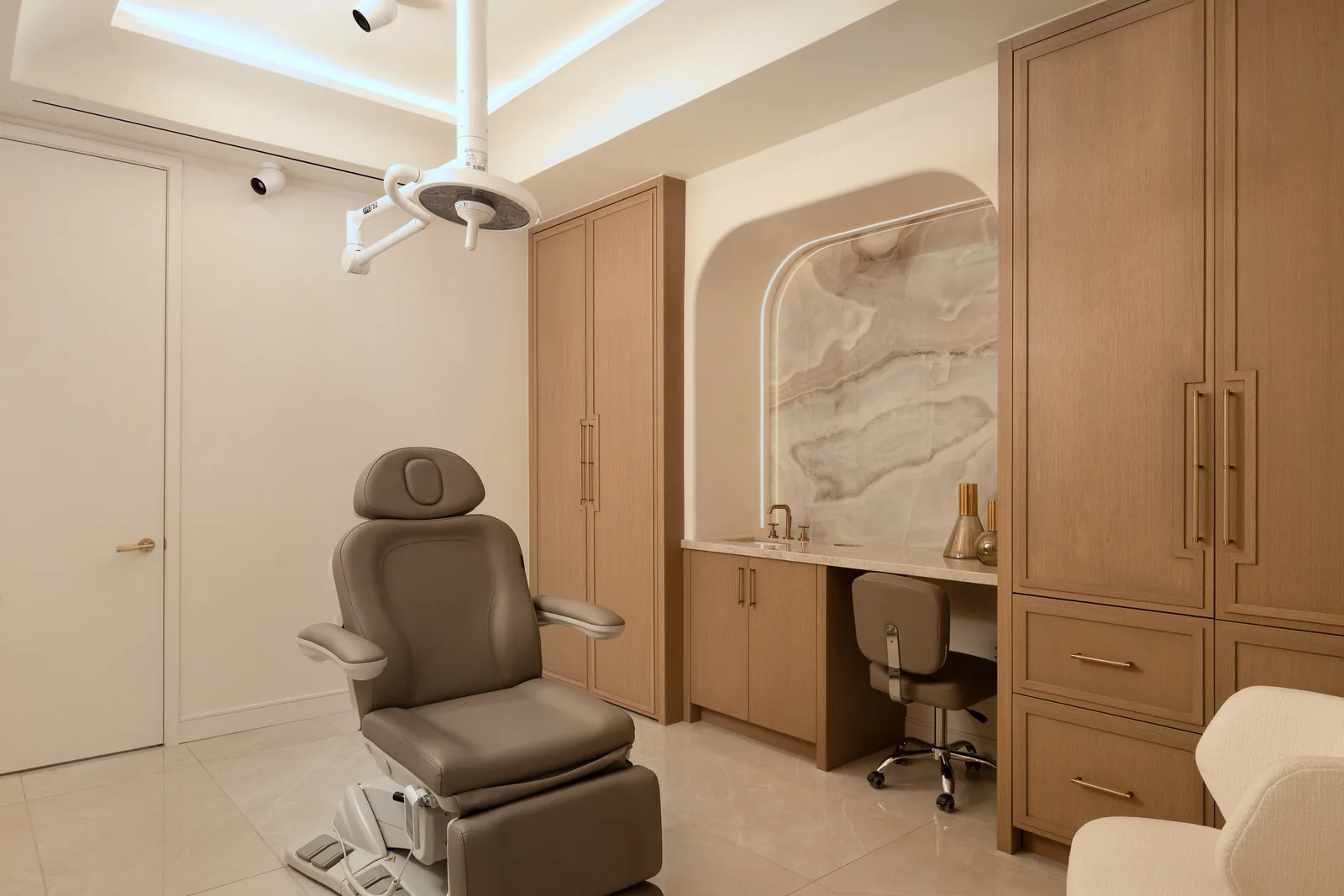
The setting, anesthesia, operative sequence, and discharge plan are selected for the complete revision and your health profile. Dr. Howarth reviews the planned priorities and any decisions that depend on operative findings before surgery begins.
Your priorities, confirmed.
The team reviews the concern, planned correction, implant information, incision considerations, preparation, safety information, and remaining questions.
Care follows the revision plan.
The operation addresses the planned structures. Technique and procedure time depend on the scope of revision and the findings encountered.
Instructions match the operation.
Before discharge, the team reviews medications, support, activity, follow-up, warning signs, and how to contact the practice. Transportation requirements are explained in advance.
CLEAR INFORMATION. REALISTIC EXPECTATIONS.
Breast Revision Safety, Risks, and Limitations
Breast revision has general surgical risks and concerns related to implants, scar tissue, altered anatomy, and prior operations. Dr. Howarth reviews how your health, tissue, skin, existing scars, implant and capsule findings, nicotine exposure, medications, and proposed correction affect individual risk.
Prior surgery may leave thin tissue, stretched skin, altered blood supply, or fewer corrective options. A concern can recur, and some limitations may remain despite an appropriately performed revision.
Possible Complications Include
- Bleeding, infection, fluid collection, or delayed healing
- Widened, raised, or otherwise unfavorable scars
- Temporary or lasting breast or nipple sensation changes
- Persistent asymmetry, contour difference, pain, or implant visibility
- Implant rupture, capsular contracture, malposition, rippling, or future reoperation
- Additional treatment, staged surgery, or another revision
What Revision Cannot Guarantee
- Perfect symmetry, complete pain relief, or another patient’s result
- Invisible scars or tissue that behaves like tissue without prior surgery
- A particular cup size or correction of every concern in one operation
- That capsular contracture, malposition, or another problem will never recur
- A final operation or a result unaffected by aging, weight change, or gravity
RECOVERY FOLLOWS THE WORK PERFORMED
Breast Revision Recovery
Focused and broader revisions do not follow identical recovery paths. The stages below are a general overview rather than a schedule; your instructions reflect the implant, capsule, pocket, tissue, and skin work actually performed.
Early care may include dressings, support, medication guidance, incision care, gentle movement, and follow-up based on the revision.
Work, driving, caregiving, and travel return according to the operation, daily demands, comfort, and individual healing.
Lifting, impact, upper-body exercise, and strenuous activity resume after healing progresses and the clinical team provides guidance.
Implants, breast tissue, skin, and scars continue to settle over time; some preexisting or revision-related limitations may remain.
BEFORE & AFTER GALLERIES
Private Breast Revision Before & After Gallery
Breast Revision before-and-after photographs can feel deeply personal. As both a woman and a surgeon, Ashley Howarth, MD, FACS, understands the trust involved in sharing them. Howarth Plastic Surgery in Scottsdale makes galleries of real patient results available by request through private before-and-after reviews.
Keeping breast revision before-and-after galleries off unrestricted public pages helps preserve patient dignity and clinical context while limiting casual viewing, unauthorized reposting, and collection by automated systems or AI agents.
During your private before-and-after review, you can see a range of breast revision results and discuss how starting anatomy, surgical choices, healing, and time influenced each outcome. These photographs can support an informed consultation, but individual results vary, and no image can predict your outcome.
PATIENT CASE SUMMARIES
Selected Breast Revision Case Summaries
These deidentified case summaries illustrate how Ashley Howarth, MD, FACS, evaluates breast revision at Howarth Plastic Surgery in Scottsdale, Arizona. They show how implant position, capsule behavior, rupture, tissue coverage, asymmetry, and prior operations shape planning. To protect patient privacy, some nonclinical identifying details have been generalized or modified. Individual anatomy, procedures, healing, and results vary.
Case 01
Implant malposition
A low implant and disrupted breast fold required pocket correction
Patient presentation
The patient reported implant descent, lower fullness, and a nipple appearing high on the breast mound.
Clinical evaluation
Dr. Howarth assessed position, fold integrity, pocket dimensions, skin, capsule, nipple position, device, and records.
Procedure performed
Revision corrected the pocket and fold with implant and support choices tailored to available tissue.
Clinical rationale
Replacing the implant alone would not correct a stretched pocket or shifted fold.
Follow-up
Follow-up monitored fold stability, implant position, symmetry, restrictions, and healing.
Case 02
Capsular contracture
Recurrent firmness and distortion required treatment of implant and capsule
Patient presentation
The patient developed increasing firmness, discomfort, and shape change after augmentation.
Clinical evaluation
Examination assessed contracture, position, coverage, asymmetry, imaging, implant history, and recurrence factors.
Procedure performed
Revision addressed the implant, capsule, and pocket findings identified during evaluation and surgery.
Clinical rationale
Changing implant volume alone does not correct an abnormal scar environment.
Follow-up
Assessment focused on softness, position, healing, symmetry, and recurrence signs.
Case 03
Rupture and exchange
A ruptured implant prompted revision of the device and pocket
Patient presentation
The patient presented after imaging identified rupture and wanted removal and replacement options.
Clinical evaluation
Dr. Howarth reviewed imaging, device history, examination, capsule, coverage, the opposite implant, and volume goals.
Procedure performed
The ruptured implant was removed, the pocket and capsule were treated, and the implant was replaced.
Clinical rationale
Revision addressed device integrity and the existing pocket while considering opposite-side symmetry.
Follow-up
Follow-up evaluated healing, position, contour, symmetry, and surveillance needs.
Case 04
Rippling
Visible implant rippling was evaluated as a tissue-coverage problem
Patient presentation
The patient noticed visible and palpable implant edges where soft-tissue coverage was limited.
Clinical evaluation
Dr. Howarth assessed tissue thickness, implant, pocket plane, weight change, capsule, and rippling location.
Procedure performed
Revision used implant, pocket, and soft-tissue strategies selected for the anatomy.
Clinical rationale
Rippling may reflect device characteristics, thin coverage, pocket position, or combined factors.
Follow-up
Follow-up assessed visibility, contour, settling, donor healing if applicable, and discussed limitations.
Case 05
Older saline implants
Older saline implants and a requested size change prompted elective breast revision
Patient presentation
The patient had saline breast implants placed years earlier and wanted a smaller, more natural-looking breast size rather than replacement with the same volume.
Clinical evaluation
Dr. Howarth reviewed implant age and type, device integrity, capsule and pocket findings, tissue coverage, skin and nipple position, prior records, and the requested degree of downsizing.
Procedure performed
Breast revision removed the older saline implants, adjusted the existing pockets, and exchanged the devices for smaller implants selected for the patient's current anatomy and goals.
Clinical rationale
An elective implant exchange is not only a volume change. Implant dimensions, pocket fit, tissue coverage, and the stretched breast envelope must be reconsidered together.
Follow-up
Follow-up assessed incision healing, implant position, pocket stability, breast shape, and how the smaller volume settled within the existing tissues.
Case 06
Revision declined
Further revision was not advised when tissue risk outweighed likely improvement
Patient presentation
The patient sought another operation for a subtle contour difference after multiple breast surgeries.
Clinical evaluation
Dr. Howarth reviewed records, scars, thickness, blood supply, implants, pockets, concern visibility, and expectations.
Recommendation
Additional revision was not recommended because likely improvement was limited relative to tissue and contour risk.
Clinical rationale
Repeated operations can reduce tissue quality and create new problems while correcting a small difference.
Follow-up
The patient received an explanation, observation options, and criteria for reevaluation.
PLANNING WITH CLARITY
Breast Revision Cost, Financing, and Travel to Scottsdale
Breast Revision Cost
At Howarth Plastic Surgery in Scottsdale, breast revision typically costs $14,600 to $32,000. Your final fee depends on the diagnosis, implant or material needs, capsule and pocket work, tissue reshaping, added support, anesthesia, and surgical setting. After consultation with Dr. Howarth, you will receive a personalized written estimate for the plan she recommends.
Financing Options
Howarth Plastic Surgery is a cash-pay practice and does not accept or bill insurance. Your patient care coordinator can review financing through PatientFi and CareCredit, subject to third-party approval.
Planning Care in Scottsdale
If you are traveling from elsewhere in Arizona or out of state, out-of-town patient information can help you plan around consultation, surgery, and follow-up. Required appointment dates, how long to remain nearby, and when travel may resume are individualized. An initial consultation may take place virtually, but an in-person examination is required before the operative plan is finalized.
QUESTIONS WORTH ASKING
Breast Revision Frequently Asked Questions
Reasons include a size or implant change, capsular contracture, rupture concern, malposition, rippling, asymmetry, scars, tissue thinning, drooping, discomfort, or a wish to remove implants. Consultation identifies what may be contributing.
It can be. Scar tissue, altered anatomy, thin tissue, implant or pocket concerns, and combined corrections may make surgery more involved. A focused revision may be more straightforward.
Prior operative reports, implant device cards, photographs, and relevant imaging can be helpful when available. You can still begin a consultation if some records cannot be obtained.
That may be an option, but the implant must suit the current pocket, tissue, breast position, skin, and goal. Breast Implant Selection explains the device decision in more detail.
Not everyone does. Breast and nipple position, skin laxity, implant plan, and expected shape all matter. Breast Lift explains that separate decision.
General possibilities include releasing the capsule or removing part or all of it, depending on the diagnosis and risks. Breast Implant Removal explains explant and capsule decisions.
Sometimes. Capsule, pocket, skin, breast position, or tissue work may require an additional or longer incision. Expected scars are discussed before surgery.
Revision may improve a defined difference, but exact symmetry cannot be guaranteed. Anatomy, prior operations, tissue, implants, scars, and healing influence the result.
Recovery follows the work performed. A focused implant exchange differs from surgery involving the capsule, pocket, breast tissue, or lift. Work and activity guidance is individualized.
At Howarth Plastic Surgery in Scottsdale, breast revision typically costs $14,600 to $32,000. Your final fee depends on the diagnosis, implant or material needs, capsule and pocket work, tissue reshaping, added support, anesthesia, and surgical setting. After consultation with Dr. Howarth, you will receive a personalized written estimate for the plan she recommends.
A new or concerning change deserves an appropriate evaluation rather than an online assumption. The needed examination, records, or imaging depend on the concern and clinical history.
Travel may be possible when records, consultation, surgery, and follow-up can be coordinated safely. Begin with the Out-of-Town Patient guide and your patient care coordinator.
Related Care
Related Breast Procedures
Continue with the page that best matches the question or surgical decision you are considering.
- Complex Breast Revision Structurally difficult or multiply operated cases.
- Breast Implant Removal Explant, capsule, and post-removal shape decisions.
- Breast Implant Illness Systemic-symptom-led concerns.
- Breast Implant Selection Device decisions during exchange planning.
- Breast Lift Breast position and the skin envelope.
- Internal Bra Support When added support may be considered for selected implant-position or tissue-support concerns.
BEGIN HERE
Request a Consultation
Tell us what you are considering. A member of our patient care team will follow up with consultation availability and next steps.

Megan S.
Patient Coordinator
Prefer to talk or text?
Selected Medical References