
Procedure Overview
What Is In-Office Labiaplasty?
In-office labiaplasty refers to performing an appropriate labiaplasty plan in a private office procedure room using local anesthesia. It is a care-setting and anesthesia option—not a different type of labiaplasty. The same individualized surgical planning still applies.
For some patients, this approach offers a familiar, discreet setting without general anesthesia. Dr. Howarth determines whether it fits your procedure, health, and comfort needs after consultation and examination.

A FAMILIAR SETTING. THE SAME THOUGHTFUL CARE.
Why Some Patients Consider an In-Office Approach
Some patients prefer local anesthesia and appreciate having their procedure in the familiar setting of Dr. Howarth’s practice. The same careful planning, surgical judgment, and follow-up apply whether surgery takes place in the office or another appropriate setting.
- Local anesthesia for selected patients
- Care within the familiar practice
- One team from planning through follow-up
- A setting matched to your procedure
- A discreet, individualized experience
Your preference matters, while the procedure and your safety guide the final recommendation.


A Thoughtful Conversation
Who May Be a Candidate for In-Office Labiaplasty?
Potential candidacy depends on your health history, anatomy, the procedure being considered, whether another procedure is planned, and your comfort needs. During consultation, Dr. Howarth also considers how you feel about an office procedure using local anesthesia and whether you can follow the preparation and recovery plan.
If another setting better supports your care, Dr. Howarth will explain why.
When Surgery May Not Be the Right Choice
The purpose of consultation is to identify the most appropriate next step—not to presume that an operation is needed. Dr. Howarth may recommend waiting, further evaluation, a different setting or approach, nonsurgical care, or no surgery when that is the more appropriate recommendation.

PRIVACY AND DISCRETION
Privacy During Labiaplasty Consultation and Care
Questions about labiaplasty are personal. The practice handles consultation requests and care information according to its privacy practices. When you contact the practice, you can indicate how you prefer to be reached and whether a voicemail may be left.
Planned for Your Anatomy
What Guides an In-Office Labiaplasty Plan
Procedure Scope
What the surgical plan includes and whether another procedure is being considered.
Anatomy
Tissue characteristics and the technique Dr. Howarth recommends after examination.
Health
Your health history, medications, and factors that may affect anesthesia or healing.
Comfort
Your preferences and how you feel about an office procedure using local anesthesia.
COMFORT, DISCRETION, AND A CLEAR PLAN
What to Expect During In-Office Labiaplasty
Before the procedure begins, Dr. Howarth confirms the plan and local-anesthesia approach. The clinical team reviews preparation, what to expect, and the instructions that apply to your procedure.
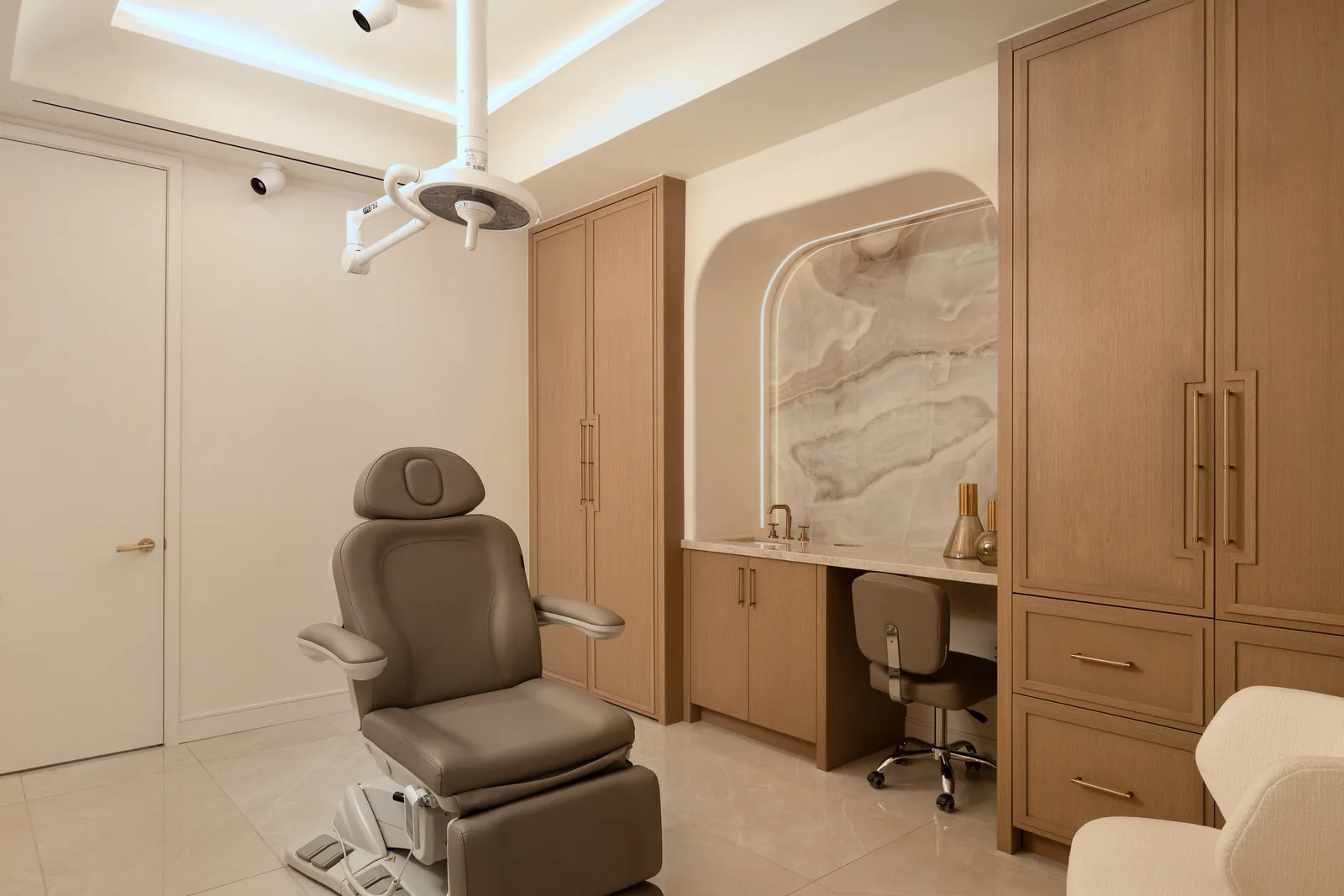
The plan is reviewed
Dr. Howarth confirms the planned changes, anesthesia approach, and procedure-specific instructions.
The area is numbed
Local anesthetic is used in the treatment area. The team explains each stage and stays in communication with you.
Care continues after the procedure
Before you leave, the team reviews medications, follow-up, and how to reach the practice with questions.
CLEAR INFORMATION. INFORMED CHOICES.
In-Office Labiaplasty Safety and Limitations
In-office labiaplasty is still surgery and requires the same thoughtful planning and postoperative care as labiaplasty performed in another setting. Potential risks include bleeding, infection, healing problems, asymmetry, contour changes, altered sensation, or the need for additional treatment. Local anesthesia also has potential risks. Dr. Howarth reviews the risks and alternatives relevant to your health and procedure during consultation.
Possible Complications Include
- Bleeding or infection
- Healing problems
- Asymmetry or contour changes
- Altered sensation
- Persistent discomfort
- Additional treatment
What Consultation Clarifies
- Your health and anatomy
- The proposed procedure
- Anesthesia and setting
- Alternatives and limitations
- Your individual recovery plan
HEALING HAPPENS IN STAGES
Recovery After In-Office Labiaplasty
Recovery after in-office labiaplasty follows the surgery itself. Local anesthesia changes the day-of-surgery experience, while the treated tissue still needs time to heal.
Swelling, tenderness, and bruising are common early. Plan for a quieter start while following your postoperative instructions.
Comfort, work demands, and individual healing guide the return to everyday routines. Physically demanding activities may require more time.
Exercise, intimacy, and activities that create pressure or friction resume later, after healing has progressed and your surgeon provides clearance.
Swelling and firmness continue to settle as healing progresses. The final shape becomes easier to assess as the tissues recover over time.
Care That Begins With Listening
Choosing an In-Office Labiaplasty Surgeon: Why Dr. Howarth
Ashley Howarth, MD, FACS, is a board-certified plastic surgeon in Scottsdale, an Instructor in Plastic Surgery at Mayo Clinic, and a coauthor of the peer-reviewed article “Labiaplasty” in the Journal of Women’s Health. For patients considering an office-based procedure, she evaluates the planned operation, anatomy, health history, and individual needs before determining whether local anesthesia and the office setting are appropriate.
Her approach is anatomy-led rather than setting-led. The location of surgery does not replace individualized planning, and Dr. Howarth performs the procedure herself.
TRAINING
PLASTIC SURGERY
COAUTHOR

SCOTTSDALE · MODERN OFFICE SETTING
BEFORE & AFTER GALLERIES
Private In-Office Labiaplasty Before & After Gallery
In-Office Labiaplasty before-and-after photographs can feel deeply personal. As both a woman and a surgeon, Ashley Howarth, MD, FACS, understands the trust involved in sharing them. Howarth Plastic Surgery in Scottsdale makes galleries of real patient results available by request through private before-and-after reviews.
Keeping in-office labiaplasty before-and-after galleries off unrestricted public pages helps preserve patient dignity and clinical context while limiting casual viewing, unauthorized reposting, and collection by automated systems or AI agents.
During your private before-and-after review, you can see a range of in-office labiaplasty results and discuss how starting anatomy, surgical choices, healing, and time influenced each outcome. These photographs can support an informed consultation, but individual results vary, and no image can predict your outcome.
PATIENT CASE SUMMARIES
Selected In-Office Labiaplasty Case Summaries
These deidentified case summaries show how Ashley Howarth, MD, FACS, evaluates in-office labiaplasty with local anesthesia at Howarth Plastic Surgery in Scottsdale. The cases compare focused office procedures with surgical-facility care based on operative scope, anxiety, health history, and monitoring needs. To protect patient privacy, select identifying details have been generalized or modified. The clinical concerns, treatment decisions, procedures, and follow-up remain faithful to the underlying patient records. Individual anatomy, anesthesia plans, procedures, healing, and results vary.
Case 01
Office wedge candidate
Office candidacy depended on scope, health history, and comfort with local anesthesia
Patient presentation
The patient had a central labia minora concern, was medically appropriate for office treatment, and felt comfortable remaining awake with local anesthesia.
Clinical evaluation
Dr. Howarth evaluated wedge anatomy, expected procedure length, health history, anxiety, positioning tolerance, postoperative support, and monitoring needs before confirming office candidacy.
Procedure and setting
A bilateral wedge labiaplasty was performed in the office with local anesthesia after the patient and operative scope met the practice’s selection criteria.
Clinical rationale
A focused wedge procedure can suit the office when anatomy, health history, monitoring needs, and patient comfort all support local anesthesia.
Follow-up
After office-based wedge labiaplasty, follow-up assessed closure healing, comfort, sensation, and a staged return to routine activity.
Case 02
Surgical setting
A broader bilateral labiaplasty required a surgical-facility setting
Patient presentation
The patient needed a broader bilateral labia minora reduction that was not well suited to a focused awake procedure with local anesthesia.
Clinical evaluation
Dr. Howarth evaluated the bilateral operative scope, expected duration, anesthesia needs, health history, monitoring, postoperative support, and the patient’s comfort with the proposed setting.
Procedure and setting
A broader bilateral labia minora reduction was performed in a surgical facility with general anesthesia rather than forcing the operation into an office setting.
Clinical rationale
The anesthesia and setting followed the broader bilateral operation rather than a preference to perform every labiaplasty in the office.
Follow-up
Follow-up documented recovery after general anesthesia, incision healing, and the patient’s staged return to routine activity after the broader bilateral reduction.
Case 03
Focused trim
In-office trim labiaplasty for a localized free-edge concern
Patient presentation
The patient had a localized labia minora free-edge concern without a need for clitoral hood reduction, labia majora treatment, or another operation.
Clinical evaluation
Dr. Howarth evaluated edge anatomy, the amount of tissue involved, closure needs, health history, comfort with local anesthesia, and suitability for office-based recovery.
Procedure and setting
A conservative edge-based trim was performed in the office with local anesthesia for the isolated treatment target confirmed on examination.
Clinical rationale
A limited plan can suit the office when the anatomy, health, and patient's comfort all align.
Follow-up
Follow-up showed healing of the focused trim while keeping the case-specific selection criteria for office-based care explicit.
Case 04
Surgical add-on
Labiaplasty accompanied a separately planned breast or body procedure
Patient presentation
The patient wanted labia minora reduction during the same operation as a separately planned breast or body procedure.
Clinical evaluation
Dr. Howarth evaluated the complete operative scope, positioning, anesthesia, monitoring, recovery restrictions, and whether combining the procedures was appropriate for that patient.
Procedure and setting
Labiaplasty was performed in the operating room under the same general anesthetic as a separately planned breast or body procedure.
Clinical rationale
The operating-room setting allowed the labiaplasty and separately indicated breast or body procedure to be completed under one planned anesthetic when the combined scope was appropriate.
Follow-up
Follow-up evaluated healing after labiaplasty separately from recovery after the accompanying breast or body procedure.
Case 05
Anxiety and comfort
A small operation may still be a poor fit for awake treatment
Patient presentation
The anatomy could permit a focused procedure, but the patient has significant procedural anxiety or does not feel comfortable remaining awake.
Clinical evaluation
Anxiety history, prior experiences, ability to tolerate positioning, available support, anesthesia preferences, and the risks of forcing an office plan.
Procedure and setting
The limited tissue correction was performed in a monitored surgical setting because the patient did not feel comfortable remaining awake for the procedure.
Clinical rationale
Procedure size alone does not determine setting; patient comfort and the ability to complete care safely are part of candidacy.
Follow-up
Follow-up documented the monitored anesthesia experience, discharge readiness, and whether the selected setting met the patient’s comfort needs.
Case 06
Medical considerations
Monitoring needs can outweigh convenience
Patient presentation
A patient prefers the office but has a medical history or medication profile that may require additional planning or monitoring.
Clinical evaluation
Health conditions, medications and supplements, bleeding risk, allergies, prior anesthesia history, and what resources the complete plan may require.
Recommendation
Surgery was postponed for medical optimization and clearance before the final anesthesia and care setting were selected.
Clinical rationale
Office-based care should never be selected simply because it is available; the setting must support the patient’s individualized safety needs.
Follow-up
At reevaluation, medical optimization, clearance, medications, and monitoring needs were reviewed before a final operative setting was chosen.
FROM CONSULTATION TO CONFIDENCE
Labiaplasty Consultation and Patient Care Coordination
After you contact the practice, your patient care coordinator helps you understand the process, answers general questions about labiaplasty, preparation, and recovery, and organizes practical next steps. Questions specific to your health, anatomy, surgical plan, or recovery are answered by Dr. Howarth or her clinical team.

A thoughtful conversation
Your patient care coordinator can arrange an in-person or virtual consultation with Dr. Howarth and explain what information to have ready. The consultation focuses on your concerns, health history, and goals. An in-person physical examination is completed before the operative plan is finalized.
Clear information before you decide
After Dr. Howarth recommends a plan, your patient care coordinator can review the written cost estimate, available financing options, scheduling requirements, forms, and next steps. Your coordinator can explain the practice process and help you understand what is needed before you decide whether to schedule.
Practical details, clearly organized
If you are traveling to Scottsdale from elsewhere in Arizona or out of state, your patient care coordinator can help align required appointment dates and share planning guidance for consultation, surgery, and follow-up. Dr. Howarth and her clinical team provide individualized medical and recovery guidance.
PLANNING WITH CLARITY
In-Office Labiaplasty Cost, Financing, and Travel to Scottsdale
In-Office Labiaplasty Cost
At Howarth Plastic Surgery in Scottsdale, in-office labiaplasty typically costs $9,800 to $11,000. The higher end includes selected plans performed with clitoral hood reduction. Your final fee depends on the anatomy being addressed, the procedure Dr. Howarth recommends, local anesthesia, and whether another procedure is included. After consultation, you will receive a personalized written estimate for the recommended plan.
Financing Options
Howarth Plastic Surgery is a cash-pay practice and does not accept or bill insurance. Your patient care coordinator can review financing through PatientFi and CareCredit, subject to third-party approval.
Planning Care in Scottsdale
If you are traveling from elsewhere in Arizona or out of state, out-of-town patient information can help you plan around consultation, surgery, and follow-up. Required appointment dates, how long to remain nearby, and when travel may resume are individualized. An initial consultation may take place virtually, but an in-person examination is required before the operative plan is finalized.
Your Questions, Answered
In-Office Labiaplasty Frequently Asked Questions
It means an appropriate labiaplasty plan is performed in a private office procedure room using local anesthesia. The anatomy and surgical technique are still selected individually.
You can discuss your preference during consultation, but candidacy depends on your health, anatomy, procedure scope, comfort needs, and surgical plan. Dr. Howarth will recommend whether the office setting is appropriate.
Local anesthesia numbs the surgical area without general anesthesia. You may notice pressure or movement, and the team stays in communication with you throughout the procedure.
She considers your health history, anatomy, planned procedure, anesthesia needs, and comfort. If another setting better supports your care, she will explain that recommendation.
Not necessarily. Labia minora reduction and trim-or-wedge planning are based on your anatomy, tissue characteristics, concerns, and goals. The care setting does not determine the technique by itself.
Procedure time depends on the surgical plan. Dr. Howarth’s team reviews the expected schedule with you once the plan is established.
Local anesthesia changes the anesthesia experience, but healing still depends on the surgery performed and the individual patient. Swelling, tenderness, restrictions, and gradual recovery still apply.
Any additional procedure requires separate evaluation. Combining procedures may change the appropriate anesthesia, setting, operative plan, and recovery.
At Howarth Plastic Surgery in Scottsdale, in-office labiaplasty typically costs $9,800 to $11,000. The higher end includes selected plans performed with clitoral hood reduction. Your final fee depends on the anatomy being addressed, the procedure Dr. Howarth recommends, local anesthesia, and whether another procedure is included. After consultation, you will receive a personalized written estimate for the recommended plan.
No. Howarth Plastic Surgery is a cash-pay practice and does not accept or bill insurance.
Related Care
Related Labiaplasty Procedures
These pages explain options that may be considered separately depending on your anatomy, goals, and surgical history. You can also review questions to ask at a labiaplasty consultation before your visit.
BEGIN HERE
Request a Consultation
Tell us what you are considering. A member of our patient care team will follow up with consultation availability and next steps.

Megan S.
Patient Coordinator
Prefer to talk or text?
Selected Medical References