
The Desert Is the Diagnosis
What Arizona Does to Skin
Arizona’s climate (about 300 days of sun a year, a summer UV index of 11 or higher, and afternoon humidity below 15 percent) produces a predictable set of changes in skin: brown spots and uneven pigment, broken capillaries and redness, chronic dehydration and rough, dull texture, and fine lines that arrive earlier than in a humid climate. Because Arizona has one of the highest skin cancer rates in the country, every skin plan at Aesthetica by Ashley Howarth MD begins with protection, not treatment, and treats each change with BBL HERO, MOXI, HALO, HydraFacial, chemical peels, or SkinPen microneedling.
Arizona skin ages differently because the climate is different. Scottsdale and the Phoenix metro see about 300 days of sun a year, a summer UV index that regularly reaches 11 or higher, afternoon humidity that drops below 15 percent, and well over 100 days a year at or above 100 degrees. The result is a specific and predictable set of changes: brown spots and uneven pigment from ultraviolet exposure, broken capillaries and background redness from heat and sun, chronic dehydration and a rough, dull surface from dry air, and fine lines that arrive earlier than they would in a humid climate. Arizona also has one of the highest skin cancer rates in the country, which is why every skin plan at Aesthetica by Ashley Howarth MD, the med spa of Howarth Plastic Surgery in Scottsdale, begins with protection, not treatment.
This page explains what the desert does to skin, which treatments correct each change (BBL HERO broadband light, MOXI and HALO lasers, HydraFacial, chemical peels, and SkinPen microneedling), and why timing matters more in Scottsdale than almost anywhere else in the United States. It is written for people who have lived in Arizona for decades and for people who arrived last month.

Sun, Heat, and Dry Air
What Arizona Patients Notice First
The concerns that bring people to Aesthetica by Ashley Howarth MD in Scottsdale follow the climate. Most are some combination of the following, and most respond to a small set of treatments when they are chosen and timed correctly.
- Brown spots and freckling on the face, chest, and hands
- Flushing, redness, and visible capillaries that worsen in heat
- Tight, dehydrated skin and a rough or dull surface
- Melasma that darkens every summer
- Fine lines and crepey texture arriving earlier than expected
- A tan that never fully fades and skin that looks older than its age
A sentence we hear often from new arrivals: “My skin was fine until I moved here.” It usually was. The desert simply accelerates everything the sun does.


Surgeon-Directed Care
More Tools in the Toolbox: Why a Plastic Surgeon Directs This Care
Aesthetica by Ashley Howarth MD is the medical aesthetics practice of Ashley Howarth, MD, FACS, a board-certified plastic surgeon and instructor in plastic surgery at Mayo Clinic. Dr. Howarth sets the treatment protocols, selects the technology, and trains the team, and she is the physician who evaluates anything that does not look like ordinary sun damage. In a state with one of the highest skin cancer rates in the country, the difference between a spa and a physician-led practice is who is looking at your skin before the light turns on.
Aesthetica by Ashley Howarth MD is the med spa of a plastic surgery practice, and that changes what can be offered. Most skin concerns are treated without surgery, and most patients never need it. When skin care and nonsurgical treatment reach their limit, the conversation does not end at the door: the same physician evaluates the next step, from deep laser skin resurfacing performed by Dr. Howarth to eyelid surgery, facelift, and neck lift. A surgeon directing the plan means more tools in the toolbox, and an honest answer about which one you need.

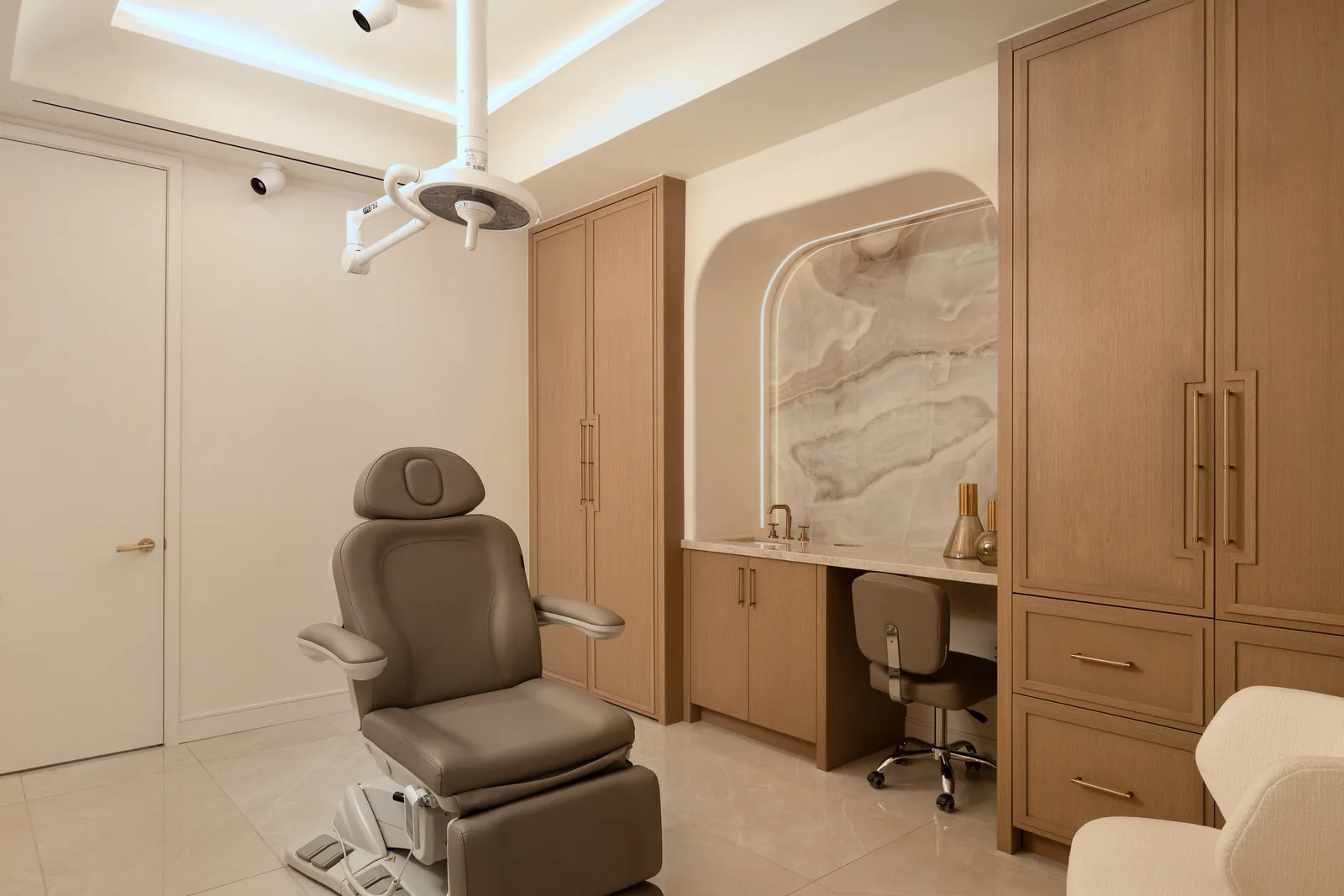
SCOTTSDALE · MODERN OFFICE SETTING
Where to Start
Who This Is For, and What Happens First
Every Aesthetica by Ashley Howarth MD plan starts with a skin assessment rather than a treatment request. A member of the physician-led team examines pigment, redness, texture, hydration, and sun history, then recommends a first treatment and a sequence. The recommendation depends on your skin type, how much sun exposure you can realistically avoid over the next month, and the time of year. Some patients are best served by a laser series in the cooler months. Some are best served by a HydraFacial and a corrected sunscreen habit in July, with laser planned for October. Sometimes the right first step is a skin cancer screening with a dermatologist before any cosmetic treatment.
Dr. Ashley Howarth, MD, FACS is a board-certified plastic surgeon and an instructor in plastic surgery at Mayo Clinic. Aesthetica by Ashley Howarth MD is the medical aesthetics brand of her practice, Howarth Plastic Surgery, at 7373 N. Scottsdale Road, Suite C150, Scottsdale, Arizona 85253.

Matched to the Change, Not the Menu
Which Treatment Corrects Which Arizona Skin Change
Brown Spots and Sun Damage
Sciton BBL HERO broadband light targets pigment in the skin, with most patients needing two to three sessions scheduled in the cooler months.
Redness and Broken Capillaries
BBL HERO also targets hemoglobin in small vessels, reducing background flushing and visible capillaries over a series, though rosacea is managed, not cured.
Dry, Dull, and Rough Skin
HydraFacial, customized facials, and lighter chemical peels restore hydration and remove the dead surface layer that dry air builds up, making them the right starting point in summer.
HydraFacial, customized facials, and lighter chemical peels restore hydration and remove the dead surface layer that dry air builds up. These are the year-round treatments and the right starting point in summer.
Fine Lines and Texture
MOXI is the gentle fractional laser for early lines, texture, and tone with minimal downtime, while HALO offers deeper correction between October and April.
Sciton MOXI is the gentle fractional laser for early lines, texture, and tone with minimal downtime. Sciton HALO is the hybrid fractional laser for deeper correction, planned between October and April. Deeper laxity is evaluated for Ellacor micro-coring.
Planning at a Glance
Sessions, Downtime, and Season
Sessions, downtime, and the months each treatment is scheduled in Scottsdale. Individual plans are set at the skin assessment.
| Treatment | Sessions | Downtime | Scottsdale season |
|---|---|---|---|
| BBL HERO | 2 to 3, four weeks apart | Minimal; spots darken and flake for 7 to 14 days | October to April |
| MOXI | 3, four weeks apart | 1 to 2 days of pinkness | October to April; select summer cases |
| HALO | 1 to 2 | 5 to 7 days | October to April |
| HydraFacial | Monthly | None | Year-round |
| Chemical peels | Series of 3 to 6 | 1 to 5 days of flaking, by depth | Year-round; lighter peels in summer |
| SkinPen microneedling | 3 to 4 | 1 to 2 days | Year-round with sun avoidance |
A Visit Built Around Sun Exposure
What to Expect at a Skin Visit at Aesthetica by Ashley Howarth MD
Skin visits at Aesthetica by Ashley Howarth MD are planned around one variable other clinics can ignore: how much sun your skin has had, and how much it will have next. That changes what is safe to do on a given day.
Your skin, your sun history, your calendar
The team reviews recent sun exposure, tanning, retinoid and skincare use, and any history of melasma or scarring. Tanned skin postpones light and laser treatments because the risk of post-inflammatory pigment rises.
The treatment that fits the day
Light and laser treatments proceed when the skin is untanned and sun avoidance is realistic for the following weeks. When it is not, hydration and resurfacing treatments that are safe in full sun take their place.
A sun plan in writing
You leave with specific instructions: broad-spectrum SPF 30 or higher reapplied every two hours outdoors, a mineral formula after treatment, shade and hats for the first two weeks, and the date of your next session.
Clear Information. Informed Choices.
Safety and Limitations in a High-UV Climate
Light and laser treatments are safe when they are matched to skin type and timed around sun exposure. Most side effects are expected and temporary. The one that matters most in Arizona is post-inflammatory hyperpigmentation, a darkening of treated skin that is more likely when skin is tanned at treatment or exposed to sun while healing. Timing and protection are how it is avoided.
Possible Side Effects Include
- Temporary redness, warmth, and mild swelling
- Pigment that darkens before it flakes away
- Post-inflammatory hyperpigmentation with sun exposure or tanned skin
- Temporary sensitivity and dryness
- Rarely, blistering, crusting, or scarring
What Treatment Cannot Guarantee
- Permanent removal of pigment while sun exposure continues
- A complete result from a single session
- Prevention of new sun damage
- A result identical to another patient's
- A substitute for skin cancer screening
Timing Matters More Here
The Arizona Skin Calendar
In most of the country, laser and light treatments are scheduled by preference. In Arizona they are scheduled by the sun. Skin needs about two weeks without meaningful sun before a light or laser treatment and two to four weeks of strict protection afterward, which is easy in January and nearly impossible in July. That is why Aesthetica by Ashley Howarth MD runs on a calendar.
Month by Month
What Is Scheduled, What Waits, and Why
What is scheduled, what waits, and why. Arizona sun sets the calendar; the skin assessment sets the plan.
| Months | Scheduled | Waits | Why |
|---|---|---|---|
| October to November | First BBL HERO and MOXI sessions; series planned to finish by spring | Any series that cannot finish by April | Tans fade and UV drops; sun avoidance becomes realistic |
| December to February | HALO and deeper resurfacing; completing a BBL series | Nothing; peak season | Shortest days and lowest UV of the year |
| March to April | Final series sessions and last MOXI treatments | New HALO after mid-April | UV climbs fast; pool and golf season begins |
| May to September | HydraFacial, facials, lighter peels, SkinPen with sun avoidance, daily mineral SPF | Full-face BBL and HALO | Tanned skin and unavoidable sun raise post-inflammatory pigment risk |
Before & After
Arizona Skin, Before and After Treatment
Results for sun damage, redness, and texture are best judged in photographs taken in the same light, weeks apart. Aesthetica by Ashley Howarth MD maintains before-and-after galleries for BBL HERO, MOXI, HALO, and skin treatments, and the team can show you cases that match your skin type and concern during your visit.
Patient Case Summaries
Selected Arizona Skin Case Summaries
These deidentified case summaries illustrate how the physician-led team at Aesthetica by Ashley Howarth, MD plans skin treatment around the Arizona climate. They include long-term residents, new arrivals, summer timing, darker skin types, and consultations in which the recommendation was to wait or to see a dermatologist first. Each summary connects the patient’s concern and skin assessment with the treatment performed or the recommendation made.
Case 01
Long-term resident
Twenty years of Arizona sun on the face, chest, and hands
Patient presentation
A woman in her fifties who had lived in Scottsdale for two decades asked about the brown spots on her cheeks, chest, and the backs of her hands. She had never used daily sunscreen.
Skin assessment
The team documented diffuse solar lentigines on all three areas, mild background redness, and no lesions requiring dermatology referral. Her skin was untanned in November.
Procedure performed
A series of three BBL HERO sessions to the face, chest, and hands, spaced four weeks apart, with daily broad-spectrum SPF 30 started at the first visit.
Clinical rationale
Diffuse pigment across sun-exposed areas responds to broadband light better than to any topical, and a November start allowed the full series to finish before spring UV.
Follow-up
After the third session the treated spots had flaked and faded, and the patient continued daily sunscreen with a maintenance session planned for the following fall.
Case 02
New arrival
Skin that changed within a year of moving from the Midwest
Patient presentation
A woman in her thirties reported that her skin had become tight, rough, and dull since relocating from Minnesota, with new freckling across her nose after one summer.
Skin assessment
The assessment showed marked dehydration, a thickened surface layer, and early pigment. Her routine was built for a humid climate: a foaming cleanser, no sunscreen, and no moisturizer.
Procedure performed
A HydraFacial in August, a corrected home routine with a mineral SPF 30 and a hydrating moisturizer, and a single MOXI session scheduled for October.
Clinical rationale
Dehydration and surface buildup are corrected safely in full sun; pigment is treated once the tan fades and protection is realistic.
Follow-up
By her October visit the texture and hydration had normalized, and the MOXI session addressed the remaining freckling with two weeks of sun avoidance.
Case 03
Summer timing
A request for HALO in June, and why the answer was October
Patient presentation
A man in his forties who golfs three mornings a week asked for HALO in early June to treat texture and sun damage before a family event in August.
Skin assessment
His skin was already tanned, and his schedule made two to four weeks of sun avoidance after treatment unrealistic. The risk of post-inflammatory hyperpigmentation was judged too high.
Recommendation
HALO was deferred to October. A HydraFacial series over the summer, a hat and SPF 50 on the course, and a BBL series planned for the fall.
Clinical rationale
A laser that is technically possible is not automatically well timed. The event outcome was better served by hydration and protection than by a resurfacing treatment likely to pigment.
Follow-up
He started the BBL series in October with untanned skin and proceeded to HALO in January.
Case 04
Darker skin type
Melasma and sun damage on olive skin required a different sequence
Patient presentation
A woman in her forties with olive skin reported patches on her cheeks and upper lip that darkened every summer and faded only partly each winter.
Skin assessment
The pattern and distribution were consistent with melasma rather than solar lentigines. Her skin type carried a higher risk of pigment response to aggressive light or laser treatment.
Recommendation
A topical program with strict daily sunscreen through the summer, followed by conservative MOXI sessions and a lighter chemical peel series in the winter months. BBL was not used on the melasma.
Clinical rationale
Melasma is heat and light sensitive; treating it like ordinary sun spots can make it worse. Conservative settings and topicals are the safer path on darker skin types.
Follow-up
Over one winter the patches lightened and the summer darkening was reduced, with the topical program continued year-round.
Case 05
Redness and heat
Flushing and visible capillaries that worsened every summer
Patient presentation
A woman in her thirties who ran outdoors described persistent redness across her cheeks and nose with visible vessels that flared in heat and after exercise.
Skin assessment
The assessment showed background erythema and telangiectasias on the central face, untanned skin in December, and no signs requiring dermatology evaluation.
Procedure performed
A series of three BBL HERO sessions targeting vessels and redness, spaced four weeks apart, with a mineral SPF and a change to early-morning runs.
Clinical rationale
Broadband light targets hemoglobin in small vessels, and a winter series avoids the heat and sun that drive flushing while the skin heals.
Follow-up
After the series the visible vessels were reduced and the resting redness was lighter; she maintains with a single session each winter.
Case 06
Honest guidance
A spot that needed a dermatologist before it needed a laser
Patient presentation
A man in his sixties asked to have a group of brown spots on his temple treated with BBL before a trip.
Skin assessment
Most of the spots were typical sun damage, but one had an irregular border and had changed in the past year. The physician-led team does not treat a lesion it cannot characterize.
Recommendation
Referral to a dermatologist for evaluation of the single lesion before any light or laser treatment. BBL for the surrounding sun damage was scheduled after clearance.
Clinical rationale
In a state with one of the highest skin cancer rates in the country, cosmetic treatment of an uncharacterized lesion can delay a diagnosis. Screening comes first.
Follow-up
The lesion was evaluated and managed by the dermatologist, and the patient returned for the BBL series the following season.
From First Visit to a Plan You Can Keep
Booking, Planning, and Follow-Up at Aesthetica by Ashley Howarth MD
Aesthetica by Ashley Howarth MD is a medical practice with a spa’s convenience. Established medspa patients book online. New patients can book online or request a consultation, and the team responds usually the same day.

Online booking or a consultation request
Book a skin visit directly online, or request a consultation and tell us what you notice. Either path starts with the same skin assessment.
A sequence, not a single appointment
You leave your first visit with a written plan: which treatment first, how many sessions, when they fall on the calendar, and what to do at home in between.
Maintenance timed to the seasons
Most Scottsdale skin plans repeat annually: a fall laser series, summer hydration, year-round sunscreen. A-List members have the next season scheduled before they leave the last one.
Your Questions, Answered
Arizona Skin Frequently Asked Questions
Arizona’s combination of about 300 sunny days a year, a summer UV index of 11 or higher, very low humidity, and extreme heat accelerates sun damage. The typical changes are brown spots and uneven pigment, redness and visible capillaries, chronic dehydration with a rough or dull surface, and fine lines that appear earlier than they would in a humid climate.
Light and laser treatments such as BBL HERO, MOXI, and HALO require untanned skin and two to four weeks of strict sun avoidance afterward to prevent post-inflammatory hyperpigmentation. That is realistic in Arizona’s cooler, shorter days and very difficult in summer, so Aesthetica by Ashley Howarth MD schedules most laser series between October and April.
HALO and full-face BBL are generally deferred to the cooler months. MOXI and BBL on areas that stay covered can sometimes be done in summer for patients who are untanned and can commit to protection. The decision is made at the skin assessment based on your skin type and sun exposure.
HydraFacial, customized facials, lighter chemical peels, and SkinPen microneedling with sun avoidance are the summer treatments at Aesthetica by Ashley Howarth MD in Scottsdale. They restore hydration and texture without the pigment risk of light and laser treatments in full sun.
A broad-spectrum sunscreen of SPF 30 or higher, applied every morning and reapplied every two hours outdoors. Mineral formulas with zinc oxide are recommended after light and laser treatments and for melasma-prone skin. Hats and shade matter as much as the product.
Yes. Ultraviolet exposure drives both, and Arizona’s UV index is among the highest in the United States for much of the year. Heat also worsens melasma. Brown spots from sun respond well to BBL HERO, Sciton’s IPL-class broadband light; melasma is treated more conservatively with topicals, sunscreen, and gentle resurfacing.
Afternoon humidity in the Phoenix area often falls below 15 percent, and air conditioning and pool chlorine remove more moisture. Skin loses water faster than it can replace it, which reads as tightness, flaking, dullness, and more visible fine lines. Hydrating treatments and a moisturizer-first routine correct it.
Start with protection now: daily SPF 30 or higher, a hydrating routine, and a skin assessment. Most new arrivals see changes within the first year. Treatment timing follows the calendar: hydration and facials any time, and laser or light treatments in the first October to April window after you arrive.
Established med spa patients can book online. New patients can book online or request a consultation through this page; the team responds usually the same day. Aesthetica by Ashley Howarth MD, the med spa of Howarth Plastic Surgery, is located at 7373 N. Scottsdale Road, Suite C150, Scottsdale, Arizona 85253, and can be reached by call or text at 480.535.5021.
Related Care
Treatments for Arizona Skin
These pages explain the treatments named in this guide. Concern-specific guides for sun damage, redness, melasma, dryness, and texture are being added to this section.
- BBL HERO Broadband light for brown spots and redness
- MOXI Laser Gentle fractional laser for tone and texture
- HALO Hybrid Fractional Laser Deeper correction, planned for laser season
- HydraFacial Hydration and resurfacing, safe year-round
- Chemical Peels Surface renewal matched to skin type
- Medspa at Aesthetica by Ashley Howarth MD All injectable, laser, and skin treatments
BEGIN HERE
Request a Consultation
Tell us what you are considering. A member of our patient care team will follow up with consultation availability and next steps.

Megan S.
Patient Coordinator
Prefer to talk or text?
Selected References