
Seven Treatments, One Decision
Which Sciton Laser Is Right for You?
Aesthetica by Ashley Howarth MD offers seven Sciton laser and light treatments (BBL HERO, BBL HEROic, MOXI, HALO, MicroLaserPeel, ProFractional, and Contour TRL), all on one platform and all directed by board-certified plastic surgeon Ashley Howarth, MD, FACS, with the physician-led team matching device to concern, skin type, and downtime. BBL treats color, MOXI and HALO treat texture and pigment across skin types, and the deepest treatments, including Contour TRL performed by Dr. Howarth herself, are reserved for etched lines and scars, all scheduled during laser season, October to April, on untanned skin.
Aesthetica by Ashley Howarth MD, the med spa of Howarth Plastic Surgery in Scottsdale, offers seven Sciton laser and light treatments: BBL HERO, BBL HEROic, MOXI, HALO, MicroLaserPeel, ProFractional, and Contour TRL, all on one platform and all directed by board-certified plastic surgeon Ashley Howarth, MD, FACS. The comparison below is the same one the physician-led team uses to match a device to a concern, a skin type, the downtime a patient can accept, and the Arizona season.
The right Sciton laser depends on what you are treating, your skin type, and how much downtime you can accept, and at Aesthetica by Ashley Howarth MD, the med spa of Howarth Plastic Surgery in Scottsdale, the answer follows a short set of rules. BBL HERO and BBL HEROic treat color: brown spots, freckling, redness, and visible vessels, with almost no downtime. MOXI is the gentle 1927 nm fractional laser for diffuse pigment, dullness, and prejuvenation, and it is the laser for all skin types including Fitzpatrick IV to VI. HALO is the hybrid fractional laser for texture, pores, fine lines, and the glow patients ask for by name, at the cost of about a week of peeling. MicroLaserPeel resets the surface with a shallow full-field erbium peel in 3 to 5 days. ProFractional reaches acne scars and deep texture through separated channels without full-field downtime. Contour TRL is the deep, full-field resurfacing laser for etched lines around the mouth and eyes, and its deep plans are performed by Dr. Howarth herself. Every one of them is scheduled in laser season, October to April, on untanned skin.
The seven treatments run on two Sciton platforms in the same room, so the comparison is not a choice between clinics but a choice within one plan. Broadband light and the two fractional lasers, MOXI and HALO, are performed by the physician-led team under Dr. Howarth’s protocols and are often combined in a single visit: BBL for the spots and redness, then MOXI or HALO for the texture. The three erbium resurfacing modes, MicroLaserPeel, ProFractional, and Contour TRL, share one 2940 nm wavelength and differ in how much skin they remove and in what pattern, which is why they are stacked in one session more often than they are chosen against each other. The tables below place all seven side by side by type, sessions, downtime, skin type, and who performs them, and then by concern. For the reasoning behind each row, read on; for the calendar that decides when any of them happen, read Skin in Arizona.

What Patients Ask When Comparing
The Questions Behind the Comparison
Most people who ask Aesthetica by Ashley Howarth MD to compare lasers arrive with a device name from a friend or a search result and a concern that may or may not match it. The questions they bring are consistent, and the comparison exists to answer them in order.
- Is BBL a laser, and is it the same as IPL?
- I want the HALO glow but I cannot take a week off
- Which one actually removes brown spots?
- Is any of these safe for my darker skin?
- Which laser fixes acne scars, and how many times?
- I have lines around my mouth that filler does not fix
Each question has a different answer, and several have the same answer for different reasons. The comparison is built so that the device follows the concern, the skin type, and the calendar, never the other way around.


Where to Start
How the Skin Assessment Decides Between Lasers
The comparison is settled at a skin assessment, not on this page. A member of the physician-led team at Aesthetica by Ashley Howarth MD examines the skin under magnification and answers four questions in order. What is the primary concern: color, which points to BBL HERO or BBL HEROic; diffuse tone or early aging, which points to MOXI; texture, pores, and fine lines, which points to HALO; scars or etched lines, which point to ProFractional and Contour TRL. What is the Fitzpatrick skin type, which removes broadband light from the plan for type VI and makes MOXI the default for IV to VI. How many days of visible healing can you accept, which separates a MOXI plan from a HALO plan and a HALO plan from full-field resurfacing. And what month is it, since every treatment on this page needs untanned skin and 2 to 4 weeks of sun avoidance afterward. The assessment also flags what a laser should not touch: a changing pigmented lesion that needs a dermatologist, melasma that broadband light can worsen, and laxity that no resurfacing laser corrects.
Dr. Ashley Howarth, MD, FACS is a board-certified plastic surgeon and an instructor in plastic surgery at Mayo Clinic. Aesthetica by Ashley Howarth MD is the medical aesthetics brand of her practice, Howarth Plastic Surgery, at 7373 N. Scottsdale Road, Suite C150, Scottsdale, Arizona 85253.

Four Questions That Choose the Laser
How Sciton Lasers Are Compared at Aesthetica by Ashley Howarth MD
What You Are Treating
Color and texture are different targets, so BBL HERO and BBL HEROic treat pigment and redness while MOXI, HALO, and the erbium lasers treat texture, lines, and scars, often combined in one visit.
Color and texture are different targets, and no single device treats both well. Melanin in brown spots and hemoglobin in redness absorb filtered broadband light, so BBL HERO and BBL HEROic are first for color. Water in the skin absorbs the 1927 nm, 1470 nm, and 2940 nm wavelengths of MOXI, HALO, and the erbium lasers, so those are first for texture, lines, and scars. Most Scottsdale faces have both, which is why BBL plus MOXI or BBL plus HALO in one visit is the most common plan.
Your Skin Type
Fitzpatrick skin type determines which lasers are safe, with MOXI usable across all skin types including IV to VI while broadband light and ablative resurfacing carry more risk on darker skin.
Fitzpatrick skin type is the second filter, and it removes options. Broadband light is routine on types I to IV, used with a test area on type V, and not used on type VI, because melanin in the surrounding skin absorbs the same light as the spot. MOXI targets water rather than pigment and is used across all skin types at conservative settings, which makes it the pigment laser for Fitzpatrick IV to VI and the safer choice for melasma. Ablative resurfacing with HALO, ProFractional, and Contour TRL carries a rising risk of post-inflammatory hyperpigmentation as skin type darkens, so depth and density are reduced or the plan changes.
The Downtime You Can Accept
Downtime ranges from almost none with BBL to 7 to 10 or more days with Contour TRL, with MOXI, MicroLaserPeel, ProFractional, and HALO falling in between.
Downtime is the honest trade for depth. BBL has almost none beyond darkened spots that flake for 7 to 14 days. MOXI is 1 to 2 days pink and 3 to 5 days of fine sandpaper mends. A light MicroLaserPeel or a shallow ProFractional pass is 3 to 5 days. HALO is 5 to 7 days of sunburn, sandpaper, and peeling. Contour TRL is 7 to 10 days for a moderate plan and longer for deep resurfacing. A patient who can give one week gets HALO; one who can give a long weekend gets MOXI or a MicroLaserPeel; one who can give two weeks and wants etched lines gone gets Contour TRL.
The Season
Every treatment on this page requires untanned skin and is scheduled during laser season, October to April, with the deepest treatments booked earliest in the window.
In Arizona the calendar is a treatment variable. Every treatment on this page needs untanned skin and 2 to 4 weeks of strict sun avoidance afterward, and the summer UV index regularly reaches 11 or higher, so all seven are scheduled in laser season, October to April. Within that window the deeper the treatment, the earlier it is booked: a Contour TRL or HALO plan goes in November through February so pinkness has faded before spring UV, while a BBL maintenance session fits in October or March. Summer belongs to HydraFacial, SkinPen, and lighter chemical peels. Read the guide to Skin in Arizona.
Side by Side
All Seven Sciton Treatments Compared
The seven Sciton laser and light treatments at Aesthetica by Ashley Howarth MD by type, best use, sessions, downtime, skin type, and who performs them. Individual plans are set at the skin assessment.
| Treatment | Type and wavelength | Best for | Sessions | Downtime | Skin types | Performed by |
|---|---|---|---|---|---|---|
| BBL HERO | Broadband light, IPL class, filters 420 to 800 nm; not a laser | Brown spots, freckling, redness, and vessels on the face and small localized areas | 2 to 3, four weeks apart; then 1 to 2 a year | None; spots darken and flake 7 to 14 days | I to IV; V with caution; not VI | Physician-led team |
| BBL HEROic | Broadband light with automated pulse placement; adds 532+ and 640S filters | Full back, arms, legs, chest, and full-body sun damage; small nasal vessels | 2 to 3, four weeks apart; then 1 to 2 a year | None; spots darken and flake 7 to 14 days, 2 to 4 weeks on the body | I to V per Sciton | Physician-led team |
| MOXI | Non-ablative fractional 1927 nm non-ablative fractional laser | Diffuse pigment, dullness, early lines, melasma cautiously, prejuvenation | Series of 3, four weeks apart | 1 to 2 days pink, 3 to 5 days of fine mends | I to VI at conservative settings | Physician-led team |
| HALO | Hybrid fractional laser, 1470 nm non-ablative plus 2940 nm ablative | Texture, pores, fine lines, sun damage, the HALO glow | 1 to 2 | 5 to 7 days of sunburn, sandpaper, and peeling | I to IV; V with care | Physician-led team; deeper or zone-specific plans by Dr. Howarth |
| MicroLaserPeel | Full-field ablative erbium, 2940 nm, set shallow depth of about 10 to 30 microns | Fine lines, rough texture, a surface reset; often stacked with ProFractional | 1 to 3 | 3 to 5 days for a light peel | I to III routinely; IV and darker with care | Dr. Howarth or the team, depending on depth |
| ProFractional | Ablative fractional erbium, 2940 nm, channels to well over 1 mm | Acne scars, deep texture, regional resurfacing | 1 to 3, four to eight weeks apart | 3 to 7 days depending on depth | I to IV; darker with reduced depth and density | Dr. Howarth or the team, depending on depth |
| Contour TRL | Tunable full-field ablative erbium, 2940 nm, adjustable depth and coagulation | Etched perioral and periorbital lines, heavy sun damage, scars, deep resurfacing | Usually 1 | 7 to 10 days; longer for deep plans | I to III; deeper plans limited to fair skin | Deep full-field plans physician-performed by Dr. Howarth |
By Concern
Which Sciton Laser for Which Concern
The first-choice treatment and the alternatives for each concern at Aesthetica by Ashley Howarth MD, and when in the Scottsdale year it is scheduled. Skin type and downtime move a concern from the first column to the second.
| Concern | First choice | Also consider | Season |
|---|---|---|---|
| Brown spots and freckling | BBL HERO for the face; BBL HEROic for large body areas | MOXI for diffuse pigment or Fitzpatrick IV to VI; HALO when texture accompanies the spots | October to April |
| Redness and visible vessels | BBL HERO or HEROic with the vascular filters; 532+ for small nasal vessels | Nothing ablative; deeper resurfacing can worsen redness | October to April |
| Melasma | Topical program first, then MOXI at conservative settings | Light chemical peels; BBL and ablative lasers are avoided | October to April; topicals year-round |
| Fine lines | HALO in 1 to 2 sessions | MOXI series for early lines; Contour TRL when lines are etched | October to April |
| Texture and pores | HALO | MOXI for mild texture and darker skin; MicroLaserPeel for a surface reset | October to April |
| Acne scars | ProFractional at depth, 1 to 3 sessions | HALO when sun damage is also present; SkinPen for summer or the darkest skin types | October to April; SkinPen year-round |
| Etched wrinkles around the mouth and eyes | Contour TRL full-field resurfacing, physician-performed | ProFractional plus MicroLaserPeel for a lighter plan; surgery for descent | November to February, to heal before spring UV |
| Laxity | SkinTyte with the BBL 800 nm filter for mild laxity | Facelift, neck lift, or eyelid surgery with Dr. Howarth for true descent; no resurfacing laser tightens | Year-round for SkinTyte |
| Full-body sun damage | BBL HEROic to back, chest, arms, and legs | MOXI to the body for darker skin; HydraFacial through summer | October to April |
From Comparison to Plan
How a Laser Plan Is Built at Aesthetica by Ashley Howarth MD
A laser plan at Aesthetica by Ashley Howarth MD is built in three steps: an assessment that ranks your concerns and records what limits the options, a written plan that names each device, its order, and who performs it, and a calendar that places every session inside laser season. The written plan is the difference between a comparison and a menu.
Concerns ranked, skin type recorded, limits identified
The team examines pigment, vessels, texture, scars, and lines under magnification, records your Fitzpatrick skin type and recent sun exposure, asks how many days of visible healing you can accept, and flags anything a laser should not touch: a changing lesion, melasma, or laxity that needs a different answer.
Each device named, in order, with who performs it
You leave with the plan in writing: which treatments, in what sequence and combination, how many sessions, the expected downtime for each, and whether it is performed by the physician-led team or by Dr. Howarth. Deep, full-field, or zone-specific resurfacing is always physician-performed.
Every session placed between October and April
The deepest treatment is booked first and earliest in the season so healing finishes before spring UV. Lighter sessions and BBL maintenance fill the remaining months. Summer is written into the plan too, with HydraFacial and sun protection until the next season starts.
Clear Information. Informed Choices.
The Trade-Offs Between Sciton Lasers
Every row in the comparison is a trade, and the trades are predictable. More depth brings more correction and more downtime, and with it a higher risk of prolonged redness, post-inflammatory hyperpigmentation, and, rarely, infection or scarring; that is why deep full-field resurfacing is physician-performed and why ablative plans are reduced on darker skin types. Less depth brings shorter recovery and a smaller change per session, so MOXI and BBL are series rather than single treatments. Broadband light is the least invasive option on the page and the one most limited by skin type, because it is absorbed by all melanin, not only the melanin in the spot. Non-ablative fractional lasers are safest across skin types and least able to change etched lines or deep scars. No treatment here tightens loose skin the way surgery does, none is safe on tanned skin, and none should be chosen before a changing pigmented lesion has been examined.
Possible Side Effects Include
- Redness and swelling, from hours after BBL to 2 weeks or more after deep resurfacing
- Post-inflammatory hyperpigmentation, more likely with tan, darker skin types, and greater depth
- Spots that darken and flake after BBL, mends and peeling after MOXI and HALO
- Prolonged pinkness, temporary lightening, or lines of demarcation after full-field resurfacing
- Rarely, blistering, infection, cold sore reactivation, or scarring
What Treatment Cannot Guarantee
- That the lightest option will do what the deepest one does
- Safe treatment of tanned skin in any month
- Tightening comparable to a facelift or eyelid surgery
- Safe improvement of melasma with broadband light or deep resurfacing
- A substitute for a dermatologist's evaluation of a changing spot
The Downtime Ladder
Downtime Compared, From None to Two Weeks
Downtime is the clearest way to compare the seven treatments, because it is the variable patients feel most and the one most closely tied to depth. The ladder below runs from the least visible recovery to the most. When treatments are combined in one visit, the longest recovery on the ladder is the one to plan around. Every rung ends the same way: mineral SPF 30 or higher, hats and shade, and 2 to 4 weeks of strict sun avoidance, which is why all of them live in laser season.
BBL HERO and BBL HEROic leave skin warm and pink for a few hours. Treated brown spots darken by evening and flake for 7 to 14 days on the face and 2 to 4 weeks on the chest and hands, and makeup goes on the next day. Nothing peels. This is the rung for patients who want color corrected without a visible recovery.
MOXI is 1 to 2 days of pinkness followed by 3 to 5 days of fine bronzed mends that feel like sandpaper and are covered by makeup. Most patients treat on a Thursday and are presentable by Monday. It is the rung for prejuvenation, diffuse pigment, and every darker skin type.
HALO runs day 1 to 2 sunburn-like, day 2 to 3 sandpaper, day 3 to 5 peeling, with the glow arriving at 2 to 3 weeks. A light MicroLaserPeel or a shallow ProFractional pass heals in 3 to 5 days; the two stacked together, or a deeper ProFractional, sit at the top of this rung. Plan one week away from cameras and the sun.
Contour TRL at moderate depth is 7 to 10 days of open healing, ointment, and peeling, and deep full-field plans take longer, with pinkness that fades over weeks to months. These are the treatments that change etched lines and heavy sun damage in one session, and at Aesthetica by Ashley Howarth MD deep plans are physician-performed by Dr. Howarth, often coordinated with facial surgery.
Surgeon-Directed Care
More Tools in the Toolbox: Why a Plastic Surgeon Directs the Comparison
Aesthetica by Ashley Howarth MD is the medical aesthetics practice of Ashley Howarth, MD, FACS, a board-certified plastic surgeon and instructor in plastic surgery at Mayo Clinic. A laser comparison written as a menu asks the patient to choose a device; a comparison written as a protocol asks the physician to match the device to the skin. Dr. Howarth’s protocol makes four decisions that a menu cannot: it examines every pigmented lesion before light touches it, because lentigo maligna can pass for a sun spot on long-exposed Arizona skin; it decides skin-type eligibility, ruling broadband light out for Fitzpatrick VI and reducing ablative depth as skin darkens; it decides depth, which is where the same 2940 nm erbium wavelength becomes a MicroLaserPeel, a ProFractional pass, or a deep Contour TRL; and it manages the complication when one occurs, because prolonged redness or pigment change after a laser is a medical problem, not a spa problem.
Who performs what follows from those decisions. BBL HERO, BBL HEROic, MOXI, and standard HALO are performed by the physician-led team, laser technicians and the aesthetician, under her written protocols. MicroLaserPeel and ProFractional are performed by Dr. Howarth or the team depending on depth. Deep, full-field, zone-specific, or surgery-coordinated resurfacing, including deep Contour TRL, is physician-performed laser skin resurfacing by Dr. Howarth, sometimes in the same plan as eyelid surgery, facelift, or neck lift. When the honest answer to the comparison is that no laser will do it, because the problem is descent or volume rather than the skin surface, the same physician says so and explains the surgical option. A surgeon directing the plan means more tools in the toolbox, and an honest answer about which one you need.

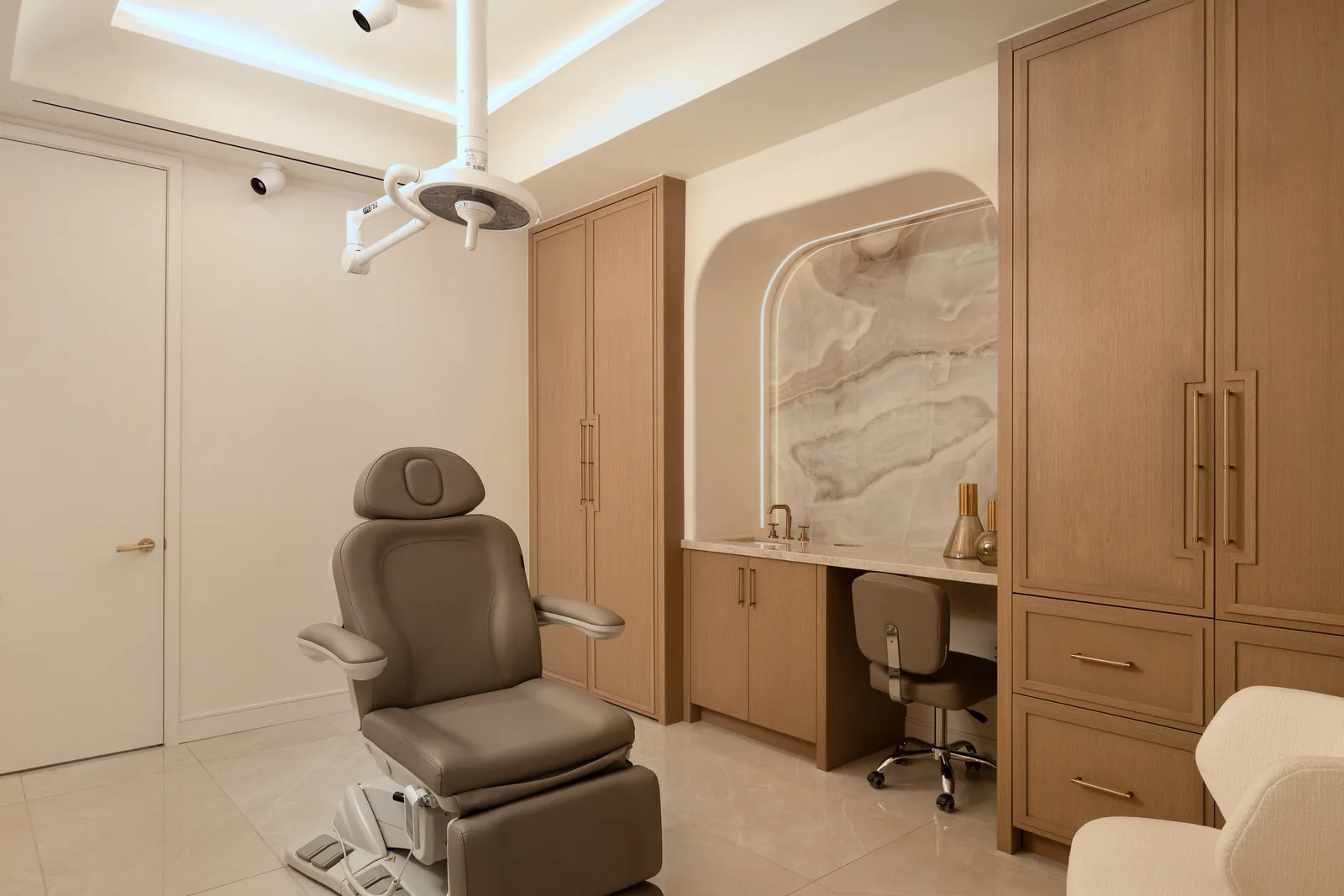
SCOTTSDALE · MODERN OFFICE SETTING
Before & After
Sciton Lasers, Before and After Treatment
The fairest comparison of lasers is a pair of photographs matched for concern, skin type, and timing. Aesthetica by Ashley Howarth MD maintains before-and-after galleries for BBL, MOXI, HALO, and erbium resurfacing, and during your assessment the team can show you a pigment case treated with light beside a texture case treated with a fractional laser, so the difference between the two families is visible rather than described.
Patient Case Summaries
Selected Sciton Laser Comparison Case Summaries
These deidentified case summaries illustrate how the physician-led team at Aesthetica by Ashley Howarth MD decides between Sciton lasers in Scottsdale. Each one shows a choice between two treatments and the reason one was chosen, across fair and darker skin types, long-term residents and new arrivals, summer and laser-season timing, single treatments and combinations, a first visit and a maintenance plan, and one consultation in which the honest answer was that no laser was the right tool. Each summary connects the patient’s concern and skin assessment with the decision made.
Case 01
BBL vs MOXI
Discrete sun spots on fair skin: broadband light chosen over MOXI
Patient presentation
A woman in her fifties, a long-term Scottsdale resident, asked whether MOXI, which a friend had praised, would remove the dozens of flat brown spots on her cheeks and chest.
Skin assessment
The assessment found discrete solar lentigines on Fitzpatrick II skin with smooth texture, no melasma, and no irregular lesion; she was untanned in November. Her concern was color, not texture.
Procedure performed
A series of three BBL HEROic sessions to the face and chest four weeks apart with the 515 and 560 nm filters. MOXI was not used.
Clinical rationale
Broadband light is absorbed directly by melanin in a discrete spot and clears it in 2 to 3 sessions; MOXI lifts diffuse tone over a series but is the wrong first tool for well-defined spots on fair skin with no texture concern.
Follow-up
The spots cleared after the third session in February; she returns for one BBL maintenance session each October.
Case 02
MOXI vs HALO
Dullness and early lines with no time off: MOXI chosen over HALO
Patient presentation
A woman in her thirties who had moved to Scottsdale two years earlier wanted the HALO glow she had read about, but managed a team in person and could not be visibly peeling.
Skin assessment
Fitzpatrick III skin with mild diffuse pigment, dullness, and early fine lines, no scarring or enlarged pores, untanned in January. HALO would have been appropriate for the skin but not for her calendar.
Procedure performed
A series of three MOXI treatments four weeks apart, each on a Thursday, with a light BBL pass at the first and third visits.
Clinical rationale
The concerns were early and diffuse, which a non-ablative 1927 nm series corrects with 1 to 2 days of pinkness; HALO’s 5 to 7 days of peeling would buy more change per session than she needed at a downtime she could not give.
Follow-up
Tone and brightness improved across the series; a single HALO was written into the following winter’s plan for a week she could take off.
Case 03
HALO vs ProFractional
Rolling acne scars on the cheeks: ProFractional chosen over HALO
Patient presentation
A man in his twenties asked for HALO for acne scarring on both cheeks after seeing full-face results online.
Skin assessment
Fitzpatrick III skin with rolling and boxcar scars confined to the cheeks, minimal sun damage elsewhere, and no active acne, untanned in December. The problem was depth and location, not surface tone.
Procedure performed
Three ProFractional sessions to the cheeks at increasing depth, six weeks apart, with a light MicroLaserPeel stacked at the second session to blend the surface. HALO was not used.
Clinical rationale
Acne scars need channels that reach well below the depth HALO’s hybrid pass is designed for, and ProFractional treats the scarred zone alone while leaving the rest of the face untouched, with 3 to 7 days of downtime per session.
Follow-up
Scar depth was visibly reduced after the third session; a full-face HALO is planned for a later season if the surrounding sun damage progresses.
Case 04
HALO vs Contour TRL
Etched lines around the mouth: physician-performed Contour TRL chosen over HALO
Patient presentation
A woman in her sixties with vertical lines around her lips that filler had softened but not erased asked whether HALO would finish the job.
Skin assessment
Fitzpatrick II skin with deeply etched perioral lines and moderate sun damage across the face, no melasma, untanned in November, able to take two weeks away from social commitments.
Procedure performed
A deep full-field Contour TRL pass to the perioral zone performed by Dr. Howarth, feathered into a lighter full-face setting, in a single December session under local anesthesia with sedation.
Clinical rationale
Etched lines are a full-thickness surface problem that a fractional pass improves only partly; full-field erbium resurfacing at depth removes and rebuilds the lined skin in one treatment, at the cost of 7 to 10 days of healing, and depth of that order is physician-performed.
Follow-up
The lines were markedly softened at three months with pinkness fading by eight weeks; she maintains with annual BBL and MOXI.
Case 05
Darker skin type
Blotchy pigment on Fitzpatrick V skin in August: MOXI in winter chosen over BBL now
Patient presentation
A man in his forties with deep brown skin who worked outdoors asked in August for the fastest laser to even the darker patches across his forehead and cheekbones.
Skin assessment
Diffuse sun-related and post-inflammatory hyperpigmentation on Fitzpatrick V skin, with a summer tan and daily outdoor exposure. Broadband light carries a meaningful pigment risk at this skin type, and any laser in August would heal under an extreme UV index.
Recommendation
A topical pigment program and daily mineral SPF started in August, then a series of three conservative-density MOXI sessions beginning in November. BBL was not offered.
Clinical rationale
MOXI targets water rather than melanin and is the pigment laser used across all skin types at conservative settings; the plan waited for laser season because tanned, sun-exposed skin is the setting in which post-inflammatory hyperpigmentation is most likely.
Follow-up
Over one winter the patches lightened noticeably; he continues the topical program year-round with a single MOXI session each laser season.
Case 06
Not a laser
Jowls and a loose neck: the honest answer was surgery, not resurfacing
Patient presentation
A woman in her sixties asked which laser would tighten her jawline and neck, having been told at another clinic that a resurfacing laser would lift the area.
Skin assessment
Fitzpatrick II skin with good surface quality, moderate sun damage, and clear tissue descent along the jawline and neck with platysmal banding. The concern was laxity, which no resurfacing laser corrects.
Recommendation
A surgical consultation with Dr. Howarth for facelift and neck lift, with a BBL and MOXI session planned for the skin surface after recovery. No resurfacing laser was recommended for the laxity.
Clinical rationale
Every laser on this page changes the skin surface; none repositions descended tissue. Selling a Contour TRL for jowls would spend two weeks of downtime on the wrong problem, and a plastic surgeon directing the comparison can say so and offer the right one.
Follow-up
She underwent facelift and neck lift the following spring and returned in the fall for a BBL and MOXI session to the newly lifted skin.
From First Visit to a Plan You Can Keep
Booking, Planning, and Follow-Up at Aesthetica by Ashley Howarth MD
Aesthetica by Ashley Howarth MD is a medical practice with a spa’s convenience. Established patients book online. New patients can book online or request a consultation, and the team responds usually the same day.

Online booking or a consultation request
Book a skin assessment directly online, or request a consultation and describe what you want changed, the laser you have in mind, and the downtime you can give. Either path starts with the same examination, and the device is chosen after it.
The comparison, settled in writing
You leave your first visit with a written plan: which of the seven treatments, in what order and combination; who performs each; how many sessions; the downtime for each; which months they fall in; and the sunscreen and home routine that protects the result.
A plan that repeats each laser season
Most Scottsdale laser plans repeat annually: the deeper treatment early in the season, BBL and MOXI maintenance in the shoulder months, HydraFacial through summer, year-round mineral sunscreen. A-List members have the next season scheduled before they leave the last one.
Your Questions, Answered
Sciton Laser Frequently Asked Questions
BBL is Sciton’s BroadBand Light, a device in the IPL class, so BBL is a type of IPL rather than an alternative to it, and neither is a laser. Both use filtered bands of light to target melanin and hemoglobin. BBL HERO adds sapphire contact cooling and higher peak power, and BBL HEROic adds automated pulse placement, which is why comfort and evenness differ from older IPL devices.
BBL treats color: discrete brown spots, freckling, redness, and vessels, in 2 to 3 sessions with almost no downtime, on Fitzpatrick I to IV skin. MOXI is a 1927 nm non-ablative fractional laser for diffuse pigment, dullness, early lines, and prejuvenation, in a series of 3 with 1 to 2 days of pinkness, and it is used on all skin types. Many Scottsdale patients have both in one visit.
MOXI is non-ablative only, at 1927 nm, with 1 to 2 days of pinkness and 3 to 5 days of fine mends, a series of 3 for tone and early aging on any skin type. HALO adds a 2940 nm ablative pass to a 1470 nm non-ablative pass in one treatment, correcting texture, pores, and fine lines in 1 to 2 sessions with 5 to 7 days of peeling. Choose by downtime and by how much texture there is.
HALO is a full-face hybrid fractional treatment for sun damage, texture, pores, and fine lines with 5 to 7 days of downtime. ProFractional is a 2940 nm ablative fractional erbium laser whose channels reach well over 1 mm, which makes it the choice for acne scars, deep texture, and regional resurfacing, in 1 to 3 sessions with 3 to 7 days of downtime depending on depth. Scars point to ProFractional; overall glow points to HALO.
HALO improves fine lines and texture across the whole face with about a week of peeling and is performed by the physician-led team. Contour TRL is full-field 2940 nm erbium resurfacing with adjustable depth, the treatment for etched lines around the mouth and eyes and heavy sun damage, usually in one session with 7 to 10 days of healing or longer for deep plans. Deep Contour TRL at Aesthetica by Ashley Howarth MD is performed by Dr. Howarth.
A MicroLaserPeel removes a set depth of the whole skin surface with a 2940 nm erbium laser, about 10 to 30 microns for a light peel, so the depth is measured rather than estimated, and it heals in 3 to 5 days. A chemical peel depends on the acid, its strength, and how the skin responds, and light peels can be done in summer. Lighter, repeatable, any-season resurfacing favors peels; a precise surface reset in laser season favors MicroLaserPeel.
MOXI is the Sciton laser used across all skin types, including Fitzpatrick IV to VI, at conservative settings, because its 1927 nm wavelength targets water rather than melanin. BBL is routine on types I to IV, used with a test area on type V, and not used on type VI. Ablative treatments such as HALO, ProFractional, and Contour TRL are reduced in depth or replaced as skin type darkens to limit post-inflammatory hyperpigmentation.
BBL HERO and BBL HEROic have the least: skin is pink for a few hours and treated spots flake for 7 to 14 days, with makeup the next day. MOXI is the lowest-downtime true laser, with 1 to 2 days of pinkness and 3 to 5 days of fine mends that makeup covers. Everything deeper, from MicroLaserPeel to Contour TRL, involves visible peeling of 3 days to 2 weeks.
ProFractional is the first choice for acne scars at Aesthetica by Ashley Howarth MD in Scottsdale. Its ablative erbium channels reach the depth of rolling and boxcar scars while leaving surrounding skin untouched, in 1 to 3 sessions 4 to 8 weeks apart. HALO is added when there is also sun damage and texture across the whole face, and SkinPen microneedling is the summer option and the choice for the darkest skin types.
It depends on the wrinkle. Fine lines from sun damage respond to HALO in 1 to 2 sessions or to a MOXI series. Etched lines around the mouth and eyes need full-field resurfacing with Contour TRL, performed by Dr. Howarth at depth. Lines that move with expression need Botox or Dysport, not a laser, and folds from descent need surgery. In Arizona all laser wrinkle treatment is scheduled between October and April.
Concerns Treated
Concerns This Treatment Addresses
These guides explain each concern and where this treatment fits among the options at Aesthetica by Ashley Howarth MD in Scottsdale.
- BBL HERO Broadband light for brown spots, redness, and sun damage on the face
- BBL HEROic Next-generation broadband light for full-body sun damage and comfort
- MOXI Laser Gentle 1927 nm fractional laser for diffuse pigment, all skin types
- HALO Hybrid Laser Ablative plus non-ablative resurfacing with about a week of downtime
- MicroLaserPeel Superficial full-field erbium resurfacing, a surface reset
- ProFractional Fractional erbium for acne scars and texture without full-field downtime
- Contour TRL Tunable deep resurfacing, physician-performed by Dr. Howarth
- Laser Season in Arizona Why October to April, and what to do in summer
BEGIN HERE
Request a Consultation
Tell us what you are considering. A member of our patient care team will follow up with consultation availability and next steps.

Megan S.
Patient Coordinator
Prefer to talk or text?
Selected References