
Dry Air, Thirsty Skin
What Dry and Dehydrated Skin Is, and Why Arizona Makes It Worse
Dry skin lacks oil and is a lifelong skin type, while dehydrated skin lacks water and can affect any skin type, and in Arizona, climate-driven dehydration from low humidity, air conditioning, pool chlorine, and hot showers is the more common problem, showing up as tightness, flaking, dullness, and lines that look deeper than they are. At Aesthetica by Ashley Howarth MD, it is treated with HydraFacial, customized facials, lighter chemical peels, and a medical-grade barrier-repair skincare routine, all offered year-round.
Dry skin and dehydrated skin are two different problems that feel the same. Dry skin (xerosis) lacks oil: the skin produces too little sebum, which is a skin type and tends to be lifelong. Dehydrated skin lacks water: the outer layer has lost moisture faster than it can hold it, which is a condition and can happen to any skin type, including oily skin. In Arizona, dehydration is the more common problem, and it is climate-driven. Afternoon humidity in the Scottsdale area often falls below 15 percent, air conditioning runs most of the year, pool chlorine strips surface lipids, and long hot showers do the rest. The result is tightness after washing, flaking, dullness, a rough surface, and fine lines that look deeper than they are. At Aesthetica by Ashley Howarth MD, the med spa of Howarth Plastic Surgery in Scottsdale, the treatments that correct it are HydraFacial, customized facials, lighter chemical peels, and a medical-grade barrier-repair skincare routine built for desert air.
This page explains how the team tells dry skin from dehydrated skin at the skin assessment, which treatments restore hydration and which remove the rough surface that dry air builds up, why these are the year-round treatments in a climate where lasers are seasonal, and how hydration is prepared before any laser treatment. It also explains when flaking and irritation are not simple dryness and should be seen by a dermatologist first.

Tight, Dull, Flaking
What Patients With Dry and Dehydrated Skin Notice
Most patients who come to Aesthetica by Ashley Howarth MD in Scottsdale for dry skin describe the same set of changes, and most describe them getting worse in their first Arizona summer or first winter of indoor heating. The pattern below is dehydration until proven otherwise.
- Skin that feels tight within minutes of washing
- Flaking around the nose, brows, and jawline
- A dull, gray, or rough surface that makeup sits on top of
- Fine lines on the cheeks and under the eyes that soften after moisturizer
- Oily skin that is somehow also flaky
- Stinging when products that used to feel fine are applied
The fifth item surprises people. Oily and dehydrated skin is common in Arizona: the skin makes oil in response to water loss, so the surface shines while the layers underneath are parched. Treating it with stronger cleansers makes both problems worse.


Surgeon-Directed Care
More Tools in the Toolbox: Why a Plastic Surgeon Directs This Care
Aesthetica by Ashley Howarth MD is the medical aesthetics practice of Ashley Howarth, MD, FACS, a board-certified plastic surgeon and instructor in plastic surgery at Mayo Clinic. Dry skin sounds simple, and usually it is. But persistent flaking, itching, or irritation can also be eczema, seborrheic dermatitis, contact dermatitis, a medication effect, or a thyroid problem, and a spa treatment on top of any of those wastes time and can make the skin worse. Dr. Howarth sets the protocols that tell the team when a case is dehydration and when it needs a physician, selects the skincare lines the practice carries, and is the physician who reviews anything that does not behave like ordinary dryness.
Aesthetica by Ashley Howarth MD is the med spa of a plastic surgery practice, and that changes what can be offered. Most skin concerns are treated without surgery, and most patients never need it. When skin care and nonsurgical treatment reach their limit, the conversation does not end at the door: the same physician evaluates the next step, from deep laser skin resurfacing performed by Dr. Howarth to eyelid surgery, facelift, and neck lift. A surgeon directing the plan means more tools in the toolbox, and an honest answer about which one you need.

SCOTTSDALE · MODERN OFFICE SETTING
Where to Start
Who This Is For, and What Happens at the Skin Assessment
This care is for anyone whose skin feels tight, rough, or dull, whose makeup no longer sits well, or who moved to Arizona and watched a routine that worked for years stop working. The skin assessment at Aesthetica by Ashley Howarth MD starts with a simple question: is this skin lacking oil, lacking water, or both? The aesthetician examines the surface under magnification, presses the cheek to see whether fine lines appear (a sign of dehydration), reviews every product you use and how often you wash, and asks about showers, pool time, and air conditioning. Skin that is only dehydrated is corrected with a HydraFacial and a barrier-repair routine. Skin that is truly dry needs lipids replaced, not just water. Skin that itches, weeps, or shows a rash pattern is not treated at the spa; it is referred to a dermatologist first.
Dr. Ashley Howarth, MD, FACS is a board-certified plastic surgeon and an instructor in plastic surgery at Mayo Clinic. Aesthetica by Ashley Howarth MD is the medical aesthetics brand of her practice, Howarth Plastic Surgery, at 7373 N. Scottsdale Road, Suite C150, Scottsdale, Arizona 85253.

Water First, Then Surface
Treatments for Dry and Dehydrated Skin in Scottsdale
HydraFacial
HydraFacial cleanses, exfoliates, extracts, and infuses hydrating serums in about 30 to 45 minutes with no downtime, making it the lead treatment for dehydrated skin, offered year-round including July.
HydraFacial is the lead treatment for dehydrated skin at Aesthetica by Ashley Howarth MD. A vortex handpiece cleanses, gently exfoliates, extracts, and infuses hydrating serums with hyaluronic acid and antioxidants in one visit of about 30 to 45 minutes. There is no downtime and no sun restriction, so it is offered year-round, including July. Most patients repeat monthly.
Customized Facials
Customized facials are matched to whether skin lacks oil, water, or both, with humectant masks for dehydration and lipid-replacing treatments for truly dry skin.
Customized facials are matched to whether the skin lacks oil, water, or both. Dehydrated skin receives humectant masks and gentle enzyme exfoliation; truly dry skin receives lipid-replacing treatments and a lighter hand with exfoliation. The aesthetician adjusts the facial to the season and to what the skin shows that day.
Lighter Chemical Peels
Lighter chemical peels like lactic and mandelic acid remove the dull, dead-cell buildup that blocks moisturizer, with lactic acid favored as a humectant peel for dehydrated skin.
Dry air builds up a thick, dull layer of dead cells that blocks moisturizer from reaching living skin. Lighter chemical peels (lactic acid, mandelic acid, and gentle blended peels) remove that layer with one to three days of light flaking. Lactic acid is itself a humectant, which is why it is the peel of choice for dehydrated skin. Peels are paused on a compromised barrier until it recovers.
Barrier-Repair Skincare
The team builds a medical-grade home routine around a non-foaming cleanser, humectant serum, ceramide moisturizer, and mineral SPF 30 or higher, and every patient leaves with a written routine.
The treatment that works every day is the one at home. The team builds a medical-grade routine around a non-foaming cleanser, a humectant serum applied to damp skin, a ceramide or lipid moisturizer, and a mineral SPF 30 or higher. Aesthetica by Ashley Howarth MD carries ZO Skin Health and SkinBetter Science, and every patient leaves with a written routine, not a bag of products.
Planning at a Glance
Sessions, Downtime, and Season
Sessions, downtime, and the months each treatment is scheduled in Scottsdale. Individual plans are set at the skin assessment.
| Treatment | Sessions | Downtime | Scottsdale season |
|---|---|---|---|
| HydraFacial | Monthly | None; pinkness for 1 to 2 hours | Year-round, including summer |
| Customized facials | Monthly to every 6 weeks | None | Year-round |
| Lighter chemical peels | Series of 3 to 6, four weeks apart | 1 to 3 days of light flaking | Year-round; lightest formulas in summer |
| MOXI (after barrier repair) | 3, four weeks apart | 1 to 2 days of pinkness | October to April |
A Visit Built Around the Barrier
What to Expect at a Dry Skin Visit at Aesthetica by Ashley Howarth MD
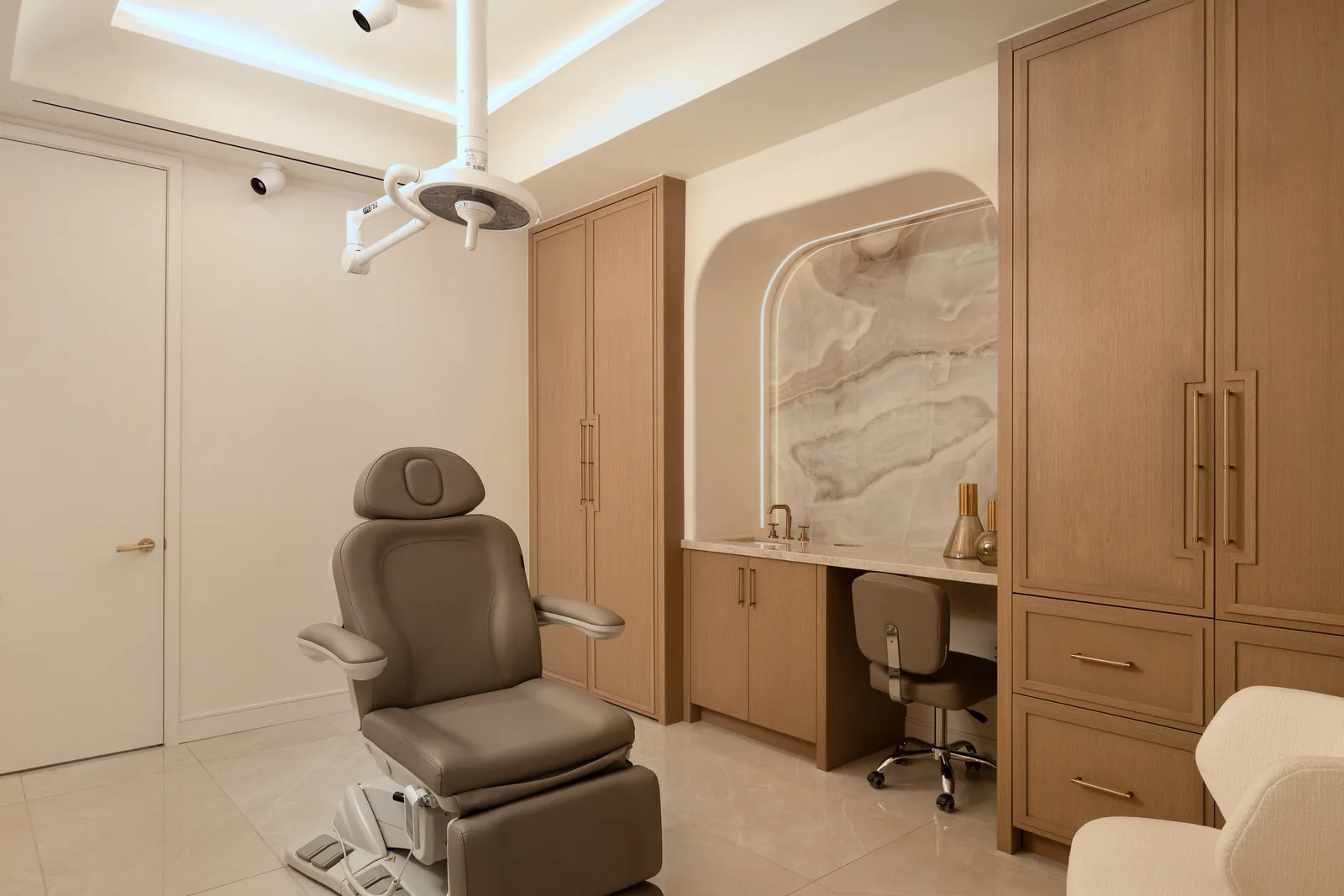
A dry skin visit at Aesthetica by Ashley Howarth MD takes about an hour. It begins with the assessment above, moves to the treatment the skin can tolerate that day, and ends with a home routine written for the desert. If a laser is in your future, this visit is also where the skin is prepared for it.
Oil, water, or both
The aesthetician examines the skin under magnification, checks for fine dehydration lines, reviews every product and habit (cleanser, retinoid, shower temperature, pool time), and rules out itching, weeping, or rash patterns that belong with a dermatologist. Photographs document the surface.
Hydrate, then resurface
Most first visits are a HydraFacial or a hydrating customized facial. A light peel is added only when the barrier is intact and the buildup is the main problem. Skin that stings on contact with water receives hydration only; exfoliation waits until the barrier recovers.
A desert routine in writing
You leave with a routine that fits your skin type: lukewarm showers under 10 minutes, moisturizer within three minutes of drying, a humectant on damp skin, a lipid moisturizer at night, a mineral SPF every morning, and a date for the next visit. Retinoids are paused or reduced until tightness resolves.
Clear Information. Informed Choices.
Safety and Limitations of Dry Skin Treatment
Hydration treatments are among the lowest-risk treatments offered at Aesthetica by Ashley Howarth MD, which is why they are the year-round and summer treatments. The limits are real, though. A HydraFacial restores water to the surface for days to weeks; it does not change how much oil the skin produces or how dry the air is. Peels on a compromised barrier can worsen irritation, so the team sequences hydration first. And flaking that itches or weeps is not treated cosmetically until a physician has ruled out eczema, contact dermatitis, or another skin disease.
Possible Side Effects Include
- Temporary pinkness for one to two hours after HydraFacial
- Light flaking for one to three days after a lactic or mandelic peel
- Stinging when a new product is introduced to a compromised barrier
- Breakouts in the first weeks of a heavier moisturizer on acne-prone skin
- Rarely, irritant or allergic reaction to a product ingredient
What Treatment Cannot Guarantee
- Lasting hydration without a daily home routine
- A change in the skin's underlying oil production
- Correction of fine lines that are structural rather than dehydration lines
- Relief of itching or rash without a medical diagnosis
- Protection from the next summer without sunscreen and moisturizer
What Happens After
The Weeks After a Hydration Treatment
The timeline below applies to the lead treatment, HydraFacial, and to a hydrating customized facial. A lighter peel adds one to three days of flaking in the first week. Unlike laser treatments, there is no sun-avoidance window, but the home routine matters more than the visit: the treatment restores water, and the routine keeps it there.
Skin looks plump and even immediately after a HydraFacial; mild pinkness fades within one to two hours. Makeup can be applied the same day. Avoid hot water, exfoliants, and retinoids for 24 to 48 hours. Apply the moisturizer and mineral SPF the team gave you before you leave the building.
Surface hydration from the treatment lasts several days to two weeks. This is the week to change habits: lukewarm showers, moisturizer within three minutes of drying, humectant on damp skin. If a light peel was included, expect fine flaking on days two to four; do not pick or scrub it.
Most Scottsdale patients maintain with a monthly HydraFacial or facial and adjust the routine twice a year: a heavier lipid moisturizer for summer air conditioning and winter heating, and stricter sunscreen from April to October. Dehydration lines fade; structural lines that remain are evaluated for other treatments.
Before & After
Dry and Dehydrated Skin, Before and After Treatment
Hydration results show best in close photographs taken in the same light: fine dehydration lines soften, flaking clears, and the surface reflects light evenly instead of looking gray. Aesthetica by Ashley Howarth MD maintains before-and-after galleries for HydraFacial, facials, and chemical peels, and the team can show you cases that match your skin type during your visit.
Patient Case Summaries
Selected Dry and Dehydrated Skin Case Summaries
These deidentified case summaries illustrate how the physician-led team at Aesthetica by Ashley Howarth MD evaluates and treats dry and dehydrated skin in the Arizona climate. They include a new arrival from a humid climate, a long-term resident, oily dehydrated skin, a darker skin type, skin prepared for a laser, and a consultation in which the recommendation was to see a dermatologist first. Each summary connects the patient’s concern and skin assessment with the treatment performed or the recommendation made.
Case 01
New arrival
A routine built for Houston humidity stopped working within two months of moving to Scottsdale
Patient presentation
A woman in her thirties who had relocated from Houston in the spring reported tightness after washing, flaking around her nose and brows, and foundation that looked patchy by midday. Her skin had been oily and trouble-free in Texas.
Skin assessment
The assessment showed dehydrated, not dry, skin: normal oil production, fine lines that appeared when the cheek was pressed, and a thickened surface layer. Her routine was a foaming cleanser twice daily, a nightly retinoid, no moisturizer, and no sunscreen.
Procedure performed
A HydraFacial in June, a corrected routine (non-foaming cleanser, hyaluronic acid serum on damp skin, ceramide moisturizer, mineral SPF 30), and the retinoid reduced to twice a week for one month.
Clinical rationale
Skin that was balanced at 70 percent humidity loses water constantly at 10 percent. The treatment restored surface hydration immediately; the routine change is what kept it.
Follow-up
At her monthly follow-up the tightness and flaking had resolved and the retinoid was back to nightly use. She continues monthly HydraFacials through the summer.
Case 02
Long-term resident
Thirty years of Arizona air and hot showers on truly dry skin
Patient presentation
A woman in her sixties who had lived in Scottsdale for three decades described skin that had always been dry and had become rough, dull, and ashen on her cheeks and jawline, with flaking that moisturizer no longer fixed.
Skin assessment
This was dry skin in the true sense: low oil production with an added dehydration component and a thick layer of dead surface cells. She took 15-minute hot showers nightly and used a light lotion once a day.
Procedure performed
A hydrating customized facial with gentle enzyme exfoliation, followed two weeks later by a lactic acid peel, and a routine built around lipid replacement: a cream cleanser, a ceramide-rich moisturizer twice daily, and lukewarm showers under 10 minutes.
Clinical rationale
Truly dry skin needs oils replaced, not just water added, and the dead surface layer had to be removed before any moisturizer could reach living skin. The lactic peel exfoliates and hydrates in the same step.
Follow-up
After the peel the ashen tone cleared and the surface felt smooth. She maintains with a facial every six weeks and a lactic peel each fall and spring.
Case 03
Oily and dehydrated
A man whose oily skin was also flaking, and the cleanser making both worse
Patient presentation
A man in his forties who swam laps outdoors four mornings a week reported a shiny forehead and nose, flaking on his cheeks, and stinging when he applied anything after swimming.
Skin assessment
The assessment showed oily, dehydrated skin with a compromised barrier: chlorine and daily sun had stripped surface lipids, and he was compensating with a salicylic acid wash twice a day. There was no rash and no sign of skin disease.
Procedure performed
A HydraFacial with the exfoliation step kept light, a gentle non-foaming cleanser to replace the salicylic wash, a lightweight humectant serum, an oil-free ceramide moisturizer, and a rinse with fresh water and moisturizer within minutes of leaving the pool.
Clinical rationale
The oil was a response to water loss, not the cause of the flaking. Stripping it drove more oil and more flaking. Restoring the barrier reduced both.
Follow-up
Within three weeks the stinging stopped and the flaking cleared; the shine was reduced but not eliminated, which is expected for his skin type. He returns monthly.
Case 04
Darker skin type
Ashen dryness and uneven tone on deeper skin required a gentler exfoliation plan
Patient presentation
A woman in her fifties with deep brown skin reported a gray, ashen cast on her cheeks and forehead, tightness, and patches of darker tone where the skin had flaked and been scrubbed.
Skin assessment
The assessment showed dehydration with a thick surface layer and early post-inflammatory hyperpigmentation where physical scrubbing had irritated the skin. Her skin type carried a higher risk of pigment response to aggressive exfoliation or peels.
Procedure performed
A hydrating customized facial with enzyme exfoliation only, no scrubs, a series of three very light mandelic acid peels spaced four weeks apart, and a routine of humectant serum, lipid moisturizer, and daily mineral SPF 30.
Clinical rationale
On Fitzpatrick V skin, the ashen cast comes from dry surface cells scattering light, and it clears with gentle exfoliation and hydration. Aggressive peels or scrubs risk exactly the pigment she was already seeing.
Follow-up
After the third peel the ashen tone had cleared and the darker patches had faded with daily sunscreen. She maintains with a facial every six weeks and no physical exfoliants.
Case 05
Pre-laser preparation
Dehydrated skin was corrected for a month before a planned HALO in January
Patient presentation
A woman in her forties came in October asking for HALO in November to treat texture and sun damage. Her skin was tight, flaky, and stung when cleansed.
Skin assessment
Her skin was untanned and otherwise a good candidate for HALO, but the barrier was compromised. Laser on a dehydrated, irritated barrier heals more slowly and carries a higher risk of prolonged redness and post-inflammatory pigment.
Recommendation
HALO was moved to January. A HydraFacial in October and again in December, a barrier-repair routine started the same day, and the retinoid paused until the barrier recovered.
Clinical rationale
A laser result depends on how the skin heals, and a hydrated barrier heals faster and more evenly. Two months of preparation cost nothing in laser season and improved the outcome.
Follow-up
By January the stinging and tightness had resolved. HALO proceeded on schedule with about six days of downtime and no prolonged redness, and she continues monthly HydraFacials between seasons.
Case 06
Honest guidance
Flaking that itched and wept was eczema, not dryness, and went to a dermatologist first
Patient presentation
A woman in her twenties, new to Arizona, asked for a HydraFacial and a peel for dry, flaky patches on her cheeks and eyelids that had appeared over the winter.
Skin assessment
On examination the patches were pink, itchy, and slightly weeping at the edges, with a pattern on the eyelids and around the mouth consistent with eczema or contact dermatitis rather than simple xerosis. The physician-led team does not perform a peel or extraction on inflamed skin.
Recommendation
Referral to a dermatologist for diagnosis and treatment before any spa treatment. In the meantime, a bland ceramide moisturizer, a fragrance-free non-foaming cleanser, and no exfoliation or active ingredients.
Clinical rationale
Eczema and contact dermatitis need a diagnosis and, often, a prescription. A peel or acid serum on inflamed skin would have worsened the barrier and delayed the correct treatment.
Follow-up
The dermatologist diagnosed eczema and prescribed a topical treatment. Once the patches cleared she returned for a hydrating facial, with peels avoided on the affected areas.
From First Visit to a Plan You Can Keep
Booking, Planning, and Follow-Up at Aesthetica by Ashley Howarth MD
Aesthetica by Ashley Howarth MD is a medical practice with a spa’s convenience. Established medspa patients book online. New patients can book online or request a consultation, and the team responds usually the same day.

Online booking or a consultation request
Book a HydraFacial or skin visit directly online, or request a consultation and describe what you notice. Either path starts with the same skin assessment.
A routine and a schedule
You leave your first visit with a written home routine, the treatment interval that fits your skin, and, if a laser is planned, the date your barrier will be rechecked before it.
Monthly maintenance, adjusted by season
Most Scottsdale hydration plans run monthly, with the routine adjusted for summer air conditioning and winter heating. A-List members have the next visit scheduled before they leave the last one.
Your Questions, Answered
Dry and Dehydrated Skin Frequently Asked Questions
Dry skin lacks oil. It is a skin type, produces too little sebum, and tends to be lifelong. Dehydrated skin lacks water in its outer layer. It is a temporary condition, can affect any skin type including oily skin, and is usually caused by climate, hot water, harsh cleansers, or over-exfoliation. Both feel tight and flaky, which is why the skin assessment matters.
Afternoon humidity in the Scottsdale area often falls below 15 percent, so water leaves the skin faster than it can be replaced. Air conditioning most of the year, pool chlorine, long hot showers, and about 300 days of sun add to the loss. Most people who move here see tightness, flaking, and dullness within their first few months.
For most patients the first treatment is a HydraFacial, which cleanses, gently exfoliates, and infuses hydrating serums in about 30 to 45 minutes with no downtime, paired with a barrier-repair home routine. Customized facials and lighter chemical peels are added when a thick, dull surface layer is blocking moisturizer. Plans are set at the skin assessment at Aesthetica by Ashley Howarth MD in Scottsdale.
Yes. HydraFacial has no downtime and no sun-avoidance requirement, which makes it one of the summer treatments at Aesthetica by Ashley Howarth MD along with customized facials and lighter peels. Light and laser treatments such as BBL HERO and HALO wait for October to April; hydration treatments do not.
Monthly is the usual interval. Surface hydration from a single treatment lasts several days to about two weeks, and the skin’s outer layer renews on roughly a four-week cycle, so a monthly visit keeps the surface clear and hydrated. The home routine between visits does most of the work.
A light peel helps when flaking comes from a thick layer of dead cells that moisturizer cannot penetrate. Lactic acid and mandelic acid peels remove that layer with one to three days of light flaking, and lactic acid also draws water into the skin. A peel makes things worse when the barrier is already irritated, so hydration comes first.
A non-foaming or cream cleanser, a humectant serum such as hyaluronic acid applied to damp skin, a moisturizer with ceramides or other lipids, and a mineral broad-spectrum SPF 30 or higher every morning. Aesthetica by Ashley Howarth MD carries medical-grade lines including ZO Skin Health and SkinBetter Science and writes a routine for each patient’s skin type.
Yes. Hot water dissolves the lipids that hold moisture in the skin, and chlorine strips them further. The fix is simple: lukewarm showers under 10 minutes, moisturizer within three minutes of towel drying, and a fresh-water rinse followed by moisturizer as soon as you leave the pool. In Arizona these habits matter as much as any treatment.
Yes. A hydrated, intact barrier heals faster and more evenly after MOXI, HALO, or BBL HERO, with less prolonged redness and lower pigment risk. When skin is visibly dehydrated, Aesthetica by Ashley Howarth MD schedules two to four weeks of barrier repair and a HydraFacial before the laser, which fits easily inside the October to April laser season.
When it itches, weeps, cracks, or appears as pink patches in a pattern, especially on the eyelids, around the mouth, or in skin folds. Those signs suggest eczema, contact dermatitis, or another skin disease that needs a diagnosis. The physician-led team at Aesthetica by Ashley Howarth MD refers those cases to a dermatologist before any spa treatment.
Related Care
Treatments for Arizona Skin
These pages explain the treatments named in this guide. Concern-specific guides for sun damage, redness, melasma, dryness, and texture are being added to this section.
- HydraFacial Cleanse, exfoliate, and hydrate with no downtime
- Customized Facials Matched to skin that lacks oil, water, or both
- Chemical Peels Light peels that clear the dull surface layer
- MOXI Laser Gentle fractional laser once the barrier is ready
- Medspa at Aesthetica by Ashley Howarth MD All injectable, laser, and skin treatments
- Skin in Arizona Why timing matters in the desert
BEGIN HERE
Request a Consultation
Tell us what you are considering. A member of our patient care team will follow up with consultation availability and next steps.

Megan S.
Patient Coordinator
Prefer to talk or text?
Selected References