
DEPTH CHANGES THE TREATMENT
What Is Deep Ablative Laser Skin Resurfacing?
Laser skin resurfacing uses controlled laser energy to remove or fractionally treat selected layers of damaged skin. For patients who need a deeper ablative plan, Ashley Howarth, MD, FACS, personally performs treatment using Sciton erbium technologies including Contour TRL, ProFractional, and MicroLaserPeel. The device name does not determine the plan by itself. Dr. Howarth selects the treated areas, pattern, depth, setting, and recovery plan after examining your skin and the facial structures beneath it.
SKIN QUALITY AND FACIAL STRUCTURE ARE DIFFERENT
What Can Laser Resurfacing Address?
Deep resurfacing is considered for selected concerns involving the skin surface. Similar-looking changes can also come from facial movement, volume loss, eyelid anatomy, or tissue descent, so Dr. Howarth determines whether resurfacing addresses the actual problem before recommending treatment.
- Etched lines around the mouth or selected areas around the eyes
- Advanced sun damage, rough texture, or an uneven skin surface
- Selected acne-scar patterns after the scar type is examined
- Skin-quality concerns considered separately from laxity, jowls, or volume loss
Laser Resurfacing for Lines Around the Mouth and Eyes
Etched perioral lines, sometimes called vertical lip lines or lipstick lines, and selected periocular wrinkles may respond to carefully planned resurfacing when the concern is primarily within the skin. Dr. Howarth separately evaluates facial movement, volume loss, eyelid support, skin thickness, and pigment risk because laser does not correct every cause of lines around the mouth or eyes.
A consultation should clarify what resurfacing may change, what it will not change, how treatment depth affects recovery, and whether the expected tradeoffs fit your priorities.

THE EXAMINATION COMES FIRST
Laser Resurfacing Candidacy, Alternatives, and Consultation
You do not need to arrive knowing whether you need Contour TRL, ProFractional, MicroLaserPeel, another treatment, or no procedure. Dr. Howarth evaluates the concern you want to change, skin thickness and quality, pigment history and skin phototype, recent sun exposure, prior procedures, cold-sore history, medications, health conditions, smoking, healing and scar history, daily demands, and your ability to complete wound care and follow-up.
Resurfacing may not be appropriate with an active infection, significant recent sun exposure or tanning, uncontrolled medical factors, impaired healing, certain medications, pregnancy, or expectations that laser cannot meet. Timing and candidacy are individualized after examination.

PERSONAL DECISIONS. THOUGHTFUL CARE.
Privacy During Laser Resurfacing Consultation and Care
Questions about facial skin treatment can feel personal. When you contact us, you can indicate whether you prefer a call or text. Your consultation with Dr. Howarth is a thoughtful conversation about your skin, medical history, concerns, goals, and the recovery a proposed treatment would require.
JUDGMENT ACROSS SKIN AND STRUCTURE
Why Choose Dr. Howarth for Deep Laser Resurfacing?
Deep ablative resurfacing requires more than choosing a device setting. Dr. Howarth evaluates both the skin surface and the facial structures beneath it, including tissue descent, eyelid excess, volume loss, and underlying facial support. Laser resurfacing can improve wrinkles, scars, sun damage, and texture, but it cannot reposition descended tissue or replace volume.
Because Dr. Howarth provides both physician-performed laser resurfacing and facial surgery, the consultation is not limited to finding a way to use the laser. She may recommend laser treatment, a facelift or another facial procedure, a carefully planned combination, a nonsurgical alternative, or no procedure when the expected benefit does not justify treatment. This deeper physician-performed pathway is distinct from the lighter laser and light-based treatments offered through Aesthetica, and your written plan explains which concern each recommendation is intended to address.
PLASTIC SURGERY
OF SURGEONS
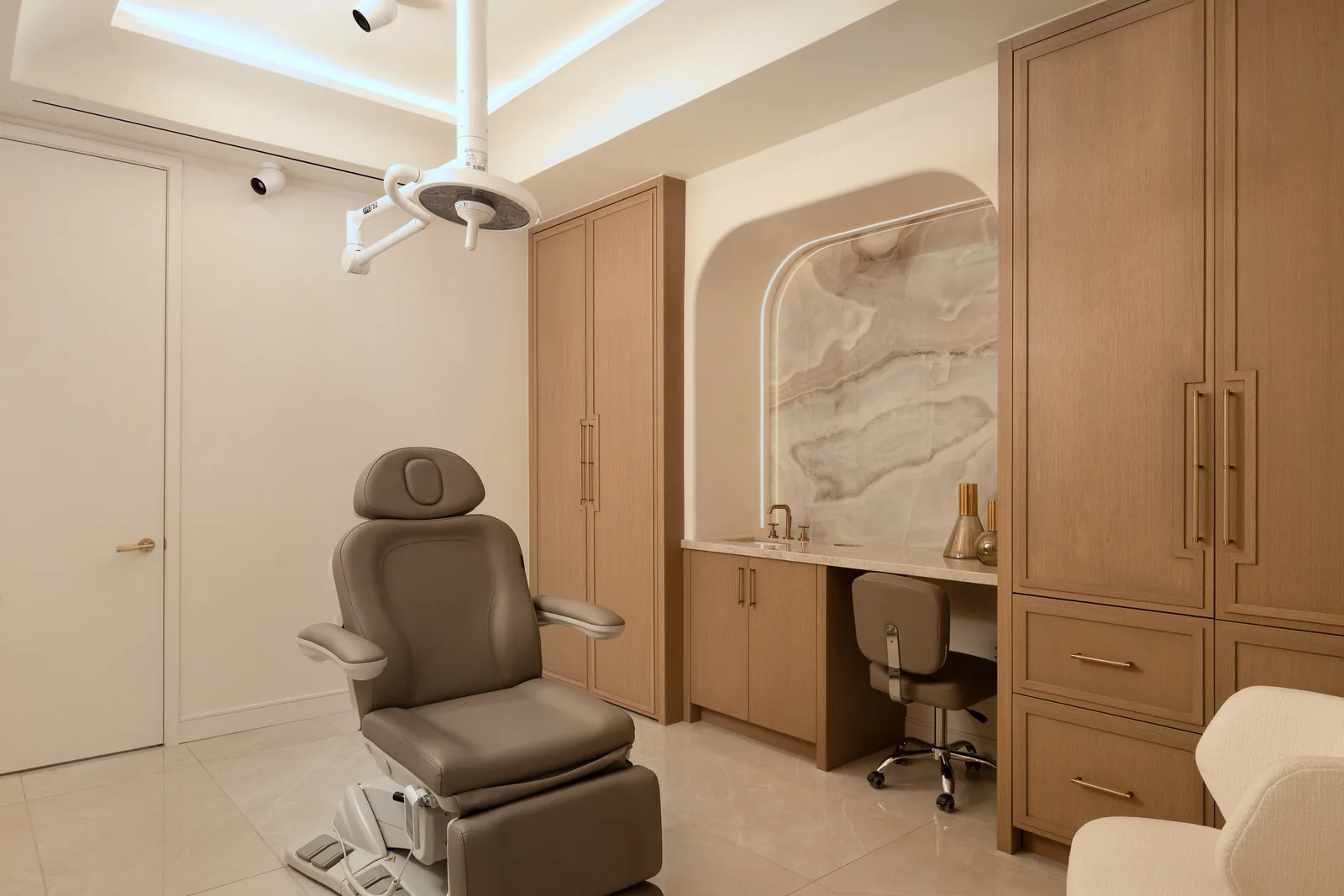
SCOTTSDALE · MODERN OFFICE SETTING
FROM QUESTIONS TO A SAFE RECOVERY PLAN
Laser Consultation and Patient Care Coordination
From your first inquiry, your patient care coordinator helps organize consultation, estimates, scheduling, preparation, travel, and follow-up logistics. Dr. Howarth and her clinical team answer medical questions, determine candidacy, and provide the treatment and recovery instructions for your individualized plan.

A thoughtful beginning.
Your patient care coordinator can help arrange your consultation and explain what photographs, records, or other information the clinical team would like you to have ready when relevant.
Clear information before you decide.
After Dr. Howarth recommends a plan, your coordinator can review the written estimate, financing information, scheduling requirements, forms, next steps, and practical questions with you.
Practical details, clearly organized.
Once required visits are known, your coordinator can help organize Scottsdale travel and follow-up timing. Dr. Howarth and her clinical team provide individualized medical and recovery guidance.
MATCHING DEPTH TO THE CONCERN
Laser Resurfacing Approaches
Full-Field Erbium
Contour TRL. Treats the complete selected surface for etched wrinkles, deeper sun damage, and selected lines around the mouth. Recovery depends on treatment depth and the area treated.
Fractional Erbium
ProFractional. Creates separated treatment channels for selected acne scars, texture concerns, and regional resurfacing. Recovery varies with treatment intensity.
Superficial Full-Field
MicroLaserPeel. Provides shallower surface renewal or helps blend transitions within a broader resurfacing plan.
Combined by Facial Zone
More than one mode. Dr. Howarth may match different resurfacing patterns to the mouth, eyes, cheeks, forehead, or facial borders. Recovery follows the deepest area treated.
A PLAN CONFIRMED BEFORE TREATMENT
What Happens on the Day of Laser Resurfacing?
The treated areas, depth, office or operating-room setting, anesthesia plan, eye protection, transportation, wound-care supplies, and follow-up schedule are confirmed before treatment. Exact details depend on the selected zones and whether resurfacing is performed alone or with facial surgery.
Preparation reviewed with you.
The team reviews skin preparation, sun avoidance, medications, antiviral planning when indicated, transportation, and remaining questions. Dr. Howarth confirms the treatment map and setting.
Depth and coverage selected by Dr. Howarth.
Dr. Howarth performs the planned full-field, fractional, or combined erbium treatment with appropriate anesthesia, skin preparation, and eye protection for the selected facial zones.
Wound care and direct follow-up.
The treated skin is protected according to the plan. You receive written instructions for cleansing, moisture, cooling, medications, activity, sun avoidance, scheduled checks, and contacting the practice with concerns.
CLEAR INFORMATION. INFORMED CHOICES.
Laser Resurfacing Safety, Risks, and Limitations
Ablative resurfacing intentionally creates a controlled skin injury. Careful selection, technique, preparation, and follow-up help manage risk but cannot eliminate it. Risk changes with treatment depth and coverage, skin phototype and pigment history, health and healing factors, sun exposure, prior procedures, and adherence to postoperative care.
Possible Complications Include
- Prolonged redness, swelling, discomfort, itching, or sensitivity
- Infection, including herpes simplex reactivation when relevant
- Delayed surface healing, acne-like eruptions, milia, or contact irritation
- Post-inflammatory hyperpigmentation, hypopigmentation, or uneven color
- Scarring, persistent texture change, visible treatment borders, or an unsatisfactory result
- Need for additional care, staged treatment, or correction of a complication
What Laser Cannot Guarantee
- A facelift-level correction of jowls, descended tissue, or significant skin excess
- Removal of every wrinkle, scar, pigment change, pore, or surface irregularity
- Exact symmetry, a uniform response across every facial zone, or a specific percentage of improvement
- A fixed recovery date or freedom from persistent redness and pigment change
- The same result shown in another patient or permanent protection from continued aging and sun damage
HEALING HAPPENS IN STAGES
Deep Laser Resurfacing Recovery
Recovery, often described as downtime, varies with treatment depth and coverage, full-field or fractional technique, facial zones, office or operating-room setting, coordinated procedures, skin characteristics, daily demands, and individual healing. Dr. Howarth’s written instructions for your plan take priority over general timelines.
Warmth, swelling, and protected skin
Warmth, swelling, redness, drainage or pinpoint bleeding, and a tight or sunburn-like sensation may occur. Cooling, moisture, prescribed medications, head elevation, and direct wound-care instructions support this phase.
Approximately 10 to 14 days after deeper treatment
Deeper full-field treatment commonly requires deliberate cleansing and continuous protective moisture while the new surface forms. Makeup and ordinary skincare wait until Dr. Howarth confirms that the skin has healed sufficiently.
Social recovery and activity resume separately
Surface closure does not mean the skin looks or feels completely normal. Makeup, work, exercise, travel, heat exposure, and sun exposure resume according to healing and the specific treatment plan.
Redness and skin remodeling continue
Pinkness, dryness, tightness, sensitivity, or pigment change may persist for weeks to months after deeper resurfacing. Follow-up monitors healing while texture and collagen-related changes continue to evolve.
BEFORE & AFTER GALLERIES
Private Laser Resurfacing Before & After Gallery
Laser skin resurfacing before-and-after photographs can help illustrate changes in lines, texture, pigment, and overall skin quality, but they are most useful with clinical context. As both a woman and a surgeon, Ashley Howarth, MD, FACS, understands the trust involved in sharing them. Howarth Plastic Surgery in Scottsdale makes galleries of real patient results available by request through private before-and-after reviews.
Keeping laser resurfacing before-and-after galleries off unrestricted public pages helps preserve patient dignity and clinical context while limiting casual viewing, unauthorized reposting, and collection by automated systems or AI agents.
During a private review, you can see a range of physician-performed laser resurfacing results and discuss how treatment depth, facial zones, starting skin, healing, and timing influenced each outcome. These photographs can support an informed consultation, but individual results vary, and no image can predict your outcome.
Individualized Decision-Making
Selected Laser Resurfacing Case Summaries
These are real, deidentified patient cases from Dr. Howarth’s practice. They show how Ashley Howarth, MD, FACS, distinguishes treatment depth, resurfacing pattern, setting, and alternatives. Details are summarized to protect patient privacy, and the cases are educational examples rather than promises that another patient will receive the same plan or result.
Case 01
DEEP PERIORAL LINES
Deep lines around the mouth were treated with focused full-field resurfacing
Primary concern
The patient described deep vertical lip lines and etched texture around the mouth that remained visible at rest.
Clinical evaluation
Dr. Howarth evaluated line depth, facial movement, skin thickness, pigment history, prior injectable treatment, and whether volume loss also contributed.
Procedure performed
Dr. Howarth performed focused full-field erbium resurfacing with Contour TRL at a depth selected for the patient’s skin and planned recovery.
Clinical rationale
The principal concern involved the skin surface rather than significant lower-face laxity or isolated volume loss.
Follow-up
Follow-up addressed surface healing, wound care, pinkness, sun protection, and changes in the appearance of the etched perioral lines as the skin matured.
Case 02
ACNE SCARS AND TEXTURE
Depressed acne scars were addressed with fractional erbium resurfacing
Primary concern
The patient was concerned about depressed acne scars and irregular cheek texture.
Clinical evaluation
Dr. Howarth assessed scar type and depth, skin phototype, pigment risk, active acne, previous scar treatments, and which scars could reasonably respond to laser.
Procedure performed
Dr. Howarth performed fractional erbium resurfacing with ProFractional, individualizing treatment density and depth by region.
Clinical rationale
Fractional treatment allowed selected columns of deeper resurfacing while leaving intervening skin intact. The plan was based on scar pattern rather than treating every irregularity with one uniform setting.
Follow-up
Follow-up addressed recovery after treatment, pigment surveillance, sun protection, texture change, and whether additional staged treatment would be appropriate.
Case 03
FULL-FACE PHOTODAMAGE
Advanced sun damage required a region-by-region resurfacing plan
Primary concern
The patient described diffuse sun damage, rough texture, fine lines, and uneven surface quality across the face.
Clinical evaluation
Dr. Howarth evaluated the distribution and depth of photodamage, skin phototype, pigment history, recent sun exposure, facial anatomy, and the patient’s ability to complete a more involved recovery.
Procedure performed
Dr. Howarth used a physician-directed combination of full-field Contour TRL and fractional ProFractional treatment, varying the approach by facial region.
Clinical rationale
The patient had several skin-quality concerns that were not best addressed with one uniform setting or a lighter treatment alone.
Follow-up
Follow-up addressed surface healing, duration of redness, return to skin care and makeup, sun protection, and progressive changes in texture and visible photodamage.
Case 04
EARLIER TEXTURE CHANGE
A lighter full-field peel was selected for more superficial concerns
Primary concern
The patient wanted to address early fine lines, mild roughness, and dull or uneven texture without deeply etched wrinkles.
Clinical evaluation
Dr. Howarth evaluated concern severity, previous treatments, pigment risk, available recovery time, and whether deep ablative treatment would represent unnecessary treatment.
Procedure performed
Dr. Howarth performed a MicroLaserPeel at an individualized depth for the more superficial skin changes identified on examination.
Clinical rationale
The concern did not require the intensity or recovery associated with deep full-field resurfacing.
Follow-up
Follow-up addressed peeling, surface healing, return to normal skin care, sun protection, and changes in texture as healing progressed.
Case 05
STRUCTURE AND SKIN QUALITY
Facial surgery and laser resurfacing were coordinated in one operative plan
Primary concern
The patient had facial or eyelid aging involving both tissue position and etched skin-surface changes.
Clinical evaluation
Dr. Howarth separated the concerns caused by laxity, eyelid anatomy, volume loss, and skin texture, then considered whether coordinating treatments was medically and practically appropriate.
Procedure performed
Dr. Howarth coordinated the indicated facial or eyelid surgery with physician-performed laser resurfacing in an operating-room plan.
Clinical rationale
Surgery addressed structural aging while resurfacing addressed selected skin-quality concerns that surgery alone would not correct.
Follow-up
Follow-up addressed incision and surface healing, swelling, skin care, facial movement, and the separate evolution of structural and skin-surface changes.
Case 06
DEEP RESURFACING NOT ADVISED
Deep ablative resurfacing was not recommended when risk outweighed likely benefit
Primary concern
The patient requested aggressive resurfacing for pigmentation, melasma, recent sun-related change, or another concern that appeared to call for laser treatment.
Clinical evaluation
Dr. Howarth evaluated skin phototype, pigment behavior, recent sun exposure, medical and healing factors, recovery availability, and whether ablative treatment could worsen the concern.
Recommendation
Dr. Howarth recommended delaying treatment, selecting a more conservative option, addressing another condition first, or avoiding ablative resurfacing.
Clinical rationale
The potential benefit did not justify the patient’s individualized risk or recovery burden and treatment was not recommended.
Follow-up
No deep resurfacing was scheduled. The patient received an individualized explanation of the concern, alternatives, sun protection, and when reassessment might be appropriate.
PLANNING WITH CLARITY
Laser Resurfacing Cost, Financing, and Travel to Scottsdale
Laser Resurfacing Cost
At Howarth Plastic Surgery in Scottsdale, physician-performed full-face laser resurfacing typically costs $4,000 to $10,000. The final estimate depends on the areas treated, resurfacing depth, use of fractional and full-field techniques, office or operating-room setting, anesthesia, and whether resurfacing is combined with facial surgery. Focused treatment plans may cost less, while advanced or combination cases may extend beyond this range.
After consultation with Dr. Howarth, you will receive a personalized written estimate for the plan she recommends.
Financing Options
Howarth Plastic Surgery is a cash-pay practice and does not accept or bill insurance. Your patient care coordinator can review financing through PatientFi and CareCredit, subject to third-party approval.
Planning Care in Scottsdale
If you are traveling from elsewhere in Arizona or out of state, out-of-town patient information can help you plan around consultation, surgery, and follow-up. Required appointment dates, how long to remain nearby, and when travel may resume are individualized. An initial consultation may take place virtually, but an in-person examination is required before the operative plan is finalized.

DIRECT ANSWERS
Laser Skin Resurfacing Frequently Asked Questions
Yes. Ashley Howarth, MD, FACS, personally evaluates and performs the premium physician resurfacing service described on this page, including selected deep, full-field, fractional, zone-specific, operating-room, and surgery-coordinated plans using Contour TRL, ProFractional, and MicroLaserPeel. Aesthetica also offers lighter laser care that may be performed by a qualified member of the clinical team. Your written plan identifies who will perform each part.
Full-field resurfacing treats the complete surface within the selected area. Fractional treatment creates separated treatment channels with intervening skin left untreated. Either approach can be superficial or more intensive depending on the platform and settings, so the terms do not describe recovery by themselves.
Contour TRL is used for tunable full-field erbium resurfacing. ProFractional creates fractionated erbium treatment channels. Dr. Howarth may select one or combine approaches across facial zones when the anatomy and skin findings support it.
MicroLaserPeel provides superficial full-field erbium resurfacing. It may be used as a lighter ablative treatment or to blend transitions within a broader plan rather than serving as the deepest component of treatment.
Neither wavelength is universally better. Erbium and CO2 systems differ in tissue interaction, available platforms, treatment patterns, recovery, and risk. The appropriate choice depends on the concern, skin, treatment depth, clinician experience, and complete care plan.
Not when the principal concern is descended facial tissue, jowls, significant skin excess, or structural eyelid anatomy. Resurfacing changes skin quality; facelift and eyelid procedures address different tissues. They may be alternatives, coordinated treatments, or neither depending on examination.
Either setting may be considered. Treatment area and depth, anesthesia needs, medical history, comfort, transportation and support, and whether resurfacing accompanies facial surgery all affect the recommendation.
Deeper full-field treatment commonly requires approximately 10 to 14 days for surface healing, followed by a longer period of pinkness, dryness, tightness, and sensitivity that may last weeks to months. Fractional or more limited treatment may follow a different course.
No treatment is automatically safe for every skin type. Pigment history and Fitzpatrick phototype, recent sun exposure, prior reactions, health and medications, and the selected depth all influence risk, including post-inflammatory hyperpigmentation and hypopigmentation.
At Howarth Plastic Surgery, physician-performed full-face laser resurfacing typically costs $4,000 to $10,000. Focused treatment may cost less, while operating-room, anesthesia, advanced, or combination plans may extend beyond this range. A written estimate follows consultation.
Related Care
Related Facial Procedures
These pages explain options that may be considered separately depending on your anatomy, goals, and Dr. Howarth’s recommendation after examination.
- Contour TRLTechnical details about tunable full-field erbium resurfacing.
- ProFractionalTechnical details about fractional erbium resurfacing.
- MicroLaserPeelTechnical details about superficial full-field erbium resurfacing.
- FaceliftFor jowls, descended facial tissue, and structural lower-face concerns rather than skin texture.
- Eyelid SurgeryFor eyelid skin, fat, support, and contour concerns that resurfacing does not correct.
- Sciton Laser & Light TreatmentsCompare physician resurfacing with lighter laser and broadband-light options.
BEGIN HERE
Request a Consultation
Tell us what you are considering. A member of our patient care team will follow up with consultation availability and next steps.

Megan S.
Patient Coordinator
Prefer to talk or text?
Selected Medical References