
Seven Services, One Decision
Which Medical Aesthetics Treatment Is Right for You?
At Aesthetica by Ashley Howarth MD, the med spa of Howarth Plastic Surgery in Scottsdale, the right medical aesthetics treatment follows a ladder: a facial is the first rung, HydraFacial and light chemical peels the second, SkinPen microneedling and medium peels the third, and Ellacor the fourth, before the plan moves up to Sciton lasers in laser season or to facial surgery. The seven services share one room and one physician, so the choice depends on what you are treating, your skin type, the downtime you can accept, and the time of year.
The right medical aesthetics treatment depends on what you are treating, your skin type, the downtime you can accept, and the time of year, and at Aesthetica by Ashley Howarth MD, the med spa of Howarth Plastic Surgery in Scottsdale, the answer follows a short set of rules. HydraFacial is the no-downtime treatment for dull, dehydrated, or congested skin and the summer bridge between laser seasons. Customized facials with medical-grade skincare are the monthly maintenance for skin that is basically healthy. Chemical peels resurface pigment, texture, and breakouts, light ones year-round and medium ones in the cooler months. SkinPen microneedling rebuilds collagen for acne scars, texture, and fine lines on every skin type, including in summer. Ellacor removes micro-cores of skin for moderate to severe wrinkles of the lower face when the alternative is surgery. Lymphatic massage reduces swelling after surgery and travel. And registered nurse ear piercing is piercing with a hollow needle in a medical setting. The practice’s medical weight loss program and hormone therapy live under Functional Wellness, not on this page.
The seven services share one room and one physician, so the comparison is not a choice between clinics but a choice within one plan, and the plan has a ladder. A facial is the first rung, HydraFacial and light peels the second, SkinPen and medium peels the third, Ellacor the fourth, and above that the Sciton lasers during laser season, October to April, and finally physician-performed laser skin resurfacing and facial surgery. The tables below place all seven services side by side and then match each concern to a first choice, an alternative, and the point at which the honest answer moves up the ladder to a laser or an operation. For the calendar that decides when the light-based rungs happen, read Skin in Arizona; for injectables, which sit alongside this ladder rather than on it, read the Botox and dermal filler guides.

What Patients Ask When Comparing
The Questions Behind the Comparison
Most people who ask Aesthetica by Ashley Howarth MD to compare treatments arrive with a name from a friend or a search result and a concern that may or may not match it. The questions they bring are consistent, and the comparison exists to answer them in order.
- Is a HydraFacial just an expensive facial?
- I have acne scars and dark skin; is microneedling safer than a laser?
- Which peel actually does something, and can I get it in July?
- Will Ellacor tighten my jowls, or do I need a facelift?
- Will lymphatic massage or a HydraFacial do more for a puffy, tired face?
- Who is actually doing my treatment, and is a doctor involved?
Each question has a different answer, and several have the same answer for different reasons. The comparison is built so that the treatment follows the concern, the skin type, and the calendar, never the other way around.


Where to Start
How the Skin Assessment Decides Between Treatments
The comparison is settled at a skin assessment, not on this page. The licensed aesthetician at Aesthetica by Ashley Howarth MD examines the skin under magnification and answers four questions in order. What is the primary concern: dryness, dullness, or congestion, which points to HydraFacial or a facial; pigment or breakouts, which point to chemical peels; scars, texture, and fine lines, which point to SkinPen; deep lower-face wrinkles, which point to Ellacor or to Dr. Howarth. What is the Fitzpatrick skin type, which keeps darker skin on light peels and SkinPen rather than medium peels and most lasers. How many days of visible healing can you accept, which separates a peel plan from a SkinPen plan and either from Ellacor. And what month is it, since medium peels and the lasers wait for October to April while HydraFacial, facials, light peels, and SkinPen run through an Arizona summer. The assessment also flags what a med spa should not treat: a changing pigmented lesion that needs a dermatologist, jowls and a loose neck that need surgery, and an abdominal apron after major weight loss that needs body contouring. Ear piercing begins with its own placement consultation with a registered nurse.
Dr. Ashley Howarth, MD, FACS is a board-certified plastic surgeon and an instructor in plastic surgery at Mayo Clinic. Aesthetica by Ashley Howarth MD is the medical aesthetics brand of her practice, Howarth Plastic Surgery, at 7373 N. Scottsdale Road, Suite C150, Scottsdale, Arizona 85253.

Four Questions That Choose the Treatment
How Medical Aesthetics Treatments Are Compared at Aesthetica by Ashley Howarth MD
What You Are Treating: Surface, Collagen, or Structure
Concerns sort into three layers (surface, collagen, and structure), and naming the right one first prevents the common mistake of treating a collagen problem with a surface tool for a year.
Concerns sort into three layers, and each layer has its tools. Surface problems, dehydration, dullness, congestion, and superficial pigment, respond to HydraFacial, facials, and light chemical peels. Collagen problems, acne scars, texture, and fine lines, need an injury-and-repair treatment: SkinPen, a medium peel, or a Sciton laser. Structural problems, deep lower-face folds and early laxity, need tissue removed or repositioned: Ellacor at the top of the med spa menu, then surgery. Naming the layer first prevents the most common mistake, which is treating a collagen problem with a surface tool for a year.
Skin Type and the Arizona Calendar
Fitzpatrick skin type and the Arizona calendar (about 300 days of sun and a summer UV index of 11 or higher) decide which treatments are safe now and which wait for laser season, October to April.
Fitzpatrick skin type and the month decide what is safe. Darker skin types, IV to VI, are kept on treatments that do not rely on heat or on differential pigment absorption: HydraFacial, facials, light peels with pre-treatment, and SkinPen, which is used across all skin types; medium peels and Ellacor, which is cleared for types I to IV, are chosen more carefully. In Arizona, with about 300 days of sun and a summer UV index that regularly reaches 11 or higher, medium peels and the Sciton lasers wait for laser season, October to April, while HydraFacial, facials, light peels, and SkinPen with strict sun avoidance carry the summer. Skin in Arizona explains the calendar.
The Downtime You Can Accept
Downtime ranges from none for HydraFacial, facials, and light peels to 1 to 3 days for SkinPen, 5 to 7 days for a medium peel, and about 3 days to a week for Ellacor, and the rule is to buy only the downtime the concern needs.
Downtime is the honest trade for change. HydraFacial, facials, lymphatic massage, and light peels have none. SkinPen is 1 to 3 days of pinkness. A medium peel is 5 to 7 days of visible peeling. Ellacor is about 3 days of redness and pinpoint scabs, up to a week. Above the med spa, HALO is 5 to 7 days and deep resurfacing 7 to 10 or more. A patient who can give no days gets HydraFacial and a series; one who can give a long weekend gets SkinPen or a medium peel; one who can give a week and wants lower-face wrinkles changed gets Ellacor or a laser. The rule is to buy only the downtime the concern needs.
When to Escalate: Facial to Laser to Surgery
A facial that hasn’t changed a concern in three months, etched lines or deep scars left by a peel or SkinPen series, or jowls and loose skin caused by descent rather than skin quality are each signs it’s time to escalate to a laser or to facelift, neck lift, eyelid, or body-contouring surgery.
The most useful thing a plastic surgeon’s med spa offers is knowing when to stop. A facial that has not changed the concern in three months is a sign the concern is not a surface problem. A peel or SkinPen series that leaves etched lines or deep scars behind is a sign the concern needs a laser: ProFractional for scars, Contour TRL for etched lines, both in laser season. Jowls, a loose neck, and heavy upper eyelids are descent, not skin quality, and no device on this page lifts them; facelift, neck lift, and eyelid surgery do. Skin stretched by 50 pounds or more of weight loss needs body contouring. At Aesthetica by Ashley Howarth MD the same physician who directs the med spa performs the surgery, so the escalation is a conversation, not a referral into the unknown.
Side by Side
All Seven Medical Aesthetics Services Compared
The seven medical aesthetics services at Aesthetica by Ashley Howarth MD by what they are, what they are best for, sessions, downtime, and who performs them. Individual plans are set at the skin assessment.
| Treatment | What it is | Best for | Sessions | Downtime | Performed by |
|---|---|---|---|---|---|
| HydraFacial | Three-step vortex treatment: cleanse and peel, extract and hydrate, fuse and protect; 30 to 45 minutes | Dull, dehydrated, congested skin; all skin types including sensitive; the summer bridge between laser seasons | Monthly, or a series of 3 to 5 | None | Licensed aesthetician |
| SkinPen Microneedling | FDA-cleared microneedling with a sterile single-use cartridge; no heat | Acne scars, texture, pores, fine lines; all Fitzpatrick types; summer with strict sun avoidance | 3 to 6, four to six weeks apart | 1 to 3 days pink | Licensed aesthetician or nurse |
| Chemical Peels | Light peels (glycolic, salicylic, lactic, mandelic) or medium TCA peels in the 20 to 35 percent range | Pigment, breakouts, rough texture, dullness; light peels for darker skin | Light: 4 to 6, two to four weeks apart; medium: 1 to 3 a year | Light: none; medium: 5 to 7 days of peeling | Licensed aesthetician |
| Facials | Customized 60-minute medical facial with skin analysis, extraction, exfoliation, and medical-grade skincare | Monthly maintenance, sensitive and post-procedure skin, event prep | Monthly | None | Licensed aesthetician |
| Ellacor | Micro-coring: hollow needles remove up to about 8 percent of skin per session without heat | Moderate to severe wrinkles of the mid to lower face, Fitzpatrick I to IV; not the upper face or neck | About 3, a month apart | About 3 days of redness and pinpoint scabs, up to a week | Dr. Howarth or a provider trained under her direction |
| Lymphatic Massage | Manual lymphatic drainage, 45 to 60 minutes | Swelling and firmness after liposuction, tummy tuck, and facial surgery; travel and puffiness | Post-op series of about 6 to 10; otherwise as needed | None | Trained provider |
| Ear Piercing | Sterile single-use hollow needle with implant-grade titanium or 14k gold studs | Lobe and selected cartilage placements, ear stacks, children from age 12 with a parent | 1 visit per placement; stacks over months | None; lobes heal 6 to 8 weeks, cartilage 6 to 12 months | Registered nurse |
By Concern
Which Medical Aesthetics Treatment for Which Concern
The first-choice treatment and the alternatives for each concern at Aesthetica by Ashley Howarth MD, and the point at which the honest answer moves to a laser or to surgery. Skin type, downtime, and the month move a concern from the first column to the second.
| Concern | First choice | Also consider | When to escalate |
|---|---|---|---|
| Dry, dull, or dehydrated skin | HydraFacial monthly or a series of 3 to 5 | Customized facials; light peels; medical-grade barrier repair | Rarely; if dullness is pigment or texture, see the rows below |
| Active acne and congestion | Light salicylic peels in a series; HydraFacial with extractions | Clarifying facials; Forever Clear BBL in laser season | Persistent or cystic acne goes to a dermatologist for prescription therapy |
| Acne scars | SkinPen, 3 to 6 sessions, any skin type, any season | Medium peels for shallow scars on fair skin | Deep rolling or boxcar scars go to ProFractional in laser season |
| Texture, pores, and dullness | SkinPen series or light peel series | HydraFacial for maintenance; medium peel in the cooler months | MOXI or HALO in laser season when texture outlasts a series |
| Superficial pigment and sun damage | Medium TCA peel October to April on fair skin; light peels with pre-treatment on darker skin | HydraFacial with a brightening booster in summer | Discrete brown spots go to BBL; diffuse pigment on darker skin to MOXI; a changing spot to a dermatologist first |
| Fine lines and early aging | SkinPen series; medical-grade retinoid routine through facials | Light peels; Botox for lines that move with expression | HALO for fine lines and Contour TRL for etched lines, both in laser season |
| Lower-face wrinkles and mild laxity | Ellacor, about 3 sessions, Fitzpatrick I to IV | SkinPen for mild laxity; dermal fillers for folds from volume loss | Jowls and a loose neck are descent: facelift and neck lift with Dr. Howarth |
| Swelling after surgery, or skin after major weight loss | Lymphatic massage series after liposuction or tummy tuck | Compression guidance; SkinPen or SkinTyte for mild laxity | Skin stretched by 50 or more pounds goes to body contouring surgery once weight is stable |
From Comparison to Plan
How a Medical Aesthetics Plan Is Built at Aesthetica by Ashley Howarth MD
A medical aesthetics plan at Aesthetica by Ashley Howarth MD is built in three steps: a skin assessment that names the layer of the concern and records what limits the options, a written plan that names each treatment, its order, and who performs it, and a calendar that places the light-sensitive treatments inside laser season and the rest around it. The written plan is the difference between a comparison and a menu.
Concern named by layer, skin type recorded, limits identified
The licensed aesthetician examines hydration, congestion, pigment, texture, scars, lines, and laxity under magnification, records your Fitzpatrick type and recent sun exposure, asks how many days of visible healing you can accept, and flags anything the med spa should not treat: a changing lesion, true descent, or skin that needs surgery.
Each treatment named, in order, with who performs it
You leave with the plan in writing: which of the seven services, in what sequence and combination, how many sessions, the expected downtime for each, whether it is performed by the aesthetician, the nurse, a licensed provider, or Dr. Howarth, and the point at which a laser or a surgical consultation would be the next step.
Medium peels and lasers between October and April, the rest year-round
Medium peels and any Sciton laser are booked in laser season; HydraFacial, facials, light peels, SkinPen, Ellacor, lymphatic massage, and piercing fill the rest of the year. Summer is written into the plan with HydraFacial and sun protection. Lymphatic massage follows the surgical calendar.
Clear Information. Informed Choices.
The Trade-Offs Between Medical Aesthetics Treatments
Every row in the comparison is a trade, and the trades are predictable. The no-downtime treatments, HydraFacial, facials, light peels, and lymphatic massage, are safe on every skin type and change the least per session, so they are series and habits rather than corrections. The collagen treatments, SkinPen and medium peels, change more and carry a rising risk of post-inflammatory hyperpigmentation as skin type darkens and as sun exposure after treatment rises, which is why medium peels are seasonal in Arizona and SkinPen in summer comes with strict sun avoidance. Ellacor removes skin and carries the risks of a minor procedure, pinpoint scabbing, prolonged redness, and, rarely, pigment change or scarring, and is cleared only for Fitzpatrick I to IV. Ear piercing carries infection and keloid risk that screening reduces. No treatment on this page tightens a loose neck, lifts jowls, or retracts skin stretched by major weight loss the way surgery does, and none should be chosen before a changing pigmented lesion has been examined.
Possible Side Effects Include
- Redness from hours after a HydraFacial to a week after a medium peel or Ellacor
- Post-inflammatory hyperpigmentation, more likely with darker skin and sun after treatment
- Breakouts or purging after extractions or a peel
- Pinpoint scabs and prolonged pinkness after Ellacor
- Infection or keloid after piercing
What Treatment Cannot Guarantee
- That a surface treatment will do what a collagen treatment does
- Safe medium-depth peeling on tanned skin in any month
- Lifting comparable to a facelift, neck lift, or eyelid surgery
- Skin that retracts on its own after 50 or more pounds lost
- A substitute for a dermatologist's evaluation of a changing spot
The Downtime Ladder
Downtime Compared, From None to One Week
Downtime is the clearest way to compare the seven services, because it is the variable patients feel most and the one most closely tied to how much a treatment changes. The ladder below runs from no visible recovery to about a week. When treatments are combined in one visit, the longest recovery on the ladder is the one to plan around, and above the top rung sit the Sciton lasers, which have their own ladder and their own season.
HydraFacial and facials leave skin refreshed and slightly pink for an hour; makeup can go on the same day. A light peel may flake lightly for 2 to 3 days. Lymphatic massage has none. A new piercing is tender but invisible. This is the rung for summer, for events, and for monthly maintenance.
SkinPen is 1 to 2 days of sunburn-like pinkness and a day or two of dryness or light flaking, with makeup by day 2 or 3 and strict sun avoidance for a week. Most patients treat on a Thursday and are presentable by Monday. It is the rung for acne scars, texture, and fine lines on every skin type, and the one collagen treatment that runs through an Arizona summer.
A medium TCA peel darkens, tightens, and peels in sheets over 5 to 7 days and is booked between October and April. Ellacor is about 3 days of redness and pinpoint scabs, up to a week, with local anesthesia at the visit and a series of about 3 sessions a month apart. Plan a long weekend to a week away from cameras and the sun.
When the concern outgrows this ladder, the next rungs are MOXI at 1 to 3 days, HALO at 5 to 7, and deep physician-performed resurfacing at 7 to 14 or more, all in laser season, and for descent or stretched skin, facial surgery or body contouring with Dr. Howarth.
Surgeon-Directed Care
More Tools in the Toolbox: Why a Plastic Surgeon Directs Medical Aesthetics
Aesthetica by Ashley Howarth MD is the medical aesthetics practice of Ashley Howarth, MD, FACS, a board-certified plastic surgeon and instructor in plastic surgery at Mayo Clinic. A med spa menu asks the patient to choose a treatment; a physician’s protocol asks the practice to match the treatment to the problem. Dr. Howarth’s direction makes four decisions a menu cannot. It tells a skin-care problem from a surgical one, so that a patient with jowls is not sold a year of facials, and a patient with dull, dehydrated skin is not sent to a laser. It decides skin-type eligibility, keeping darker skin on light peels and SkinPen and away from medium peels and most lasers. It draws the depth line: medium-depth peels are the deepest resurfacing offered in the med spa, and anything deeper is a Sciton laser in laser season or physician-performed resurfacing. And it manages complications, because prolonged redness after a peel, a pigment change after microneedling, or an infected cartilage piercing is a medical problem, and the physician is in the building.
Who performs what follows from those decisions. HydraFacial, facials, chemical peels, and SkinPen are performed by the licensed aesthetician or nurse under her written protocols. Lymphatic massage is performed by a trained provider, most often after her own body contouring operations. Ear piercing is performed by a registered nurse. Ellacor is performed by Dr. Howarth or a provider trained under her direction. When the honest answer is that none of the seven will do it, because the problem is descent, volume, or stretched skin rather than the skin surface, the same physician says so and explains the surgical or body contouring option. More tools in the toolbox, and an honest answer about which one you need.

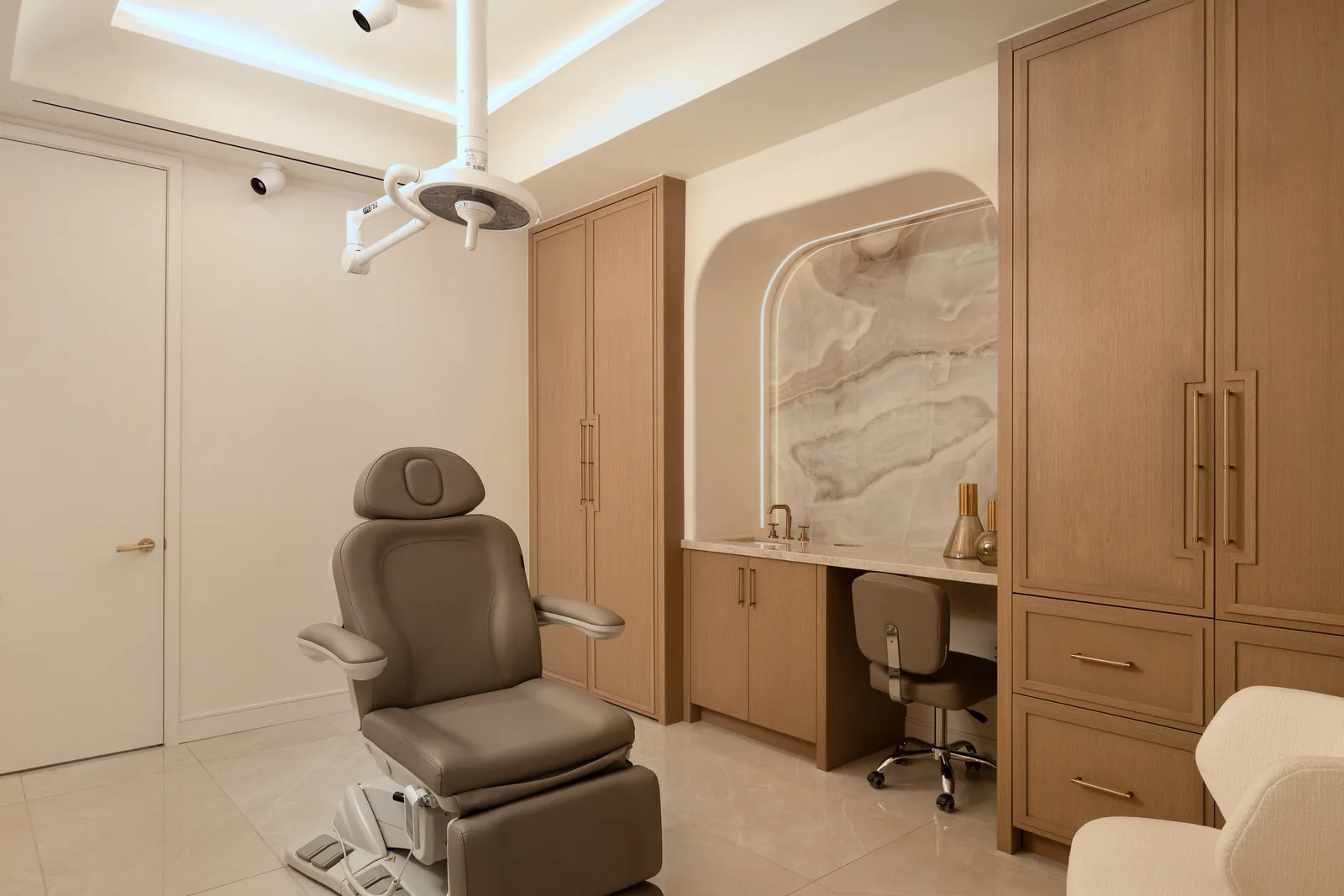
SCOTTSDALE · MODERN OFFICE SETTING
Before & After
Medical Aesthetics, Before and After Treatment
The fairest comparison of treatments is a pair of photographs matched for concern, skin type, and timing. Aesthetica by Ashley Howarth MD maintains before-and-after galleries for SkinPen, chemical peels, Ellacor, and the Sciton lasers, and during your assessment the team can show you an acne scar case treated with microneedling beside one treated with a laser, or a lower-face case treated with Ellacor beside one that went to surgery, so the difference between the rungs is visible rather than described.
Patient Case Summaries
Selected Medical Aesthetics Case Summaries
These deidentified case summaries illustrate how the physician-led team at Aesthetica by Ashley Howarth MD decides between medical aesthetics treatments in Scottsdale. Each one shows a choice between two treatments and the reason one was chosen, across fair and darker skin types, long-term residents and new arrivals, summer and laser-season timing, single treatments and combinations, a first visit and a maintenance plan, and one consultation in which the honest answer was surgery rather than anything on the med spa menu. Each summary connects the patient’s concern and skin assessment with the decision made.
Case 01
HydraFacial vs facial
Dull, congested skin in a new arrival in July: HydraFacial series chosen over a monthly facial
Patient presentation
A woman in her thirties who had moved to Scottsdale from the coast in May reported that her skin had gone dull, dry, and congested within two months and asked whether a facial would fix it.
Skin assessment
Fitzpatrick III skin with dehydration, blackheads across the nose and chin, and a compromised barrier from air conditioning and afternoon humidity under 15 percent, with no pigment or texture problem beyond the surface. It was July, with a UV index over 11, so no light-based or medium-depth option was on the table.
Procedure performed
A series of three HydraFacial treatments four weeks apart through the summer with a hydrating booster and extractions, a medical-grade barrier-repair routine and mineral sunscreen, and a customized facial planned monthly once the series finished.
Clinical rationale
The concern was entirely surface-level, dehydration and congestion, which HydraFacial’s cleanse, extract, and hydrate steps address in one visit with no downtime and full safety in summer; a facial alone would have soothed the skin without clearing the congestion as quickly.
Follow-up
Her skin was clear and hydrated by the third session; she maintains with a monthly facial and books HydraFacial before events, and a BBL session was added the following laser season for early freckling.
Case 02
SkinPen vs HALO
Acne scars on Fitzpatrick V skin in June: SkinPen chosen over a laser
Patient presentation
A man in his twenties with deep brown skin asked for the HALO laser for rolling acne scars on both cheeks after reading about it, and wanted to start in June.
Skin assessment
Fitzpatrick V skin with rolling and a few boxcar scars, no active acne, and a summer tan from outdoor work. An ablative or hybrid laser at this skin type carries a meaningful risk of post-inflammatory hyperpigmentation, and no laser is used on tanned skin in an Arizona June.
Procedure performed
A series of four SkinPen microneedling sessions six weeks apart beginning in June, with PRF applied topically after needling, strict sun avoidance for a week after each, and a topical pigment program between sessions. HALO was not used.
Clinical rationale
SkinPen creates collagen-stimulating channels mechanically without heat or pigment absorption, is used across all skin types, and can run in summer with sun discipline, which made it the right first tool; ProFractional in a later laser season was written into the plan for any scars that remained.
Follow-up
Scar depth improved visibly after the fourth session with no pigment change; a conservative ProFractional session to the deepest scars is planned for the following winter.
Case 03
Peel vs MicroLaserPeel
Blotchy pigment and rough texture on fair skin: a medium peel series chosen, with a laser reset held in reserve
Patient presentation
A woman in her fifties, a long-term Scottsdale resident, asked in October whether a chemical peel or a laser peel would even out the blotchy pigment and rough texture across her cheeks and forehead.
Skin assessment
Fitzpatrick II skin with diffuse superficial sun-related pigment, rough texture, and mild fine lines, no melasma, no irregular lesion, untanned in October, and able to take a week away from social plans. Either a medium TCA peel or a MicroLaserPeel would address the surface.
Procedure performed
Two medium-depth TCA peels eight weeks apart in November and January, performed by the licensed aesthetician, with a retinoid and sunscreen routine between them, and a MicroLaserPeel held in reserve for the following season if texture persisted.
Clinical rationale
Superficial pigment and mild texture on fair skin respond well to a medium peel with 5 to 7 days of peeling, the deepest resurfacing offered in the med spa; a MicroLaserPeel removes a measured depth with a 2940 nm erbium laser and was the better next rung if the peel left texture behind, but was not needed first.
Follow-up
Pigment was markedly more even after the second peel; texture improved enough that the MicroLaserPeel was not needed, and she maintains with light peels year-round and one BBL session each fall.
Case 04
Ellacor vs facelift
Jowls and a loose neck: the honest answer was surgery, not micro-coring
Patient presentation
A woman in her sixties asked for Ellacor after reading that it tightens the lower face without surgery, hoping to avoid a facelift she had been told she needed elsewhere.
Skin assessment
Fitzpatrick II skin with good surface quality, moderate perioral and marionette wrinkling, but clear tissue descent along the jawline and neck with platysmal banding. Ellacor is cleared for moderate to severe wrinkles of the mid to lower face; it does not lift descended tissue or treat the neck.
Recommendation
A surgical consultation with Dr. Howarth for facelift and neck lift, with Ellacor discussed as a later option for residual perioral wrinkling once the tissue had been repositioned. Ellacor alone was not recommended for the jowls.
Clinical rationale
Micro-coring removes skin and improves wrinkles in the treated area; it does not move the descended fat and platysma that create jowls and a loose neck. Selling three Ellacor sessions for a surgical problem would spend months on the wrong layer, and a plastic surgeon directing the med spa can say so and offer the right operation.
Follow-up
She underwent facelift and neck lift the following spring and returned six months later for a single Ellacor session to the perioral wrinkles that surgery does not address.
Case 05
Ellacor vs SkinPen
Marionette lines on Fitzpatrick III skin: Ellacor chosen over another SkinPen series
Patient presentation
A woman in her fifties, a long-term Scottsdale resident, had completed two SkinPen series over three years and asked for a third because the marionette lines and perioral wrinkling on her lower face had stopped improving.
Skin assessment
Fitzpatrick III skin with moderate to severe wrinkles of the mid to lower face, mild laxity at the jawline without true jowling or platysmal banding, and good surface texture from the earlier microneedling. The concern had moved from the collagen layer to a skin-excess problem that fine punctures do not address.
Procedure performed
A series of three Ellacor micro-coring sessions about a month apart under local anesthesia, performed by Dr. Howarth, with a HydraFacial between sessions once the pinpoint scabs had cleared. A third SkinPen series was not offered.
Clinical rationale
SkinPen stimulates collagen without removing tissue and had already delivered what it could; Ellacor removes up to about 8 percent of skin per session in the mid to lower face, is cleared for Fitzpatrick I to IV, and was the next rung for wrinkles that had outgrown microneedling, with a facelift reserved for the day descent appears.
Follow-up
Marionette lines were visibly softer at three months after the third session with no pigment change; she maintains with monthly facials and an annual SkinPen session for texture.
Case 06
Post-surgical swelling
Swelling and firmness after liposuction: a lymphatic massage series, and a facial to keep her skin on plan
Patient presentation
A woman in her fifties, one week after liposuction of the abdomen and thighs with Dr. Howarth, reported swelling, tightness, and firm areas under the skin and asked what would help.
Skin assessment
Expected post-liposuction edema with early firmness, no signs of infection, no calf pain or swelling to suggest a clot, and surgical clearance for manual lymphatic drainage to begin.
Procedure performed
A series of eight manual lymphatic drainage sessions over five weeks, beginning one week after surgery, with compression garment guidance, followed by a cooling recovery facial once she was comfortable lying flat.
Clinical rationale
Gentle manual lymphatic drainage after liposuction reduces swelling and the fibrotic firmness that can follow, and it is safe once the surgeon has excluded infection and clotting; performing it in the surgeon’s own practice means the same team watches the healing.
Follow-up
Swelling resolved on the expected timeline with no persistent firm areas; she continued monthly facials and booked her first BBL session the following laser season.
From First Visit to a Plan You Can Keep
Booking, Planning, and Follow-Up at Aesthetica by Ashley Howarth MD
Aesthetica by Ashley Howarth MD is a medical practice with a spa’s convenience. Established patients book online. New patients can book online or request a consultation, and the team responds usually the same day.

Online booking or a consultation request
Book a skin assessment directly online, or request a consultation and describe what you want changed, the treatment you have in mind, and the downtime you can give. Either path starts with the same examination, and the treatment is chosen after it.
The comparison, settled in writing
You leave your first visit with a written plan: which of the seven services, in what order and combination; who performs each; how many sessions; the downtime for each; which months they fall in; the home routine that protects the result; and the point at which a laser or a surgical consultation would be next.
Monthly maintenance, seasonal corrections
Most Scottsdale plans repeat annually: monthly facials or HydraFacial, a SkinPen or peel series in the shoulder months, medium peels and lasers in laser season, sunscreen year-round. A-List members have the next season scheduled before they leave the last one.
Your Questions, Answered
Medical Aesthetics Frequently Asked Questions
A HydraFacial is a device treatment: a vortex tip cleanses and peels, extracts with suction, and infuses serums in three steps over 30 to 45 minutes with no downtime, and it is the faster fix for congestion and dehydration. A customized facial is hands-on care with medical-grade skincare, skin analysis, extractions, and exfoliation chosen for that day’s skin, and it is the monthly maintenance. At Aesthetica by Ashley Howarth MD both are performed by the licensed aesthetician.
SkinPen is mechanical microneedling with no heat, FDA-cleared for facial acne scars, used on all skin types through Fitzpatrick VI, in 3 to 6 sessions with 1 to 3 days of pinkness, and it runs in summer with sun avoidance. HALO is a hybrid fractional laser with 5 to 7 days of peeling, more change per session, and a rising pigment risk on darker skin, October to April. Darker skin or summer means SkinPen; fair skin in season, HALO or ProFractional.
A medium chemical peel uses TCA in the 20 to 35 percent range to peel the surface over 5 to 7 days, one to three times a year in the cooler months, and is the deepest resurfacing offered in the med spa. A MicroLaserPeel removes a measured depth of skin with a 2940 nm erbium laser, about 10 to 30 microns for a light peel, heals in 3 to 5 days, and is the next rung when texture remains.
Ellacor removes micro-cores of skin to improve moderate to severe wrinkles of the mid to lower face in about 3 sessions with a few days of downtime, and it is for wrinkled skin that has not descended. A facelift repositions descended tissue and treats jowls and the neck, which Ellacor does not. Wrinkles point to Ellacor; jowls, a loose neck, or heavy folds point to surgery, and Dr. Howarth tells you which at the consultation.
Lymphatic massage helps more when the problem is fluid: puffiness after travel, a salty week, sinus congestion, or swelling after surgery or injectables. Gentle rhythmic strokes move lymph and the face looks lighter the same day, with no downtime. HydraFacial helps more when the problem is the skin surface: dullness, congestion, and dehydration. Both are performed in the same visit at Aesthetica by Ashley Howarth MD when a patient wants both.
A medical facial at Aesthetica by Ashley Howarth MD is performed by a licensed aesthetician under a plastic surgeon’s protocols, uses medical-grade product lines, starts with a skin analysis, and is chosen to fit a written plan that may include peels, SkinPen, lasers, or surgery. A spa facial is relaxation with retail products. The practical difference is that a medical facial is allowed to conclude that a facial is not what your skin needs and to say what is.
In an Arizona summer, with a UV index that regularly reaches 11 or higher, HydraFacial, customized facials, light chemical peels, lymphatic massage, and ear piercing run without restriction, and SkinPen runs with strict sun avoidance for a week after each session. Medium peels and every Sciton laser wait for laser season, October to April, because they need untanned skin and 2 to 4 weeks of sun avoidance afterward.
Both use needles, and that is where the similarity ends. SkinPen makes thousands of fine punctures that stimulate collagen and heal in 1 to 3 days, for texture, scars, and fine lines on any skin type. Ellacor uses hollow needles to remove micro-cores of full-thickness skin, up to about 8 percent of the treated area per session, under local anesthesia with 3 days to a week of downtime, for moderate to severe lower-face wrinkles on Fitzpatrick I to IV.
Yes, with the surgeon’s clearance. Manual lymphatic drainage after liposuction, abdominoplasty, and other body contouring reduces swelling and the firm, fibrotic areas that can follow, typically in a series of about 6 to 10 sessions of 45 to 60 minutes beginning around a week after surgery. At Aesthetica by Ashley Howarth MD in Scottsdale it is performed by a trained provider in the same practice, and not with active infection, a clot, or heart failure.
HydraFacial, facials, chemical peels, and SkinPen are performed by the licensed aesthetician or nurse under protocols written by board-certified plastic surgeon Ashley Howarth, MD, FACS. Ear piercing is performed by a registered nurse and lymphatic massage by a trained provider. Ellacor is performed by Dr. Howarth or a provider trained under her direction; lasers, resurfacing, and surgery are hers.
Concerns Treated
Concerns This Treatment Addresses
These guides explain each concern and where this treatment fits among the options at Aesthetica by Ashley Howarth MD in Scottsdale.
- HydraFacial Three-step hydration with no downtime, year-round
- SkinPen Microneedling Collagen induction for acne scars, texture, and fine lines on every skin type
- Chemical Peels Light peels year-round, medium peels in the cooler months
- Facials Customized medical facials with the licensed aesthetician
- Ellacor Micro-Coring Skin removal for moderate to severe lower-face wrinkles
- Lymphatic Massage Manual drainage after surgery and for swelling
- Ear Piercing Registered nurse needle piercing in a medical setting
BEGIN HERE
Request a Consultation
Tell us what you are considering. A member of our patient care team will follow up with consultation availability and next steps.

Megan S.
Patient Coordinator
Prefer to talk or text?
Selected References