
Broadband Light for the Body
What BBL HEROic Is
BBL HEROic is Sciton’s next-generation BroadBand Light handpiece, introduced in 2024, a pulsed light device (not a laser) whose automated pulse delivery covers large areas like the back, arms, and legs evenly, without the striping or pulse stacking of manual placement, across skin types I to V. At Aesthetica by Ashley Howarth MD it is the full-body handpiece (used for backs covered in freckling, sun-damaged forearms, and mottled chests), given in 2 to 3 sessions about four weeks apart during laser season, October to April.
BBL HEROic is Sciton’s next-generation BroadBand Light handpiece, introduced in 2024, and the name means HERO with Intelligent Control. It is a pulsed broadband light device in the IPL class, not a laser, and its defining feature is automated pulse delivery: the handpiece places each pulse itself as the operator glides it across the skin, which Sciton states prevents striping and pulse stacking and produces uniform treatment on both flat and curved surfaces. Sciton describes treating large areas such as the back, arms, and legs in minutes and lists the face, neck, chest, arms, legs, back, buttocks, and abdomen as treatment areas for skin types I to V. At Aesthetica by Ashley Howarth MD, the med spa of Howarth Plastic Surgery in Scottsdale, HEROic is the full-body handpiece: the answer for a back covered in freckling and solar lentigines, forearms that show forty years of driving in the sun, or a chest of mottled redness and pigment, and the comfort-first choice for patients who found older intense pulsed light hard to tolerate. Series run during laser season, October to April, on untanned skin, in 2 to 3 sessions about four weeks apart. The practice also runs the 2020 BBL HERO handpiece for the face and small localized areas.
The light itself works the way all BBL works: an interchangeable filter narrows the band so that melanin in a spot or hemoglobin in a vessel absorbs it, the target heats and breaks down, and a sapphire crystal keeps the surface cool. What HEROic adds is coverage and consistency. Two new filters extend the range: the 532+ narrow band, 500 to 650 nm, which Sciton describes for the small thready vessels around the nose and for low-contrast, recalcitrant pigmented lesions, and the SkinSmooth 640S, a finishing filter Sciton describes for smoothness and luminosity. CoolComfort technology adds cooling through the crystal, and energy adjusts in half-joule increments, which matters when the neck needs a gentler setting than the back in the same session. Treated body spots darken within a day and flake over 2 to 4 weeks, longer than on the face. The 2013 Stanford pilot study that found a younger gene expression pattern in BBL-treated skin was done on the forearm, which is one reason the body is a reasonable place to run Forever Young BBL maintenance too. To see how HEROic compares with the fractional lasers, compare Sciton lasers.

Why Patients Ask for BBL HEROic
What Patients Who Choose BBL HEROic Notice
People who ask Aesthetica by Ashley Howarth MD about HEROic usually describe an area, not a spot. It is the whole back they saw in a changing-room mirror, the forearms that no longer match the upper arms, or a chest that has become a different color from the neck. Many have already had their face treated and want the rest to catch up. These are the descriptions the team hears most.
- A back and shoulders covered in freckles that merged after years of pool days
- Forearms and the backs of the hands two shades darker and more mottled than the upper arms
- A V of red and brown at the chest that stops exactly where shirts start
- Shins and thighs speckled with sun spots that appeared after fifty
- A face already treated with BBL, and a body that gives away the difference
- A memory of older IPL that hurt too much to finish the series
Large areas used to mean long, uncomfortable sessions with visible stripes where pulses did not quite meet. Automated pulse placement is what changed that, and comfort is what makes patients finish the series. Cleared areas stay cleared while covered skin and sunscreen keep new sun off them.


Surgeon-Directed Care
More Tools in the Toolbox: Why a Plastic Surgeon Directs Large-Area Light Treatment
Aesthetica by Ashley Howarth MD is the medical aesthetics practice of Ashley Howarth, MD, FACS, a board-certified plastic surgeon and instructor in plastic surgery at Mayo Clinic. Treating a whole body with light is a different problem from treating a face, and the difference is where a surgeon’s judgment matters. The face heals quickly because it is rich in hair follicles and oil glands that regrow skin from below; the chest, the inner arms, the abdomen, and the shins are not, and they scar and pigment more readily when they are over-treated. A single energy setting that is safe on a fair upper back can be too much for the sternum a few inches away, and a forearm darkened by forty years of driving in the sun is functionally a different skin type from the pale inner arm beside it. Dr. Howarth’s protocols therefore set the filter and energy for every body site separately, define where a test spot is required, forbid treating across a tan line without one, and specify how much the energy steps down from the back to the chest to the neck. Automated pulse placement removes the risk of stacked pulses; the protocol removes the risk of the right pulse in the wrong place.
A plastic surgeon also brings the perspective of someone who repairs skin for a living and examines it for cancer. Sun-damaged backs and shoulders are where many skin cancers appear, and a body mapped for light treatment is a body that has been looked at; any lesion that is irregular or changing goes to a dermatologist first. And because Aesthetica by Ashley Howarth MD is the med spa of a plastic surgery practice, the plan is not limited to broadband light. HEROic shares a platform with MOXI and HALO, performed by the physician-led team under her protocols, and when a patient’s real concern is loose skin rather than color, the same physician evaluates physician-performed laser skin resurfacing for the face or the surgical options that light cannot replace. More tools in the toolbox, and an honest answer about which one you need.

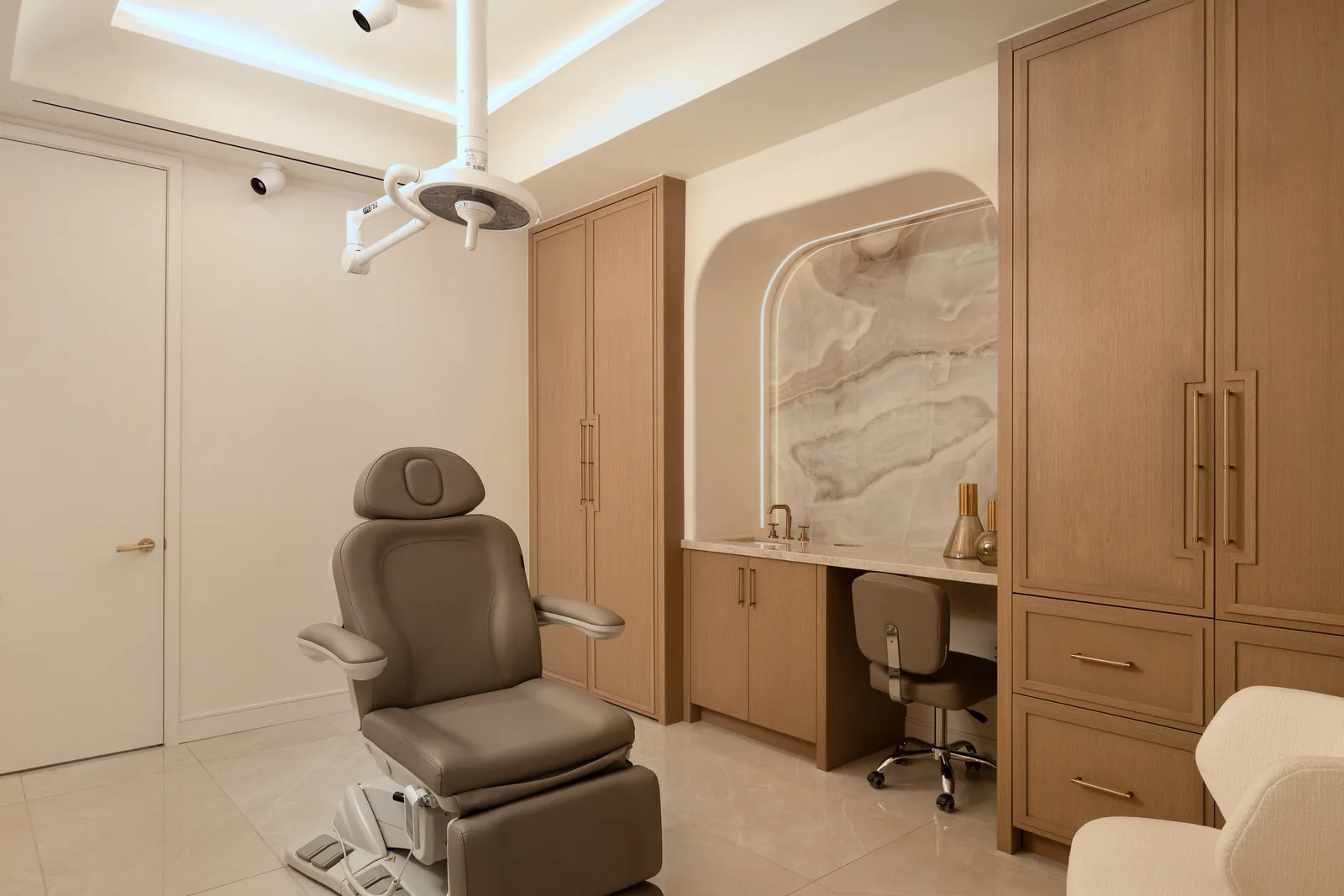
SCOTTSDALE · MODERN OFFICE SETTING
Where to Start
Who BBL HEROic Is For, and What Happens First
BBL HEROic at Aesthetica by Ashley Howarth MD is for adults with sun damage, freckling, brown spots, or redness across a body area, the back, chest, arms, hands, legs, or abdomen, or across the whole body, who are untanned at the time of treatment and can keep treated skin covered or protected for two to four weeks afterward. It is also the handpiece offered to patients who need a facial series but could not tolerate the discomfort of an older IPL device. The skin assessment maps the areas rather than the spots. A member of the physician-led team records your Fitzpatrick type and recent sun exposure by site, since a forearm is often two shades darker than the inner arm beside it, looks for tan lines and for any irregular or changing lesion that needs a dermatologist first, reviews retinoid, antibiotic, and photosensitizing medication use, and sets a filter and energy for each area from Dr. Howarth’s written protocol. Fitzpatrick I to III is treated routinely, IV at conservative settings, and V only after a test spot on the exact area to be treated; Fitzpatrick VI is directed to MOXI and chemical peels. If your concern is confined to the face or a few spots on a temple or hand, the assessment sends you to BBL HERO instead.
Dr. Ashley Howarth, MD, FACS is a board-certified plastic surgeon and an instructor in plastic surgery at Mayo Clinic. Aesthetica by Ashley Howarth MD is the medical aesthetics brand of her practice, Howarth Plastic Surgery, at 7373 N. Scottsdale Road, Suite C150, Scottsdale, Arizona 85253.

Automated Coverage, Nine Filters, Site-Specific Settings
How BBL HEROic Is Used in Scottsdale
Full Back, Shoulders, and Chest
A full back and chest treatment with BBL HEROic takes about 15 to 25 minutes, clearing dense freckling and solar lentigines evenly across the shoulders with an automated gliding pass.
The back is where HEROic earns its name. Dense freckling and solar lentigines across the shoulders and upper back are treated with the 515 and 560 nm filters in a gliding pass, the handpiece firing each pulse automatically so coverage is even over the curve of the shoulder without stripes or double-treated bands. The chest is treated in the same visit at a lower energy set by protocol, because the skin over the sternum is thinner and scars more readily. A full back and chest takes about 15 to 25 minutes in the room. Spots darken within a day and flake over 2 to 4 weeks, and the series is 2 to 3 sessions four weeks apart between October and April, then one maintenance pass a year.
Arms, Hands, and Legs
Forearms, hands, and legs get their own settings, with a full arm-and-hand pass taking about 15 to 25 minutes and legs 25 to 40, plus the 532+ filter for stubborn low-contrast pigment.
Forearms, the backs of the hands, and the shins are the most sun-exposed skin on a Scottsdale body and the slowest to heal, so they get their own settings. The team treats both arms and hands in one pass of about 15 to 25 minutes and both legs in 25 to 40, with the energy stepped down on the inner arms and thighs where the skin is paler and thinner. The 532+ filter, 500 to 650 nm, is used over low-contrast, recalcitrant pigment on the forearms that broader filters leave behind. Legs flake for closer to four weeks and must be covered from sun, so long pants and a hat are part of the plan. Diffuse redness on the arms and chest is treated with the 560 and 590 nm filters.
Comfort-First Facial and Full-Body Sessions
HEROic’s CoolComfort cooling and automated pulse delivery make it the comfort-first option for patients who found earlier IPL painful, with a whole-body sun damage pass taking 60 to 90 minutes.
HEROic is also the handpiece Aesthetica by Ashley Howarth MD offers to patients who have stopped a previous IPL series because it hurt. Sciton’s CoolComfort technology cools through the sapphire crystal during each pulse, and automated pulse delivery removes the stop-and-start rhythm of manual placement, so a session feels like a steady warm sweep rather than a series of snaps. For a whole-body sun damage pass, face, neck, chest, arms, back, and legs, the team plans 60 to 90 minutes, sometimes split over two visits a week apart, and finishes the face with the SkinSmooth 640S filter, which Sciton describes for smoothness and luminosity. Texture and fine lines on the face are handed to MOXI or HALO in the same visit when needed.
When BBL HERO Is the Better Handpiece
For a concern limited to the face alone or a handful of discrete spots, the manual pulse placement of BBL HERO is the more precise, better-suited handpiece.
BBL HERO is the 2020 generation of the same broadband light, and Aesthetica by Ashley Howarth MD keeps it for a reason. Its manual pulse placement lets the operator treat exactly one lesion and nothing around it, which is what a few dark spots on a temple, a single vessel beside a nostril, or a scatter of lentigines on the backs of the hands call for. Sciton states HERO has four times the speed, three times the peak power, and two times the cooling of the original BBL, so it is not a lesser device; it is a more precise one. If your assessment shows the concern is the face alone or a handful of discrete spots, the team will recommend HERO, and the BBL HERO page explains that plan, its filters, and Forever Young facial maintenance in full.
At a Glance
BBL HEROic at a Glance
Body areas treated with BBL HEROic at Aesthetica by Ashley Howarth MD, what is treated on each, typical room time, sessions, and when in the Scottsdale year they are scheduled; individual plans and settings are set at the skin assessment.
| Area | What it treats | Treatment time | Sessions | Scottsdale season |
|---|---|---|---|---|
| Face | Sun spots and redness for comfort-sensitive patients; SkinSmooth 640S finish | About 15 to 20 minutes | 2 to 3, four weeks apart | October to April |
| Neck and chest | Mottled redness and freckling in the V of the chest; lower energy by protocol | About 15 to 20 minutes | 2 to 3, four weeks apart | October to April |
| Arms and hands | Forearm and hand lentigines; 532+ for low-contrast pigment | About 15 to 25 minutes for both | 2 to 3, sometimes 4 | October to April |
| Back and shoulders | Dense freckling and solar lentigines over a curved surface | About 15 to 25 minutes | 2 to 3, four weeks apart | October to April |
| Legs | Sun spots on the shins and thighs; slowest to flake | About 25 to 40 minutes for both | 2 to 3, sometimes 4 | October to April; must stay covered after |
| Full body | Face, neck, chest, arms, back, and legs in one round | 60 to 90 minutes, or two visits a week apart | 2 to 3 rounds, then 1 a year | October to April, planned to finish before spring |
Next Generation
What HEROic Adds
The features Sciton lists for BBL HEROic beyond the 2020 BBL HERO, as stated on sciton.com, and what each means in practice at Aesthetica by Ashley Howarth MD.
| Feature | What Sciton states | What it means for you |
|---|---|---|
| Automated pulse placement | A fully automated pulse delivery system that prevents striping and pulse stacking and gives uniform treatment on flat and curved surfaces | A back or shoulder is covered evenly in a gliding pass, with no missed bands and no double-treated ones |
| Speed | Treat large areas like the back, arms, and legs in minutes; up to nine times faster than other IPL devices when considering fluence, spot size, and repetition rate | A full back in about 15 to 25 minutes and a whole-body round in 60 to 90, which makes body treatment practical to finish |
| 532+ filter | A narrow-bandpass filter from 500 to 650 nm for the small thready vessels around the nose and low-contrast, recalcitrant pigmented lesions | Faint, stubborn forearm and hand pigment and fine nasal vessels that broader filters leave behind |
| SkinSmooth 640S | Powered by the new 640S filter and proprietary software to improve skin smoothness, luminosity, and overall appearance | A finishing pass on the face at the end of a body round |
| CoolComfort cooling | CoolComfort technology for enhanced patient comfort, with a sapphire crystal that keeps the epidermis cool while light reaches its target | A steady warm sweep instead of individual snaps; the choice for patients who could not finish older IPL |
| Skin types and body coverage | Skin types I to V on the Fitzpatrick scale; face, neck, decollete, arms, legs, back, buttocks, and abdomen; half-joule parameter increments | Broad indication, applied at the practice with test spots on IV and V, no BBL on VI, and a separate setting for each body site |
A Visit Mapped by Body Area
What to Expect at a BBL HEROic Visit at Aesthetica by Ashley Howarth MD
A BBL HEROic visit at Aesthetica by Ashley Howarth MD is planned by area. The team maps which sites will be treated, sets the filter and energy for each from the written protocol, treats them in sequence, and sends you home with a covering plan. A single area such as the back takes 15 to 25 minutes; a whole-body pass takes 60 to 90 and may be split over two visits.
Skin type by site, tan lines, and a settings map
The team records your Fitzpatrick type on each area to be treated, notes tan lines and any darker forearm or shin, checks for irregular lesions that need a dermatologist first, places a test spot on Fitzpatrick IV and V skin, and writes the filter and energy for every site before the handpiece is picked up.
Gel, eyewear, and a gliding automated pass
Cool gel goes on the first area and you wear protective eyewear. The technician glides the handpiece across the skin and HEROic fires each pulse itself, so the back or both arms are covered in a steady warm sweep with even overlap. Settings change between areas. Numbing cream is not usually needed.
A covering plan for the body
You leave with mineral SPF 30 or higher on every treated area, a rash guard, long sleeves, or long pants for outdoor time over the next two to four weeks, instructions not to scrub or pick flaking spots in the shower, a 48-hour pause on sweat-heavy workouts, and the date of the next session.
Clear Information. Informed Choices.
Safety and Limitations of BBL HEROic
BBL HEROic is safe when the settings match the skin at each site and the skin is untanned. The body raises two risks the face does not. First, body skin has fewer hair follicles and oil glands per square inch than the face, so it heals more slowly and a burn or an over-treated band takes longer to resolve; that is why the neck, chest, and inner arms are treated at lower energy than the back and why automated placement, which prevents pulse stacking, matters more here than anywhere. Second, body areas are harder to keep out of the sun for two to four weeks in Arizona, where the summer UV index reaches 11 or higher, and sun on healing skin is the main cause of post-inflammatory hyperpigmentation. Sciton lists HEROic for skin types I to V; Aesthetica by Ashley Howarth MD treats IV and V only after a test spot and does not treat Fitzpatrick VI with BBL.
Possible Side Effects Include
- Warmth, redness, and mild swelling over the treated area for a few hours to two days
- Spots that darken and flake for 2 to 4 weeks on the body
- Post-inflammatory hyperpigmentation, especially on tanned or sun-exposed healing skin
- Temporary bruising or a purple tinge over treated vessels
- Rarely, blistering, crusting, temporary lightening, or scarring, more likely on the chest and shins
What Treatment Cannot Guarantee
- Clearance that survives an uncovered summer
- A full-body result from a single session
- Safe improvement of melasma
- Tightening of loose arm or abdominal skin
- A substitute for a full-body skin cancer examination
What Happens After BBL HEROic
Recovery After BBL HEROic
Recovery from BBL HEROic is longer on the body than on the face, not because the treatment is harsher but because body skin turns over more slowly: treated spots on the back, arms, and legs take 2 to 4 weeks to flake rather than 7 to 14 days. The practical questions are different too. Patients ask about showering, sweat, clothing rubbing on a treated back, and how to get through a Scottsdale weekend without sun on their forearms. The timeline below answers those. If MOXI is added to the face in the same visit, add 1 to 2 days of facial pinkness.
Treated areas feel like a mild sunburn for a few hours and may look flushed. Mineral sunscreen goes on before you dress, and loose cotton is better than anything that rubs across a treated back or shoulder. A cool shower that evening is fine; a hot bath, sauna, or sweat-heavy workout is not, for 48 hours. By bedtime the treated spots are visibly darker.
This is the week the body looks its worst. The back, chest, or arms are speckled with darkened spots that are lifting toward the surface. Wash with hands, not a loofah, and pat dry; do not scrub or pick, because a scratched spot on a shin can leave a mark that lasts months. Long sleeves, a rash guard for the pool, and a hat for the neck and chest. Redness usually settles within two days.
The chest and upper back usually finish flaking by about two weeks, the forearms and hands by three, and the shins by four. Underneath, the skin is more even and the treated redness is fading. Strict sun protection continues for the whole window; in Arizona that means covered skin outdoors, not just sunscreen. The second session in the series is scheduled at about four weeks once every area has finished.
After 2 to 3 sessions most treated areas are substantially clearer, with dense freckling reduced to scattered faint spots and mottled redness evened. The result holds as long as the areas stay protected, which for a Scottsdale body means sun-protective clothing as much as sunscreen. Most patients return for one HEROic maintenance pass each laser season and keep the face on its own schedule. The Skin in Arizona guide covers year-round protection.
Before & After
BBL HEROic, Before and After Treatment
Body results from BBL HEROic are best judged in photographs taken in the same light before the first session and four to six weeks after the last, when the slowest area, usually the shins or forearms, has finished flaking. Aesthetica by Ashley Howarth MD maintains before-and-after galleries for BBL, MOXI, and HALO, and the team can show you body cases that match your skin type and the areas you want treated, whether the concern is pigment or redness, during your visit.
Patient Case Summaries
Selected BBL HEROic Case Summaries
These deidentified case summaries illustrate how the physician-led team at Aesthetica by Ashley Howarth MD plans BBL HEROic treatment in Scottsdale. They include a full back, a whole-body pass on a golfer, arms and hands, a patient who chose HEROic for comfort after abandoning an older IPL series, a darker skin type for whom the honest answer was MOXI, and a long-term BBL HERO patient who moved body maintenance to HEROic. Each summary connects the patient’s concern and skin assessment with the treatment performed or the recommendation made.
Case 01
Full back
Dense freckling across the entire back and shoulders cleared in three HEROic sessions
Patient presentation
A man in his fifties who had swum outdoors in Scottsdale for decades asked whether the freckling and mottled brown spots across his back and shoulders could be treated at all, or whether the area was simply too large for light.
Skin assessment
The assessment found dense solar lentigines and confluent freckling on Fitzpatrick II skin over the whole back, heavier across the shoulders, no melasma, and two atypical-looking lesions on the left scapula that were photographed and referred to a dermatologist before any treatment. He was untanned in late November.
Procedure performed
After dermatologist clearance, three BBL HEROic sessions to the full back and shoulders spaced four weeks apart with the 515 and 560 nm filters, the energy stepped down over the shoulder tops and spine per protocol, each visit about 20 minutes in the room.
Clinical rationale
Automated pulse placement covers a curved back evenly without stripes or stacked pulses, which manual placement over an area this size cannot reliably do, and site-specific energy settings protect the thinner skin over bone.
Follow-up
After the third session the back was substantially clearer with only scattered faint spots; he returns for one HEROic maintenance pass each December and swims in a rash guard.
Case 02
Full-body golfer
A whole-body sun damage pass split over two visits for a lifelong golfer
Patient presentation
A woman in her sixties who had played golf in Scottsdale three mornings a week for twenty years asked for one treatment that would address the sun spots on her face, chest, forearms, hands, and shins together rather than area by area.
Skin assessment
Fitzpatrick II skin with solar lentigines on every exposed site, a sharp tan line at the sleeve and sock lines, mild background redness on the chest, and no irregular lesions. Her forearms and shins were visibly darker than the covered skin beside them. She was untanned in January after six weeks off the course.
Procedure performed
A whole-body HEROic plan of three rounds four weeks apart, each round split over two visits a week apart: face, neck, and chest on the first with the 560 nm filter and a SkinSmooth 640S finish on the face; arms, hands, and shins on the second with 515 and 560 nm and a test spot beside each tan line before treating across it.
Clinical rationale
A full-body pass is where HEROic’s speed makes the plan practical, but the tan lines meant the covered and exposed skin needed different energies, so the protocol required a test spot at each boundary and separate settings per site rather than one setting for the body.
Follow-up
By March the tan-line contrast had softened and the forearm spots were largely gone; she golfs in long sleeves and sun gloves and returns each January for a maintenance round.
Case 03
Arms and hands
Forearms and hands that no longer matched the upper arms, treated in one pass
Patient presentation
A woman in her fifties who had moved to Scottsdale from Seattle eight years earlier noticed her forearms and the backs of her hands had become mottled and two shades darker than her upper arms, and asked whether that was reversible.
Skin assessment
Solar lentigines and freckling limited to the forearms, wrists, and dorsal hands on Fitzpatrick II skin, with the upper arms nearly clear, no irregular lesions, and no melasma. The darker forearms were treated as a different skin type from the inner arms. She was untanned in February.
Procedure performed
Three BBL HEROic sessions to both forearms and hands four weeks apart with the 515 and 560 nm filters, the energy reduced on the inner forearms, and the 532+ filter over the low-contrast pigment on the backs of the hands at the third session, each visit about 15 minutes.
Clinical rationale
Both arms and hands in a single automated pass gave even coverage from wrist to elbow in the time HERO would spend on one hand, and the 532+ filter is Sciton’s answer for the faint, stubborn pigment that broader filters leave behind.
Follow-up
After three sessions the forearms matched the upper arms closely; she wears driving sleeves and reapplies SPF to her hands, and returns for one session each winter.
Case 04
Comfort first
A patient who abandoned an IPL series elsewhere finished a facial and chest series on HEROic
Patient presentation
A woman in her forties reported that she had stopped an intense pulsed light series at another clinic after two sessions because the pulses on her chest and cheeks were more painful than she could tolerate, and asked whether BBL would be any different.
Skin assessment
Fitzpatrick III skin with scattered solar lentigines on the cheeks and a V of mottled redness and freckling on the chest, no irregular lesions, and a low tolerance for the stop-and-start pulse rhythm she described. She was untanned in March.
Procedure performed
Three BBL HEROic sessions to the face and chest four weeks apart with the 560 nm filter, the chest at lower energy per protocol, relying on CoolComfort cooling through the sapphire crystal and the continuous automated pass rather than numbing cream, with a test pass on the chest at the first visit before committing to the full area.
Clinical rationale
HEROic was chosen over HERO for a facial series because comfort, not precision, was the barrier to completing treatment; automated delivery replaces individual snaps with a steady warm sweep, and the cooling runs through every pulse.
Follow-up
She completed all three sessions, described the chest as tolerable without numbing, and now has one HEROic maintenance session each spring before the pool opens.
Case 05
Darker skin type
Sun-darkened forearms on Fitzpatrick V skin, and why HEROic was declined in favor of MOXI
Patient presentation
A man in his forties with deep brown skin who worked outdoors reported that his forearms and the back of his neck had become blotchy and darker than the rest of his skin, and asked for the full-body light treatment a colleague had described.
Skin assessment
Diffuse sun-related and post-inflammatory hyperpigmentation on the forearms and posterior neck on Fitzpatrick V skin, no discrete spots, and no irregular lesions. Sciton lists HEROic for skin types I to V, but the pigment was diffuse rather than discrete, the sites were body skin that heals slowly, and a test spot on the forearm produced more darkening than lightening.
Recommendation
BBL was declined. A topical pigment program for six weeks, then a series of three conservative-density MOXI sessions to the forearms and neck in winter with light chemical peels between sessions, and sun-protective sleeves for work.
Clinical rationale
On Fitzpatrick V body skin the risk that broadband light adds pigment outweighs the benefit when the target is diffuse, and the test spot confirmed it; the 1927 nm non-ablative laser at conservative settings evens pigment with far less risk, and declining a treatment is part of a physician-led plan.
Follow-up
Over one winter the forearms lightened noticeably; he continues the topical program and returns for a single MOXI session each laser season.
Case 06
HERO to HEROic
A decade of facial BBL HERO, with body maintenance moved to HEROic
Patient presentation
A woman in her sixties who had maintained her face with an annual BBL HERO session for ten years asked whether her chest, arms, and legs, which had never been treated, could join the same schedule without turning one appointment into an afternoon.
Skin assessment
The face showed even tone with minimal new lentigines on Fitzpatrick II skin, consistent with a decade of maintenance and daily sunscreen, while the chest, forearms, and shins carried untreated freckling and mottled redness. She was untanned in October.
Procedure performed
The face stayed on BBL HERO, one session each October with a light MOXI pass. The chest, arms, and shins started a three-session HEROic correction series with the 515 and 560 nm filters four weeks apart, then joined the annual October visit as a single HEROic body pass after the facial session.
Clinical rationale
HERO’s manual placement remains the better tool for a well-maintained face with a few new spots, while HEROic’s automated coverage makes adding three body areas to the same annual visit practical without extending it beyond about an hour.
Follow-up
Her annual visit is now a facial HERO session followed by a HEROic body pass; she describes the October appointment as the one she does not skip.
From First Visit to a Plan You Can Keep
Booking, Planning, and Follow-Up at Aesthetica by Ashley Howarth MD
Aesthetica by Ashley Howarth MD is a medical practice with a spa’s convenience. Established patients book online. New patients can book online or request a consultation, and the team responds usually the same day.

Online booking or a consultation request
Book a skin assessment directly online, or request a consultation and describe which areas of your body concern you, whether the problem is spots, freckling, or redness, and how much sun those areas get in a normal week. Either path starts with the same site-by-site examination.
A body map, not a single appointment
You leave your first visit with a written plan: which areas are treated and in what order; the filter and energy for each site; whether a whole-body round is split over two visits; how many sessions and in which months; whether the face stays on HERO; and the clothing, sunscreen, and shower routine that protects the result.
One body pass a year, timed to laser season
Most Scottsdale HEROic plans repeat annually: a body pass each fall or winter, the face on its own schedule, summer HydraFacial, and sun-protective clothing year-round. A-List members have the next season’s round scheduled before they leave the last one.
Your Questions, Answered
BBL HEROic Frequently Asked Questions
BBL HEROic treats sun damage, freckling, and brown spots; diffuse redness and visible vessels; and uneven tone across the face, neck, chest, arms, hands, back, abdomen, and legs. Sciton also lists it for acne with Forever Clear and mild laxity with SkinTyte. At Aesthetica by Ashley Howarth MD it is the handpiece for body areas and whole-body passes. It does not resurface texture and is not used first-line for melasma.
All three use filtered broadband light. Older IPL devices place each pulse manually with less cooling. BBL HERO, Sciton’s 2020 handpiece, added four times the speed, three times the peak power, and twice the cooling of the original BBL, still with manual placement. BBL HEROic, from 2024, automates pulse delivery to prevent striping and pulse stacking, adds the 532+ and 640S filters and CoolComfort cooling, and is Aesthetica by Ashley Howarth MD’s body handpiece.
There is no time off work, but there is a visible healing period that is longer on the body than on the face. Treated areas are warm and flushed for a few hours, then the spots darken and flake for 2 to 4 weeks on the back, arms, and legs, about 7 to 14 days on the face. Sweat-heavy workouts pause for 48 hours, and treated skin stays covered outdoors for two to four weeks.
Sciton lists HEROic for Fitzpatrick skin types I to V. At Aesthetica by Ashley Howarth MD, I to III are treated routinely, IV at conservative settings, and V only after a test spot on the exact area, because body skin heals slowly and darkens more readily than the face. Fitzpatrick VI is not treated with BBL; MOXI with chemical peels is the usual alternative. A tanned forearm counts as a darker skin type than the arm beside it.
Most body areas need 2 to 3 BBL HEROic sessions spaced about four weeks apart to clear freckling, sun spots, and mottled redness, then one maintenance pass a year. Shins and forearms, the most sun-exposed and slowest-healing skin, sometimes need a fourth. A whole-body round may be split over two visits a week apart. All sessions fall between October and April on untanned skin.
The first change is spots getting darker within a day, which is the pigment lifting. On the chest and upper back the clearer skin underneath shows at about two weeks; on the forearms and hands at about three; on the shins at about four. Redness fades over the same window. The result of a full series is judged four to six weeks after the last session.
At Aesthetica by Ashley Howarth MD a single area such as a full back or both arms takes about 15 to 25 minutes in the room, both legs 25 to 40, and a whole-body pass covering the face, neck, chest, arms, back, and legs 60 to 90 minutes, sometimes split over two visits a week apart. Sciton states the automated handpiece treats large areas such as the back, arms, and legs in minutes.
Less than older intense pulsed light, which is why patients who stopped an IPL series elsewhere are offered HEROic. The automated handpiece glides across the skin in a steady warm sweep instead of individual snaps, and Sciton’s CoolComfort technology cools through the sapphire crystal during each pulse. The chest and shins are the most sensitive sites and are treated at lower energy. Numbing cream is rarely needed.
No. Body areas must be untanned at treatment and covered or strictly protected for two to four weeks afterward, and in an Arizona summer, with a UV index of 11 or higher and well over 100 days at or above 100 degrees, that is not realistic for arms and legs. Aesthetica by Ashley Howarth MD schedules HEROic body series between October and April, as the laser season guide explains, and uses HydraFacial and lighter care in summer.
A treated spot does not return, but body skin in Scottsdale collects new sun every week it is uncovered, so the result lasts as long as protection does. Patients who wear sun-protective sleeves, a rash guard in the pool, and mineral SPF 30 or higher on exposed skin typically hold their result with one HEROic maintenance pass a year. Uncovered summers bring new spots within a season.
Concerns Treated
Concerns This Treatment Addresses
These guides explain each concern and where this treatment fits among the options at Aesthetica by Ashley Howarth MD in Scottsdale.
- Sun Damage & Brown Spots Freckling and solar lentigines across the back, arms, chest, and legs
- Redness & Rosacea Mottled chest redness and facial vessels, including the 532+ filter
- Skin in Arizona Why timing matters in the desert
- Fine Lines & Wrinkles Where HEROic hands off to MOXI and HALO
- Melasma Why broadband light is not first-line, and what is
- Laser Season in Arizona Why October to April, and what to do in summer
BEGIN HERE
Request a Consultation
Tell us what you are considering. A member of our patient care team will follow up with consultation availability and next steps.

Megan S.
Patient Coordinator
Prefer to talk or text?
Selected References