
Collagen, Elastin, and the Sun
What Skin Laxity and Crepey Skin Are, and What Treats Them
Skin laxity is the loss of elasticity that lets skin sag, and crepey skin is its thin, finely wrinkled surface form, both driven mainly by UV-related collagen and elastin loss and visible on the neck, chest, under-eyes, and upper arms. At Aesthetica by Ashley Howarth MD, mild laxity and crepey texture are treated with HALO, Ellacor micro-coring, SkinPen microneedling, and BBL HERO, while moderate to severe laxity (jowls, neck banding, heavy under-eye skin) is evaluated by Dr. Howarth for facelift, neck lift, or blepharoplasty.
Skin laxity is the loss of elasticity that lets skin sag instead of snapping back, and crepey skin is its thin, finely wrinkled surface form, most visible on the neck, chest, under the eyes, and upper arms. Both come from the same change: less collagen and elastin in the dermis, and the fibers that remain are disorganized. Age causes some of this, but ultraviolet light is the dominant cause, and Arizona delivers about 300 days of it a year with a summer UV index of 11 or higher. Weight change stretches skin that can no longer recoil, and chronic dehydration in air that often sits below 15 percent humidity makes crepey texture look worse than it is. At Aesthetica by Ashley Howarth MD, the med spa of Howarth Plastic Surgery in Scottsdale, mild laxity and crepey texture are treated with the HALO hybrid fractional laser, Ellacor micro-coring, SkinPen microneedling, and BBL HERO for the sun-damaged chest and arms.
This page also states the boundary plainly. Nonsurgical treatments improve skin quality and tighten mild laxity; they do not lift tissue that has descended. Moderate to severe laxity, established jowls, neck banding, and heavy under-eye skin are surgical concerns (facelift, neck lift, and blepharoplasty), and at this practice they are evaluated by Dr. Ashley Howarth as a board-certified plastic surgeon rather than treated with a device that cannot deliver the result. Knowing which side of that line you are on is the purpose of the first visit.

Thin, Loose, Finely Lined
What Patients With Skin Laxity Notice
Laxity arrives gradually and is usually noticed in a photograph or a mirror at an unfamiliar angle. Patients who come to Aesthetica by Ashley Howarth MD in Scottsdale describe some combination of the changes below. The first three are usually treatable without surgery; the last three often are not.
- Crepey, finely wrinkled skin on the neck, chest, and upper arms
- Thin under-eye skin that folds when you smile
- A jawline that has softened but has not yet formed jowls
- Loose skin that stays creased after sleep or after weight loss
- Vertical bands and a loose fold under the chin
- Heavy upper eyelid skin that rests on the lashes
The honest version of the pinch test: if you can pinch a fold of loose skin on the neck or jawline and it stays, that is tissue, not texture, and a device will not remove it. Dr. Howarth evaluates that patient as a surgeon.


Surgeon-Directed Care
More Tools in the Toolbox: Why a Plastic Surgeon Directs This Care
Aesthetica by Ashley Howarth MD is the medical aesthetics practice of Ashley Howarth, MD, FACS, a board-certified plastic surgeon and instructor in plastic surgery at Mayo Clinic. Laxity is the concern where a surgeon’s judgment matters most, because the most common error in nonsurgical tightening is treating a surgical problem with a device. Dr. Howarth performs facelifts, neck lifts, and blepharoplasty in the same practice, so she has no reason to sell a device series to a patient who needs surgery, or surgery to a patient who needs a laser. She sets the protocols, selects the technology, and personally evaluates every patient whose laxity is graded moderate or worse.
Aesthetica by Ashley Howarth MD is the med spa of a plastic surgery practice, and that changes what can be offered. Most skin concerns are treated without surgery, and most patients never need it. When skin care and nonsurgical treatment reach their limit, the conversation does not end at the door: the same physician evaluates the next step, from deep laser skin resurfacing performed by Dr. Howarth to eyelid surgery, facelift, and neck lift. A surgeon directing the plan means more tools in the toolbox, and an honest answer about which one you need.

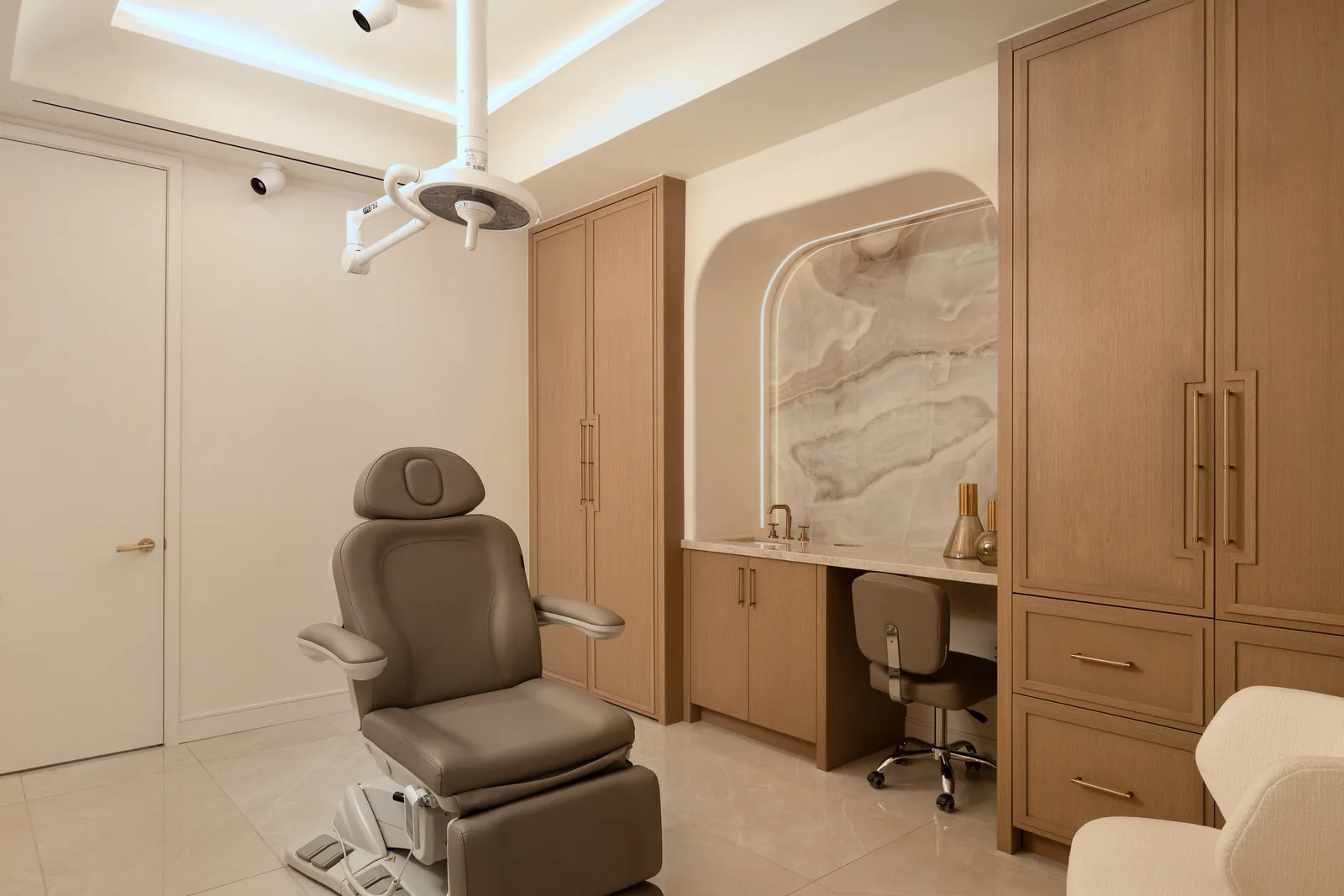
SCOTTSDALE · MODERN OFFICE SETTING
Where to Start
Who This Is For, and What Happens at the Laxity Assessment
This care is for anyone who has noticed crepey texture or early looseness on the face, neck, chest, under-eyes, or arms and wants an honest answer about what will and will not correct it. The assessment at Aesthetica by Ashley Howarth MD grades laxity by area: how much the skin recoils when pinched, whether the change is texture (fine crepe, sun damage, dehydration) or descent (jowls, bands, folds), skin type, sun history, and the time of year. Mild laxity and texture are matched to HALO, Ellacor, SkinPen, or BBL HERO. Moderate to severe laxity is scheduled for a surgical consultation with Dr. Howarth, and the team says so at the first visit rather than after a series that could not have worked.
Dr. Ashley Howarth, MD, FACS is a board-certified plastic surgeon and an instructor in plastic surgery at Mayo Clinic. Aesthetica by Ashley Howarth MD is the medical aesthetics brand of her practice, Howarth Plastic Surgery, at 7373 N. Scottsdale Road, Suite C150, Scottsdale, Arizona 85253.

Matched to the Degree of Laxity
Treatments for Skin Laxity and Crepey Skin in Scottsdale
HALO for Texture and Mild Laxity
HALO resurfaces the top layer while heating the dermis to stimulate collagen, treating crepey texture, fine lines, and mild laxity with results that build over 3 to 6 months.
Sciton HALO combines an ablative and a non-ablative wavelength in one pass, resurfacing the top layer while heating the dermis to stimulate collagen. It is the treatment for crepey texture, fine lines, and mild laxity on the face and neck, with 5 to 7 days of downtime and results that build over 3 to 6 months. One to two sessions, scheduled between October and April.
Ellacor Micro-Coring
Ellacor removes thousands of hair-width cores of skin, physically removing excess tissue without visible scars, making it the option for early jowling and loose lower cheeks that aren’t yet surgical.
Ellacor removes thousands of hair-width cores of skin from the mid and lower face, up to about 8 percent of the treated area per session, and the skin closes over the gaps without visible scars. It is the only nonsurgical treatment that physically removes excess skin, which makes it the option for early jowling and loose lower cheeks that are not yet surgical. One to three sessions, 30 to 90 days apart, with 3 to 7 days of downtime.
SkinPen Microneedling
SkinPen triggers collagen without heat to improve crepey texture and skin quality on the face, neck, and under-eyes, though it does not tighten loose folds.
SkinPen creates controlled micro-injuries that trigger collagen production without heat, which makes it safe on all skin types and usable year-round with sun avoidance. It improves crepey texture and skin quality on the face, neck, and under-eyes over a series of 3 to 4 sessions spaced 4 to 6 weeks apart, with 1 to 2 days of redness. It does not tighten loose folds.
BBL HERO for Crepey Chest and Arms
BBL HERO clears the pigment and vessels that usually accompany crepey skin on the chest and arms and, over a series, improves texture and firmness.
Crepey skin on the chest and arms in Arizona almost always comes with brown spots and redness from sun. Sciton BBL HERO broadband light clears the pigment and vessels and, over a series, improves the texture and firmness of sun-damaged skin. Two to three sessions, four weeks apart, between October and April, often combined with MOXI for texture.
Planning at a Glance
Sessions, Downtime, and Season
Sessions, downtime, and the months each treatment is scheduled in Scottsdale. Individual plans are set at the laxity assessment.
| Treatment | Sessions | Downtime | Scottsdale season |
|---|---|---|---|
| HALO | 1 to 2 | 5 to 7 days | October to April |
| Ellacor micro-coring | 1 to 3, 30 to 90 days apart | 3 to 7 days | October to April |
| SkinPen microneedling | 3 to 4, 4 to 6 weeks apart | 1 to 2 days of redness | Year-round with sun avoidance |
| BBL HERO (chest and arms) | 2 to 3, four weeks apart | Minimal; spots darken and flake for 7 to 14 days | October to April |
| Facelift, neck lift, blepharoplasty | Surgical consultation with Dr. Howarth | Set at consultation | Year-round |
A Visit That Starts With a Pinch Test
What to Expect at a Laxity Visit at Aesthetica by Ashley Howarth MD
A laxity visit at Aesthetica by Ashley Howarth MD is an evaluation first and a treatment second. The team’s job is to tell you which category your skin is in, because the right treatment for mild laxity and the right treatment for moderate laxity are different departments of the same practice.
Texture or tissue, area by area
The team examines the face, neck, chest, and arms, grades recoil with a pinch test, separates crepey texture and sun damage from descended tissue, records skin type and sun history, and photographs each area. Anything that looks surgical is flagged for Dr. Howarth.
The device that fits, or the surgeon
Mild laxity proceeds to HALO, Ellacor, SkinPen, or BBL HERO when the skin is untanned and the season allows. Moderate to severe laxity is scheduled for a surgical consultation with Dr. Howarth, sometimes with a device treatment planned afterward for skin quality.
A written plan and a sun plan
You leave with the number of sessions, the calendar they fall on, downtime for each, and sun instructions: SPF 30 or higher reapplied every two hours outdoors, mineral formula after treatment, hats and shade for the first two weeks, and the date of your next visit.
Clear Information. Informed Choices.
Safety and Limitations of Nonsurgical Tightening
Energy-based and micro-coring treatments are safe when matched to skin type, degree of laxity, and season. Most side effects are expected and temporary. The specific Arizona risk is post-inflammatory hyperpigmentation after HALO, BBL, or Ellacor on tanned or sun-exposed skin, which is why these treatments run October to April. The broader limitation is honesty about degree: no device lifts tissue that has descended, and a patient with moderate laxity who receives three device treatments has spent a year not getting the result surgery would have given.
Possible Side Effects Include
- Redness, swelling, and warmth for several days after HALO or Ellacor
- Pinpoint bleeding and small scabs for 3 to 7 days after Ellacor
- Post-inflammatory hyperpigmentation with sun exposure or tanned skin
- Temporary sensitivity, dryness, and flaking
- Rarely, infection, prolonged redness, or scarring
What Treatment Cannot Guarantee
- A surgical degree of lift from any nonsurgical device
- Removal of jowls, neck bands, or excess eyelid skin
- A complete result from a single session
- Permanent firmness while sun exposure continues
- A result identical to another patient's
Collagen Takes Months
The Timeline After HALO or Ellacor
The timeline below applies to HALO and Ellacor, the two lead treatments for laxity on the face. SkinPen is milder (1 to 2 days of redness) and BBL HERO on the chest and arms follows the pigment pattern of darkening and flaking over 7 to 14 days. In every case the visible result lags the treatment: collagen remodels for 3 to 6 months, and the skin you see at one month is not the final result.
HALO skin darkens to a bronze, sandpaper texture and peels on days 3 to 5. Ellacor micro-wounds scab and shed by day 5 to 7. Most patients return to work within a week, with makeup permitted once the surface has closed. Strict sun avoidance: hats, shade, mineral SPF 30 or higher.
Pinkness fades and texture is visibly smoother. This is the earliest sign of the result, not the result. Sun protection continues for the full 2 to 4 weeks. A second Ellacor session, if planned, is scheduled 30 to 90 days after the first.
Collagen and elastin continue to rebuild for 3 to 6 months, and firmness improves through that window. Photographs at 3 and 6 months show the change. Maintenance is usually one HALO or a SkinPen series each laser season, with daily sunscreen year-round.
Before & After
Skin Laxity, Before and After Treatment
Laxity results are judged in standardized photographs at 3 and 6 months, because collagen remodeling continues long after the skin has healed. Aesthetica by Ashley Howarth MD maintains before-and-after galleries for HALO, Ellacor, SkinPen, and BBL HERO, and Dr. Howarth’s surgical galleries for facelift and neck lift are on the same site, so you can compare what each approach realistically delivers.
Patient Case Summaries
Selected Skin Laxity Case Summaries
These deidentified case summaries illustrate how the physician-led team at Aesthetica by Ashley Howarth MD evaluates and treats skin laxity and crepey skin in the Arizona climate. They include mild laxity treated with Ellacor and HALO, a sun-damaged chest and arms, a darker skin type, and two consultations in which the honest recommendation was a surgical evaluation with Dr. Howarth rather than a device. Each summary connects the patient’s concern and assessment with the treatment performed or the recommendation made.
Case 01
Ellacor candidate
Early softening of the jawline in a long-term resident, treated with micro-coring
Patient presentation
A woman in her early fifties who had lived in Scottsdale for 25 years noticed her jawline blurring in photographs and loose skin at the lower cheeks. She wanted improvement without surgery and did not yet have true jowls.
Skin assessment
The pinch test showed mild laxity of the lower face with good recoil, no platysmal bands, and Fitzpatrick II skin. She was untanned in November and could commit to a week of downtime. The team graded her as mild, a device candidate.
Procedure performed
Two Ellacor micro-coring sessions to the mid and lower face, eight weeks apart, in November and January, with strict sun avoidance and daily mineral SPF 30.
Clinical rationale
Ellacor physically removes a small percentage of excess skin, which is the mechanism early lower-face laxity needs. Her degree of laxity, skin type, and season all fit the treatment.
Follow-up
At six months the jawline was visibly more defined in standardized photographs and the lower cheeks sat higher. She plans a HALO for texture the following laser season.
Case 02
Chest and arms
Crepey, spotted skin on the chest and upper arms after decades of Arizona sun
Patient presentation
A woman in her sixties who swam and gardened year-round asked about the thin, crepey skin on her chest and the backs of her upper arms, which was also freckled and blotchy.
Skin assessment
The assessment showed diffuse solar lentigines, background redness, and crepey texture on both areas, no lesions requiring dermatology referral, and untanned skin in October. The laxity was texture and sun damage rather than loose tissue.
Procedure performed
A series of three BBL HERO sessions to the chest and arms four weeks apart, with MOXI added to the chest on the second and third visits, a long-sleeve sun shirt for gardening, and daily SPF 50.
Clinical rationale
Crepey chest and arm skin in Arizona is mostly photodamage. Broadband light clears the pigment and vessels that make it look worse and improves firmness over a series, and MOXI addresses the texture.
Follow-up
After the series the pigment had cleared, the redness was reduced, and the crepey texture was smoother. She maintains with a single BBL session each fall.
Case 03
Surgical referral
A request for a device series that would not have worked, and a neck lift consultation instead
Patient presentation
A woman in her late fifties asked for the treatment that would tighten the loose fold under her chin and two vertical bands in her neck before a wedding in six months.
Skin assessment
The pinch test showed a fold of skin that stayed when released, visible platysmal bands, and moderate laxity of the jawline. Skin quality was good; the problem was descended tissue and muscle, not texture. The team graded her as surgical.
Recommendation
A surgical consultation with Dr. Howarth for neck lift evaluation rather than a device series. HALO was offered as an optional skin-quality treatment after surgery, not as a substitute.
Clinical rationale
No energy device or micro-coring treatment removes a skin fold or corrects platysmal bands. Selling a series would have used her six months and her budget without delivering the change she asked for.
Follow-up
She consulted with Dr. Howarth, proceeded with a neck lift, and returned to the medspa the following season for HALO to address texture on the healed neck.
Case 04
Darker skin type
Crepey under-eye and cheek texture on Fitzpatrick V skin treated without heat
Patient presentation
A woman in her forties with deep brown skin reported fine crepey lines under her eyes and on her upper cheeks that showed when she smiled, and asked about Ellacor or a laser.
Skin assessment
The assessment showed mild texture change with good recoil and no descent. Her skin type placed her outside Ellacor’s current clearance range and at higher risk of pigment change with HALO. SkinPen was the safer mechanism for her skin.
Procedure performed
A series of four SkinPen microneedling sessions to the under-eye and cheek area, five weeks apart, starting in May with strict sun avoidance, plus a topical retinoid and daily mineral SPF 30.
Clinical rationale
Microneedling stimulates collagen mechanically, without heat, so it does not carry the pigment risk that light and laser do on darker skin. It also suited a summer start.
Follow-up
At three months after the fourth session the crepey lines were softer and the skin looked thicker, with no pigment change. She maintains with a two-session series each year.
Case 05
Weight loss
Loose facial skin after significant weight loss needed a surgeon's opinion before any device
Patient presentation
A man in his forties who had lost about 80 pounds over 18 months reported loose skin along his jawline and neck and a hollow, tired look he had not had at his previous weight.
Skin assessment
The pinch test showed moderate laxity of the lower face and neck with poor recoil, early jowls, and volume loss in the cheeks. Skin texture was good. The change was tissue and volume, not surface.
Recommendation
A surgical consultation with Dr. Howarth to evaluate a facelift and neck lift, with a discussion of dermal fillers for cheek volume as part of the overall plan. No device treatment was recommended as a first step.
Clinical rationale
Skin stretched by significant weight and then emptied does not recoil to a device, and treating it with HALO or Ellacor would have improved texture he did not need while leaving the laxity he did.
Follow-up
He consulted with Dr. Howarth and is planning a lower facelift with neck lift once his weight has been stable for a full year, with skin-quality treatment to follow.
Case 06
New arrival
Texture and mild laxity in a recent arrival, treated with HALO in laser season
Patient presentation
A woman in her early fifties who had moved from Seattle 14 months earlier said her skin had aged five years in one: crepey texture on the cheeks and neck, fine lines, and a jawline that looked softer.
Skin assessment
The assessment showed mild laxity with good recoil, diffuse fine lines, dehydration, and early sun damage from a first Arizona summer without consistent sunscreen. Fitzpatrick II skin, untanned in December.
Procedure performed
A single HALO session to the face and neck in December, preceded by four weeks of barrier repair and a HydraFacial, with mineral SPF 30 daily and sun avoidance for four weeks afterward.
Clinical rationale
Her change was texture and early photodamage, exactly what HALO corrects, and a December treatment allowed the full healing window before spring UV.
Follow-up
At three months her texture was smoother and the neck firmer; at six months the improvement had continued. She plans a maintenance HALO each winter and monthly hydration through the summer.
From First Visit to a Plan You Can Keep
Booking, Planning, and Follow-Up at Aesthetica by Ashley Howarth MD
Aesthetica by Ashley Howarth MD is a medical practice with a spa’s convenience. Established medspa patients book online. New patients can book online or request a consultation, and the team responds usually the same day.

Online booking or a consultation request
Book a laxity evaluation directly online, or request a consultation and tell us what you notice and where. Either path starts with the same assessment, and surgical candidates are routed to Dr. Howarth.
Device, surgery, or both, in writing
You leave your first visit with a written plan: which treatment, how many sessions, when they fall in the October to April season, expected downtime, and, when appropriate, a surgical consultation date.
Photographs at 3 and 6 months
Results are reviewed in standardized photographs at 3 and 6 months, and maintenance is planned for the next laser season. A-List members have the next season scheduled before they leave the last one.
Your Questions, Answered
Skin Laxity and Crepey Skin Frequently Asked Questions
Loss of collagen and elastin in the dermis, which makes skin thin and finely wrinkled. Ultraviolet light is the main cause, followed by age, weight change, and dehydration. It appears first where skin is thin and sun-exposed: the neck, chest, under the eyes, and the upper arms. In Arizona, with about 300 days of sun a year, it tends to appear earlier.
It depends on the degree and location. For crepey texture and mild laxity on the face and neck, HALO is the lead treatment. For early jowling and loose lower cheeks, Ellacor micro-coring physically removes excess skin. For all skin types and year-round use, SkinPen microneedling improves texture. For crepey, sun-spotted chest and arms, BBL HERO. Aesthetica by Ashley Howarth MD in Scottsdale matches the device at the assessment.
Ellacor is a micro-coring device that removes thousands of hair-width cores of skin from the mid and lower face, up to about 8 percent of the treated area per session, without heat. The skin closes over the gaps and the net effect is less skin and a firmer lower face. It is FDA-cleared for moderate to severe wrinkles in the mid to lower face on lighter skin types, typically one to three sessions.
A laser can tighten mildly loose, crepey neck skin and improve its texture; HALO does this well over one to two sessions. A laser cannot remove a fold of skin under the chin or correct the vertical bands of the platysma muscle. Those are neck lift concerns, and at Aesthetica by Ashley Howarth MD they are evaluated by Dr. Howarth as a plastic surgeon.
The pinch test is a reasonable guide: if you can pinch a fold of skin at the jawline or neck and it stays when released, or if you have established jowls, neck bands, or heavy eyelid skin, the change is tissue, not texture, and devices will not correct it. Those patients are scheduled for a surgical consultation with Dr. Howarth, who performs facelift, neck lift, and blepharoplasty.
Yes, for texture. SkinPen stimulates collagen mechanically, without heat, so it is safe on all skin types and can be done year-round in Arizona with sun avoidance. A series of 3 to 4 sessions spaced 4 to 6 weeks apart thickens and smooths crepey skin on the face, neck, and under the eyes. It does not tighten loose folds.
In Arizona, crepey chest and arm skin is mostly sun damage: brown spots, redness, and thin texture together. BBL HERO broadband light clears the pigment and vessels and improves firmness over a series of two to three sessions four weeks apart, often with MOXI added for texture. Treatment runs October to April with strict sun protection afterward.
October to April for HALO, Ellacor, and BBL HERO, because they require untanned skin and two to four weeks of strict sun avoidance afterward to prevent post-inflammatory hyperpigmentation. SkinPen can be done year-round with sun avoidance. Results take 3 to 6 months to mature, so a winter treatment shows fully by summer.
Collagen built by HALO, Ellacor, or SkinPen is your own tissue and persists, but aging and sun exposure continue. Most patients maintain with one HALO or a SkinPen series each laser season and daily sunscreen. Ellacor results are considered long-lasting because skin has been physically removed. Nothing prevents new laxity from continued unprotected sun.
Sometimes, if the loss was modest and the skin recoils well. After significant weight loss, skin that has been stretched and emptied usually does not recoil to a device, and the honest recommendation at Aesthetica by Ashley Howarth MD is a surgical consultation with Dr. Howarth once weight has been stable for about a year, with device treatment afterward for skin quality.
Related Care
Treatments for Arizona Skin
These pages explain the treatments named in this guide. Concern-specific guides for sun damage, redness, melasma, dryness, and texture are being added to this section.
- HALO Hybrid Fractional Laser Texture and mild laxity, planned for laser season
- Ellacor Micro-Coring Removes excess skin in the lower face without surgery
- SkinPen Microneedling Collagen without heat, safe for all skin types
- BBL HERO Broadband light for crepey, sun-damaged chest and arms
- Facial Plastic Surgery Facelift, neck lift, and blepharoplasty with Dr. Howarth
- Skin in Arizona Why timing matters in the desert
BEGIN HERE
Request a Consultation
Tell us what you are considering. A member of our patient care team will follow up with consultation availability and next steps.

Megan S.
Patient Coordinator
Prefer to talk or text?
Selected References