
October to April
What Laser Season Is, and Why Arizona Has One
Laser season is the part of the Arizona year, October to April, when laser and light treatments needing untanned skin can be performed and can heal without daily sun exposure, and Aesthetica by Ashley Howarth MD schedules all seven Sciton treatments inside that window. From May through August the midday UV index in the Phoenix area routinely reaches 10 or 11, daily highs top 100 degrees, and the 2 to 4 weeks of strict sun avoidance every treatment requires afterward is nearly impossible to keep, so series of sessions are timed to finish before spring UV climbs back.
Laser season is the part of the Arizona year, October to April, when laser and light treatments that need untanned skin can be performed and can heal without daily sun exposure. Aesthetica by Ashley Howarth MD, the med spa of Howarth Plastic Surgery in Scottsdale, schedules BBL HERO, BBL HEROic, MOXI, HALO, MicroLaserPeel, ProFractional, and Contour TRL inside that window for four reasons. From May through August the midday UV index in the Phoenix area routinely reaches 10 or 11, the top of the EPA scale, and skin that has been in that sun is tanned, which raises the risk of pigment change and burns from any treatment that heats melanin. Every treatment needs 2 to 4 weeks of strict sun avoidance afterward, which no one in Scottsdale keeps in July. Normal daily highs run above 100 degrees from June through September, and heat, sweat, and pool water irritate healing skin. And a series of 2 to 3 sessions four weeks apart has to finish before spring UV climbs back, which means starting by January.
The season is not a marketing calendar; it is a description of when the risk is lowest. Arizona has about 300 days of sun a year and one of the highest skin cancer rates in the country, and the same sun that creates the brown spots, redness, and texture these treatments correct is the reason they cannot be done in the months that create them. The month-by-month calendar below shows the normal high, the typical UV index, what Aesthetica by Ashley Howarth MD schedules, and what waits, and the tables that follow show which treatments are seasonal, which run year-round, and how to plan a series so it is finished by April. Summer is not empty: HydraFacial, facials, lighter chemical peels, SkinPen, and SkinTyte carry skin through May to September. For the wider climate picture read Skin in Arizona; for which laser fits which concern read the Sciton laser comparison.

Why the Calendar Matters
What Patients Ask About Laser Season
Most people who ask Aesthetica by Ashley Howarth MD about timing have already been told to wait, by a friend, a search result, or a clinic in another state where summer does not mean 106 degrees. Their questions are practical, and each one has a date attached.
- I am only here November to April, can I finish a series?
- Can I do anything in July, or do I just wait?
- I have a wedding in April, when do I start?
- I tanned all summer, how long until I can be treated?
- Does my self-tanner count as a tan?
- I golf every morning, does that rule me out?
Every one of these has an answer on this page. The short version: start in October, put the deepest treatment first, finish by March, and spend summer on hydration and sunscreen rather than on nothing.


Surgeon-Directed Care
More Tools in the Toolbox: Why a Plastic Surgeon Directs Laser Timing
Aesthetica by Ashley Howarth MD is the medical aesthetics practice of Ashley Howarth, MD, FACS, a board-certified plastic surgeon and instructor in plastic surgery at Mayo Clinic. Laser season is one of her protocols, and it exists because the complication it prevents, post-inflammatory hyperpigmentation on sun-exposed healing skin, is a medical problem with a months-long course and no quick fix. A physician-directed calendar makes decisions a booking system cannot: it examines a tan rather than taking a patient’s word for it, it treats a Fitzpatrick IV or V patient with more caution in October than a Fitzpatrick II patient in January, it recognizes melasma that heat will worsen, and it refuses a July BBL for a September wedding because the risk is not worth the photograph. It also manages the complication when a patient arrives with one from treatment done elsewhere in the wrong month.
Who performs what follows the depth of the treatment, and the season shapes the order. BBL HERO, BBL HEROic, MOXI, and standard HALO are performed by the physician-led team under her protocols and fill the season from October to March. MicroLaserPeel and ProFractional are performed by Dr. Howarth or the team depending on depth. Deep, full-field, zone-specific, or surgery-coordinated resurfacing, including deep Contour TRL, is physician-performed laser skin resurfacing by Dr. Howarth and is booked earliest, November through February, sometimes in the same plan as eyelid surgery, facelift, or neck lift, whose recovery is also easier in winter. A surgeon directing the plan means more tools in the toolbox, and an honest answer about when to use each one.

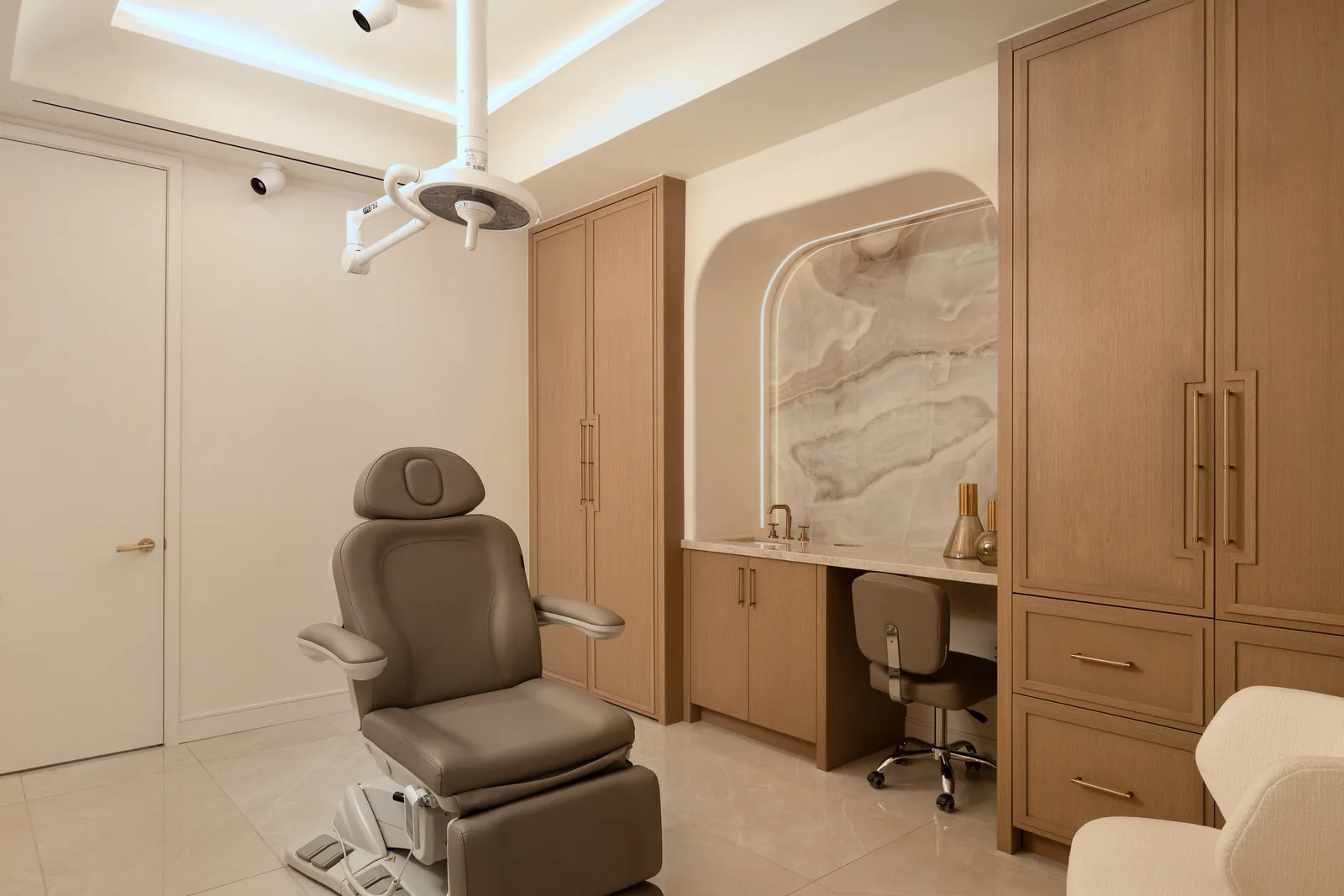
SCOTTSDALE · MODERN OFFICE SETTING
Where to Start
Who Laser Season Planning Is For, and What Happens First
Laser season planning at Aesthetica by Ashley Howarth MD is for anyone in Scottsdale who wants a laser or light treatment and needs to know when it can safely happen: full-time residents who tan without trying, winter residents with a fixed departure date, new arrivals who spent their first summer outdoors, and patients with an event on the calendar. The skin assessment comes first, and in this practice it includes a tan check. A member of the physician-led team examines the skin under magnification, compares exposed skin to covered skin for a tan line, records your Fitzpatrick skin type and how much sun you get in a normal week, and asks about self-tanner, outdoor sport, travel, and the date you need to look your best. That conversation sets the plan: which treatment, how many sessions, the earliest safe start, and the date the last session must fall on. A tanned patient in September is not turned away; the visit becomes a sunscreen correction, a HydraFacial, and a booked October start. A patient with melasma, which heat alone can worsen, is planned even more conservatively. The season page you are reading is the general rule; the assessment is where it becomes your calendar.
Dr. Ashley Howarth, MD, FACS is a board-certified plastic surgeon and an instructor in plastic surgery at Mayo Clinic. Aesthetica by Ashley Howarth MD is the medical aesthetics brand of her practice, Howarth Plastic Surgery, at 7373 N. Scottsdale Road, Suite C150, Scottsdale, Arizona 85253.

Four Reasons Lasers Wait for Winter
Why Laser Season Is October to April in Scottsdale
UV Index and Tanned Skin
The Phoenix midday UV index peaks at 10 or 11 from May through August, and tanned skin (extra melanin in the epidermis) raises the risk of pigment change and burns from BBL and ablative lasers.
The EPA UV index scale runs from 1 to 11 or higher, and in the Phoenix area the midday peak sits at 10 or 11 from May through August and stays at 8 or 9 in April and September. Skin exposed to that sun tans, and a tan is extra melanin in the epidermis. BBL targets melanin, so on tanned skin it heats the whole surface, not only the spot, and ablative lasers such as HALO and Contour TRL heal with more pigment change on tanned skin. In a randomized trial of intense pulsed light, darker skin pigmentation and higher energy were the main determinants of side effects. By late October the tan has faded and the index has fallen to 6 or lower.
Sun Avoidance After Treatment
Every treatment requires 2 to 4 weeks of strict sun avoidance afterward to prevent post-inflammatory hyperpigmentation, the complication Arizona patients get most.
Every treatment on the Sciton platform is followed by 2 to 4 weeks of strict sun avoidance, and deeper resurfacing by longer. That is not an inconvenience but the mechanism: freshly treated skin makes pigment in response to ultraviolet light, and the darkening it produces, post-inflammatory hyperpigmentation, is the complication Arizona patients get most. Between November and February the index is 3 to 5 at midday and the sun is low, so a hat, shade, and mineral SPF 30 or higher are enough. In June, a walk from the car is a UV dose, and no plan survives it. MOXI and BBL heal fastest, which is why they fill the shoulder months of October and March.
Heat and Sweat on Healing Skin
Phoenix summer highs above 100 degrees, sweat, and pool water all irritate skin healing from HALO, MicroLaserPeel, or ProFractional, which is why winter highs of 66 to 78 degrees are the conditions resurfacing is written for.
Phoenix normal daily highs are about 104 degrees in June, 107 in July, 105 in August, and 100 in September, with well over 100 days a year at or above 100 degrees. Skin peeling after HALO, a MicroLaserPeel, or ProFractional needs to stay cool, clean, and moist. Sweat stings and irritates, heat prolongs redness and can worsen melasma, and pool water on open skin is an infection risk. Winter highs of 66 to 78 degrees from December through March are the conditions resurfacing is written for. Summer belongs to HydraFacial, facials, lighter peels, and SkinPen with sun avoidance.
Finishing the Series Before Spring
A three-session laser series plus follow-up sun avoidance takes about three months, so an October start finishes by January while the deepest treatments, like Contour TRL and HALO, are booked earliest, November through February.
Most laser plans are series, not single visits. BBL is 2 to 3 sessions four weeks apart; MOXI is 3 sessions four weeks apart; HALO is 1 to 2 sessions 4 to 6 weeks apart; ProFractional is 1 to 3 sessions 4 to 8 weeks apart. Add 2 to 4 weeks of sun avoidance after the last one and a three-session series occupies about three months. An October start finishes by January; a January start finishes by April, when the index is already 9. The rule at Aesthetica by Ashley Howarth MD is the deepest treatment first and earliest, so Contour TRL and HALO go in November through February and the lighter sessions fill the edges. Compare the options on the Sciton laser comparison.
Seasonal or Year-Round
Which Treatments Are Seasonal
Which treatments at Aesthetica by Ashley Howarth MD wait for laser season, why, and what carries the same concern through a Scottsdale summer.
| Treatment | Season | Why | Summer alternative |
|---|---|---|---|
| BBL HERO | October to April | Broadband light is absorbed by all melanin, so a tan means burns and pigment change; 2 to 4 weeks of sun avoidance after | HydraFacial with a brightening booster; topical pigment program |
| BBL HEROic | October to April | Same physics as HERO over larger body areas, which tan most; back, arms, and legs need 2 to 4 weeks covered | Rash guard and mineral SPF; body HydraFacial where offered |
| MOXI | October to April; the first treatment of the season | Targets water rather than melanin, so it is the most tan-tolerant laser, but healing skin still needs 2 weeks of sun avoidance | Light chemical peel or HydraFacial; summer MOXI only for untanned, indoor patients at the team's discretion |
| HALO | November to February | Ablative component and 5 to 7 days of peeling; sweat and heat prolong redness; UV on healing skin darkens it | SkinPen microneedling with strict sun avoidance |
| MicroLaserPeel | November to March | Full-field ablation of the surface heals open for 3 to 5 days and must not see sun or pool water | Light chemical peel for patients who stay indoors |
| ProFractional | November to February | Deep channels heal over 3 to 7 days with weeks of pinkness; pigment change is the main risk on sun-exposed healing skin | SkinPen microneedling for acne scars with strict protection |
| Contour TRL | November to early February, physician-performed | Deep full-field resurfacing heals open for 7 to 10 days or more and stays pink for weeks; needs the lowest UV of the year | None; it waits for the next season |
| SkinTyte | Year-round | Infrared 800 nm filter heats dermal collagen under sapphire cooling without targeting melanin | It is the summer treatment for mild laxity |
| HydraFacial | Year-round; the summer workhorse | Hydration and gentle exfoliation with no pigment risk and no sun avoidance | It is the summer alternative to most of the rows above |
Planning a Series
Planning a Series
When to start and when to finish each common laser season goal at Aesthetica by Ashley Howarth MD so the last session lands before spring UV. Sessions and spacing follow mainstream norms and are set individually.
| Goal | Start by | Finish by | Sessions |
|---|---|---|---|
| Clear brown spots with BBL | October, or early January at the latest | January, or March at the latest | 2 to 3, four weeks apart; then 1 to 2 a year |
| Even tone and texture with a MOXI series | October to December | January to March | 3, four weeks apart; often paired with BBL |
| Fine lines and the HALO glow | November to January | February, with the glow at 2 to 3 weeks | 1 to 2, four to six weeks apart |
| Acne scars with ProFractional | November | February | 1 to 3, four to eight weeks apart |
| Etched lines with Contour TRL | November to December | Treated by early February; pink through March | Usually 1, physician-performed |
| A full-face combination plan | November | March | Deepest treatment first, then BBL and MOXI sessions four weeks apart |
Planning a Season
How a Laser Season Is Planned at Aesthetica by Ashley Howarth MD
A laser season at Aesthetica by Ashley Howarth MD is planned backward from the date the skin must be healed and untanned, usually the end of March or an event before it. Three steps put every session in its month.
Tan check, skin type, and the goals for the season
In September or October the team examines the skin, confirms the summer tan has faded or sets the date it will have, records skin type and sun habits, and ranks the concerns to treat. Anyone still tanned leaves with sunscreen, a HydraFacial, and a start date rather than a laser.
The biggest treatment goes earliest in the season
HALO, ProFractional, and physician-performed Contour TRL are booked for November through February, when the UV index is lowest and there are months of weak sun to heal in. BBL and MOXI series are placed around them, four weeks apart, so the last session lands by March.
Last session by March, then the summer plan
The final laser or light session is scheduled no later than late March, with 2 to 4 weeks of protection before April’s UV climbs. The same visit books the summer: HydraFacial or facials every four to six weeks, mineral SPF 30 or higher, and the next October start.
Clear Information. Informed Choices.
What Happens When Laser Is Done Tanned or in Summer
The reason laser season exists is what goes wrong outside it. Broadband light or laser on tanned skin heats the melanin across the whole surface, and the results are burns, blistering, striping, and post-inflammatory hyperpigmentation, a new darkening that can outlast the spot it was meant to remove by months. Treated skin exposed to a summer UV index of 10 or 11 while healing darkens the same way, and redness that would settle in a week in January can persist for weeks in June. Heat and sweat on peeling skin bring irritation, folliculitis, and infection risk, and heat alone worsens melasma. The danger is greatest for darker skin types and deeper treatments, which is why a Fitzpatrick IV patient with a tan in August is planned for MOXI in November rather than BBL now. None of this is rare or theoretical; it is the most common complication the physician-led team sees from treatment done elsewhere in the wrong month.
Possible Side Effects Include
- Post-inflammatory hyperpigmentation on tanned or sun-exposed healing skin
- Burns, blistering, or striping from light absorbed by a tan
- Redness that persists for weeks instead of days in summer heat
- Irritation, folliculitis, or infection from sweat and pool water on peeling skin
- Melasma that worsens with heat even without ultraviolet exposure
What Treatment Cannot Guarantee
- Safe laser or light treatment on tanned skin in any month
- A finished series before an event that is fewer than 8 weeks away
- Results that hold without daily sunscreen through summer
- That a summer HydraFacial or peel does what a winter laser does
- An exception to the season for travel, a wedding, or a departure date
Between Seasons
Summer at Aesthetica by Ashley Howarth MD
Summer in Scottsdale is not a gap in care; it is the maintenance half of the year. The lasers rest from May to September, and the skin is carried by treatments that do not need untanned skin or weeks of sun avoidance: HydraFacial, facials, lighter chemical peels, SkinPen microneedling with strict protection, SkinTyte, and Botox and filler as usual. The four stages below are how a summer runs from the last spring session to the first fall laser.
The UV index is already 10 by May and normal highs pass 104 degrees by June. The last laser or light session is behind you and its 2 to 4 weeks of sun avoidance are done. Daily mineral SPF 30 or higher, reapplied every two hours outdoors, hats, and shade become the treatment. A HydraFacial in May clears the last flaking from a March BBL or MOXI session.
Normal highs of 105 to 107 degrees, monsoon humidity, and an index of 10 to 11. Monthly HydraFacial with a brightening booster, a light peel for patients who stay indoors, and a topical pigment program for anyone with melasma or a history of post-inflammatory hyperpigmentation. SkinPen is possible with strict sun avoidance for patients who can keep it. No broadband light or laser on a tan.
Highs are still near 100 degrees and the index is 8 or 9, but the fall assessment happens now so the plan is ready. The team checks the tan line, records skin type and the season’s goals, and books the October start. Retinoids and pigment topicals continue. Anyone still tanned from a Labor Day weekend at the lake gets a HydraFacial and a date two to four weeks out.
By mid to late October the index is 6 or lower and highs are in the 80s. Untanned skin starts with BBL HERO or BBL HEROic and MOXI, the fastest-healing treatments, while HALO, ProFractional, and Contour TRL are booked for November through February. The Skin in Arizona guide covers the rest of the year.
The Scottsdale Laser Calendar
Month by Month
Normal daily highs are NOAA 1991 to 2020 climate normals for Phoenix Sky Harbor, rounded; the UV index is the typical midday peak for the Phoenix area on the EPA scale. What is scheduled reflects Aesthetica by Ashley Howarth MD’s protocol; individual plans are set at the skin assessment.
| Month | UV and heat | What is scheduled | What waits |
|---|---|---|---|
| January | UV index about 3 to 4 at midday; normal high 68 degrees | Core of the season: HALO, ProFractional, physician-performed Contour TRL, BBL and MOXI series sessions | Nothing; the lowest-risk month of the year |
| February | UV index about 5; normal high 71 degrees | HALO and ProFractional, last month for deep Contour TRL, BBL and MOXI series sessions | New deep full-field plans after mid-month, so pinkness fades before spring |
| March | UV index about 7; normal high 78 degrees | Final BBL and MOXI sessions, light HALO, MicroLaserPeel, maintenance passes; season closes late in the month | Deep resurfacing; new multi-session series |
| April | UV index about 9; normal high 86 degrees | Sun avoidance after March sessions; HydraFacial; a BBL or MOXI session early in the month for untanned patients only | HALO, ProFractional, Contour TRL, and any new series |
| May | UV index about 10; normal high 95 degrees | HydraFacial, facials, light peels, SkinPen with strict protection, SkinTyte, injectables | All broadband light and laser treatments that need untanned skin |
| June | UV index about 11; normal high 104 degrees | HydraFacial, facials, SkinTyte, injectables, daily mineral SPF 30 or higher | All laser and light; peels only for patients who stay indoors |
| July | UV index about 11 with monsoon humidity; normal high 107 degrees | HydraFacial with a brightening booster, topical pigment programs, injectables | All laser and light; SkinPen only with strict sun avoidance |
| August | UV index about 10 to 11; normal high 105 degrees | HydraFacial, facials, topical pigment control, sunscreen correction for new arrivals | All laser and light; tans acquired now delay an October start |
| September | UV index about 8 to 9; normal high 100 degrees | Fall skin assessments and tan checks, HydraFacial, plans written and October dates booked | Laser and light until the tan has faded, usually mid to late October |
| October | UV index about 6 to 7 falling through the month; normal high 89 degrees | Season opens mid to late month with BBL HERO, BBL HEROic, and MOXI on untanned skin | HALO, ProFractional, and Contour TRL until November; anyone still tanned |
| November | UV index about 4; normal high 77 degrees | HALO, ProFractional, and physician-performed Contour TRL begin; second BBL and MOXI sessions; deepest treatments booked first | Nothing; winter residents start their full plan on arrival |
| December | UV index about 3; normal high 66 degrees | Deep Contour TRL and combined resurfacing plans, HALO, third BBL and MOXI sessions | Nothing, apart from sessions placed 2 to 4 weeks before holiday travel to sun or snow |
Before & After
A Laser Season, Before and After
The results of a well-timed season are best judged in photographs taken before the October start and four weeks after the last spring session, in the same light. Aesthetica by Ashley Howarth MD maintains before-and-after galleries for BBL, MOXI, and HALO, and during your assessment the team can show you a series that ran on the same calendar as yours, for the same pigment or texture concern and skin type.
Patient Case Summaries
Selected Laser Season Case Summaries
These deidentified case summaries illustrate how the physician-led team at Aesthetica by Ashley Howarth MD plans laser season in Scottsdale. They include a winter resident with a departure date, a bride with an April wedding, a daily golfer, a new arrival who tanned through August, a summer maintenance plan built around HydraFacial, and a November start for a full-face plan, across fair and darker skin types and single and combined treatments. Each summary connects the patient’s concern, skin assessment, and calendar with the plan made.
Case 01
Snowbird timing
A winter resident here from November to April who wanted the whole plan finished
Patient presentation
A woman in her sixties who spends November through mid-April in Scottsdale and the summer in Minnesota asked whether a BBL series and a HALO could both be completed before she left.
Skin assessment
Fitzpatrick II skin with solar lentigines on the face and chest, rough texture and fine lines, no melasma, untanned on arrival in early November. She had 22 weeks in town and a fixed departure.
Procedure performed
HALO in mid-November with a BBL HEROic pass in the same visit, a second BBL session in late December, a third in late January, and a MOXI finishing session in early March, four weeks of protection before her April flight.
Clinical rationale
The deepest treatment went first and earliest so its week of peeling and weeks of pinkness fell in the weakest sun, and the lighter sessions were spaced four weeks apart to finish with a margin before departure and before April’s UV index of 9.
Follow-up
She left in April with clear tone and smoother texture; the same calendar repeats each winter, with HydraFacial arranged in Minnesota for the summer.
Case 02
April wedding
A bride with an April wedding who started in October to be healed by March
Patient presentation
A woman in her thirties asked in September what she could do about uneven tone, a few sun spots, and dull texture before her wedding in the second week of April.
Skin assessment
Fitzpatrick III skin, lightly tanned from a summer of hiking, mild diffuse pigment and a handful of discrete spots, dullness, no scarring. Seven months to the event, of which the last four weeks had to be treatment-free.
Procedure performed
Sunscreen correction and a HydraFacial in September, then BBL HERO plus MOXI in late October, late November, and early January, a single HALO in late January, and a final HydraFacial the week of the wedding. Nothing with downtime after February.
Clinical rationale
Working backward from the date, the last laser had to land by early February to leave HALO’s 2 to 3 week glow window and a full month of untanned, unpeeling skin before photographs, so the series started the first week the tan had faded.
Follow-up
Her skin was even and bright at the wedding; she now holds one BBL and MOXI session each October and HydraFacial through summer.
Case 03
Daily golfer
A golfer who plays every morning and whether that ruled out laser season
Patient presentation
A man in his fifties who plays golf five mornings a week year-round asked whether the brown spots and redness on his face and forearms could ever be treated, since he was never out of the sun.
Skin assessment
Fitzpatrick II skin with dense solar lentigines and background redness on the face and forearms, a persistent tan line at the sleeve and collar in October, and two atypical lesions on a forearm that were photographed and sent to a dermatologist first.
Recommendation
Dermatologist clearance, then a four-week sunscreen, sleeve, and hat program to fade the tan line, followed by a BBL HEROic series to the face and forearms in December, January, and February, with tee times moved to the earliest slot and a UPF sleeve worn for four weeks after each session.
Clinical rationale
Daily sun does not exclude a patient, but it delays the start until the tan has faded and demands a written protection plan; December through February mornings in Scottsdale carry an index of 3 to 5, low enough for a covered, sunscreened golfer to heal.
Follow-up
The face and forearms cleared by March; he keeps the sleeve and hat year-round and returns each December for a maintenance session.
Case 04
New arrival, tanned
A new resident who tanned through her first Arizona August and wanted laser in September
Patient presentation
A woman in her forties who moved from the Pacific Northwest in June asked in early September for HALO to reverse the freckling and roughness she had gained over her first summer at the pool.
Skin assessment
Fitzpatrick III skin, visibly tanned with a swimsuit line, new ephelides and early lentigines across the cheeks and chest, mild texture change, and no daily sunscreen habit. The UV index was still 8 to 9 and she was in the pool most afternoons.
Recommendation
A daily mineral SPF 30 routine and a rash guard in the pool from that visit, a HydraFacial in September and another in early October, and HALO plus BBL HEROic booked for the second week of November once the tan had faded, with a MOXI session in January.
Clinical rationale
HALO on tanned, sun-exposed skin in September would have healed under an index of 8 with a high risk of post-inflammatory hyperpigmentation; two months of protection and hydration cost nothing and made the November treatment both safer and more effective.
Follow-up
The November HALO cleared most of the freckling and smoothed the texture; she now describes sunscreen as the price of living here.
Case 05
Summer bridge
A monthly HydraFacial plan that carried a BBL result through summer
Patient presentation
A woman in her fifties who had finished a BBL series in February asked in May how to keep her cleared skin from reverting over the summer, since her spots had returned after previous years’ treatments elsewhere.
Skin assessment
Fitzpatrick II skin, clear of lentigines after the winter series, no tan yet in May, and a history of losing results to summer sun because sunscreen use had been occasional and she swam daily.
Procedure performed
Monthly HydraFacial with a brightening booster from May through September, a mineral SPF 30 reapplied every two hours outdoors, a wide-brimmed swim hat, and a fall assessment booked for the last week of September ahead of an October BBL maintenance session.
Clinical rationale
Treated spots do not return; new ones form from new sun, so the summer plan protects the result rather than treating it, and monthly hydration and gentle exfoliation keep tone even without any pigment risk under an index of 11.
Follow-up
She reached October with no new spots for the first time, needed only a single maintenance BBL, and kept the HydraFacial cadence the following summer.
Case 06
November full-face start
A full-face plan with physician-performed Contour TRL started in November
Patient presentation
A woman in her sixties, a lifelong Arizona resident, asked in October for everything at once: etched lines around her mouth, heavy sun damage, brown spots, and redness.
Skin assessment
Fitzpatrick II skin, untanned, with deeply etched perioral lines, diffuse photodamage and rough texture, solar lentigines, background redness, no melasma, and no lesion needing referral. She could take two weeks away from social commitments in December.
Procedure performed
Deep full-field Contour TRL to the perioral zone performed by Dr. Howarth, feathered into a lighter full-face erbium setting, in the first week of December; BBL HERO with the pigment and vascular filters in late January and late February; a MOXI finishing session in late March.
Clinical rationale
The deepest treatment was booked earliest so its 7 to 10 days of open healing and weeks of pinkness fell in December and January, the lowest-UV months of the year, leaving February and March for light and the fastest-healing laser before the season closed.
Follow-up
At three months the perioral lines were markedly softened and the spots and redness cleared; she maintains with BBL and MOXI each fall and HydraFacial through summer.
From First Visit to a Plan You Can Keep
Booking, Planning, and Follow-Up at Aesthetica by Ashley Howarth MD
Aesthetica by Ashley Howarth MD is a medical practice with a spa’s convenience. Established patients book online. New patients can book online or request a consultation, and the team responds usually the same day. The best month to book a fall assessment is September, before the season opens.

A fall assessment, or a consultation any month
Book a skin assessment directly online, or request a consultation and describe what you want treated, when you are in town, and any date you need to look your best. Either path starts with the same examination and tan check.
A season on a calendar, not a single appointment
You leave your first visit with a written season: which treatments, in what order, on which dates between October and April; who performs each; the sun avoidance window after each; and the summer plan that protects the result until the next season.
Every October, the same restart
Most Scottsdale plans repeat annually: a September assessment, October BBL and MOXI, deeper work in the winter months, a March close, and HydraFacial through summer. A-List members have the next season scheduled before they leave the last one.
Your Questions, Answered
Laser Season Frequently Asked Questions
Laser season is the part of the year when laser and light treatments that need untanned skin can be performed and can heal without strong sun. It applies to BBL, MOXI, HALO, MicroLaserPeel, ProFractional, and Contour TRL, all of which target or heat the skin in ways a tan makes riskier and all of which need 2 to 4 weeks of sun avoidance afterward. In Arizona it runs October to April.
October to April. By mid to late October the Phoenix-area midday UV index has fallen to about 6 and normal highs are in the 80s, and by December through February the index is 3 to 5 with highs in the 60s and 70s. April is the last month, with the index already near 9, so the final session is usually scheduled by late March. May through September the index is 10 to 11 and highs exceed 100 degrees.
Broadband light and laser treatments that need untanned skin are generally not performed at Aesthetica by Ashley Howarth MD from May through September, because the UV index is 10 to 11, most patients are tanned, and 2 to 4 weeks of sun avoidance is not realistic. Summer care is HydraFacial, facials, lighter chemical peels, SkinPen microneedling with strict protection, SkinTyte, and injectables.
A tan is extra melanin in the outer skin. Broadband light is absorbed by melanin, so on tanned skin it heats the whole surface instead of only the spot, causing burns, blistering, striping, and post-inflammatory hyperpigmentation. Ablative and fractional lasers heal with more pigment change on tanned skin for the same reason. In a randomized trial of intense pulsed light, darker skin pigmentation was a main determinant of side effects.
Two to four weeks of strict sun avoidance after BBL, MOXI, and HALO: hats, shade, no midday exposure, and mineral SPF 30 or higher reapplied every two hours outdoors. Deeper resurfacing with ProFractional or Contour TRL extends that to four to eight weeks while pinkness fades. In Scottsdale’s winter that is manageable; in June it is not, which is the reason for laser season.
HydraFacial every four to six weeks is the summer workhorse, with facials, lighter chemical peels for patients who stay indoors, SkinPen microneedling with strict sun avoidance, and SkinTyte, which uses infrared light to heat collagen without targeting pigment. Botox, Dysport, and fillers continue year-round. Daily mineral sunscreen is the most important summer treatment of all.
Start in October. A BBL correction series is 2 to 3 sessions about four weeks apart, so an October start finishes in December or January, with 2 to 4 weeks of protection after the last one. That leaves February and March for a MOXI or HALO session or a maintenance pass. The latest sensible start for a three-session BBL series is early January, which finishes in March before April’s UV index reaches 9.
Yes. Self-tanner stains the outer layer of skin with dihydroxyacetone, and the stain absorbs light and darkens the skin’s baseline the way a tan does, which makes broadband light less predictable and can cause uneven heating. Aesthetica by Ashley Howarth MD asks patients to stop self-tanner one to two weeks before treatment and exfoliate until the color is fully gone, and the team checks at the visit.
The season is the same, but the margin is smaller. Fitzpatrick IV to VI skin carries a higher risk of post-inflammatory hyperpigmentation from any laser, so darker skin types are treated in the core of the season, November through February, with MOXI at conservative settings rather than BBL, and with longer sun avoidance and a topical pigment program before and after. A tan on darker skin delays treatment just as it does on fair skin.
Tell the team the dates. A ski trip is high altitude and reflected sun, and a beach vacation in January is a tan, so sessions are placed at least 2 to 4 weeks before departure and treatment resumes 2 weeks after return once the skin is untanned. Winter residents with a fixed departure have the deepest treatment first and the last session at least four weeks before they leave.
Concerns Treated
Concerns This Treatment Addresses
These guides explain each concern and where this treatment fits among the options at Aesthetica by Ashley Howarth MD in Scottsdale.
- Sciton Laser Comparison Which laser fits which concern
- Skin in Arizona Why timing matters in the desert
- Sun Damage & Brown Spots The October start for most Scottsdale patients
- Redness & Rosacea BBL in laser season, heat avoidance year-round
- Skin Texture, Pores & Dullness HALO and MOXI in the winter months
- Melasma The concern heat alone can worsen
BEGIN HERE
Request a Consultation
Tell us what you are considering. A member of our patient care team will follow up with consultation availability and next steps.

Megan S.
Patient Coordinator
Prefer to talk or text?
Selected References