
Tunable Full-Field Erbium Resurfacing
What Contour TRL Is
Contour TRL is Sciton’s Tunable Resurfacing Laser, a full-field 2940 nm erbium:YAG device on which ablation depth and coagulation are set independently, allowing everything from a light peel to deep resurfacing of etched wrinkles, vertical lip lines, crow’s feet, lower eyelid crepe, and decades of sun damage. At Aesthetica by Ashley Howarth MD, a light pass is performed by the physician-led team, while every medium and deep full-field, zone-specific, or surgery-coordinated plan is performed by Dr. Howarth herself, usually in one treatment that heals over 7 to 14 days, with deep plans scheduled November to February.
Contour TRL is Sciton’s Tunable Resurfacing Laser: a full-field 2940 nm erbium:YAG laser on which ablation depth and coagulation are set independently, so the same instrument can perform anything from a light peel to deep resurfacing of etched wrinkles, vertical lip lines, crow’s feet and lower eyelid crepe, decades of sun damage, and scars. Ablation removes tissue layer by layer with micron precision; coagulation adds a controlled band of heat below the ablated surface that tightens the skin and controls bleeding, the property that lets an erbium laser reach results once possible only with CO2, with less heat and a shorter recovery. Aesthetica by Ashley Howarth MD, the med spa of Howarth Plastic Surgery in Scottsdale, offers Contour TRL across that range, and the depth decides who performs it: a light pass is performed by the physician-led laser technicians under Dr. Howarth’s protocols, and every medium and deep full-field plan, every zone-specific perioral or periorbital plan, and every plan coordinated with facial surgery is performed by Dr. Howarth herself. Deep resurfacing usually takes one treatment, heals over 7 to 14 days, and is scheduled during laser season, October to April, with the deepest plans placed in November to February so the pinkness that follows resolves before the Arizona summer, when the UV index regularly reaches 11 or higher.
Deep full-field erbium resurfacing is the treatment for lines that are etched into the dermis, which no peel, fractional laser, or injectable removes. A seven-year retrospective study of deep perioral erbium resurfacing published in Plastic and Reconstructive Surgery in 2019 reported durable correction of lip lines with no hypopigmentation or perioral scarring, and a 2017 systematic review of comparative studies found erbium resurfacing improves facial wrinkles comparably to CO2 with fewer side effects. That evidence is why the practice chose erbium and does not offer CO2: water absorbs the 2940 nm wavelength far more strongly than the 10600 nm CO2 wavelength, so each pass removes tissue with less residual heat, redness resolves in weeks rather than months, and the risk of permanent lightening is lower. The trade is that the surgeon must build depth deliberately, pass by pass and zone by zone, which is precisely the work a plastic surgeon is trained for. For fine lines and surface texture the lighter MicroLaserPeel is enough, for scars the fractional ProFractional is used, and for sun damage with modest lines HALO is the lower-downtime choice. Compare Sciton lasers to see where each fits.
Why Patients Ask for Contour TRL
What Patients Who Choose Contour TRL Notice
Most people who ask Aesthetica by Ashley Howarth MD about Contour TRL have already tried the lighter options. They describe lines that are still there after peels, a fractional laser, or filler, usually after decades of Arizona sun, and they want to know what actually removes them. The common findings are these.
- Vertical lines above the upper lip that lipstick bleeds into
- Etched crow's feet and crepey lower eyelid skin
- Crosshatched wrinkles across the cheeks that show at rest
- Leathery, mottled sun damage over the whole face
- Deep acne or surgical scars a fractional laser softened but did not remove
- Lines that remain after a facelift tightened the skin around them
Lines etched into the dermis are removed by resurfacing the dermis, and full-field erbium at a depth chosen by zone is the most direct way to do that. The depth sets both the result and the recovery, which is why deep plans are planned like a procedure, performed by a surgeon, and timed to the Arizona calendar.


Surgeon-Performed Care
More Tools in the Toolbox: Why a Plastic Surgeon Performs Deep Laser Resurfacing
Aesthetica by Ashley Howarth MD is the medical aesthetics practice of Ashley Howarth, MD, FACS, a board-certified plastic surgeon and instructor in plastic surgery at Mayo Clinic, and Contour TRL is the treatment on which her role is most direct: she does not only set the protocol, she performs the procedure. Deep full-field erbium resurfacing is a controlled second-degree burn of the face, and every decision in it is surgical. Depth is judged by looking at the tissue between passes, not by reading a number, and it changes from the cheek to the eyelid to the neck. A skin-type decision made wrongly leaves months of pigment change. An etched line that is really a moving line, a hollow, or a descended cheek needs Botox, filler, or surgery instead, and only a surgeon who performs all of them can tell you which. Resurfacing at the time of a facelift or blepharoplasty depends on knowing which skin has just been lifted and how its blood supply behaves, a judgment that belongs to the surgeon who did the lifting. And the healing that follows, from a cold sore that could scar to a patch that is not closing on day 7, is managed by the physician who made the wound. That is why, at Aesthetica by Ashley Howarth MD, a light Contour pass is performed by the physician-led laser technicians under Dr. Howarth’s written protocol, and every medium plan, every deep full-field plan, every zone-specific perioral or periorbital plan, and every surgery-coordinated plan is performed by Dr. Howarth as physician-performed laser skin resurfacing. Your written plan names who performs each part before treatment.
Aesthetica by Ashley Howarth MD is the med spa of a plastic surgery practice, and that changes what can be offered. Contour TRL is one setting on a Sciton platform that also runs MicroLaserPeel, ProFractional, HALO, and BBL, so the plan can go lighter, fractional, or light-based in the same room. And when the honest answer is that the problem is not the skin’s surface, the same surgeon performs the facelift, neck lift, or eyelid surgery and times the resurfacing around it. A surgeon performing the plan means more tools in the toolbox, and an honest answer about which one you need.
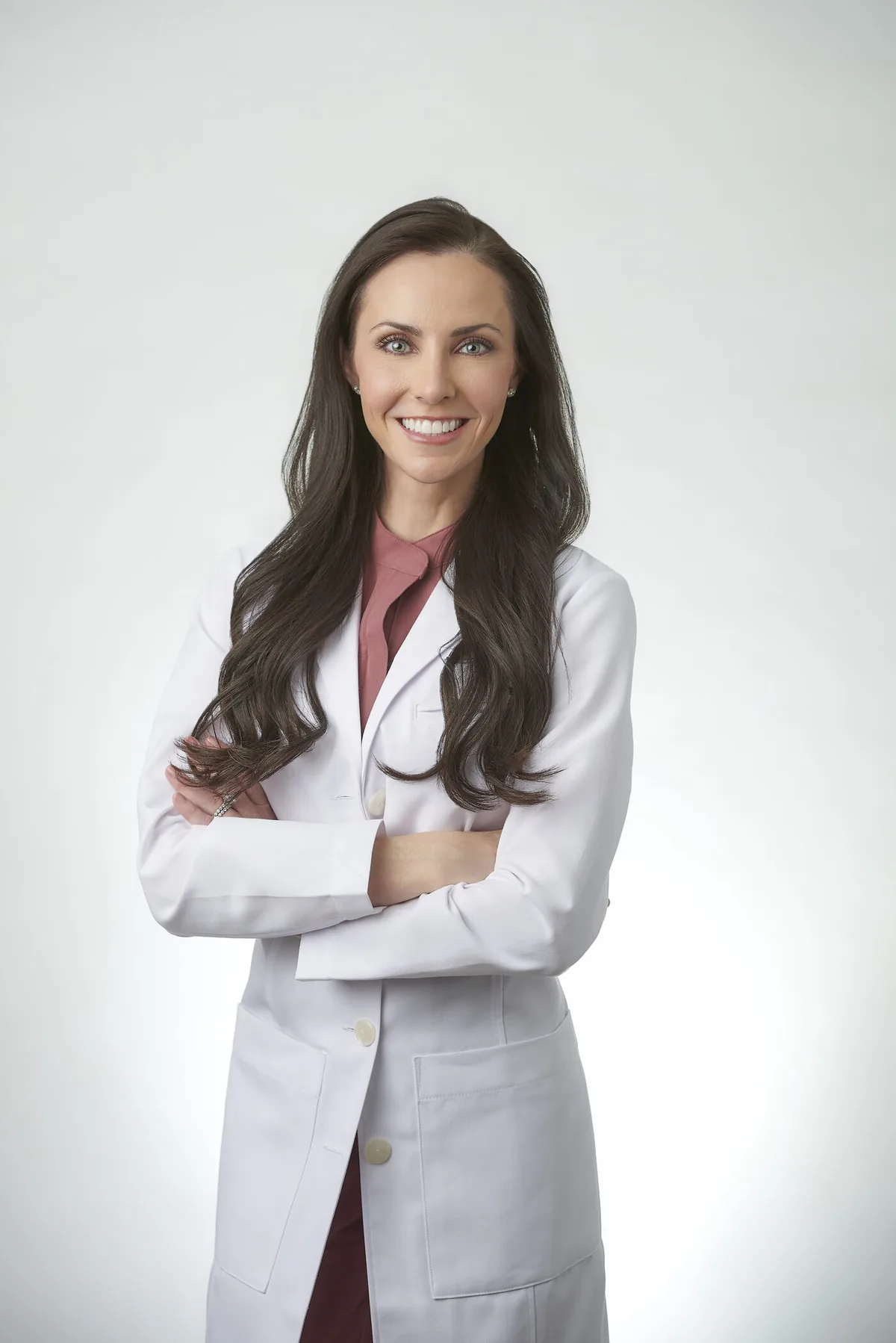
SCOTTSDALE · MODERN OFFICE SETTING
Where to Start
Who Contour TRL Is For, and What Happens First
Contour TRL at Aesthetica by Ashley Howarth MD is for adults with etched wrinkles, vertical lip lines, periorbital lines, deep sun damage, or scars on the face, who are untanned at the time of treatment, can take 7 to 14 days of open healing and several weeks of pinkness for a deep plan, and can protect the treated skin from sun for 2 to 4 weeks after a light plan and 8 to 12 weeks after a deep one. The consultation for anything beyond a light pass is with Dr. Howarth. She examines the lines at rest and in motion, separates a skin-surface problem from muscle movement, volume loss, eyelid anatomy, or tissue descent, since each has a different answer, from Botox and filler to eyelid surgery or a facelift; records your Fitzpatrick skin type, sun history, prior resurfacing, cold sore and keloid history, and isotretinoin use; checks for any lesion that needs a dermatologist; and sets the depth and coagulation zone by zone, the anesthesia, the setting, and the recovery calendar. Fair to medium skin with etched lines is planned for deep full-field or zone-specific resurfacing performed by Dr. Howarth. Fine lines and surface texture without etching are directed to a light pass performed by the team, or to MicroLaserPeel or HALO. Fitzpatrick IV skin is limited to light or medium depth after pretreatment and a test area; Fitzpatrick V and VI skin is not treated with deep full-field erbium and is directed to MOXI or chemical peels.
Dr. Ashley Howarth, MD, FACS is a board-certified plastic surgeon and an instructor in plastic surgery at Mayo Clinic. Aesthetica by Ashley Howarth MD is the medical aesthetics brand of her practice, Howarth Plastic Surgery, at 7373 N. Scottsdale Road, Suite C150, Scottsdale, Arizona 85253.

Depth and Coagulation, Zone by Zone
How Contour TRL Is Used in Scottsdale
Light Contour Pass: The Team, Under Protocol
At its lightest setting of about 20 to 50 microns, Contour TRL behaves like a MicroLaserPeel, refreshing texture and softening fine lines with healing of three to five days.
At its lightest setting, about 20 to 50 microns of ablation with little or no coagulation, Contour TRL behaves like a MicroLaserPeel: a full-field pass that refreshes texture and tone, softens fine lines, and heals in 3 to 5 days. At Aesthetica by Ashley Howarth MD this light pass is performed by the physician-led laser technicians under Dr. Howarth’s written protocol, on Fitzpatrick I to III skin routinely and IV after pretreatment. It is also the pass used to blend the edges of a deeper zone into untreated skin, and the annual maintenance treatment after a deep plan.
Deep Full-Field Resurfacing: Physician-Performed
For etched wrinkles and leathery sun damage, Dr. Howarth performs deep full-field Contour TRL herself, with healing over 10 to 14 days and one treatment usually enough.
For etched wrinkles across the face and leathery sun damage, Dr. Howarth performs deep full-field Contour TRL: ablation built up in passes to a depth she sets for each zone, deeper on the cheeks and perioral skin and shallower on the eyelids and jawline, with coagulation dialed in for tightening. Local nerve blocks with oral or IV sedation, or general anesthesia when coordinated with surgery, keep the treatment comfortable. The face heals over 10 to 14 days and stays pink for 4 to 12 weeks, so deep plans are scheduled November to February. This is physician-performed laser skin resurfacing, and one treatment is usually enough.
Perioral and Periorbital Zones: Physician-Performed
Vertical lip lines and crow’s feet are treated as zone-specific plans by Dr. Howarth, with the perioral zone tolerating the deepest treatment and healing taking seven to ten days.
Vertical lip lines and crow’s feet are the two problems deep erbium resurfacing solves best, and both are zone-specific plans performed by Dr. Howarth. The perioral zone tolerates the deepest treatment on the face; a 2019 Plastic and Reconstructive Surgery study of deep perioral erbium resurfacing reported durable correction of lip lines with no hypopigmentation or scarring over seven years. The periorbital zone is thin and is treated more conservatively, often 3 to 6 months after or at the time of eyelid surgery. Each zone is feathered into a light pass so there is no visible edge. Healing takes 7 to 10 days for a zone, with antiviral prophylaxis for every perioral plan.
Coordinated With Facelift and Eyelid Surgery
Because surgery repositions tissue but does not change the skin’s surface, Dr. Howarth often plans Contour TRL resurfacing alongside facelift, neck lift, or eyelid surgery.
Surgery repositions tissue; it does not change the skin’s surface. Etched lines on a lifted face are still etched, which is why Dr. Howarth plans resurfacing alongside facelift, neck lift, and blepharoplasty. Zones that surgery does not undermine, such as the perioral area, can be resurfaced at the same operation under the same anesthesia; skin that has been lifted is resurfaced lightly at the time of surgery or deeply 3 to 6 months later once its blood supply has recovered. Only a surgeon performing both can make that sequencing decision, and it is the reason Contour TRL at Aesthetica by Ashley Howarth MD sits inside a plastic surgery practice. ProFractional is added for scars within the plan.
At a Glance
Contour TRL at a Glance
Contour TRL plans at Aesthetica by Ashley Howarth MD by depth, with the anesthesia, days of recovery, and who performs each; the plan is set at the consultation, and deep plans are scheduled November to February.
| Plan | Depth and coagulation | Anesthesia | Downtime | Who performs it |
|---|---|---|---|---|
| Light pass | About 20 to 50 microns of ablation, little or no coagulation; texture, tone, fine lines, annual maintenance | Topical numbing | 3 to 5 days, pink 1 to 2 weeks | Physician-led laser technician under Dr. Howarth's protocol |
| Medium plan | About 100 to 200 microns with light coagulation; moderate lines, Fitzpatrick IV skin at limited depth | Topical numbing with local nerve blocks and oral medication | 7 to 10 days, pink 3 to 6 weeks | Dr. Howarth, physician-performed |
| Deep full-field resurfacing | Ablation built in passes to several hundred microns by zone, with coagulation for tightening; etched wrinkles and leathery sun damage | Nerve blocks with oral or IV sedation; general anesthesia when combined with surgery | 10 to 14 days, pink 4 to 12 weeks | Dr. Howarth, physician-performed |
| Zone-specific perioral or periorbital | Deep in the perioral zone, more conservative around the eyes, feathered into a light pass | Nerve blocks with oral sedation; metal eye shields for periorbital work | 7 to 10 days, pink 3 to 8 weeks | Dr. Howarth, physician-performed |
| Surgery-coordinated | Deep on undissected zones at the time of facelift or blepharoplasty; lifted skin treated lightly at surgery or deeply 3 to 6 months later | General anesthesia in the operating room, or the second stage under nerve blocks in the office | Follows the surgical recovery, then 10 to 14 days for the second stage | Dr. Howarth, physician-performed |
How It Compares
Contour TRL vs HALO vs CO2
How full-field erbium resurfacing compares with the hybrid fractional HALO and with fractional CO2; Aesthetica by Ashley Howarth MD offers erbium and HALO and does not offer CO2, and the table explains why.
| Contour TRL (erbium) | HALO | Fractional CO2 | |
|---|---|---|---|
| What it is | Full-field 2940 nm erbium:YAG with independently set ablation and coagulation | Hybrid fractional laser, 1470 nm non-ablative plus 2940 nm ablative, treating a fraction of the surface | Fractional 10600 nm CO2 laser treating a fraction of the surface with substantial heat |
| Depth and heat | Micron-precise ablation with coagulation added deliberately; least residual heat | Shallow ablative and deeper non-ablative channels; moderate heat | Deep channels with a wide zone of thermal damage; most residual heat |
| Best for | Etched wrinkles, lip lines, crow's feet, leathery sun damage, deep scars | Sun damage, tone, pores, texture, and fine lines in 1 to 2 treatments | Etched wrinkles and scars where fractional CO2 is the device available |
| Downtime and redness | 7 to 14 days open for deep plans; pink 4 to 12 weeks | 5 to 7 days of peeling; pink 1 to 2 weeks | 7 to 14 days open; redness commonly 2 to 3 months or longer |
| Skin types and pigment risk | I to III for deep plans; IV at limited depth; lower rate of permanent lightening in the comparative literature | I to IV routinely, V with care | I to III; higher reported rates of prolonged redness and pigment change |
| At Aesthetica by Ashley Howarth MD | Offered; light pass by the team, everything deeper performed by Dr. Howarth; deep plans November to February | Offered; team under protocol, deeper plans by Dr. Howarth; October to April | Not offered; the practice chose erbium for less heat, shorter redness, and comparable wrinkle correction |
A Procedure, Planned Like One
What to Expect at a Contour TRL Treatment at Aesthetica by Ashley Howarth MD
A Contour TRL treatment at Aesthetica by Ashley Howarth MD has three parts: a consultation with Dr. Howarth that sets depth and coagulation by zone, anesthesia, and the calendar; the treatment itself; and a written wound care and sun plan with scheduled follow-up visits. For deep plans this is a procedure with preparation and recovery, not an appointment, and it is planned that way.
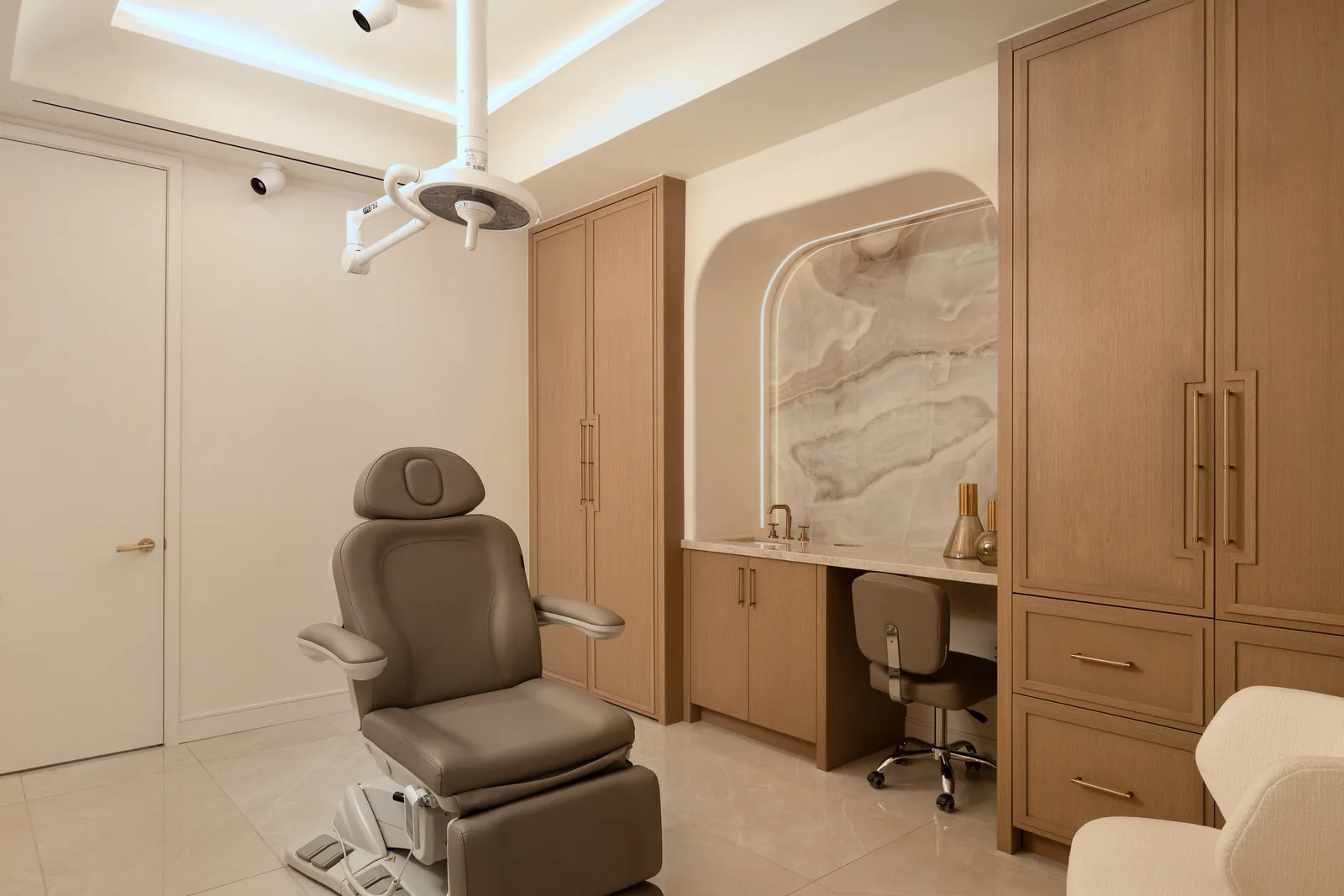
Lines examined, zones mapped, depth and anesthesia set
Dr. Howarth examines the lines at rest and in motion, rules out problems that need surgery or injectables instead, records skin type and sun history, maps the zones and the depth for each, chooses topical numbing, nerve blocks, sedation, or the operating room, starts antiviral prophylaxis and skin preparation, and books the date within November to February for deep plans. A light pass is scheduled with the team.
Anesthesia, protective eyewear, and passes built to depth
After numbing or nerve blocks take effect, you wear protective eye shields and Dr. Howarth builds the depth pass by pass, zone by zone, checking the tissue between passes, with coagulation set for each area. A full face takes 45 to 60 minutes; a perioral or periorbital zone about 20 to 30 minutes. Light passes performed by the team use topical numbing and take 15 to 30 minutes.
Wound care, a sun plan, and follow-up visits booked
You leave with an occlusive dressing or ointment routine, written cleansing instructions, oral medication for comfort, antiviral tablets to finish, a strict no-sun plan of 8 to 12 weeks for deep plans, and follow-up visits at day 2 or 3, day 7, and week 3 with Dr. Howarth, then photographs at 3 and 6 months.
Clear Information. Informed Choices.
Safety and Limitations of Contour TRL
Deep full-field resurfacing is a controlled second-degree injury, and it is safe when depth matches the skin type and zone, the skin is untanned, wound care is followed, and the surgeon performing it manages the healing personally. The complications that matter most are infection during the open phase, post-inflammatory hyperpigmentation in the pink phase, more likely on darker or tanned skin and with early sun, and, after very deep treatment, permanent lightening or scarring. Erbium’s low residual heat makes the last two less common than after CO2, and the published perioral series reported none, but no depth eliminates them. That is why Dr. Howarth performs every medium, deep, zone-specific, and surgery-coordinated plan, limits Fitzpatrick IV skin to lighter depths, does not treat Fitzpatrick V and VI skin with deep full-field erbium, requires antiviral prophylaxis, and schedules deep plans between November and February.
Possible Side Effects Include
- Open, weeping skin for 7 to 14 days after deep plans
- Pinkness for 4 to 12 weeks, longer in fair, freckled skin
- Post-inflammatory hyperpigmentation, especially with sun or darker skin
- Cold sore reactivation or bacterial infection during healing
- Rarely, milia, prolonged redness, permanent lightening, or scarring
What Treatment Cannot Guarantee
- Lifting of descended tissue or removal of excess eyelid skin
- Softening of lines caused by muscle movement without Botox
- Safe deep treatment of Fitzpatrick V and VI skin
- A result that survives continued daily sun exposure
- A substitute for skin cancer screening
What Happens After Contour TRL
Recovery After Contour TRL
Recovery from Contour TRL scales with depth: 3 to 5 days for a light pass, 7 to 10 days of open healing for a medium or zone-specific plan, and 10 to 14 days for deep full-field resurfacing, followed by weeks of pinkness. The timeline below describes a deep plan performed by Dr. Howarth, with follow-up visits at each stage; a light pass by the team follows the shorter MicroLaserPeel timeline. The American Society of Plastic Surgeons describes erbium recovery as about a week of healing versus up to two weeks for CO2, with pinkness fading over two to three months.
The skin is red, swollen, and weeping under an occlusive dressing or thick ointment; swelling peaks on day 2 and the eyes may be puffy after periorbital work. Oral medication manages discomfort. Cleanse as instructed with dilute vinegar or saline soaks 3 to 4 times a day and reapply ointment. No sun, no makeup, no heat, and sleep with the head elevated. Dr. Howarth checks the skin at day 2 or 3.
The surface re-epithelializes from the edges and from below, itching as it does; the weeping stops and the skin turns a bright, shiny pink by day 7 to 10 for a zone and day 10 to 14 for a deep full face. Do not pick or peel. Mineral makeup can go on once the surface is fully closed. Exercise, sweat, and heat wait until then. Dr. Howarth sees you at day 7 and adjusts the wound care.
The skin is pink and tight, then progressively paler over 4 to 12 weeks; fair, freckled skin stays pink longest. This is the window in which sun causes hyperpigmentation, so mineral SPF 30 or higher, hats, and shade are non-negotiable for 8 to 12 weeks, which is why deep plans are scheduled November to February in Arizona. Retinoids and active skin care resume at about 6 weeks. Read more in the Skin in Arizona guide.
Etched lines are removed when the surface closes, and the skin continues to tighten and smooth as collagen remodels for 3 to 6 months; photographs are taken at 3 and 6 months. One deep treatment is usually enough. Most Scottsdale patients then maintain with a light Contour or MicroLaserPeel pass each laser season, BBL for new pigment, and HydraFacial through the summer.
Before & After
Contour TRL, Before and After Treatment
Deep resurfacing results are best judged in photographs taken in the same light before treatment and at 6 months, once pinkness has resolved and collagen has remodeled. Aesthetica by Ashley Howarth MD maintains before-and-after galleries for Contour TRL, ProFractional, MicroLaserPeel, and HALO, and Dr. Howarth can show you cases that match your skin type, the zones planned, whether the concern is etched lines or sun damage, and whether resurfacing was combined with facial surgery.
Patient Case Summaries
Selected Contour TRL Case Summaries
These deidentified case summaries illustrate how Dr. Howarth and the physician-led team at Aesthetica by Ashley Howarth MD plan Contour TRL treatment in Scottsdale. They include deep zone-specific and full-face plans performed by Dr. Howarth, resurfacing coordinated with a facelift and with eyelid surgery, fair and darker skin types, a request in summer that waited for laser season, and a light pass performed by the team. Each summary connects the patient’s concern and skin assessment with the treatment performed or the recommendation made.
Case 01
Deep perioral
Etched vertical lip lines removed with deep perioral Contour TRL performed by Dr. Howarth
Patient presentation
A woman in her sixties, a lifelong Arizona resident and former smoker, reported deep vertical lines above and below her lips that filler had softened only briefly and that her lipstick bled into every day.
Skin assessment
Dr. Howarth found deeply etched perioral rhytides on Fitzpatrick II skin with good lip support and no volume loss that filler needed to address, no laxity that needed surgery, and no lesion of concern. She had a history of cold sores. She could take 10 days of recovery in January.
Procedure performed
Deep perioral Contour TRL performed by Dr. Howarth under local nerve blocks and oral sedation, with ablation built up in passes to the base of the lines and coagulation added for tightening, feathered into a light pass across the lower face, with antiviral prophylaxis started two days before.
Clinical rationale
Lines etched into the dermis are removed by resurfacing the dermis, and the perioral zone tolerates the deepest treatment on the face; the published seven-year series of deep perioral erbium resurfacing reported durable correction without hypopigmentation or scarring, which is why erbium at depth rather than filler or CO2 was the plan.
Follow-up
The zone healed by day 9 and was pink for 6 weeks; at 6 months the lines were gone in photographs and her lipstick no longer bled. She maintains with a light pass each laser season.
Case 02
Facelift coordinated
Full-face deep resurfacing planned around a facelift and performed by Dr. Howarth
Patient presentation
A woman in her sixties who had moved to Scottsdale from Southern California asked whether a facelift would remove the crosshatched wrinkles across her cheeks and the leathery sun damage over her whole face, or whether she needed a laser as well.
Skin assessment
Dr. Howarth found jowling and neck laxity that needed a facelift and neck lift, plus etched cheek wrinkles and deep photodamage on Fitzpatrick II skin that no lift would change, since surgery repositions tissue and does not resurface skin. Her perioral and forehead skin would not be undermined by the operation.
Procedure performed
A facelift and neck lift performed by Dr. Howarth in November with deep Contour TRL to the perioral zone and forehead at the same operation under general anesthesia, then deep full-field Contour TRL to the cheeks and lifted skin performed by Dr. Howarth in the office in February, 3 months after surgery, under nerve blocks and oral sedation.
Clinical rationale
Zones that surgery does not undermine can be resurfaced deeply at the same operation, but freshly lifted skin has a reduced blood supply and is resurfaced deeply only once it has recovered; sequencing the two safely is possible only when the same surgeon performs both.
Follow-up
Both stages healed without complication; at 6 months after the second stage her cheeks were smooth and even in tone, and she uses BBL and a light pass each laser season to maintain the surface.
Case 03
After blepharoplasty
Crow's feet and lower eyelid crepe treated with periorbital Contour TRL after eyelid surgery
Patient presentation
A man in his fifties, a long-term Scottsdale golfer, had lower eyelid surgery with Dr. Howarth to remove bags and asked four months later why the fine crepey lines under his eyes and his crow’s feet were still there.
Skin assessment
Dr. Howarth found that the eyelid contour was corrected but the thin periorbital skin remained etched and crepey on Fitzpatrick II skin, a surface problem that blepharoplasty is not designed to fix and that filler would not address. The lids had fully healed and his tan had faded by December.
Procedure performed
Zone-specific periorbital Contour TRL performed by Dr. Howarth at a medium depth with light coagulation, under nerve blocks with metal eye shields, feathered into a light pass over the upper cheeks and temples, 4 months after the blepharoplasty.
Clinical rationale
The periorbital zone is the thinnest skin on the face and is resurfaced more conservatively than the perioral zone, and deep treatment over recently operated eyelids waits 3 to 6 months for the blood supply to recover; performing the surgery and the resurfacing herself let Dr. Howarth judge that timing and depth.
Follow-up
The zone healed by day 8 and was pink for 5 weeks; at 6 months the crepe was smoothed and the crow’s feet markedly softer. He wears wraparound sunglasses and SPF on the course.
Case 04
Darker skin type
Etched lines on Fitzpatrick IV skin, and why the depth was limited
Patient presentation
A woman in her fifties of South Asian descent, recently relocated to Scottsdale, asked for the deep resurfacing she had read about to remove lip lines and crosshatched cheek wrinkles.
Skin assessment
Dr. Howarth found moderately etched perioral and cheek lines on Fitzpatrick IV skin with a history of post-inflammatory hyperpigmentation after minor injuries. Deep full-field erbium at this skin type carries a substantial risk of months of hyperpigmentation and some risk of permanent lightening, and Arizona sun would compound it.
Procedure performed
Eight weeks of topical pigment preparation and a test area, then a medium-depth perioral Contour TRL with minimal coagulation performed by Dr. Howarth in December, feathered widely, followed by two conservative-density ProFractional sessions to the cheeks over the winter and a MOXI series the next season, with the topical program continued throughout.
Clinical rationale
On Fitzpatrick IV skin the honest plan trades a single deep treatment for staged, shallower treatments that reach the lines gradually with a manageable pigment risk; limiting depth is a physician decision made before treatment, not a compromise discovered afterward.
Follow-up
No lasting hyperpigmentation occurred, the lip lines were clearly softer at 6 months, and she continues the topical program and daily SPF with a plan to repeat the medium perioral pass next winter.
Case 05
Summer timing
A request for deep resurfacing in May that was scheduled for November
Patient presentation
A woman in her fifties asked in May for deep full-face Contour TRL to remove etched wrinkles and sun damage before a September reunion.
Skin assessment
Dr. Howarth found etched cheek and perioral lines on Fitzpatrick II skin that were a good match for deep resurfacing, but the recovery would put open, then pink, skin into an Arizona June and July with a UV index above 11 and 100-degree days, and 8 to 12 weeks of strict sun avoidance was not realistic. The risk of hyperpigmentation and heat on healing skin outweighed the benefit before the reunion.
Recommendation
A summer plan of HydraFacial, a corrected mineral SPF habit, and Botox for the moving lines, with deep full-face Contour TRL performed by Dr. Howarth booked for November so that healing and pinkness would resolve over the cool months.
Clinical rationale
Deep resurfacing is planned like a procedure, and its calendar matters as much as its depth; in Scottsdale the deepest plans belong in November to February so that the pink phase, when sun causes the most pigment change, falls in the mildest weather.
Follow-up
She was pleased with her skin at the reunion, had deep full-face Contour TRL in November, was pink through January, and at 6 months the etched lines and sun damage were gone in photographs.
Case 06
Light pass, team-performed
A light Contour pass for texture and fine lines performed by the physician-led team
Patient presentation
A woman in her forties, a long-term Scottsdale resident who had completed a BBL series, asked whether she needed deep resurfacing for fine lines and a rough surface on her cheeks that were beginning to bother her.
Skin assessment
The assessment found fine, not etched, lines and mild rough texture on Fitzpatrick II skin with even tone after BBL, no perioral or periorbital etching, and no laxity. Deep resurfacing would have cost two weeks of recovery for a problem a light pass could address. She was untanned in March.
Procedure performed
A light full-field Contour TRL pass at about 30 microns with no coagulation, performed by the physician-led laser technician under Dr. Howarth’s written protocol, with topical numbing, ointment for 3 days, and a mineral SPF plan.
Clinical rationale
The depth decides the performer as well as the result: a light pass within the protocol range is team-performed and heals in 3 to 5 days, and it is the honest answer for fine lines and texture that are not yet etched. Dr. Howarth is the next step if the lines deepen.
Follow-up
She peeled for 4 days and was smooth and bright by the end of the week; she repeats the light pass each laser season alongside her BBL maintenance.
From First Visit to a Plan You Can Keep
Booking, Planning, and Follow-Up at Aesthetica by Ashley Howarth MD
Aesthetica by Ashley Howarth MD is a medical practice with a spa’s convenience. Established patients book online. New patients can book online or request a consultation, and the team responds usually the same day. Anything beyond a light Contour pass begins with a consultation with Dr. Howarth.

Online booking or a consultation with Dr. Howarth
Book a skin assessment directly online for a light pass, or request a consultation with Dr. Howarth for deep, zone-specific, or surgery-coordinated resurfacing and describe the lines, where they are, what you have tried, and when you can recover. Either path starts with an examination of your skin.
Zones, depth, anesthesia, and a date between November and February
You leave the consultation with a written plan: the zones and the depth and coagulation for each; who performs it, the team for a light pass or Dr. Howarth for everything deeper; the anesthesia and setting; whether it is coordinated with surgery, ProFractional, or BBL; the date, with deep plans placed in November to February; and the preparation, wound care, and sun protection that protect the result.
Visits at day 2 or 3, day 7, and week 3, then photographs at 3 and 6 months
Deep plans are followed by Dr. Howarth through the open and pink phases, then photographed at 3 and 6 months. Most Scottsdale patients then maintain with a light pass each laser season, BBL for new pigment, summer HydraFacial, and year-round mineral sunscreen. A-List members have the next season scheduled before they leave the last one.
Your Questions, Answered
Contour TRL Frequently Asked Questions
Contour TRL is Sciton’s Tunable Resurfacing Laser, a full-field 2940 nm erbium:YAG laser on which ablation depth and coagulation are set independently. It performs anything from a light peel to deep resurfacing that removes etched wrinkles, lip lines, crow’s feet, deep sun damage, and scars. At Aesthetica by Ashley Howarth MD, deep, zone-specific, and surgery-coordinated Contour TRL is performed by Dr. Howarth, a board-certified plastic surgeon.
Contour TRL treats lines etched into the dermis, which peels, fractional lasers, and injectables do not remove: vertical lip lines, crow’s feet and lower eyelid crepe, crosshatched cheek wrinkles, leathery sun damage, and deep acne or surgical scars. It does not lift descended tissue, remove excess eyelid skin, or soften lines made by muscle movement; those need surgery or Botox, which Dr. Howarth also provides.
Water in the skin absorbs the 2940 nm erbium wavelength about ten times more strongly than the 10600 nm CO2 wavelength, so each Contour TRL pass removes a precise layer with little residual heat, and the surgeon adds coagulation deliberately for tightening. Erbium therefore heals faster, stays pink for weeks rather than months, and carries a lower risk of permanent lightening. Aesthetica by Ashley Howarth MD offers erbium and does not offer CO2 for those reasons.
Deep full-field Contour TRL is planned for Fitzpatrick I to III skin. Fitzpatrick IV skin is limited to light or medium depth after topical pretreatment and a test area, because deep full-field ablation carries a substantial risk of months of hyperpigmentation and some risk of lightening. Fitzpatrick V and VI skin is not treated with deep full-field erbium and is directed to MOXI or chemical peels. Tanned skin of any type postpones treatment.
Deep full-field and zone-specific plans usually need one treatment, with collagen tightening continuing for 3 to 6 months afterward; Sciton lists 1 to 3 treatments with improvement for up to 6 months. Light passes may be repeated each laser season as maintenance. On Fitzpatrick IV skin, or when a patient cannot take the recovery of one deep plan, the treatment is staged into shallower sessions instead.
A light pass with topical numbing feels like a hot, prickly sting and a strong sunburn afterward. Medium and zone-specific plans use topical numbing with local nerve blocks and oral medication. Deep full-field plans performed by Dr. Howarth use nerve blocks with oral or IV sedation, or general anesthesia when coordinated with a facelift or eyelid surgery. The first 2 to 3 days of healing are managed with oral medication and cool soaks.
A light pass heals in 3 to 5 days. A perioral or periorbital zone is open for 7 to 10 days; a deep full face for 10 to 14 days, with pinkness for 4 to 12 weeks. Sun must be avoided strictly through the pink phase, 8 to 12 weeks for deep plans, so in Scottsdale Dr. Howarth schedules deep resurfacing November to February and light passes October to April.
Etched lines are visibly reduced as soon as the new surface closes, at 7 to 14 days, though the skin is pink and shiny at that stage. Pinkness fades over 4 to 12 weeks, and the skin continues to tighten and smooth as collagen remodels for 3 to 6 months. Dr. Howarth photographs deep plans at 3 and 6 months, when the result is judged.
Yes, and the sequencing is a surgical decision. Zones that surgery does not undermine, such as the perioral area and forehead, can be resurfaced deeply at the same operation. Skin that has been lifted, including the eyelids after blepharoplasty, is resurfaced lightly at surgery or deeply 3 to 6 months later once its blood supply has recovered. Dr. Howarth performs both the surgery and the resurfacing, so both are planned together within laser season.
Lines removed by deep resurfacing do not come back as the same lines; the published seven-year perioral series found the correction durable. The skin continues to age and to take sun, which in Scottsdale is about 300 days a year, so new lines form over years wherever protection lapses. With daily mineral SPF 30 or higher and a light pass each laser season, most patients hold the result for many years.
Concerns Treated
Concerns This Treatment Addresses
These guides explain each concern and where this treatment fits among the options at Aesthetica by Ashley Howarth MD in Scottsdale.
- Fine Lines & Wrinkles Etched lines, lip lines, and crow's feet, the first use of deep resurfacing
- Sun Damage & Brown Spots Leathery, mottled photodamage resurfaced in one treatment
- Acne & Acne Scars Deep scars, with ProFractional inside the plan
- Skin Laxity Where coagulation tightens and where a facelift is the answer
- Skin Texture, Pores & Dullness A light Contour pass performed by the team
- Laser Season in Arizona Why October to April, and what to do in summer
BEGIN HERE
Request a Consultation
Tell us what you are considering. A member of our patient care team will follow up with consultation availability and next steps.

Megan S.
Patient Coordinator
Prefer to talk or text?
Selected References