
NONSURGICAL CONTOURING WITH DONATED ADIPOSE TISSUE
What Is alloClae Body Contouring?
alloClae is a sterile, hydrated adipose-tissue allograft made from donated human tissue. It contains non-viable adipocytes, extracellular matrix, lipids, and connective tissue. It is placed in localized subcutaneous areas where fat naturally exists to provide cushioning and structural support.
For selected body concerns, it may offer modest contour refinement without liposuction to harvest your own fat. It is nonsurgical, even though this page sits in the Body family so patients can compare it directly with surgical body-contouring choices.
alloClae is not weight loss, liposuction, a buttock augmentation, a skin-tightening treatment, or a stem-cell treatment. It is best discussed as a targeted option, not a large-volume transformation.

TARGET A DEFICIT—NOT EVERY CONTOUR PROBLEM
Body Concerns alloClae May—or May Not—Address
A localized depression and excess fat can look similar from one angle but require opposite treatment strategies. Examination also separates volume deficit from skin laxity, muscle, scar tethering, or a result that needs surgical revision.
- Selected hip-dip or lateral-contour depressions
- A small post-liposuction contour irregularity after healing is mature
- Localized soft-tissue deficiency after prior surgery or injury
- A modest transition that needs softening rather than fat removal
- A patient with limited donor fat or a strong preference to avoid a donor-site procedure
alloClae does not remove fat, tighten loose skin, correct muscle separation, or provide the scale of a large-volume fat transfer or implant-based operation.


LOCALIZED GOALS. STABLE HEALTH. CLEAR LIMITS.
alloClae Body Contouring Candidacy and Consultation
A possible candidate is a healthy adult with a stable, localized subcutaneous contour deficit and realistic expectations about scale, symmetry, risk, and duration. The person should understand that the material comes from donated human tissue and that long-term aesthetic data remain limited.
Consultation reviews weight stability, prior liposuction or surgery, scars, skin quality, health, medications, allergies, nicotine exposure, healing, and the exact concern. Dr. Howarth may recommend observation, liposuction, fat transfer, skin removal, scar release, another specialist, or no procedure instead.

DIAGNOSIS BEFORE VOLUME
Why a Plastic Surgeon Should Direct Body alloClae Planning
Body contour differences may come from too much fat, too little volume, loose skin, muscle, scar tethering, skeletal shape, or a prior operation. Adding material without identifying the layer can worsen rather than solve the visual problem.
Ashley Howarth, MD, FACS, evaluates the complete contour and explains when a small subcutaneous correction is reasonable, when surgery or fat removal addresses the cause more directly, and when treatment should not proceed.
PLASTIC SURGERY
OF SURGEONS

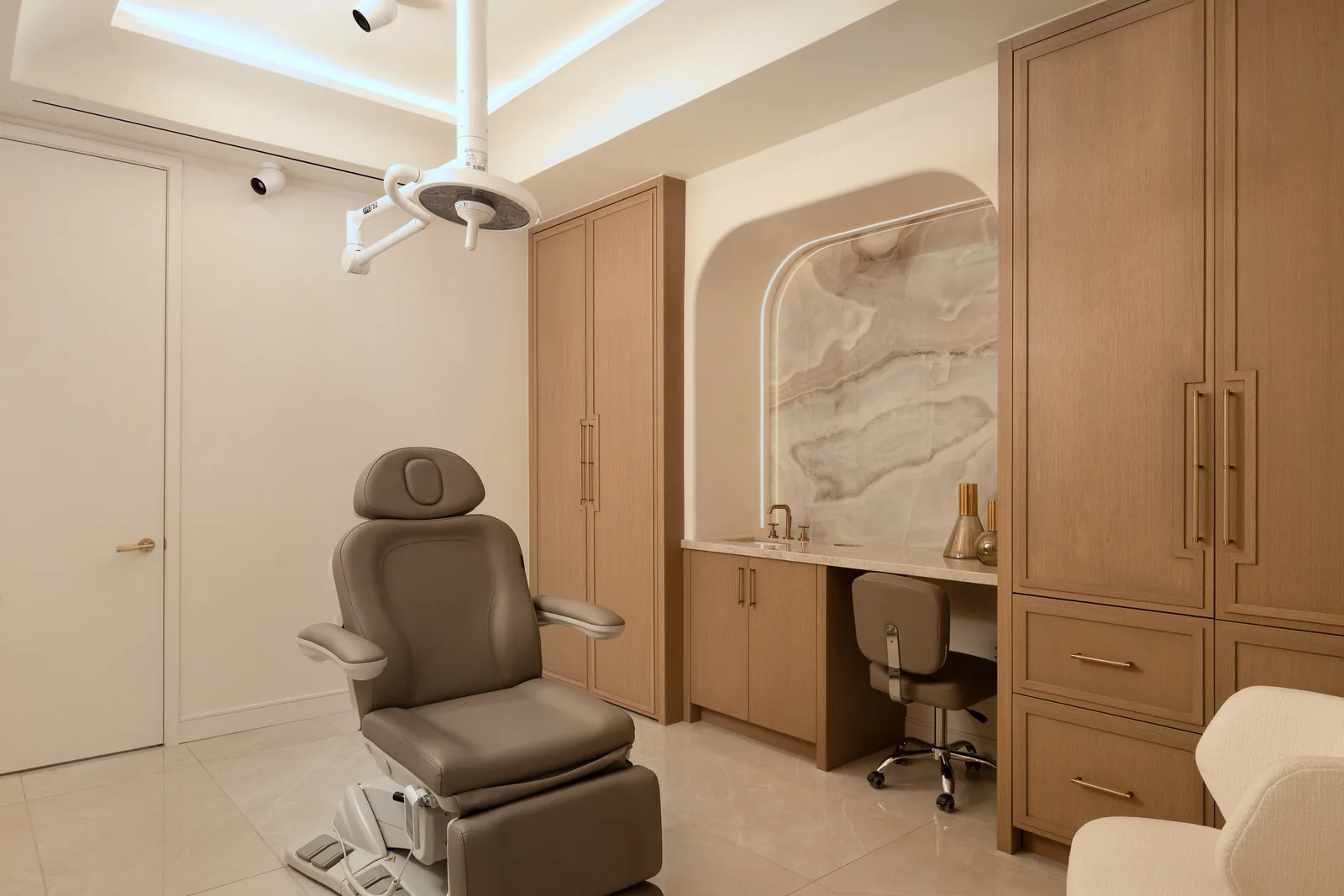
SCOTTSDALE · MODERN OFFICE SETTING
FROM FIRST QUESTION TO A CLEAR PLAN
alloClae Body Consultation and Patient Care Coordination
Your patient care coordinator helps organize consultation, records, estimates, forms, and follow-up logistics. Dr. Howarth and her clinical team make the medical recommendation, review donor-tissue considerations, and explain alternatives.

A thoughtful beginning.
Your patient care coordinator can arrange an in-person or virtual consultation with Dr. Howarth and explain what photographs, records, or other information to have ready. The consultation focuses on your concerns, health history, anatomy, and goals. An in-person physical examination is completed before the operative plan is finalized.
Clear information before you decide.
After Dr. Howarth recommends a plan, your patient care coordinator can review the written cost estimate, available financing options, scheduling requirements, forms, and next steps. Your coordinator can explain the practice process and help you understand what is needed before you decide whether to schedule.
Practical details, clearly organized.
If you are traveling to Scottsdale from elsewhere in Arizona or out of state, your patient care coordinator can help align required appointment dates and practical planning for consultation, surgery, and follow-up. Dr. Howarth and her clinical team provide individualized medical and recovery guidance.
COMPARE THE DIRECTION OF CHANGE
Body Contouring Options and Tradeoffs
alloClae
Adds selected localized subcutaneous support using donated human adipose tissue without a liposuction donor site.
Fat Transfer
Moves your own harvested fat and may support a broader volume plan when donor tissue and operative recovery are acceptable.
Liposuction
Removes selected subcutaneous fat; it does not fill a depression or tighten substantially loose skin.
Skin or Structural Surgery
Addresses loose skin, muscle separation, larger contour change, implants, or a revision that an injectable cannot correct.
MAP · PLACE · REASSESS
What to Expect With Body alloClae
The plan is location-specific. Product amount, access, comfort measures, staging, and follow-up are individualized after examination; a larger or more complex contour problem may require a different approach.
The contour is diagnosed.
Dr. Howarth determines whether the concern is a volume deficit, excess fat, skin laxity, muscle, scar tethering, skeletal shape, or a combination.
The exact area is mapped.
The team reviews donor-tissue consent, risks, alternatives, product amount, access points, comfort plan, aftercare, and whether staging or surgery fits better.
The area is reassessed over time.
The material is placed into the selected subcutaneous contour and follow-up evaluates early swelling, firmness, symmetry, and the evolving result.
CLEAR INFORMATION. INFORMED CHOICES.
Body alloClae Safety, Risks, and Limitations
alloClae is donated human tissue regulated as a human cellular and tissue-based product. Donor screening and processing reduce risk but cannot eliminate every risk. The official Instructions for Use report possible local and systemic reactions and make no biological claim.
Possible Risks and Reactions Include
- Pain, tenderness, swelling, bruising, redness, or discoloration
- Bleeding, hematoma, infection, delayed healing, or fluid collection
- Lumps, cysts, nodules, firmness, contour irregularity, or asymmetry
- Allergic, immune, or anaphylactic reaction, plus the residual disease-transmission risk of donated human tissue
- An unsatisfactory change, need for more treatment, or need for surgical correction
What alloClae Cannot Guarantee
- A specific volume, shape, symmetry, or duration of correction
- The same behavior as living fat transferred from your own body
- A substitute for an implant, lift, skin-removal procedure, or weight loss
- That one session will address every contour difference
- A complication-free treatment or a result unchanged by aging and tissue change
HEALING AND RESULTS EVOLVE
Recovery After Body alloClae
Recovery is generally centered on the treated area rather than a liposuction donor site. The course depends on location, amount, access points, tissue quality, prior surgery, and whether another procedure is performed.
Temporary swelling is expected
Tenderness, bruising, fullness, firmness, or asymmetry may be more noticeable before the area settles.
Activity follows the treated area
Work, exercise, compression, sleeping position, and travel instructions depend on the location, access points, and any combined procedure.
The contour is reassessed
Dr. Howarth evaluates healing, tissue response, symmetry, and whether observation or another step is appropriate.
Long-term data are still developing
No exact duration can be promised. Aging, weight change, tissue quality, healing, and the amount placed all influence the visible result.
PATIENT CASE SUMMARIES
alloClae Body Patient Case Summaries
These deidentified patient case summaries show how Ashley Howarth, MD, FACS, evaluated localized volume deficits, hip dips, and stable contour irregularities in Scottsdale. Identifying information is omitted. Each case reflects an individual clinical decision—including when another treatment or no procedure fit better—and does not predict another patient’s treatment or outcome.
Case 01
HIP DIP
A modest hip dip was evaluated for localized alloClae body contouring after confirmation of a true volume deficit
Patient presentation
At stable weight, the patient described a discrete indentation between the lateral hip and upper thigh and wanted a restrained change without a donor-site procedure.
Clinical evaluation
Dr. Howarth assessed pelvic anatomy, fat distribution, skin quality, symmetry, gluteal contour, prior procedures, and the volume required for a visible change.
Treatment decision
The consultation compared alloClae, fat transfer, observation, and staged treatment for the small subcutaneous deficit.
Clinical rationale
The evaluation distinguished the localized hollow from skeletal anatomy, adjacent fullness, broad shape preferences, and a request for large-volume augmentation.
Case boundary
alloClae cannot guarantee a perfectly round hip, exact symmetry, or the scale of change associated with larger-volume fat transfer.
Case 02
POST-LIPOSUCTION DEPRESSION
A stable post-liposuction depression was evaluated after healing and scar behavior were mature
Patient presentation
The patient reported a small contour depression after prior liposuction that remained visible after swelling resolved and weight stabilized.
Clinical evaluation
The evaluation mapped the depth, width, mobility, scar tethering, remaining fat, skin laxity, asymmetry, and positional changes in the irregularity.
Treatment decision
The consultation compared observation, scar release, alloClae, fat grafting, surgical revision, and a combined plan according to the tissue layer involved.
Clinical rationale
Adding volume fit only if missing soft tissue was the leading issue; tethered scar or uneven remaining fat required a different correction.
Case boundary
The assessment occurred after early swelling and firmness had resolved enough to distinguish healing from a persistent irregularity.
Case 03
SCAR-RELATED HOLLOW
A localized hollow near a mature surgical scar required diagnosis of both missing volume and scar tethering
Patient presentation
After prior surgery or injury, the patient noticed a small depression adjacent to a healed scar and asked whether an injectable could smooth it.
Clinical evaluation
Dr. Howarth examined scar maturity, attachment to deeper tissue, circulation, skin thickness, motion, symptoms, and the surrounding contour.
Treatment decision
The consultation compared alloClae and fat transfer for the volume deficit with release, revision, observation, or no procedure for fixed tethering.
Clinical rationale
Treating volume without addressing a bound-down scar would have left the main cause unchanged.
Case boundary
No material can erase a scar, guarantee a smooth transition, or substitute for adequate healing time.
Case 04
LIMITED DONOR FAT
Limited donor fat made alloClae relevant to a small body contour deficit—but the required volume set the boundary
Patient presentation
The patient had one focal soft-tissue deficit and wanted to avoid liposuction or lacked enough donor fat for meaningful grafting.
Clinical evaluation
The consultation compared the measured deficit with donor-site options, tissue thickness, skin quality, prior surgery, and the patient’s desired scale of change.
Treatment decision
The small mapped area was evaluated for alloClae; observation, staged fat transfer, surgery, or no treatment remained the alternatives for broader contouring.
Clinical rationale
Limited donor fat did not automatically make a donated adipose-tissue matrix appropriate; anatomy and required volume controlled the plan.
Case boundary
alloClae is donated human tissue and is not living autologous fat or a stem-cell treatment.
Case 05
LOOSE SKIN
Loose abdominal or body skin was not treated as a volume-loss problem that alloClae could correct
Patient presentation
The patient asked about filling an irregular lower-abdominal contour after pregnancy or weight change when loose skin was also present.
Clinical evaluation
Dr. Howarth distinguished missing volume from skin excess, muscle separation, subcutaneous fat, visceral contour, scars, and overall weight stability.
Treatment decision
The evaluation redirected the discussion to skin-removal surgery, muscle repair, liposuction, observation, or no procedure rather than added volume.
Clinical rationale
A matrix placed under the skin does not tighten a lax skin envelope or repair abdominal muscle separation.
Case boundary
Adding fullness would not have improved the concern because the involved tissue layer required a different solution.
Case 06
NOT LARGE-VOLUME CONTOURING
A request for buttock augmentation, weight loss, or broad body reshaping fell outside localized alloClae treatment
Patient presentation
The patient requested a major silhouette change, generalized fullness reduction, or large-volume buttock enhancement without surgery.
Clinical evaluation
The consultation evaluated overall goals, weight trajectory, skeletal proportions, subcutaneous and visceral fat, skin quality, donor fat, health, and risk.
Treatment decision
The discussion shifted to weight management, liposuction, fat transfer, excisional surgery, observation, or no procedure instead of alloClae.
Clinical rationale
alloClae is intended for selected localized subcutaneous contours, not weight loss or predictable large-volume body augmentation.
Case boundary
No specific body shape, volume, symmetry, or duration can be guaranteed.
YOUR QUESTIONS, ANSWERED
alloClae Body Contouring Frequently Asked Questions
alloClae is a sterile, hydrated adipose-tissue allograft made from donated human tissue. It contains non-viable adipocytes, extracellular matrix, lipids, and connective tissue for localized subcutaneous cushioning and support.
No. It is a nonsurgical injectable treatment. This page appears in the Body family so it can be compared honestly with liposuction, fat transfer, skin removal, and other surgical choices.
Its labeled use is for localized subcutaneous areas where fat naturally exists. Whether a particular hip, buttock, trunk, scar, or post-surgical contour is appropriate requires examination and an individualized plan.
It may be considered for selected localized hip-dip contours when the desired change is modest. Skeletal shape, muscle, skin, symmetry, and the volume required can make another plan more appropriate.
It may be considered for selected stable depressions after healing is mature. Some irregularities involve scar tethering, remaining fat, loose skin, or broader asymmetry and may need observation or surgical revision instead.
Fat transfer uses your own fat harvested by liposuction and involves a donor site. alloClae uses processed donated human adipose tissue and does not require fat harvesting. They are not biologically identical.
The Instructions for Use describe non-viable adipocytes and make no biological claim. It should not be marketed as a stem-cell or regenerative treatment.
An exact duration cannot be promised, and long-term aesthetic data are still developing. The visible course may vary with placement, amount, tissue quality, healing, aging, and weight change.
Possible risks include pain, swelling, bruising, infection, bleeding, cysts, nodules, firmness, asymmetry, allergic or immune reactions, anaphylaxis, discoloration, unsatisfactory contour, and residual disease-transmission risk.
Dr. Howarth may recommend observation, liposuction, fat transfer, skin-removal surgery, scar-focused revision, another specialist, or no procedure depending on the actual cause and scale of the concern.
Related Care
Related Body Procedures
These pages help distinguish whether skin, localized fat, muscle, a scar, or broader body-contouring priorities should lead the conversation.
- LiposuctionWhen selected excess subcutaneous fat—not a volume deficit—leads the concern.
- Tummy TuckWhen loose abdominal skin or abdominal-wall laxity requires surgery.
- Mommy MakeoverWhen breast and body priorities require coordinated surgical planning.
- alloClae Breast ContouringExplore localized nonsurgical contouring in the Breast family.
BEGIN HERE
Request a Consultation
Tell us what you are considering. A member of our patient care team will follow up with consultation availability and next steps.

Megan S.
Patient Coordinator
Prefer to talk or text?