
The Medical Facial for Every Season
What HydraFacial Is
HydraFacial is a medical facial delivered through a spiral vortex tip that cleanses and applies a light chemical peel, extracts congestion with painless vacuum suction, and infuses hydrating serums with hyaluronic acid, peptides, and antioxidants, all in one 30 to 45 minute session performed by the licensed aesthetician at Aesthetica by Ashley Howarth MD. There is no downtime, it suits all skin types including Fitzpatrick V and VI, and most patients keep it year-round as the summer bridge between laser seasons.
HydraFacial is a medical facial delivered through a spiral vortex tip that does three things in one 30 to 45 minute session: it cleanses and applies a light chemical peel, it extracts congestion from the pores with painless vacuum suction, and it infuses hydrating serums with hyaluronic acid, peptides, and antioxidants into freshly exfoliated skin. There is no downtime, it suits all skin types including sensitive skin and Fitzpatrick V and VI, and results, a brighter, smoother, plumper surface, are visible when you sit up. At Aesthetica by Ashley Howarth MD, the med spa of Howarth Plastic Surgery in Scottsdale, HydraFacial is performed by the licensed aesthetician and is the treatment most patients keep year-round: monthly for maintenance, or a series of 3 to 5 for dehydration, congestion, pores, and dullness, or a tone that has gone flat. It is also the summer bridge in Arizona. Light and laser treatments that need untanned skin run in laser season, October to April; HydraFacial carries the skin through the UV index 11+ months in between, when the afternoon humidity often sits below 15 percent and skin that looked fine in March turns dull and tight.
The mechanism is mechanical and topical rather than thermal, which is why it is safe in full sun and on every skin type. The vortex tip creates a small whirlpool at the skin surface that loosens dead cells and softens sebum in the pores; the peel step, a low-strength glycolic and salicylic blend, dissolves the bond between those cells without visible peeling; the extraction step vacuums the loosened debris away instead of squeezing it; and the final pass pushes serum into skin that has just lost its dry outer layer and absorbs it more readily. A 2008 study of hydradermabrasion published in the Journal of Cosmetic Dermatology found that six treatments with an antioxidant serum increased epidermal thickness, papillary dermal thickness, and skin antioxidant levels, while the same serum applied by hand did not. That is why the serum step is not a spa flourish. Boosters, concentrated serums chosen for brightening, firming, or clarifying, are added at the assessment, and the same visit can end with LED light where indicated. What HydraFacial does not do is resurface, remove brown spots, or tighten; for those the assessment moves you to chemical peels, SkinPen microneedling, or BBL HERO and MOXI in season.

Why Patients Ask for HydraFacial
What Patients Who Choose HydraFacial Notice
Most people who ask Aesthetica by Ashley Howarth MD about HydraFacial describe skin that is not damaged so much as tired. It is the Arizona pattern: dry air pulls water out of the outer layer, sunscreen and sweat sit in the pores, and by August the face looks dull and feels tight even with moisturizer. These are the findings the aesthetician hears most.
- Skin that looks dull and grey by afternoon no matter what serum goes on in the morning
- Blackheads and congestion on the nose and chin that squeezing only inflames
- Makeup that sits in fine lines and flakes by midday in the dry air
- Tightness after cleansing, especially from May to September
- A wedding, a reunion, or a photo shoot in two weeks and no time for peeling
- Skin that is too sensitive, too dark, or too tanned for a laser right now
Congestion, dehydration, and dullness are the problems HydraFacial solves best, because extraction and infusion address them directly and immediately. Fine lines soften with hydration but do not go away; brown spots and redness do not change. The assessment separates what a facial can fix from what needs a peel, a laser in season, or a physician’s opinion.


Surgeon-Directed Care
More Tools in the Toolbox: Why a Plastic Surgeon Directs a Medical Facial
Aesthetica by Ashley Howarth MD is the medical aesthetics practice of Ashley Howarth, MD, FACS, a board-certified plastic surgeon and instructor in plastic surgery at Mayo Clinic. A HydraFacial does not need a surgeon in the room, and at Aesthetica by Ashley Howarth MD it is performed by the licensed aesthetician. What a plastic surgeon’s practice adds is the judgment around it. The first judgment is diagnostic: Arizona has one of the highest skin cancer rates in the country, and a long-term Scottsdale resident’s face carries lesions that a facial should not be polishing over. Dr. Howarth’s protocol is that any spot the aesthetician cannot confidently call a pore, a milium, or a benign keratosis is photographed and shown to a physician, and that any pigmented lesion with irregular borders, more than one color, or a history of change is referred to a dermatologist before any skin treatment continues. The second judgment is honesty about escalation. A facial improves congestion and hydration; it does not treat sun damage, scars, or laxity, and a practice that offers only facials has an incentive to keep selling them. A practice that also offers peels, SkinPen, the Sciton lasers, physician-performed laser skin resurfacing, and facial surgery under the same physician can tell you which step you actually need.
The third judgment is timing and coordination. Dr. Howarth sets the rules for when a HydraFacial is safe after a laser, after injectables, before and after facial surgery, and on skin that is on isotretinoin or a retinoid, and the aesthetician works within them. She also sets the summer plan for Arizona, where the light-based treatments pause from May through September and a medical facial carries the skin through UV index 11+ months without heat or downtime. More tools in the toolbox, and an honest answer about which one you need.

SCOTTSDALE · MODERN OFFICE SETTING
Where to Start
Who HydraFacial Is For, and What Happens First
HydraFacial at Aesthetica by Ashley Howarth MD is for adults of any skin type, any Fitzpatrick type, and any month of the year who want cleaner pores, better hydration, and a brighter surface with no downtime, and for anyone whose skin is too tanned, too sensitive, or too dark for the light and laser treatments the practice runs in laser season. It is the right first treatment for a new patient who has never had professional skin care, the right maintenance treatment between laser series, and the right pre-event treatment about a week before photographs. The skin assessment comes first. The licensed aesthetician examines the skin under magnification, records your Fitzpatrick type, sun exposure, and current products, checks for active acne, cold sores, sunburn, open lesions, rosacea flares, and recent isotretinoin or facial surgery, and identifies whether the problem is surface congestion and dehydration, which HydraFacial addresses, or pigment, etched lines, scarring, or laxity, which it does not. Boosters are chosen from the findings: brightening for uneven tone, clarifying for oily or acne-prone skin, hydrating for the desert months, firming peptides for early lines. If the assessment finds a lesion that should be examined by a physician, or a concern that needs a peel, a laser, or surgery, that is said plainly at the first visit.
Dr. Ashley Howarth, MD, FACS is a board-certified plastic surgeon and an instructor in plastic surgery at Mayo Clinic. Aesthetica by Ashley Howarth MD is the medical aesthetics brand of her practice, Howarth Plastic Surgery, at 7373 N. Scottsdale Road, Suite C150, Scottsdale, Arizona 85253.

Three Steps, Customized by Booster and Season
How HydraFacial Is Used in Scottsdale
Cleanse and Peel, Extract and Hydrate, Fuse and Protect
Every HydraFacial follows the same three-step, 30-to-45-minute sequence: a peel that loosens dead cells, painless vacuum extraction of pore congestion, and an infusion of hyaluronic acid, peptides, and antioxidants, after which there’s no restriction beyond a makeup-free evening.
Every HydraFacial at Aesthetica by Ashley Howarth MD follows the same three steps. The vortex tip first cleanses and applies a low-strength glycolic and salicylic peel that loosens dead cells without visible flaking. The second pass extracts with painless suction, pulling softened sebum and debris out of the pores on the nose, chin, and forehead instead of squeezing them. The third pass infuses hyaluronic acid, peptides, and antioxidants into the freshly exfoliated surface, where a 2008 histologic study found hydradermabrasion with serum increased epidermal thickness and skin antioxidant levels. The whole sequence takes 30 to 45 minutes, and you leave with sunscreen on and no restriction beyond a makeup-free evening.
Boosters for Congestion, Dullness, and Dehydration
The assessment chooses a booster added at the infusion step (clarifying for congestion and dullness, hyaluronic for dehydration, or brightening with vitamin C for uneven tone), and the choice changes the result more than most patients expect.
The assessment chooses the booster, a concentrated serum added at the infusion step. For congestion, pores, and dullness the aesthetician uses a clarifying booster and a longer extraction pass; a 2022 open-label study of six HydraFacial clarifying treatments two weeks apart reported the share of patients with clear or almost clear skin rising from 20 to 65 percent by investigator assessment, in 20 patients with mild to moderate acne. For dehydrated skin, the most common Scottsdale finding from May through September, a hyaluronic booster and a hydrating mask. For flat, uneven tone a brightening booster with vitamin C. Boosters change the result more than most patients expect, and the choice is written into your plan.
The Summer Bridge Between Laser Seasons
Because it uses no heat or light, HydraFacial is safe on tanned summer skin and fills the months between Arizona’s October-to-April laser season, with most patients using it monthly from May through September.
In Arizona the light and laser treatments that need untanned skin and two to four weeks of sun avoidance, BBL HERO, MOXI, and HALO, run October to April. HydraFacial uses no heat and no light, so it is safe in July on tanned skin and safe the week after a hike. Most Scottsdale patients at Aesthetica by Ashley Howarth MD use it monthly from May through September to keep pores clear and hydration up, then resume laser work in the fall. It also fits two weeks after a laser session, once the skin has finished peeling, to lift residual dryness. The Skin in Arizona guide explains the full-year calendar.
When HydraFacial Is Not Enough
HydraFacial improves the skin’s surface but doesn’t resurface it, so solar lentigines, melasma, etched wrinkles, acne scars, or laxity call for a chemical peel, SkinPen, BBL or MOXI, or physician-performed laser resurfacing instead.
HydraFacial improves the surface and it does not resurface. If the assessment finds solar lentigines, melasma, etched wrinkles, acne scars, or laxity, the honest answer is a different treatment: a chemical peel series for tone and texture, SkinPen microneedling for scars and pores, BBL or MOXI in season for pigment, or physician-performed laser skin resurfacing and facial surgery evaluated by Dr. Howarth for deeper change. A HydraFacial is often the right first step and the right maintenance step around those treatments; it is never presented as a substitute for them.
At a Glance
HydraFacial at a Glance
Concerns treated with HydraFacial at Aesthetica by Ashley Howarth MD, the booster commonly chosen, typical sessions, downtime, and when in the Scottsdale year they are scheduled; individual plans are set at the skin assessment.
| Concern | Booster and focus | Sessions | Downtime | Scottsdale season |
|---|---|---|---|---|
| Dehydrated, tight, flaking skin | Hyaluronic hydrating booster, hydrating mask | Series of 3, then monthly | None | Year-round; monthly May to September |
| Congestion, blackheads, and enlarged pores | Clarifying booster, extended extraction | 3 to 5, four weeks apart | None; possible small purge at day 2 to 3 | Year-round |
| Dull, uneven surface tone | Brightening booster with vitamin C | 3 to 5, then monthly | None | Year-round |
| Oily, acne-prone skin without active cysts | Clarifying booster, blue LED where used | Series of 6 every two weeks in the published protocol | None | Year-round |
| Fine lines that makeup settles into | Firming peptide serum | Monthly; softens, does not remove | None | Year-round; a week before an event |
| Post-laser dryness after BBL, MOXI, or HALO | Hydrating booster, no peel step | 1, two weeks after the laser | None | October to April, timed to the laser series |
Three Ways to Refresh the Surface
HydraFacial vs Facial vs Chemical Peel
How the three surface treatments at Aesthetica by Ashley Howarth MD differ; the aesthetician chooses at the skin assessment, and the facials and chemical peels pages cover those plans in full.
| HydraFacial | Customized facial | Chemical peel | |
|---|---|---|---|
| What it is | Vortex-tip cleanse, light peel, suction extraction, and serum infusion | Hands-on 60-minute facial with medical-grade products, enzyme or light exfoliation, manual extraction | Acid solution applied to remove the outer layers at a set depth |
| Best for | Congestion, dehydration, dullness, pre-event glow | Sensitive or rosacea-prone skin, relaxation, skincare guidance | Uneven tone, fine lines, acne, texture, melasma with preparation |
| Downtime | None; pink for an hour or two | None | Light peel none to 3 days of flaking; medium peel 5 to 7 days of peeling |
| Skin types | All, including V and VI and sensitive skin | All | All for light peels; darker types get light peels with pre-treatment; medium peels mainly I to IV |
| Sessions | Monthly, or 3 to 5 for a concern | Monthly | Light 4 to 6 two to four weeks apart; medium 1 to 3 a year |
| Scottsdale season | Year-round; the summer bridge | Year-round | Light year-round; medium October to April |
A Visit Built Around Your Skin
What to Expect at a HydraFacial Visit at Aesthetica by Ashley Howarth MD
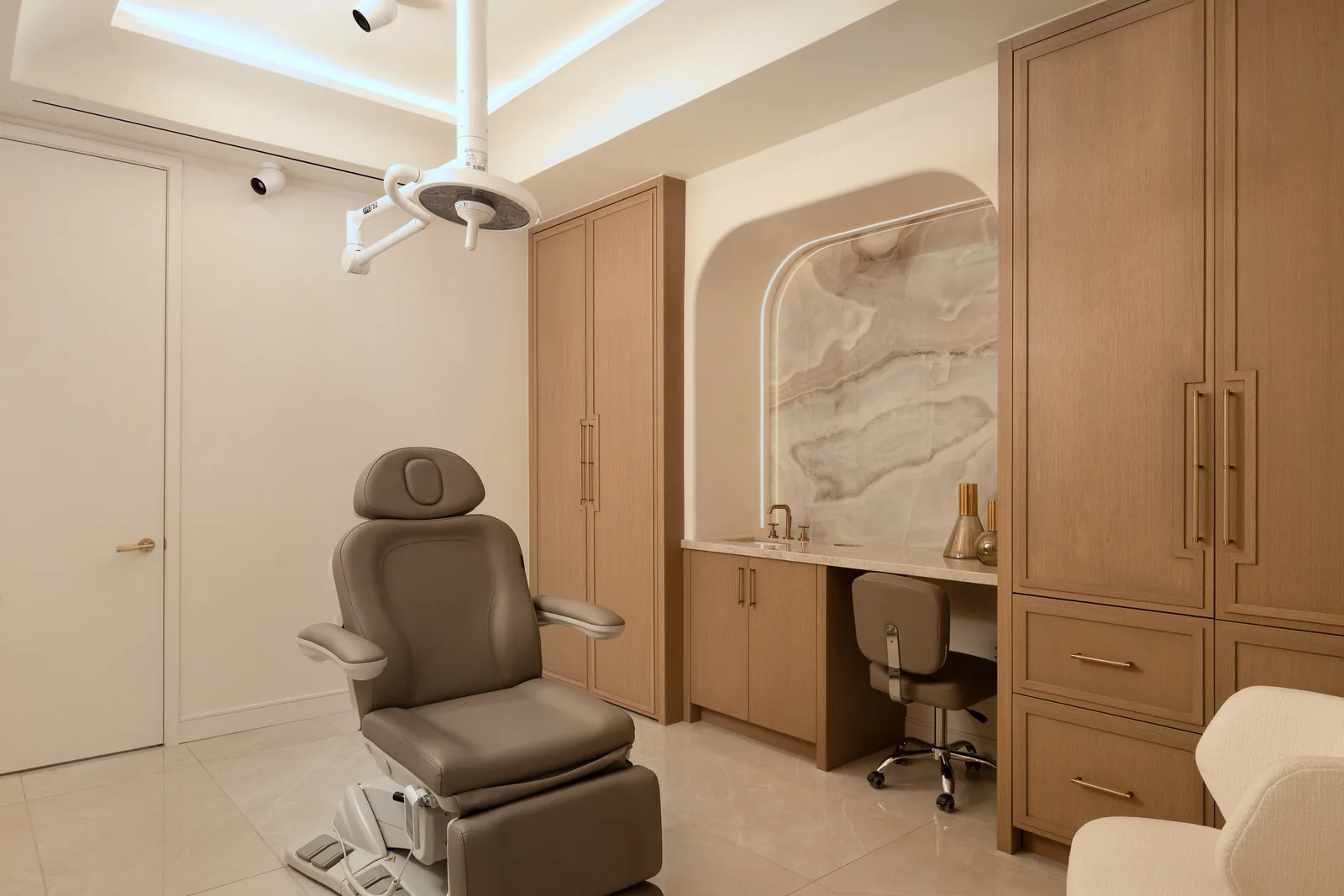
A HydraFacial visit at Aesthetica by Ashley Howarth MD has three parts: a skin analysis that chooses your booster, the three-step treatment through the vortex tip, and a short home plan. Plan on about 45 to 60 minutes in the room for a first visit and 30 to 45 for a repeat.
Skin analyzed, booster chosen, deferrals checked
The licensed aesthetician examines the skin under magnification, records your Fitzpatrick type, current products, and sun exposure, checks for cold sores, sunburn, open lesions, active rosacea, and recent isotretinoin or facial surgery, and chooses the booster. Anything that looks like a lesion rather than a pore is noted for a physician.
Cleanse and peel, extract, infuse
You lie back with your hair wrapped. The tip glides over the face in sections and feels like a cool, damp paintbrush with a light pull. The peel step may tingle for a minute. Extraction concentrates on the nose, chin, and forehead. The infusion pass is the part most people fall asleep during. LED light finishes the visit when indicated.
Sunscreen on, a home plan, and the next date
You leave with mineral SPF 30 or higher on the skin, a note to skip makeup, sweating, and direct sun for the rest of the day, retinoids paused until the next evening, and either a monthly maintenance date or the next of a 3 to 5 session series about four weeks out.
Clear Information. Informed Choices.
Safety and Limitations of HydraFacial
HydraFacial is one of the safest treatments in the practice because it uses no heat and no light and removes only the outermost layer of dead cells. Side effects are mild and brief. The limitations matter more than the risks: a facial improves congestion, hydration, and surface brightness and does not remove brown spots, resurface scars or etched lines, or tighten skin, and no series of facials will. The one medical point is the same as for every skin treatment at a plastic surgeon’s practice: a spot that is a growth rather than a pore, or a patch of pigment that is changing, is examined by a physician rather than polished over. Retinoid use, active acne flares, and a sunburn change the plan for that visit, and skin that is peeling from a recent laser or peel waits until it has healed.
Possible Side Effects Include
- Mild redness or flushing for one to three hours
- A tingling or tight feeling during the peel step
- A small purge of congestion in the days after a first extraction
- Temporary sensitivity if retinoids were not paused
- Rarely, irritation from a booster on very reactive skin
What Treatment Cannot Guarantee
- Removal of brown spots, melasma, or redness
- Resurfacing of acne scars or etched wrinkles
- Tightening of loose skin
- A result that lasts longer than about a month without maintenance
- A substitute for skin cancer screening
What Happens After HydraFacial
Recovery After HydraFacial
There is no recovery from a HydraFacial in the usual sense. The skin is slightly pink for an hour or two, feels clean and plump the same day, and looks its best over the following three to seven days as the hydration settles and the extracted pores stay clear. The practical instructions are short: no makeup, sweating, or direct sun for the rest of the day, retinoids and acids paused until the next evening, and mineral sunscreen every morning. When a light chemical peel is added at the same visit, expect two to four days of mild flaking; a HydraFacial after MOXI or BBL HERO is scheduled two weeks out, once the laser skin has finished.
Skin is slightly flushed when you sit up and calm within an hour or two. The surface feels smooth and hydrated and looks brighter immediately. Mineral SPF 30 or higher goes on before you leave. No makeup, no workout, no pool, and no direct sun for the rest of the day; a gentle cleanser and moisturizer that night, no retinoid or acid.
Makeup and normal routine resume the next morning; retinoids the next evening. Some first-time patients see a small purge of congestion around day two to three as pores that were extracted finish clearing, and it settles on its own. This is the week most people describe as their best skin, and the week to schedule a HydraFacial before an event.
The immediate brightness lasts about a week and the hydration two to four weeks depending on the season; in an Arizona June it is closer to two. Pores begin to refill and the surface dulls slightly. This is why the maintenance interval is monthly and why a series of 3 to 5 at four-week spacing is planned for a defined concern rather than a single visit.
With monthly treatments most Scottsdale patients hold clearer pores, steadier hydration, and a more even surface across the year, and skin that arrives at October untanned and calm, ready for BBL HERO or MOXI. Concerns a facial cannot reach are planned for laser season; the Skin in Arizona guide sets out the calendar.
Before & After
HydraFacial, Before and After Treatment
HydraFacial results are best judged in two photographs: one immediately after the session, when the surface is brightest, and one at four weeks into a monthly plan, when pore clarity and hydration have stabilized. Aesthetica by Ashley Howarth MD maintains before-and-after galleries for its medical aesthetics treatments, and the aesthetician can show you cases that match your skin type and concern, whether the goal is congestion and dullness or dehydration, and cases where a HydraFacial was paired with peels or MOXI across a Scottsdale year.
Patient Case Summaries
Selected HydraFacial Case Summaries
These deidentified case summaries illustrate how the physician-led team at Aesthetica by Ashley Howarth MD plans HydraFacial treatment in Scottsdale. They include a new arrival whose skin had not adjusted to the desert, a summer series on tanned skin, a Fitzpatrick V patient, a pre-event visit, a monthly maintenance plan wrapped around laser season, and a patient whose brown spots needed a different treatment and a physician’s look first. Each summary connects the patient’s concern and skin assessment with the treatment performed or the recommendation made.
Case 01
New to Arizona
Dehydration and flaking in a recent arrival from the Pacific Northwest, treated with a hydrating series
Patient presentation
A woman in her thirties who had moved to Scottsdale from Seattle four months earlier reported that her skin had become tight, flaky around the nose and mouth, and dull, and that her usual products no longer seemed to work.
Skin assessment
The assessment found dehydrated, barrier-stressed Fitzpatrick II skin with fine surface flaking, mild congestion at the nose, and no pigment or texture problem. She was using a foaming cleanser and a physical scrub twice a week, both of which were stripping a barrier already challenged by afternoon humidity under 15 percent. It was June.
Procedure performed
A series of three HydraFacials four weeks apart with a hyaluronic hydrating booster and a hydrating mask, the scrub and foaming cleanser stopped, and a cream cleanser, a humectant serum, and a mineral SPF added at home.
Clinical rationale
Dehydration from desert air is a barrier problem, not a texture problem; the gentle peel step removes the flaking layer, the infusion step replaces water and humectants directly, and the home routine stops the daily stripping that was undoing every treatment.
Follow-up
By the second visit the flaking was gone and the tightness after cleansing had stopped; she now has a HydraFacial monthly from May through September and every six to eight weeks in winter.
Case 02
Summer, tanned skin
A request for a laser in July that became a clarifying HydraFacial series until October
Patient presentation
A man in his forties, a long-term Scottsdale resident who cycles outdoors, asked for a laser to clear blackheads and rough, dull skin across his nose and cheeks before the fall.
Skin assessment
His skin was tanned to a deep Fitzpatrick III with heavy congestion at the nose and chin, enlarged pores, and diffuse sun damage. Any light or laser treatment on tanned skin in July carried a real risk of post-inflammatory hyperpigmentation, and he could not avoid sun for the two to four weeks each session would need.
Recommendation
Three HydraFacials with a clarifying booster and extended extraction, four weeks apart in July, August, and September, with a mineral SPF and a hat for riding, and a MOXI plus BBL HERO plan booked for October once the tan had faded.
Clinical rationale
HydraFacial uses no heat or light, so it is safe on tanned skin in full summer and addresses the congestion and dullness directly; the sun damage needed light and laser, and those wait for laser season rather than being forced in July.
Follow-up
The congestion cleared over the series and he arrived in October untanned; he completed the MOXI and BBL HERO series through January and keeps a monthly HydraFacial each summer.
Case 03
Fitzpatrick V
Congestion and dull tone on deep brown skin, treated safely with HydraFacial year-round
Patient presentation
A woman in her twenties with Fitzpatrick V skin reported persistent congestion on the chin and forehead, dullness, and a few dark marks left by old breakouts, and said she had been told she was not a candidate for most treatments.
Skin assessment
The assessment found comedonal congestion, mild post-inflammatory hyperpigmentation, and a dull, uneven surface with no active inflammatory acne. Light-based treatments were not appropriate at her skin type, and a strong peel without preparation would risk more dark marks.
Procedure performed
Monthly HydraFacials with a brightening booster and gentle extraction, a topical pigment program at home, and after three months a light mandelic chemical peel added to alternate visits.
Clinical rationale
HydraFacial has no thermal step and is safe on all Fitzpatrick types, extraction addresses the congestion without inflaming it, and the pigment marks are managed by suppression and light peels rather than heat, which on darker skin can create the very marks it is meant to remove.
Follow-up
After six months the congestion was controlled and the dark marks had faded; she continues monthly visits and has never needed a laser.
Case 04
Before an event
A single HydraFacial a week before a wedding, with no time for peeling
Patient presentation
A woman in her fifties asked for the most she could do for her skin before her daughter’s wedding in nine days without any visible recovery.
Skin assessment
Her Fitzpatrick II skin was dehydrated, slightly dull, and had mild congestion at the nose, with fine lines that hydration would soften but not remove. She had had a HALO treatment the previous winter, and her pigment was even. It was April and she had been in the sun that week.
Procedure performed
One HydraFacial with a hydrating booster and a firming peptide serum seven days before the wedding, with retinoids paused for two days on either side, and no peel, no laser, and no new products.
Clinical rationale
Seven days out is the window in which HydraFacial hydration and pore clarity are at their peak, and anything that peels, heats, or introduces a new active before an event risks a visible reaction with no time to recover.
Follow-up
She reported that makeup went on evenly and lasted through the reception; she now schedules a HydraFacial a week before any occasion with photographs.
Case 05
Maintenance around laser season
A year-round plan: HydraFacial May to September, BBL HERO and MOXI in season
Patient presentation
A woman in her sixties, a Scottsdale resident for twenty years who completes a BBL HERO series each winter, asked whether there was anything worth doing between April and October.
Skin assessment
Her Fitzpatrick II skin was even in tone after years of light treatment but dulled and dehydrated by early summer, with mild congestion and makeup settling into fine lines. There was no lesion of concern.
Procedure performed
Monthly HydraFacials with a hydrating booster from May through September, one HydraFacial two weeks after each fall BBL HERO session to lift the post-laser dryness, and MOXI paired with the October BBL session.
Clinical rationale
HydraFacial carries the skin through the months when light treatment is off the calendar, needs no sun avoidance, and keeps the skin calm and hydrated so it arrives at laser season ready; scheduling it two weeks after a laser respects the healing window.
Follow-up
She describes the summer visits as the reason her skin no longer looks tired by August; the annual plan repeats with no gap.
Case 06
Not a facial
Brown spots that a HydraFacial would not remove, and one that needed a dermatologist first
Patient presentation
A man in his fifties who had lived in Arizona all his life asked for a series of HydraFacials to get rid of the brown spots on his cheeks and forehead, which a friend had said a facial with a brightening booster would fade.
Skin assessment
The assessment found numerous solar lentigines on Fitzpatrick II skin, no meaningful congestion or dehydration, and one 8 mm spot on the left temple with an irregular edge and two shades of brown that he said had grown. Under Dr. Howarth’s protocol the lesion was photographed and he was referred to a dermatologist before any skin treatment.
Recommendation
Dermatology referral first; after biopsy reported a benign lesion, a BBL HERO series to the face in November through January rather than HydraFacial, with a single HydraFacial two weeks after the last BBL session.
Clinical rationale
A facial polishes the surface and does not remove lentigines, so selling him a series would have wasted his money, and an irregular pigmented lesion must be examined before it is treated with anything; broadband light in laser season was the treatment that matched the problem.
Follow-up
His spots cleared over the BBL series; he has an annual skin check and one BBL HERO maintenance session each fall, and he uses HydraFacial only for the post-laser visit.
From First Visit to a Plan You Can Keep
Booking, Planning, and Follow-Up at Aesthetica by Ashley Howarth MD
Aesthetica by Ashley Howarth MD is a medical practice with a spa’s convenience. Established patients book online. New patients can book online or request a consultation, and the team responds usually the same day.

Online booking or a consultation request
Book a HydraFacial or a skin assessment directly online, or request a consultation and describe what you notice: congestion, dullness, tightness, or an event date. Either path starts with the same skin analysis.
A booster, an interval, and a season
You leave your first visit with a written plan: which booster; whether this is monthly maintenance or a series of 3 to 5; how it fits around laser season and any peel or SkinPen work; and the cleanser, moisturizer, and sunscreen that protect the result.
Monthly through summer, laser work in the fall
Most Scottsdale HydraFacial plans repeat monthly from May through September and every four to eight weeks in winter around light and laser sessions. A-List members have the next visit scheduled before they leave the last one.
Your Questions, Answered
HydraFacial Frequently Asked Questions
A HydraFacial is a medical facial delivered through a spiral vortex tip in three steps: cleanse and light peel, extraction by painless suction, and infusion of hydrating serums with hyaluronic acid, peptides, and antioxidants. It takes 30 to 45 minutes, uses no heat or light, and has no downtime. At Aesthetica by Ashley Howarth MD in Scottsdale it is performed by the licensed aesthetician.
HydraFacial treats congestion, blackheads, enlarged-looking pores, and dull surface tone, dehydration, and the fine lines that hydration softens. It helps oily and acne-prone skin with a clarifying booster. It does not remove brown spots, melasma, or redness, resurface acne scars or etched wrinkles, or tighten skin; those need a peel, SkinPen, a laser in season, or a physician’s evaluation.
No. The tip feels like a cool, damp paintbrush with a light pull as it moves over the face. The peel step may tingle for about a minute, and extraction over the nose is a mild suction. No numbing is used and most patients find the infusion pass relaxing. The skin feels clean and slightly tight afterward rather than sore.
There is no downtime. The skin may be slightly pink for one to three hours and is makeup-ready the next morning. For the rest of the treatment day you skip makeup, sweating, and direct sun, and you pause retinoids and acids until the next evening. Results are visible when you sit up and are at their best over the following three to seven days.
One HydraFacial gives an immediate result that lasts roughly a week for brightness and two to four weeks for hydration. For a defined concern such as congestion or dehydration, Aesthetica by Ashley Howarth MD plans a series of 3 to 5 about four weeks apart. For maintenance, monthly is the standard interval, and in the Arizona summer most patients keep it monthly from May through September.
Yes. A light chemical peel can be added in the same visit for tone and texture. SkinPen microneedling is scheduled at a separate visit, with a HydraFacial a week or two before to clear the skin. After BBL HERO, MOXI, or HALO the HydraFacial waits two weeks until peeling has finished. Botox and fillers are done at a separate visit, usually before the facial rather than after.
Yes. HydraFacial uses no heat or light, so it is safe on every Fitzpatrick type including V and VI, on sensitive and rosacea-prone skin at gentle settings, and on tanned skin in summer, which is where it has an advantage over lasers in Arizona. The aesthetician adjusts the peel strength and booster for reactive skin, and defers the visit for sunburn, cold sores, open lesions, or recent isotretinoin.
The immediate glow lasts about five to seven days and the improvement in hydration and pore clarity two to four weeks, shorter in the dry Arizona summer. There is no permanent change from a single facial, which is why HydraFacial is planned as monthly maintenance or a series of 3 to 5. Daily mineral sunscreen and a non-stripping cleanser extend every result.
Pause retinoids, exfoliating acids, and scrubs for three to five days before the visit, arrive without a sunburn, and tell the aesthetician about isotretinoin use in the past six months, cold sores, recent facial surgery, injectables in the past two weeks, and any laser or peel in the past month. Arrive with a clean face if you can; makeup is removed at the start either way.
Yes, and summer is when it matters most. From May through September the light and laser treatments that need untanned skin and sun avoidance pause in Scottsdale, while the UV index reaches 11+ and the humidity drops below 15 percent. HydraFacial uses no heat or light, is safe on tanned skin, and keeps pores clear and hydration up until laser season opens in October. The Skin in Arizona guide covers the full calendar.
Concerns Treated
Concerns This Treatment Addresses
These guides explain each concern and where this treatment fits among the options at Aesthetica by Ashley Howarth MD in Scottsdale.
- Dry & Dehydrated Skin The most common Scottsdale finding, and the first use of HydraFacial
- Skin Texture, Pores & Dullness Congestion, blackheads, and a dull surface cleared by extraction
- Acne & Acne Scars Clarifying HydraFacial for active congestion; scars need SkinPen
- Fine Lines & Wrinkles Hydration softens fine lines; deeper lines need laser or peels
- Sun Damage & Brown Spots Why a facial does not remove spots, and what does
- Laser Season in Arizona Why October to April, and what to do in summer
BEGIN HERE
Request a Consultation
Tell us what you are considering. A member of our patient care team will follow up with consultation availability and next steps.

Megan S.
Patient Coordinator
Prefer to talk or text?
Selected References