
Seven Injectables, One Decision
Which Injectable Is Right for You?
At Aesthetica by Ashley Howarth MD, seven injectable treatments address four different problems: neuromodulators (Botox, Dysport, and Daxxify) treat lines made by movement; dermal fillers treat facial volume and structure; platelet-rich fibrin (PRF EZ Gel and PRF hair restoration) addresses selected skin quality and hair concerns using the patient’s own blood; and alloClae is a donated human adipose-tissue matrix for selected localized breast and body contours.
alloClae is not a facial filler, living fat transfer, implant, or stem-cell treatment. Breast and body concerns are evaluated in their full procedure families so a nonsurgical injectable is not used where implant revision, lifting, fat removal, skin treatment, or another plan is more appropriate.
The right injectable depends on what is causing what you see, and at Aesthetica by Ashley Howarth MD, the med spa of Howarth Plastic Surgery in Scottsdale, six injectables answer three different problems. Neuromodulators treat lines made by movement: Botox is the original, with four FDA aesthetic approvals, onset in 3 to 5 days, and 3 to 4 months of effect; Dysport is the fastest, with softening in 2 to 3 days and a wider spread that suits a broad forehead; and Daxxify is the longest, peptide-stabilized and lasting a median of 24 weeks for frown lines in its phase 3 trials. Dermal fillers treat volume and structure: hyaluronic acid gels from the RHA, Restylane, and Juvederm families restore cheeks, lips, chin, jawline, temples, and the under-eye for 6 to 18 months and can be dissolved with hyaluronidase. And platelet-rich fibrin treats skin quality and hair from the patient’s own blood: PRF EZ Gel is the additive-free gel for thin, crepey skin under the eyes, around the mouth, and on the hands, and PRF hair restoration is the scalp series for mild to moderate thinning where follicles are still alive. Every one of the six is injected by Dr. Howarth or by an advanced aesthetic nurse injector under her direction, and none of them is seasonal.
The comparison is simpler than the list suggests, because each injectable answers one question and the assessment asks them in order. Does the line appear with expression and fade at rest? That is a neuromodulator, and the choice among the three is a question of onset, duration, and area. Is the problem a shadow, a flattening, or a lost edge that is there at rest? That is volume, and the choice between hyaluronic acid filler and EZ Gel is a question of how much structure the area needs and how thin the skin over it is. Is the problem the skin itself, crepey and thin, or the scalp, thinning but not bare? That is PRF. And is the problem tissue that has slid, a fat bag, a heavy brow, or a bald crown? That is not an injectable at all, and because Aesthetica by Ashley Howarth MD is the med spa of a plastic surgery practice, the same physician can say so and offer fat transfer, a facelift, blepharoplasty, or a neck lift instead. The tables below place all six side by side and then match each concern to a first choice, an alternative, and the point at which the honest answer leaves the syringe behind. Sun-damaged skin between visits is a separate plan, covered in Skin in Arizona.

What Patients Ask When Comparing
The Questions Behind the Comparison
Most people who ask Aesthetica by Ashley Howarth MD to compare injectables arrive with a product name from a friend or an advertisement and a concern that may or may not match it. The questions they bring are consistent, and the comparison exists to answer them in order.
- Botox, Dysport, or Daxxify: is one actually better, or just different?
- Do I need Botox or filler for the lines around my mouth?
- How long will each one last, and how often will I be back?
- Is PRF a natural filler, and does it do what filler does?
- Will filler fix my jowls, or am I being told I need a facelift?
- Who is actually holding the syringe, and what happens if something goes wrong?
Each question has a different answer, and several have the same answer for different reasons. The comparison is built so that the injectable follows the cause of the concern, the skin over it, and the interval the patient can keep, never the other way around.


Where to Start
How the Assessment Decides Between Injectables
The comparison is settled at an assessment, not on this page. The injector at Aesthetica by Ashley Howarth MD photographs the face at rest and at maximum frown, brow lift, squint, and smile, examines it in three-quarter and profile views, and answers four questions in order. What is moving: a line that appears with expression and fades at rest points to Botox, Dysport, or Daxxify, chosen by onset, duration, and area. What is missing: a flattened cheek, a receding chin, a thinned lip, or a hollow at rest points to hyaluronic acid filler where structure is needed and to PRF EZ Gel where the skin is thin and the hollow is shallow. What has thinned: crepey skin points to EZ Gel with SkinPen, and a widened part or receding temples with follicles still present point to PRF hair restoration after a scalp examination under magnification. And what has slid: jowls, a loose neck, a fat bag under the eye, or a heavy brow are surgical problems that no injectable corrects, and the assessment says so and explains facelift, neck lift, blepharoplasty, or fat transfer with Dr. Howarth. The assessment also records prior products and how long each lasted, blood thinners, neuromuscular disease, pregnancy, autoimmune disease, and every filler ever placed, and it marks the course of the facial arteries before any gel is drawn up. Lines etched into sun-damaged Arizona skin at rest are named as a resurfacing problem, not an injectable one.
Dr. Ashley Howarth, MD, FACS is a board-certified plastic surgeon and an instructor in plastic surgery at Mayo Clinic. Aesthetica by Ashley Howarth MD is the medical aesthetics brand of her practice, Howarth Plastic Surgery, at 7373 N. Scottsdale Road, Suite C150, Scottsdale, Arizona 85253.

Four Questions That Choose the Injectable
How Injectables Are Compared at Aesthetica by Ashley Howarth MD
What You Are Treating: Movement Lines, Volume, Skin Quality, or Hair
Concerns sort into four layers, movement lines, lost volume, skin quality, and scalp thinning, and each layer points to its own injectable.
Concerns sort into four layers, and each layer has its injectable. Lines that appear when you frown, lift your brows, or smile and fade at rest are made by muscle, and only a neuromodulator, Botox, Dysport, or Daxxify, treats the cause. Shadows, flattening, and lost edges that are there at rest, in the cheeks, lips, chin, jawline, temples, or under the eyes, are lost volume, and dermal filler replaces it. Skin that is thin and crepey rather than hollow is a skin quality problem, and PRF EZ Gel, often with SkinPen, rebuilds it. A widened part or receding temples with living follicles are a scalp problem, and PRF hair restoration treats them. Naming the layer first prevents the most common mistake, which is filling a line that a neuromodulator would have stopped, or relaxing a muscle under a fold that filler would have lifted.
How Long You Want It to Last
Duration ranges from 3 to 4 months for Botox and Dysport, to a median of 24 weeks for Daxxify, to 6 to 18 months for dermal filler, with fat transfer placed just once.
Duration is the second question, and it changes the product more than the technique. Among the neuromodulators, Botox and Dysport last 3 to 4 months, so most patients return three or four times a year, while Daxxify held frown lines for a median of 24 weeks in its phase 3 trials, so a patient who wants two visits a year is offered it for the glabella, with the honest caveat that a median means half of patients fade sooner. Among the volume treatments, hyaluronic acid filler lasts 6 to 18 months by area, lips at the short end and cheeks, chin, and jawline at the long end, and PRF EZ Gel holds its collagen improvement for about 6 to 12 months after a series of 2 to 3 sessions. PRF hair restoration is judged at six months and maintained every 4 to 6 months, because pattern loss continues in the background. Above all of these sits fat transfer, the patient’s own tissue placed once, for a patient who is tired of the calendar.
Natural vs Synthetic: Your Own Blood or a Manufactured Gel
PRF is made from the patient’s own blood with nothing added, while hyaluronic acid filler is manufactured but reversible with hyaluronidase, and each family suits a different job.
Patients increasingly ask whether an injectable is natural, and the honest answer is that the two families do different jobs. PRF EZ Gel and PRF hair restoration are made from the patient’s own blood with nothing added, so there is no allergic reaction to the material, no foreign-body nodule, and no bluish tint under thin skin; the trade is that the result is softer, slower, and more modest, cannot be dissolved, and rests on a smaller body of trial evidence. Hyaluronic acid filler is manufactured, but from a sugar that already exists in skin, and its defining safety feature is that it is reversible with hyaluronidase; it is the tool when an area needs structure, projection, or a predictable volume. The neuromodulators are all purified botulinum toxin type A; Daxxify is stabilized with a peptide instead of the human serum albumin used in Botox and Dysport, which matters to some patients and changes nothing about the mechanism. Under the eyes, thin skin with a shallow hollow points to EZ Gel and a deep hollow to a thin hyaluronic acid gel, and the two are often combined elsewhere, filler for structure and PRF for the skin over it.
When the Answer Is Surgery
When a line is etched into skin, volume loss is diffuse, tissue has descended, or a crown is bare of follicles, the honest next step is laser resurfacing, fat transfer, a facelift, or a transplant consultation rather than more injectable.
The most useful thing a plastic surgeon’s injectable practice offers is knowing when to stop. A neuromodulator that has fully relaxed the muscle and left a crease behind means the line is etched into the skin, and the tool is physician-performed laser skin resurfacing, not more units. A filler plan that grows to five or six areas every year means the volume loss is diffuse, and fat transfer restores it once with the patient’s own tissue. Jowls, a loose neck, and heavy nasolabial folds in a face whose tissue has descended are a lifting problem, and no syringe lifts; a facelift or neck lift does. A shadow under the eye with a fat bag above it is an eyelid surgery problem, and adding volume beneath the bag makes it larger. A smooth, bare crown has no follicles for PRF to reach, and a transplant consultation is the honest next step. Because the same surgeon who directs the injectables performs the operations, escalation at Aesthetica by Ashley Howarth MD is a conversation in the same room, not a referral into the unknown, and filler or a neuromodulator is used afterward to refine rather than to substitute.
Side by Side
All Seven Injectables Compared
The six injectables at Aesthetica by Ashley Howarth MD by what they are, what they are best for, onset and duration, downtime, and who performs them. Individual plans are set at the assessment.
| Treatment | What it is | Best for | Onset and duration | Downtime | Performed by |
|---|---|---|---|---|---|
| Botox | OnabotulinumtoxinA, the original neuromodulator; FDA-approved for frown lines, crow's feet, forehead lines, and platysma bands | Most expression lines; small or bulky muscles where tight spread matters; the neck; the longest record | 3 to 5 days, full at 10 to 14; lasts 3 to 4 months | None; bumps settle in 20 to 30 minutes | Dr. Howarth or an advanced aesthetic nurse injector under her direction |
| Dysport | AbobotulinumtoxinA; FDA-approved for frown lines; its own unit scale, roughly 2.5 to 3 per Botox unit | An event within 7 to 10 days; a wide or tall forehead with many fine lines | 2 to 3 days, full around day 7; lasts 3 to 4 months | None | Dr. Howarth or an advanced aesthetic nurse injector under her direction |
| Daxxify | DaxibotulinumtoxinA-lanm, peptide-stabilized with no human serum albumin; FDA-approved 2022 for frown lines | Frown lines in a patient who wants about two visits a year and accepts a newer product with less long-term data | Typically within 2 days, peak at 2 to 4 weeks; median 24 weeks | None | Dr. Howarth or an advanced aesthetic nurse injector under her direction |
| Dermal Fillers | Cross-linked hyaluronic acid gels from the RHA, Restylane, and Juvederm families; reversible with hyaluronidase | Volume and structure: cheeks, lips, chin, jawline, temples, folds, tear trough at conservative volumes, hands | Immediate, judged at 2 weeks; lasts 6 to 18 months by area | Swelling 2 to 3 days; up to a week for lips and under eyes | Dr. Howarth or an advanced aesthetic nurse injector under her direction; tear trough and temples reserved for the most experienced hands |
| PRF EZ Gel | Your own platelet-rich fibrin heated into an additive-free albumin gel (Alb-PRF); not dissolvable | Thin, crepey skin and shallow hollows: under eyes, lip lines, temples, neck, hands; patients avoiding synthetic filler | Soft volume same day, partly resorbs over 1 to 3 weeks; collagen over 6 to 12 weeks; series of 2 to 3, then 6 to 12 months | Swelling 2 to 5 days, possible bruising | Dr. Howarth or an advanced aesthetic nurse injector under her direction |
| PRF Hair Restoration | Your own platelet-rich fibrin injected across thinning scalp at about 1 cm intervals after a scalp examination | Mild to moderate pattern thinning with follicles present; a widened part, receding temples, stalled shedding after a trigger | Less shedding in about a month, thickening at 2 to 3 months; series of 3 to 4, judged at 6 months, maintained every 4 to 6 | Tender scalp for a few hours; no washing for 12 to 24 hours | Dr. Howarth or an advanced aesthetic nurse injector under her direction |
| alloClae | Donated human adipose-tissue matrix with non-viable adipocytes, extracellular matrix, lipids, and connective tissue; not hyaluronic acid filler or living fat transfer | Selected localized breast or body contour deficits when modest subcutaneous support fits and a liposuction donor site is not desired or available | Early volume is visible, but swelling and tissue response evolve; exact duration cannot be promised and long-term aesthetic data are still developing | Swelling, bruising, tenderness, or firmness varies by location and amount | Surgeon-directed planning with Dr. Howarth after breast or body examination |
By Concern
Which Injectable for Which Concern
The first-choice injectable and the alternatives for each concern at Aesthetica by Ashley Howarth MD, and the point at which the honest answer moves to resurfacing or to surgery. Skin thickness, the interval a patient can keep, and whether tissue has descended move a concern from the first column to the second.
| Concern | First choice | Also consider | When to escalate |
|---|---|---|---|
| Frown and forehead lines | Botox, 20 units glabella with the forehead dosed to brow position; Dysport for a wide forehead or an event within 10 days | Daxxify to the glabella for a patient who wants two visits a year | Creases still visible with the muscle fully relaxed are etched: physician-performed laser skin resurfacing; a low, heavy brow goes to a brow lift or blepharoplasty |
| Crow's feet | Botox, about 12 units per side, or Dysport about 30 per side | Daxxify off-label with consent; EZ Gel with SkinPen for crepey skin at the outer eye | Fine lines at rest on sun-damaged skin go to MOXI or HALO in laser season; hooded lids go to blepharoplasty |
| Lip lines and lips | A half to one syringe of a flexible filler (RHA 2, Restylane Kysse, Juvederm Volbella XC) for a faded border or thinned lip | A small neuromodulator dose above the lip for lines made by pursing; EZ Gel with SkinPen for fine vertical lines | Etched vertical lines go to MicroLaserPeel or Contour TRL in laser season; lips already beyond natural proportion get restraint, not more product |
| Cheeks and midface volume | A firm filler deep on the cheekbone (Juvederm Voluma XC, Restylane Lyft, RHA 4), 1 to 2 syringes per side, treated before any fold | EZ Gel for early hollowing and skin quality; filler and EZ Gel combined | Diffuse loss needing five or six areas every year goes to fat transfer; descended cheeks with jowls go to a facelift |
| Jawline and chin | The firmest filler on bone (Juvederm Volux XC, Restylane Defyne), 1 to 2 syringes, for a receding chin or soft jaw angle | Botox to the masseter for a widened lower face from clenching; Botox to platysma bands, the only neuromodulator approved for the neck | Jowls and loose neck skin are descent: facelift and neck lift; a chin that needs permanent projection goes to a chin implant or genioplasty |
| Under eyes | EZ Gel, 2 to 3 sessions, for a shallow hollow with thin, crepey skin; the cheek treated first if it has deflated | A thin, low-swelling filler (Restylane Eyelight) with a cannula at conservative volume for a deep hollow | A fat bag above the hollow or loose lid skin goes to lower blepharoplasty; adding volume beneath a bag makes it larger |
| Skin quality and glow | PRF with SkinPen microneedling, liquid PRF from the same draw over the needled skin, any skin type, any season | EZ Gel to the neck and hands for crepey, sun-thinned skin; HydraFacial monthly between visits | Pigment and sun damage are not injectable problems: BBL HERO and MOXI in laser season, and the plan in Skin in Arizona |
| Hair thinning | PRF hair restoration, 3 to 4 sessions 4 to 6 weeks apart, after a scalp examination and laboratory screening where shedding is diffuse | Topical or prescription options discussed with a physician, continued through the series; low-level laser at home | Scarring, patchy, or inflamed patterns and undiagnosed shedding go to a dermatologist first; a smooth bare crown goes to a transplant consultation |
| Localized breast or body contour deficit | alloClae may fit selected modest subcutaneous contour concerns after examination | Fat transfer when donor tissue and operative recovery fit | Implant, capsule, breast position, loose skin, muscle, excess fat, scar tethering, or larger volume goals route to the appropriate surgical evaluation |
From Comparison to Plan
How an Injectables Plan Is Built at Aesthetica by Ashley Howarth MD
An injectables plan at Aesthetica by Ashley Howarth MD is built in three steps: an assessment that names the layer of each concern and maps the anatomy, a written plan that names each product, its dose or volume, and who performs it, and a calendar that sets the interval by the product rather than by habit. The written plan is the difference between a comparison and a menu.
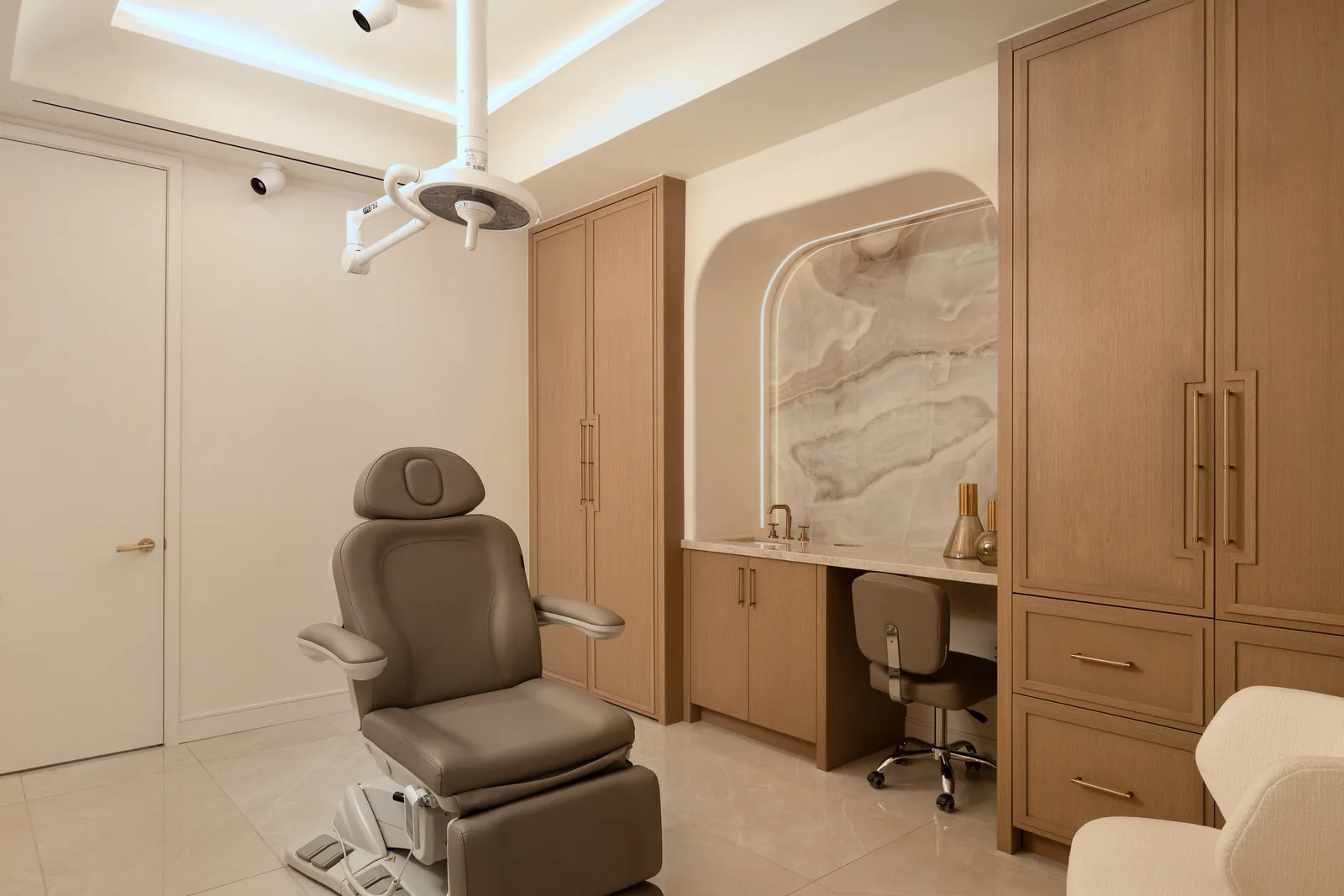
Expressions photographed, volume mapped, arteries marked
The injector photographs every expression, examines the face at rest in three-quarter and profile views, separates moving lines from lost volume from thin skin, examines the scalp under magnification if hair is the concern, records prior products and how long each lasted, reviews medical history and every previous filler, and marks the facial arteries before any product is opened. Anything an injectable should not treat, descent, a fat bag, a bare crown, or an undiagnosed shedding, is named here.
Each product named, dosed, and assigned to an injector
You leave with the plan in writing: which of the six injectables, in what areas, at what units or roughly how many syringes or sessions, in what order and combination, whether Dr. Howarth or the advanced aesthetic nurse injector performs each, the downtime and the two-week check for each, and the point at which resurfacing or a surgical consultation would be the next step.
Intervals set by the product, year-round
Injectables are not seasonal, so the calendar follows duration: Botox and Dysport every 3 to 4 months, Daxxify about twice a year, structural filler yearly and lips twice, an EZ Gel series over 2 to 3 months then maintenance, and a PRF hair series over 3 to 4 months then every 4 to 6 months. Neuromodulator and filler visits are paired where possible, and any BBL, MOXI, or SkinPen over an injected area is separated by about two weeks.
Clear Information. Informed Choices.
The Trade-Offs Between Injectables
Every row in the comparison is a trade, and the trades are predictable. The neuromodulators are the lowest-risk and the most temporary: their side effects are a bruise, a headache, and, with product placed too close to the levator muscle, a heavy eyelid that lasts until the product wears off, which is why the longest-lasting of them, Daxxify, demands the most careful placement. Hyaluronic acid fillers change the most and carry the one serious injectable risk, vascular occlusion, filler entering or compressing an artery so the skin it supplies loses blood flow, and in the rarest cases vision; a 2019 review in Aesthetic Surgery Journal counted 146 reported cases of filler-related vision loss worldwide, most from the nose, glabella, forehead, and nasolabial fold, which is why Aesthetica by Ashley Howarth MD maps arteries, uses cannulas and small slow deposits in high-risk zones, and keeps hyaluronidase in the room. PRF EZ Gel and PRF hair restoration are the safest materials, the patient’s own blood with nothing added, and their trade is honesty about the result: softer, slower, cumulative, not reversible with hyaluronidase, and supported by a smaller and newer body of trials than the products they sit beside. No injectable on this page lifts descended tissue, removes a fat bag, smooths a crease etched into the dermis, or regrows hair where follicles are gone, and none should be chosen before those problems have been named.
Possible Side Effects Include
- Bruising and swelling, from hours after a neuromodulator to a week after lip or under-eye filler
- Headache or a heavy brow after a neuromodulator, and rarely an eyelid droop that resolves as the product wears off
- Lumps, asymmetry, or a bluish tint from filler placed too superficially, adjusted or dissolved at two weeks
- Rarely, vascular occlusion after filler, managed on site with hyaluronidase by protocol
- Scalp tenderness and a brief increase in shedding after PRF hair sessions
What Treatment Cannot Guarantee
- That a neuromodulator will smooth a line already etched into the skin at rest
- Lifting comparable to a facelift, neck lift, or eyelid surgery
- A permanent result; every injectable on this page is maintained
- The projection of a hyaluronic acid gel from an autologous PRF gel
- Regrowth from a bald area with no visible follicles
The Downtime Ladder
Downtime Compared, From Hours to Two Weeks
Downtime is the clearest way to compare the six injectables, because it is the variable patients feel most and the one most closely tied to how much an injectable changes at once. The ladder below runs from a few hours to about a week, and above its top rung sit the surgical options that some patients on this page are better served by. When injectables are combined in one visit, the longest recovery on the ladder is the one to plan around, and any important event is scheduled at least two weeks after filler. None of the six is seasonal, so the ladder applies in July as in January; the laser season calendar governs only the light-based treatments that wait for October.
A neuromodulator leaves small bumps that flatten in 20 to 30 minutes; the rules are 4 hours upright and a day without rubbing, hard exercise, or heat, and the result arrives over days, Dysport at 2 to 3, Daxxify typically within 2, and Botox at 3 to 5. A PRF hair session leaves the scalp tender and slightly bumpy for a few hours, with no washing for 12 to 24 hours. This is the rung for a lunch-hour visit.
Structural filler placed deep on bone is swollen and occasionally bruised for 2 to 3 days, with work the next day normal, no hard exercise, heat, or alcohol for 24 hours, and no pressure on the area for 48. PRF EZ Gel in the temples and cheeks follows the same pattern with mild swelling for 1 to 3 days. Makeup goes over intact skin from the next morning.
Lip filler swells the most and can look overdone for 24 to 48 hours, settling over 5 to 7 days; tear trough filler and EZ Gel under the eyes swell for 2 to 5 days and can bruise for up to a week, and EZ Gel is deliberately placed fuller than the final result because part of the volume resorbs over 1 to 3 weeks. Every filler and EZ Gel treatment is judged at a two-week photograph check, which is why an event is booked at least two weeks out.
When the concern outgrows this ladder, the next rungs are surgical and are performed by Dr. Howarth: fat transfer at 1 to 2 weeks of swelling and bruising, facelift, neck lift, or blepharoplasty at about 2 weeks before social activity, and deep physician-performed resurfacing at 7 to 14 or more days in laser season. Injectables return afterward in smaller amounts, to refine what surgery has repositioned.
Surgeon-Directed Care
More Tools in the Toolbox: Why a Plastic Surgeon Directs Injectables
Aesthetica by Ashley Howarth MD is the medical aesthetics practice of Ashley Howarth, MD, FACS, a board-certified plastic surgeon and instructor in plastic surgery at Mayo Clinic. An injectables menu asks the patient to choose a product; a surgeon’s protocol asks the practice to match the product to the cause. Dr. Howarth’s direction makes four decisions a menu cannot. It reads the anatomy she operates on: the balance between the frontalis that lifts the brow and the muscles that pull it down, which decides whether a forehead treatment leaves a patient rested or heavy-lidded, and the facial, angular, supratrochlear, and superficial temporal arteries a few millimeters under the skin, which decide where a cannula is required and where nothing is injected. It manages the complication that matters, vascular occlusion, with hyaluronidase in the room, a high-dose pulsed protocol, and a physician on site who has handled the problem rather than read about it. It practices restraint, keeping lips inside their natural proportion, doses for softening rather than stillness, and under-eye volumes conservative. And it tells the truth about when an injectable is the wrong tool, because a surgeon who performs facelifts, neck lifts, blepharoplasty, and fat transfer has no reason to sell eight syringes to a face that needs lifting.
Who performs what follows from those decisions. Every injectable on this page, Botox, Dysport, Daxxify, dermal fillers, PRF EZ Gel, and PRF hair restoration, is performed by Dr. Howarth or by an advanced aesthetic nurse injector under her direction and written protocols, with every dose, point, and syringe recorded and a two-week check built into the plan; the tear trough, the temples, and any zone adjacent to the nose are reserved for the most experienced hands, and no scalp is injected until the pattern of loss has been examined. When the honest answer is that none of the six will do it, because the problem is descent, a fat bag, an etched crease, or a bare crown, the same physician says so and explains surgery or physician-performed laser skin resurfacing. More tools in the toolbox, and an honest answer about which one you need.

SCOTTSDALE · MODERN OFFICE SETTING
Before & After
Injectables, Before and After Treatment
The fairest comparison of injectables is a pair of photographs matched for concern, angle, and timing: a neuromodulator at maximum expression before and at two weeks, filler in profile before and at two weeks once swelling has settled, EZ Gel at about three months after a series, and a part line from the same distance at six months. Aesthetica by Ashley Howarth MD maintains before-and-after galleries for Botox, Dysport, Daxxify, dermal fillers, PRF EZ Gel, and PRF hair restoration, and during your assessment the team can show you a frown-line case treated with Botox beside one moved to Daxxify, or an under-eye case treated with filler beside one treated with EZ Gel and one sent to surgery, so the difference between the rows is visible rather than described.
Patient Case Summaries
Selected Injectables Case Summaries
These deidentified case summaries illustrate how Dr. Howarth and the injectors working under her direction at Aesthetica by Ashley Howarth MD decide between injectables in Scottsdale. Each one shows a choice between two options and the reason one was chosen: a neuromodulator picked for onset before an event, one picked for duration, filler weighed against fat transfer, filler weighed against PRF under the eyes, filler weighed against a facelift, and a scalp where the honest answer was a diagnosis before any injection. Each summary connects the patient’s concern and assessment with the decision made.
Case 01
Botox vs Dysport
Frown and forehead lines nine days before a wedding: Dysport chosen over Botox for onset
Patient presentation
A woman in her forties asked for Botox to her frown and forehead lines nine days before her daughter’s wedding, having had Botox twice before at another practice with a good result.
Skin assessment
Moderate glabellar and forehead lines at maximum expression on Fitzpatrick II skin, a normal brow position, no eyelid heaviness, and a documented good response to onabotulinumtoxinA. Botox reaches full effect at 10 to 14 days, which would have arrived after the photographs; Dysport’s median onset of 2 to 3 days and full effect around day 7 fit the date.
Procedure performed
Dysport 50 units to the glabella and 40 units across the frontalis in a row of low-dose points kept above the brow, with a check two days before the wedding and Botox offered again for her next routine visit if she preferred it.
Clinical rationale
The two products relax muscle the same way and last about the same 3 to 4 months; the deciding variable was the calendar, and Dysport’s faster onset and wider spread across a broad forehead answered it without changing the dose map she was used to.
Follow-up
Softening was visible by day 3 and complete at the check; she has stayed on Dysport for the forehead and returns every four months.
Case 02
Daxxify for two visits
A part-time Scottsdale resident who could manage two neuromodulator visits a year, moved to Daxxify for the glabella
Patient presentation
A man in his fifties who spent half the year away from Scottsdale said his frown lines were back for two months of every cycle because he could only get in twice a year, and asked whether anything lasted longer than the Botox he had used for six years.
Skin assessment
Severe glabellar lines with heavy corrugators that responded fully to Botox 20 units each cycle, no lid heaviness, and no contraindication. The problem was the interval, not the response. The assessment reviewed the SAKURA trials with him: a median of 24 weeks at none or mild, 26 to 28 weeks to baseline, sponsored by the maker, and a median meaning half of patients fade sooner.
Procedure performed
Daxxify 40 units at the five label points in the glabella, with the crow’s feet left on Botox in the same visit, a two-week check before he left town, and a request that he record the week his frown returned.
Clinical rationale
For a patient whose difficulty is the calendar rather than the product, the long-duration neuromodulator is the right tool for the area where its evidence is strongest, and keeping the other area on the product with the longest record gave him the interval where the data support it.
Follow-up
His frown returned at about 25 weeks; he now has Daxxify each October and April and describes the schedule as the first that has worked.
Case 03
Filler vs fat transfer
Diffuse facial volume loss needing five areas every year: fat transfer chosen over another round of filler
Patient presentation
A woman in her fifties, a long-term Scottsdale resident, had received filler in the cheeks, temples, nasolabial folds, marionette lines, and chin at another clinic each year for four years and asked Aesthetica by Ashley Howarth MD to take over the same plan.
Skin assessment
Diffuse deflation of the deep fat compartments across the midface and temples on thin, sun-weathered Fitzpatrick II skin, with mild but not descended cheek tissue, no jowls, and no platysmal bands. Restoring the volume properly would have taken about eight syringes a year indefinitely; the skin still fit the face well enough that lifting was not yet needed.
Recommendation
Fat transfer to the cheeks, temples, and lower face performed by Dr. Howarth in her surgical practice, using the patient’s own fat harvested from the abdomen, with a half syringe of filler to the chin at six months as a refinement and Botox continued for the glabella.
Clinical rationale
Hyaluronic acid filler replaces a few milliliters for 6 to 18 months and is the right tool for focal loss; diffuse loss across five areas every year is the situation in which a single fat transfer restores the same volume with the patient’s own tissue and a majority of it survives long term, and a practice that performs the operation can offer it rather than sell the syringes.
Follow-up
At one year after surgery she uses one syringe of filler a year for the chin and has added a BBL HERO series in laser season for the skin.
Case 04
Tear trough: filler vs EZ Gel
Under-eye hollows on thin, crepey skin: PRF EZ Gel chosen over hyaluronic acid filler
Patient presentation
A woman in her thirties asked for tear trough filler because the hollows under her eyes made her look tired on video calls and concealer settled into fine lines rather than covering them.
Skin assessment
A shallow true hollow with thin, finely crepey skin over it, no fat bag when she looked up, a cheek that still projected well, and a history of fluid retention around the eyes on salty days. Thin skin with a shallow hollow and easy swelling is the under-eye most likely to show a bluish tint or a persistent puff with hyaluronic acid; a deep hollow would have pointed to a thin low-swelling gel instead.
Procedure performed
Three PRF EZ Gel sessions to both tear troughs five weeks apart with a blunt cannula from a single entry point, with liquid PRF from the same draw placed superficially into the crepey skin, and no hyaluronic acid under the eyes.
Clinical rationale
Under the eyes the decision turns on skin thickness and hollow depth: her own albumin gel softens a shallow shadow and thickens the skin over it without the tint or fluid retention a manufactured gel can cause in thin tissue, at the cost of a softer, slower result, which suited a patient who wanted subtlety rather than projection.
Follow-up
At three months the hollow was shallower and the skin visibly thicker; she maintains with one session every eight months and has never needed filler in the area.
Case 05
Filler vs facelift
Jowls and heavy folds in a woman in her sixties: the honest answer was a facelift, not eight syringes
Patient presentation
A woman in her sixties asked for filler in her cheeks, nasolabial folds, marionette lines, and jawline, having been quoted eight syringes elsewhere, and hoped to avoid the facelift a friend had told her she needed.
Skin assessment
Dr. Howarth’s assessment found descended cheek tissue, jowls that moved when the skin was lifted a centimeter at the temple, platysmal bands in the neck, and thin sun-damaged skin. Volume loss was real but secondary; the primary problem was tissue that had slid, and eight syringes would have added weight to a face that needed lifting.
Recommendation
A facelift and neck lift with fat transfer to the cheeks performed by Dr. Howarth, with one syringe of filler at the chin six months later as a refinement, Botox continued for the glabella and crow’s feet, and physician-performed laser skin resurfacing planned for the skin in laser season.
Clinical rationale
A rough test decides between filler and a facelift: if lifting the skin at the temple with a finger fixes what bothers you, it is a lifting problem, and filler cannot reposition fallen tissue or tighten skin; large volumes in a lax face produce heaviness rather than lift, and a practice that performs the surgery can say so.
Follow-up
One year after surgery she uses a fraction of the filler she was expecting to need and describes the result as looking rested rather than filled.
Case 06
PRF hair vs referral
Diffuse shedding across the whole scalp: a diagnosis and a dermatologist before any PRF
Patient presentation
A man in his forties who had moved to Scottsdale from another state had received six PRP sessions elsewhere over a year with no improvement and asked whether PRF hair restoration would work better.
Skin assessment
Scalp examination under magnification found diffuse thinning across the whole scalp rather than a pattern, a positive pull test everywhere, and no miniaturization at the temples, which does not fit androgenetic loss. No laboratory testing had ever been done. Thyroid testing requested at the assessment showed an underactive thyroid.
Recommendation
Referral to his physician for thyroid treatment and a dermatology opinion, with no PRF until the shedding had stabilized; a three-session PRF series to the crown was offered six months later once the diffuse loss had settled and an underlying mild pattern thinning remained.
Clinical rationale
PRF treats miniaturized hair on a scalp that still shows follicles; six sessions of any platelet treatment cannot fix shedding driven by an untreated medical cause, and a physician-led practice diagnoses first and injects second, or refers and does not inject at all.
Follow-up
His shedding stopped within months of thyroid treatment, and after the later PRF series he described the result as the first that had done anything.
From First Visit to a Plan You Can Keep
Booking, Planning, and Follow-Up at Aesthetica by Ashley Howarth MD
Aesthetica by Ashley Howarth MD is a medical practice with a spa’s convenience. Established patients book online. New patients can book online or request a consultation, and the team responds usually the same day.

Online booking or a consultation request
Book an injectables assessment directly online, or request a consultation and describe what you notice, which product you have in mind, any injectable you have had before and how long it lasted, and any date you are treating for. Either path starts with the same examination, and a neuromodulator or a first filler area can often follow the same day.
The comparison, settled in writing
You leave your first visit with a written plan: which of the six injectables, in what areas and combination; whether Botox, Dysport, or Daxxify is the molecule for you; whether filler or EZ Gel fits each hollow; who performs each; the two-week check; and the point at which resurfacing or a surgical consultation would be next.
Intervals by product, year-round
Injectables are not seasonal, so most Scottsdale plans settle into a rhythm: a neuromodulator every 3 to 4 months or twice a year on Daxxify, structural filler yearly and lips at 6 to 12 months, EZ Gel maintenance every 6 to 12 months, and PRF hair maintenance every 4 to 6 months, with skin protected by mineral sunscreen in between. A-List members have the next visit scheduled before they leave the last one.
Your Questions, Answered
Injectables Frequently Asked Questions
None is best for everyone; all three are botulinum toxin type A products that relax muscle the same way. Botox has four aesthetic FDA approvals, onset in 3 to 5 days, and 3 to 4 months of effect. Dysport starts fastest, in 2 to 3 days, spreads slightly more, and suits a broad forehead. Daxxify is peptide-stabilized and lasted a median of 24 weeks in its trials. The assessment chooses by onset, duration, and area.
Botox relaxes a muscle so a line made by movement, a frown, a brow lift, or a squint, softens; it adds nothing. Filler is a hyaluronic acid gel that replaces volume missing at rest in the cheeks, lips, chin, jawline, temples, or under the eyes. A line that appears with expression is a Botox problem; a shadow or flattening present when the face is still is a filler problem. Many patients need both in one visit.
Botox and Dysport generally last 3 to 4 months; Daxxify held frown lines for a median of about six months in its phase 3 trials. Hyaluronic acid fillers often last 6 to 18 months by product and area. PRF plans are staged and maintained over time. For alloClae, an exact duration cannot be promised and long-term aesthetic data are still developing; placement, amount, tissue quality, healing, aging, and weight change influence the visible course.
They do different jobs. PRF EZ Gel is your own platelet-rich fibrin heated into an additive-free gel; it softens shallow hollows and thickens thin, crepey skin under the eyes, around the mouth, and on the hands, gradually and modestly, and cannot be dissolved. Hyaluronic acid filler gives immediate, predictable structure in the cheeks, chin, jawline, and lips and is reversible with hyaluronidase. Thin skin points to PRF; projection points to filler; the two combine well.
Facial injectables and PRF treatments are performed by Dr. Ashley Howarth, MD, FACS, or by an advanced aesthetic nurse injector under her direction and protocols. alloClae planning is routed to Dr. Howarth through the Breast or Body family because implant, capsule, breast position, skin, fat, muscle, scar, and surgical alternatives may change the recommendation.
Every injectable family has a different risk profile. Neuromodulators may spread to an unintended muscle; filler can rarely block a vessel; PRF has blood-draw and injection-site considerations; and alloClae can cause pain, swelling, infection, cysts, nodules, allergic or immune reactions, anaphylaxis, contour irregularity, and a residual disease-transmission risk associated with donated human tissue. The consultation and official product information guide informed consent.
Yes, and most plans do. A neuromodulator and filler are routinely done in the same visit, usually the neuromodulator first. PRF EZ Gel pairs with SkinPen microneedling in the same session, with liquid PRF from the same draw applied over the needled skin, and PRF hair restoration can share that draw. Filler for structure and EZ Gel for the skin over it are often placed together. BBL, MOXI, or SkinPen over a freshly injected area waits about two weeks.
Filler if the problem is lost volume in skin that still fits the face; a facelift if tissue has descended into jowls and loose neck skin. A rough test: if lifting the skin at the temple with a finger fixes what bothers you, it is a lifting problem, and no syringe lifts. A patient needing filler in five or six areas every year is usually better served by fat transfer. Both answers are available at one Scottsdale consultation.
About 30 to 60 minutes. The injector photographs your face at rest and at maximum frown, brow lift, squint, and smile, examines it in profile, separates moving lines from lost volume from thin skin, records prior products and how long each lasted, reviews your history and every filler, and marks the facial arteries. You leave with a written plan naming each product, dose, injector, and the two-week check; a first area can often be treated the same day.
Established patients of Aesthetica by Ashley Howarth MD book online; new patients book online or request a consultation and describe what they notice, any injectable they have had before, and any date they are treating for. The practice is at 7373 N. Scottsdale Road, Suite C150, in Scottsdale, injectables are scheduled year-round, and a neuromodulator visit takes about 15 to 45 minutes once the plan is set, so most patients fit it into a workday.
Concerns Treated
Concerns This Treatment Addresses
These guides explain each concern and where this treatment fits among the options at Aesthetica by Ashley Howarth MD in Scottsdale.
- Botox The original neuromodulator, four FDA approvals, 3 to 4 months
- Dysport The fastest onset, for events and broad foreheads
- Daxxify The long-duration option, a median of 24 weeks for frown lines
- Dermal Fillers RHA, Restylane, and Juvederm for volume and structure, 6 to 18 months
- PRF EZ Gel Your own additive-free gel for thin skin under the eyes and on the hands
- PRF Hair Restoration A scalp series for thinning hair with follicles still alive
- alloClaeDonated adipose-tissue matrix for selected localized breast and body contour concerns
BEGIN HERE
Request a Consultation
Tell us what you are considering. A member of our patient care team will follow up with consultation availability and next steps.

Megan S.
Patient Coordinator
Prefer to talk or text?
Selected References