
Controlled Exfoliation by Depth
What a Chemical Peel Is
A chemical peel removes the skin’s outer layers at a controlled depth: light peels (glycolic, salicylic, lactic, or mandelic acid) strip only the dead outer epidermis with no real downtime and run year-round in a series of 4 to 6, while medium TCA peels reach the upper dermis, peel visibly for 5 to 7 days, and in Arizona are scheduled in laser season, October to April, on untanned skin. At Aesthetica by Ashley Howarth MD peels are performed by the licensed aesthetician under Dr. Howarth’s protocols, and a medium peel is the deepest the med spa offers: deeper resurfacing moves to a laser performed by Dr. Howarth herself.
A chemical peel is an acid solution applied to the skin to remove its outer layers at a controlled depth, so that the skin that replaces them is smoother, more even in tone, and, with medium peels, supported by new collagen. Depth is the whole decision. Light peels, glycolic, salicylic, lactic, or mandelic acid, remove only the dead outer layer of the epidermis, have no downtime beyond a day or two of dryness or a few days of light flaking, suit every skin type, and are given in a series of 4 to 6 two to four weeks apart, year-round. Medium peels, trichloroacetic acid in the 20 to 35 percent range, reach the upper dermis, peel visibly for 5 to 7 days, are done one to three times a year, and in Arizona are scheduled in laser season, October to April, on untanned skin. At Aesthetica by Ashley Howarth MD, the med spa of Howarth Plastic Surgery in Scottsdale, peels are performed by the licensed aesthetician under protocols set by Dr. Howarth, and a medium peel is the deepest peel the med spa offers; when a face needs deeper resurfacing, the answer is a laser, Contour TRL or MicroLaserPeel, and physician-performed laser skin resurfacing by Dr. Howarth. Peels treat uneven tone and sun-related surface change, rough texture and dullness, acne and post-acne marks, fine lines, and, with preparation, melasma.
The mechanism is a controlled chemical injury and the healing that follows it. Alpha hydroxy acids such as glycolic and lactic loosen the bonds between dead surface cells; salicylic acid, a beta hydroxy acid, is oil-soluble and clears pores, which is why it is the peel for acne-prone skin; mandelic acid is a larger molecule that penetrates slowly and is the gentlest choice for darker or reactive skin. Trichloroacetic acid coagulates protein to a depth that rises with its concentration, and the frost that appears as it is applied tells the aesthetician the depth has been reached. A 2018 review in the Journal of Clinical and Aesthetic Dermatology sets out this depth-by-agent framework, and a 2018 systematic review of randomized trials in BMJ Open found that peels improve acne, with no single agent clearly superior. On darker skin the rule is different: a 2018 retrospective study of 473 superficial peel treatments in Fitzpatrick III to VI patients found complications in 3.8 percent, most of them temporary pigment change, which is why Fitzpatrick IV to VI patients at Aesthetica by Ashley Howarth MD receive light peels only, after two to four weeks of topical preparation. Peels pair naturally with HydraFacial and SkinPen and with BBL HERO in season.

Why Patients Ask for a Chemical Peel
What Patients Who Choose Chemical Peels Notice
Most people who ask Aesthetica by Ashley Howarth MD about a peel describe skin that has lost its evenness. It is the mottled tone that makeup has to correct, the rough patch on the forehead, the breakouts that leave marks long after they heal, or the fine lines that show up in the dry air by afternoon. Many want a visible change without a laser’s week of downtime, or cannot have a laser because of their skin type. These are the findings the aesthetician hears most.
- Uneven, mottled tone across the cheeks that foundation has to correct every morning
- Dark marks left by breakouts that outlast the breakouts by months
- Rough, dull texture on the forehead and around the nose
- Fine lines under the eyes and around the mouth that show by afternoon in the dry air
- Persistent congestion and oily skin that a facial improves only for a week
- Melasma on the upper lip or cheeks that darkens every summer
Uneven tone, post-acne marks, rough texture, and congestion are the problems peels solve best, because they act directly on the layers where those problems live and can be repeated safely. Etched wrinkles, deep scars, and laxity live deeper than a medium peel reaches, and the assessment says so.


Surgeon-Directed Care
More Tools in the Toolbox: Why a Plastic Surgeon Directs Chemical Peels
Aesthetica by Ashley Howarth MD is the medical aesthetics practice of Ashley Howarth, MD, FACS, a board-certified plastic surgeon and instructor in plastic surgery at Mayo Clinic. At Aesthetica by Ashley Howarth MD, chemical peels are performed by the licensed aesthetician. The judgment a plastic surgeon adds is the depth decision, and it runs in both directions. In one direction it is restraint: a peel is a controlled chemical injury, and on Fitzpatrick IV to VI skin, on tanned skin, on melasma, or in an Arizona July, the depth that would give a fast result is the depth that leaves a mark. Dr. Howarth’s protocol sets the ceiling, light peels with preparation for darker skin types, no medium peels on melasma, no medium peels outside October to April, and the aesthetician works within it. In the other direction it is honesty about the floor: a medium TCA peel reaches the upper dermis and no further, and a patient with etched perioral lines, deep sun-related surface change, or pitted scars can spend a year of peels getting nowhere. A surgeon who resurfaces skin with the Contour TRL and MicroLaserPeel at a measured depth, and who performs laser skin resurfacing herself when the plan is deep, recognizes which face needs that and says so at the first visit. The practice does not offer deep phenol peels; the resurfacing that goes deeper than a medium peel is done with a laser by Dr. Howarth.
The second judgment is diagnostic. Arizona has one of the highest skin cancer rates in the country, and an acid applied across a field of pigmented lesions can lighten one that should have been biopsied. Every lesion is examined before a peel, and anything irregular or changing goes to a dermatologist first. The third is coordination: peels are timed around BBL HERO, MOXI, SkinPen, injectables, and facial surgery by the same physician who plans all of them. More tools in the toolbox, and an honest answer about which one you need.

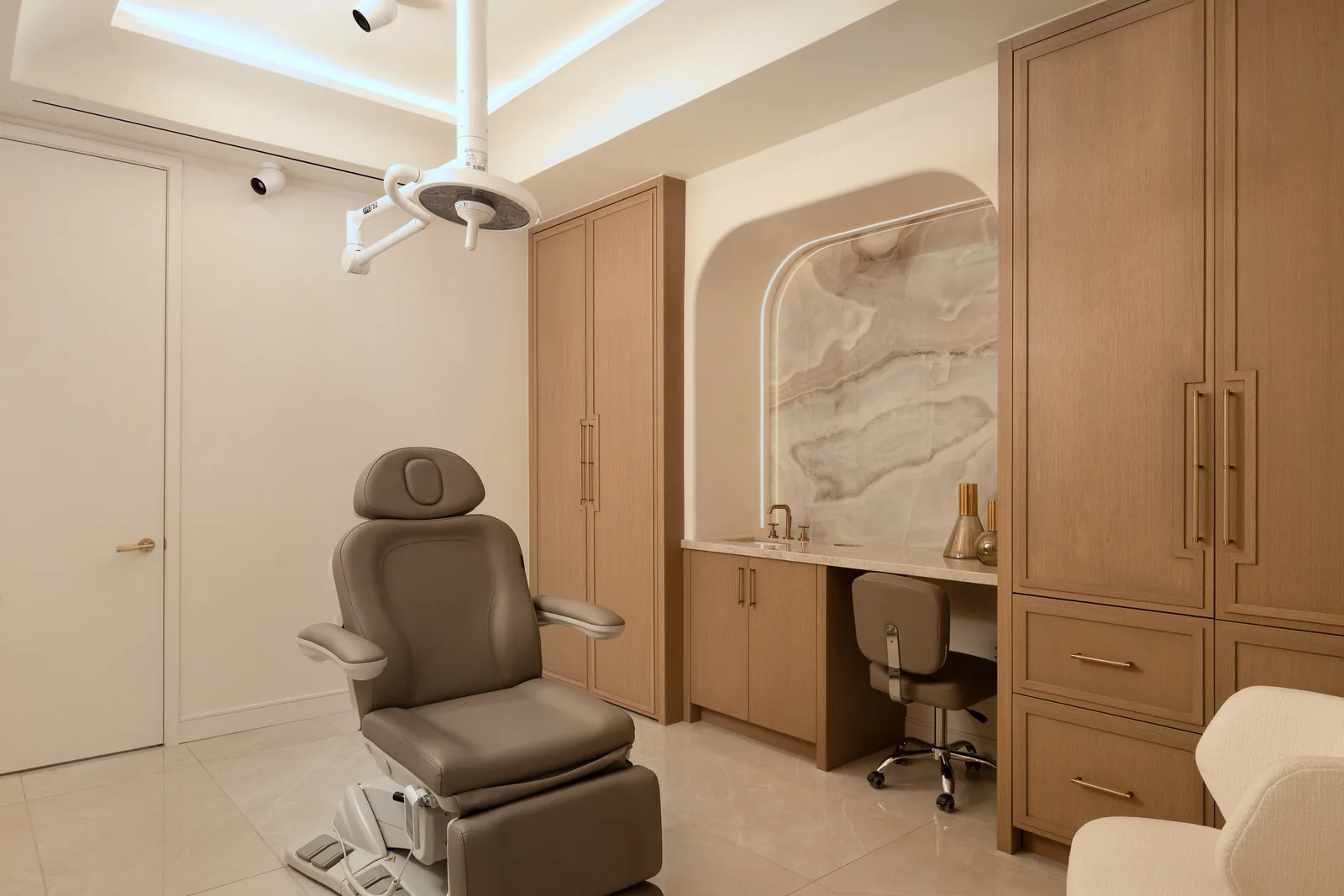
SCOTTSDALE · MODERN OFFICE SETTING
Where to Start
Who Chemical Peels Are For, and What Happens First
Light chemical peels at Aesthetica by Ashley Howarth MD are for adults of any skin type, any Fitzpatrick type, and any month of the year who want more even tone, clearer pores, and smoother texture with little or no downtime. Medium peels are for adults with fair to medium skin, Fitzpatrick I to III routinely and IV with care, who have sun-related surface change, fine lines, or stubborn post-acne marks, are untanned in laser season, and can accept 5 to 7 days of visible peeling and two to four weeks of strict sun avoidance. The skin assessment comes first. The licensed aesthetician examines the skin under magnification, records your Fitzpatrick type, tanning, and sun exposure, separates solar lentigines from melasma and post-inflammatory marks, reviews retinoid, isotretinoin, and pregnancy status and any cold sore history, and identifies any lesion that should be examined by a physician before any acid touches it. Depth is then set by the findings, not the request: a Fitzpatrick V patient with post-acne marks gets a mandelic or lactic series after two to four weeks of topical preparation; a fair, untanned patient with mottled tone in November may get a medium TCA peel; a patient whose real problem is pitted scars or etched lines is told that a peel will not reach them and is directed to SkinPen, ProFractional, or Contour TRL.
Dr. Ashley Howarth, MD, FACS is a board-certified plastic surgeon and an instructor in plastic surgery at Mayo Clinic. Aesthetica by Ashley Howarth MD is the medical aesthetics brand of her practice, Howarth Plastic Surgery, at 7373 N. Scottsdale Road, Suite C150, Scottsdale, Arizona 85253.

Four Acids, Two Depths, One Rule About Skin Type
How Chemical Peels Are Used in Scottsdale
Light Peels for Tone, Texture, and Congestion
Light peels are the year-round workhorse, chosen by concern (glycolic or lactic for tone and texture, salicylic for acne-prone skin, mandelic as the gentlest option for darker or reactive skin), with little more than a day or two of dryness afterward.
Light peels are the year-round workhorse at Aesthetica by Ashley Howarth MD. Glycolic and lactic acid peels brighten dull, rough texture and even mottled tone; a salicylic acid peel is the choice for oily, congested, acne-prone skin because it is oil-soluble and clears the pores; mandelic acid is the gentlest and the usual first peel on darker or reactive skin. The solution goes on for two to five minutes, tingles, and is neutralized or self-neutralizes, and there is no visible peeling for most patients, only a day or two of dryness or three days of light flaking. A series of 4 to 6 peels two to four weeks apart is the plan for a defined concern, then one every four to six weeks to maintain. Light peels combine well with HydraFacial in the same visit.
Medium TCA Peels in Laser Season
Medium TCA peels reach the upper dermis for fair to medium skin, with healing the American Academy of Dermatology puts at 7 to 14 days, and in Arizona they’re scheduled October through April, one to three times a year.
A medium peel uses trichloroacetic acid in the 20 to 35 percent range to reach the upper dermis, for fair to medium skin with sun-related surface change, fine lines, and stubborn post-acne marks. The aesthetician applies it in sections and watches for the even white frost that marks the depth; it stings for a few minutes under a fan. The face darkens and tightens over two days, peels in sheets from day three to seven, and is pink for a week or two after. The American Academy of Dermatology puts healing at 7 to 14 days. Because the new skin must not be tanned or exposed, medium peels at Aesthetica by Ashley Howarth MD run October to April, one to three times a year, and Fitzpatrick IV to VI skin is not treated with a medium peel as a rule. Antiviral prophylaxis is given to patients with a cold sore history.
Darker Skin Types and Melasma
On Fitzpatrick IV to VI skin and for melasma, the protocol is light peels only, after weeks of topical preparation on darker skin, and always as an adjunct to topical therapy and sun protection rather than a stand-alone treatment for melasma.
On Fitzpatrick IV to VI skin the risk of a peel is post-inflammatory hyperpigmentation, a darkening that can outlast the problem it was meant to treat, and a 2018 study of 473 superficial peel treatments in skin types III to VI found complications in 3.8 percent, most of them pigment change. The protocol at Aesthetica by Ashley Howarth MD is light peels only, mandelic or lactic first, after two to four weeks of a retinoid and pigment-suppressing topical, then salicylic or low-strength glycolic as tolerance is shown. Melasma follows the same rule on every skin type: light peels as an adjunct to topical therapy and strict sun protection, never as a stand-alone treatment, and never a medium peel, because heat, inflammation, and Arizona sun each make melasma worse. A 2024 systematic review in Dermatologic Surgery supports peels as an adjunct rather than a cure.
When a Laser Is the Better Tool
Etched wrinkles, deep sun damage, and pitted scars go beyond what a medium peel reaches and call for physician-performed laser resurfacing (MicroLaserPeel, Contour TRL, or ProFractional) by Dr. Howarth instead.
A medium peel is the deepest peel offered at Aesthetica by Ashley Howarth MD, and it is not the deepest resurfacing the practice offers. Etched perioral and periorbital wrinkles, deep sun-related surface change, and pitted scars live below the reach of a medium TCA peel and need controlled ablation at a set depth: MicroLaserPeel for a precise shallow erbium peel, Contour TRL for adjustable-depth full-field resurfacing, or ProFractional for scars. Those are physician-performed laser skin resurfacing by Dr. Howarth when the plan is deep or zone-specific. A practice that offers both can tell you honestly when a series of peels would spend a year getting to where one laser session starts, and you can compare Sciton lasers side by side.
At a Glance
Chemical Peels at a Glance
Peels by depth and agent at Aesthetica by Ashley Howarth MD, what each is used for, typical sessions, downtime, and when in the Scottsdale year they are scheduled; individual plans are set at the skin assessment.
| Peel | Best for | Sessions | Downtime | Scottsdale season |
|---|---|---|---|---|
| Glycolic acid, light | Dull, rough texture and mottled tone; maintenance on fair to medium skin | 4 to 6, two to four weeks apart, then every 4 to 6 weeks | None to 3 days of light flaking | Year-round |
| Salicylic acid, light | Oily, congested, acne-prone skin and post-acne marks | 4 to 6, two to four weeks apart | Dryness 1 to 3 days | Year-round; the summer acne peel |
| Lactic acid, light | Dry, sensitive, or dehydrated skin needing gentle brightening | 4 to 6, two to four weeks apart | None | Year-round |
| Mandelic acid, light | Fitzpatrick IV to VI skin, reactive skin, post-inflammatory marks, melasma as an adjunct | 4 to 6, three to four weeks apart, after 2 to 4 weeks of topical preparation | None | Year-round |
| Trichloroacetic acid 20 to 35 percent, medium | Sun-related surface change, fine lines, stubborn marks on Fitzpatrick I to III, IV with care | 1, repeated 1 to 3 times a year | 5 to 7 days of sheet peeling, pink 1 to 2 weeks more | October to April, untanned skin |
| Deeper than medium: MicroLaserPeel or Contour TRL | Etched wrinkles, deep sun-related change, pitted scars | Usually 1 | 3 to 5 days for a light laser peel; 7 to 10 days or more for deep resurfacing | October to April; physician-performed by Dr. Howarth |
Three Ways to Renew the Surface
Chemical Peel vs MicroLaserPeel vs HydraFacial
How the three surface-renewal treatments at Aesthetica by Ashley Howarth MD differ; the assessment chooses, and the MicroLaserPeel and HydraFacial pages cover those plans in full.
| Chemical peel | MicroLaserPeel | HydraFacial | |
|---|---|---|---|
| What it is | Acid solution removes outer layers at a depth set by agent and strength | Full-field 2940 nm erbium laser ablates a set depth, about 10 to 30 microns for a light peel | Vortex-tip cleanse, light peel, suction extraction, and serum infusion |
| Best for | Uneven tone, post-acne marks, acne, texture, fine lines; melasma as an adjunct | Fine lines, rough texture, sun-related surface change needing a measured depth | Congestion, dehydration, dullness, pre-event glow |
| Sessions | Light 4 to 6; medium 1 to 3 a year | 1 to 3 | Monthly, or 3 to 5 for a concern |
| Downtime | Light none to 3 days; medium 5 to 7 days of peeling | 3 to 5 days for a light laser peel | None |
| Skin types | All for light peels with preparation; medium mainly I to IV | I to IV routinely, V with care | All, including V and VI |
| Season and who performs | Light year-round, medium October to April; licensed aesthetician under Dr. Howarth's protocols | October to April; Dr. Howarth or the team depending on depth | Year-round; licensed aesthetician |
A Visit Built Around Your Skin Type
What to Expect at a Chemical Peel Visit at Aesthetica by Ashley Howarth MD
A chemical peel visit at Aesthetica by Ashley Howarth MD has three parts: an assessment that sets the agent and depth, the peel itself, and a written aftercare plan. A light peel takes about 30 minutes in the room; a medium peel about 45 to 60 minutes including preparation and cooling.
Skin type, tan, and lesions examined; agent and depth set
The licensed aesthetician examines the skin under magnification, records your Fitzpatrick type and recent sun exposure, separates sun spots from melasma and post-inflammatory marks, refers any irregular or changing lesion to a physician, confirms retinoids were paused and there is no tan, sunburn, cold sore, or isotretinoin in the past six months, and chooses the acid and strength. Tanned skin postpones a medium peel.
Degrease, apply in sections, watch the clock or the frost
The skin is cleansed and degreased, eyes are protected, and the solution goes on with a brush or gauze in sections. A light peel tingles and warms for two to five minutes and is neutralized. A medium TCA peel stings more sharply under a fan for several minutes while the aesthetician watches for an even frost, then cools with compresses. A bland balm goes on before you leave.
A no-picking, sun-avoidance plan in writing
You leave with mineral SPF 30 or higher, a bland cleanser and moisturizer, retinoids and acids paused until peeling is finished, a strict rule against picking or peeling the skin by hand, one to two weeks of sun avoidance after a light peel and two to four after a medium peel, and the date of your next session or your post-peel check at one week for a medium peel.
Clear Information. Informed Choices.
Safety and Limitations of Chemical Peels
Chemical peels are safe when the agent and depth match the skin type, the skin is untanned and prepared, and the aftercare is followed. Light peels have a long safety record on every skin type; medium peels carry more risk and more benefit. The side effect that matters most in Arizona is post-inflammatory hyperpigmentation, a darkening of treated skin that is more likely on tanned skin, on Fitzpatrick IV to VI skin treated too deeply, and on skin exposed to sun while healing, and it is the reason medium peels are seasonal and darker skin types receive light peels with preparation. The side effect that matters most medically is scarring or lasting lightening from a peel that went deeper than intended or was picked at, which is why depth is set by protocol and peeling skin is never pulled off. A cold sore history needs antiviral prophylaxis before a medium peel, and isotretinoin within six months, pregnancy for salicylic and TCA peels, and open lesions defer the visit. What a peel cannot do is reach etched wrinkles, pitted scars, or laxity.
Possible Side Effects Include
- Stinging during application and redness for hours to a few days
- Dryness, tightness, and flaking after a light peel; sheet peeling for 5 to 7 days after a medium peel
- Post-inflammatory hyperpigmentation, especially with sun, tanned skin, or darker skin types
- Cold sore reactivation after a medium peel without prophylaxis
- Rarely, prolonged redness, lasting lightening, infection, or scarring
What Treatment Cannot Guarantee
- Removal of etched wrinkles or pitted scars
- A cure for melasma
- Tightening of loose skin
- A lasting result while daily sun exposure continues
- A substitute for skin cancer screening
What Happens After a Chemical Peel
Recovery After a Chemical Peel
Recovery depends on depth. After a light peel the skin is pink for a few hours, dry or lightly flaky for one to three days, and makeup-ready the next morning. After a medium TCA peel the skin darkens and tightens for two days, peels in sheets from day three to seven, is pink for another week or two, and needs two to four weeks of strict sun avoidance, which in Scottsdale means laser season. HydraFacial can precede a light peel in the same visit; SkinPen and any laser wait at least two weeks on either side.
After a light peel the face is pink for a few hours and feels clean and slightly tight; mineral sunscreen goes on before you leave and a bland moisturizer that night, with no makeup until the next morning. After a medium peel the skin looks sunburned, feels tight, and begins to darken by evening; only the balm from the office touches it, and you stay out of the sun entirely.
Light peel: dryness or fine flaking on days one to three, makeup fine, retinoids paused until the flaking stops, hat and mineral SPF outdoors. Medium peel: the skin darkens and cracks by day two and peels in sheets from day three to seven; wash gently, keep it moist with a bland balm, and never pull loose skin, since picking is the main cause of marks. A one-week check confirms healing.
Light peel: the skin is brighter and more even by two weeks and the next peel in a series falls at two to four weeks. Medium peel: peeling is finished by about day ten, the new skin is pink and smooth and may look slightly uneven for a week or two, retinoids resume once fully healed, and strict sun avoidance continues to week four. Sun on new skin in Arizona is the surest way to make new pigment.
A light peel series of 4 to 6 produces more even tone, clearer pores, and smoother texture, held with a peel every four to six weeks and daily mineral SPF. A medium peel’s result is judged at four weeks and holds for months to a year with sunscreen; most Scottsdale patients repeat it once or twice each laser season and pair it with BBL HERO for discrete spots. The Skin in Arizona guide sets out the calendar.
Before & After
Chemical Peels, Before and After Treatment
Peel results are best judged in photographs taken in the same light before the first peel and four weeks after the last, when flaking has finished and the pinkness of a medium peel has settled. Aesthetica by Ashley Howarth MD maintains before-and-after galleries for its medical aesthetics treatments and for MicroLaserPeel and Contour TRL, and the aesthetician can show you cases that match your skin type and concern, whether the goal is uneven tone, post-acne marks, or texture, and the time of year.
Patient Case Summaries
Selected Chemical Peel Case Summaries
These deidentified case summaries illustrate how the physician-led team at Aesthetica by Ashley Howarth MD plans chemical peels in Scottsdale. They include a medium TCA peel in laser season for a long-term Arizona resident, a mandelic series on Fitzpatrick V skin, a summer salicylic series for acne, melasma treated as an adjunct rather than a target, a maintenance plan paired with BBL HERO, and etched wrinkles for which the honest answer was a physician-performed laser rather than a peel. Each summary connects the patient’s concern and skin assessment with the treatment performed or the recommendation made.
Case 01
Medium peel in season
Mottled tone and fine lines on fair skin treated with a medium TCA peel in November
Patient presentation
A woman in her fifties who had lived in Scottsdale for thirty years asked for something stronger than the light peels she had been having, to even the mottled tone and soften the fine lines across her cheeks.
Skin assessment
Fitzpatrick II skin, untanned in November, with diffuse sun-related mottling, fine static lines, and rough texture, no melasma, and no irregular lesion on examination. She had no cold sore history and had paused her retinoid for a week. She accepted a week of visible peeling.
Procedure performed
A single medium trichloroacetic acid peel in the 20 to 35 percent range to the full face, applied in sections to an even frost, with a one-week healing check, retinoid resumed at two weeks, and four weeks of strict sun avoidance.
Clinical rationale
Fair, untanned skin in laser season with sun-related surface change and fine lines is the case a medium peel is for; reaching the upper dermis gives the tone and texture change a series of light peels could not, and the timing kept the new skin out of the sun.
Follow-up
At four weeks her tone was markedly more even and the texture smoother; she now has one medium peel each laser season and light peels every six weeks in summer.
Case 02
Fitzpatrick V
Post-acne dark marks on deep brown skin treated with a prepared mandelic series
Patient presentation
A woman in her twenties with Fitzpatrick V skin asked for a strong peel to clear the dark marks her breakouts left on her cheeks and jaw, which lasted for months after each one.
Skin assessment
The assessment found post-inflammatory hyperpigmentation with mild residual comedonal acne and no active cysts. A medium peel at her skin type carried a meaningful risk of more pigment than it removed, and the marks were epidermal, within reach of light peels with preparation.
Procedure performed
Four weeks of a retinoid and a pigment-suppressing topical, then a series of six mandelic acid peels three weeks apart, moving to a low-strength salicylic peel for the last two once tolerance was clear, with daily mineral SPF.
Clinical rationale
Light peels have a documented safety record in skin types III to VI when depth is respected, mandelic acid penetrates slowly and is the gentlest first agent, and pre-treatment lowers the chance that the peel itself creates new marks.
Follow-up
The marks had faded substantially by the end of the series and new ones cleared faster; she continues a peel every six weeks and has never needed anything deeper.
Case 03
Summer acne
Congested, oily skin treated with salicylic peels through the summer
Patient presentation
A man in his thirties, a new arrival from Chicago, reported that the Arizona heat had made his skin oilier and more congested than it had ever been and that breakouts along his temples had become constant.
Skin assessment
Fitzpatrick III skin, lightly tanned in June, with comedonal and mild papular acne, enlarged pores, and no scarring or pigment problem. A light or laser treatment was off the table in summer, and his tan ruled out anything medium-depth.
Procedure performed
A series of five salicylic acid peels three weeks apart from June through September, each preceded by a HydraFacial with extraction in the same visit, with a non-comedogenic mineral SPF and a salicylic cleanser at home.
Clinical rationale
Salicylic acid is oil-soluble and clears the pore itself, light peels are safe on tanned skin with sun avoidance, and randomized trials support peels for acne; combining extraction and a peel in the same visit addressed congestion and oil at once.
Follow-up
His breakouts were controlled by the third peel and the pores less visible by the fifth; he continues a peel every six weeks year-round and did not need a dermatology referral.
Case 04
Melasma adjunct
Upper-lip melasma treated with topical therapy first and light peels as an adjunct
Patient presentation
A woman in her forties with Fitzpatrick IV skin asked for a medium peel to remove a brown patch across her upper lip that darkened every summer and had not responded to a brightening facial.
Skin assessment
The assessment found a symmetric, blotchy patch with an irregular border on the upper lip and faint patches on both cheekbones, consistent with melasma rather than solar lentigines. Melasma is driven by heat, hormones, and UV, and a medium peel would likely have darkened it.
Recommendation
No medium peel. A physician-directed topical regimen and strict mineral sunscreen with a hat for eight weeks, then a series of four low-strength glycolic peels four weeks apart in winter as an adjunct, with the peels stopped if any darkening appeared.
Clinical rationale
Chemical peels improve melasma only as an adjunct to topical therapy and sun protection, a 2024 systematic review supports that role and no more, and inflammation from a deeper peel is one of the surest ways to make melasma worse.
Follow-up
The patch lightened over the winter and she now expects it to shift with the seasons, holds it with the topical regimen and sunscreen, and repeats a light peel series each laser season.
Case 05
Maintenance with BBL
Light peels every six weeks between annual BBL HERO sessions
Patient presentation
A woman in her sixties, a Scottsdale resident for twenty years who has a BBL HERO series each fall, asked what would keep her tone even between sessions without laser downtime.
Skin assessment
Fitzpatrick II skin, even in tone after years of light treatment, with mild dullness and rough texture by mid-summer, and no melasma or irregular lesion. Her spots were cleared; her surface was not.
Procedure performed
A glycolic acid peel every six weeks year-round, timed at least two weeks away from each BBL HERO session, with a HydraFacial in the same visit in summer and a single medium TCA peel each January.
Clinical rationale
BBL HERO treats discrete color and does not exfoliate; a light peel series keeps the surface turning over and the tone even between light sessions, and a medium peel in season addresses the texture that neither reaches.
Follow-up
Her tone has stayed even year-round and she describes the peels as the reason her makeup routine got shorter; the plan repeats each year.
Case 06
Not a peel
Etched perioral wrinkles for which the honest answer was physician-performed laser resurfacing
Patient presentation
A woman in her sixties asked for the strongest peel available for the vertical lines around her mouth, which lipstick bled into, and mentioned she had had several medium peels elsewhere with little change.
Skin assessment
Fitzpatrick II skin with deep etched perioral rhytids and sun-related surface change across the lower face, untanned in October, and no cold sore history. The lines extended into the dermis well below the reach of a medium TCA peel, which explained the earlier results.
Recommendation
Not another peel. Dr. Howarth planned a deep full-field Contour TRL resurfacing of the perioral zone, performed by her, with a light MicroLaserPeel of the rest of the face in the same session and a 7 to 10 day recovery in November.
Clinical rationale
Etched wrinkles are a depth problem, a medium peel reaches the upper dermis and stops, and a tunable erbium laser removes tissue to a measured depth that no peel offered at a med spa can; a plastic surgeon who does both can say which the face needs.
Follow-up
At three months the perioral lines were markedly softer and lipstick no longer bled; she uses light peels every six weeks for maintenance and has not asked for a medium peel since.
From First Visit to a Plan You Can Keep
Booking, Planning, and Follow-Up at Aesthetica by Ashley Howarth MD
Aesthetica by Ashley Howarth MD is a medical practice with a spa’s convenience. Established patients book online. New patients can book online or request a consultation, and the team responds usually the same day.

Online booking or a consultation request
Book a skin assessment directly online, or request a consultation and describe the tone, texture, marks, or breakouts you notice, your skin type, and any peels or lasers you have had. Either path starts with the same examination of your skin.
An agent, a depth, and a season
You leave your first visit with a written plan: which acid and strength; a light series or a medium peel; which months it falls in; whether HydraFacial, SkinPen, or BBL HERO is paired with it; whether a laser is the honest answer instead; and the home routine that protects the result.
Light peels on a rhythm, medium peels in laser season
Most Scottsdale peel plans repeat on a rhythm: a light peel every four to six weeks, a medium peel once or twice between October and April, sunscreen every day. A-List members have the next visit scheduled before they leave the last one.
Your Questions, Answered
Chemical Peels Frequently Asked Questions
A chemical peel is an acid solution applied to the skin to remove its outer layers at a controlled depth so that smoother, more even skin replaces them. Light peels use glycolic, salicylic, lactic, or mandelic acid and remove only dead surface cells; medium peels use trichloroacetic acid to reach the upper dermis. At Aesthetica by Ashley Howarth MD in Scottsdale, peels are performed by the licensed aesthetician under Dr. Howarth’s protocols.
Peels treat uneven tone and mottled sun-related surface change, post-acne dark marks, active acne and congestion, rough or dull texture, and fine lines, and with preparation they are an adjunct for melasma. They do not reach etched wrinkles, pitted scars, or loose skin, which need SkinPen, a fractional laser, or physician-performed resurfacing, and they do not replace skin cancer screening.
Alpha hydroxy acids such as glycolic and lactic loosen the bonds between dead surface cells so they shed; salicylic acid is oil-soluble and clears inside the pore; mandelic acid penetrates slowly and gently. Trichloroacetic acid coagulates protein to a depth that rises with its concentration, and the frost that appears during application shows the depth reached. The skin that heals afterward is smoother, more even, and, after a medium peel, supported by new collagen.
A light peel tingles and warms for two to five minutes and is then neutralized; no numbing is needed. A medium TCA peel stings sharply for several minutes while it is applied, eased by a fan and cool compresses, and the skin feels tight and sunburned for the rest of the day. Neither requires anesthesia. Deeper resurfacing at the practice is done with a laser under appropriate anesthesia by Dr. Howarth.
After a light peel: pink for a few hours, dry or lightly flaky for one to three days, makeup the next morning, and one to two weeks of sun care. After a medium peel: the skin darkens and tightens for two days, peels in sheets from day three to seven, is pink for a week or two more, and needs two to four weeks of strict sun avoidance. In Scottsdale that is why medium peels are scheduled October to April.
For a defined concern, a series of 4 to 6 light peels two to four weeks apart, then one every four to six weeks to maintain. A medium TCA peel is a single treatment judged at four weeks and repeated one to three times a year, in laser season. The American Academy of Dermatology notes that 3 to 5 light peels may be needed for a result and that a medium peel heals in 7 to 14 days.
Yes. A light peel is often done in the same visit as a HydraFacial, after the extraction step. SkinPen microneedling and any laser, including BBL HERO and MOXI, are scheduled at least two weeks away from a peel on either side. Botox and fillers are done at a separate visit. Peels are the usual partner to BBL HERO in laser season, keeping the surface even between light sessions.
Light peels are safe on every Fitzpatrick type when depth is respected; a 2018 study of 473 superficial peels in skin types III to VI found complications in 3.8 percent, mostly temporary pigment change. At Aesthetica by Ashley Howarth MD, Fitzpatrick IV to VI skin receives light peels only, mandelic or lactic first, after two to four weeks of topical preparation, and no medium TCA peel as a rule, because the risk of lasting darkening rises with depth.
A light peel’s brightness lasts several weeks and a series produces more even tone and clearer pores that hold with a peel every four to six weeks and daily mineral sunscreen. A medium peel’s improvement in tone and texture lasts months to a year with sun protection. In Arizona, with about 300 days of sun a year, results last exactly as long as the sunscreen habit does.
Pause retinoids and exfoliating acids for 5 to 7 days, avoid tanning and sunburn for at least a week before, tell the aesthetician about isotretinoin in the past six months, pregnancy, cold sores, and any laser or microneedling in the past two weeks, and arrive with a clean face. Light peels are year-round in Scottsdale with sun avoidance; medium peels are scheduled October to April, when untanned skin and weeks of sun avoidance are realistic. The laser season and Skin in Arizona guides explain why.
Concerns Treated
Concerns This Treatment Addresses
These guides explain each concern and where this treatment fits among the options at Aesthetica by Ashley Howarth MD in Scottsdale.
- Sun Damage & Brown Spots Mottled tone and sun-related surface change, the first use of a medium peel
- Acne & Acne Scars Salicylic peels for active acne and light peels for post-acne marks
- Skin Texture, Pores & Dullness Rough, dull texture and congestion cleared by a light peel series
- Melasma Why peels are an adjunct, never a medium peel, and what comes first
- Fine Lines & Wrinkles Fine lines with a medium peel; etched lines need a laser
- Laser Season in Arizona Why October to April, and what to do in summer
BEGIN HERE
Request a Consultation
Tell us what you are considering. A member of our patient care team will follow up with consultation availability and next steps.

Megan S.
Patient Coordinator
Prefer to talk or text?
Selected References