
Brow And Forehead Anatomy
What Is a Brow Lift?
A brow lift, also called a forehead lift, repositions selected brow and forehead tissues. The direction and degree of change depend on brow position, forehead and hairline anatomy, eyelid relationship, asymmetry, and goals rather than one preset shape.
A brow lift does not remove eyelid skin or treat lower-eyelid bags. It also cannot guarantee a particular expression, exact symmetry, a smooth forehead, or permanent position. Eyelid Surgery is the more complete route when eyelid skin, fat, bags, lid support, eye-health concerns, or possible true ptosis are central. Examination clarifies which structures matter before a procedure is selected.

Questions an Examination Can Clarify
What May Lead Someone to Consider a Brow Lift?
Normal brow position, height, shape, and asymmetry vary. If changes in brow position are affecting the upper-eye area or expression, consultation can clarify whether the brow, eyelids, or both are contributing.
-
Brow Position
A brow that sits lower than it once did may change its relationship to the forehead, orbital rim, and upper eyelid. -
Brow Asymmetry
Side-to-side differences in brow height, shape, or movement can be evaluated without assuming that exact symmetry is possible or desirable. -
Forehead and Hairline
Forehead height, hairline position, hair density, and styling preferences influence which scar and repositioning tradeoffs may be acceptable. -
Brow and Upper Eyelid
Brow position can influence the appearance of upper-eyelid skin, but excess eyelid skin and true eyelid ptosis are separate questions.
A thoughtful consultation should clarify what surgery may change, which concerns require a different decision, and whether the tradeoffs fit your priorities.


Start with the Right Structure
Brow Lift Candidacy, Alternatives, and Consultation
Brow position and upper-eyelid skin can influence one another, but they are not interchangeable. Dr. Howarth evaluates both before recommending a brow lift, eyelid surgery, a coordinated plan, or a nonsurgical option.
Consultation begins with what you notice at rest and with movement. Examination may include brow position and shape, forehead height, hairline and hair density, upper-eyelid skin, asymmetry, skin and tissue characteristics, and facial proportions.
Tell the clinical team about nicotine use, medications and supplements, prior facial or eye procedures, healing concerns, eye irritation or dryness, vision symptoms, and relevant health history. A vision or eye-health concern may require additional evaluation before a surgical plan is recommended.
When eyelid skin or fat is primary, Eyelid Surgery may fit better. Selected nonsurgical care may suit a dynamic-line or skin-quality concern, but it is not the same as surgery. Observation and no treatment remain valid. You do not need to choose a path before consultation.
When Surgery May Not Be the Right Choice
The purpose of consultation is to identify the most appropriate next step—not to presume that an operation is needed. Dr. Howarth may recommend waiting, further evaluation, a different setting or approach, nonsurgical care, or no surgery when that is the more appropriate recommendation.

PERSONAL DECISIONS. THOUGHTFUL CARE.
Privacy During Facial Surgery Consultation and Care
Questions about facial surgery can feel personal. When you contact us, you can indicate whether you prefer a call or text. Your consultation with Dr. Howarth is a thoughtful conversation about your anatomy, concerns, and goals.
Surgeon-led Judgment
Choosing a Brow Lift Surgeon: Why Dr. Howarth
Choosing a brow lift surgeon involves more than selecting a named approach. Look for appropriate board certification, evaluation of the brow, forehead, hairline and eyelids together, balanced counseling about expression and scars, and a clear follow-up plan.
Ashley Howarth, MD, FACS, is a board-certified plastic surgeon in Scottsdale, an Instructor in Plastic Surgery at Mayo Clinic, and a Fellow of the American College of Surgeons. Her background includes nine years of surgical training.
A thoughtful brow-lift plan accounts for movement, asymmetry, hairline proportions, scar location, scalp sensation, facial-nerve risk, eyelid contribution, and the degree of change requested. Dr. Howarth distinguishes the brow from the eyelids, explains the relevant tradeoffs, and recommends a proportionate plan rather than a preset elevation.
Her whole-face evaluation keeps the recommendation centered on brow position without overlooking eyelid anatomy or your natural expression.
PLASTIC SURGERY
OF SURGEONS

SCOTTSDALE · MODERN OFFICE SETTING
FROM QUESTIONS TO A CLEAR PLAN
Brow Lift Consultation and Patient Care Coordination
From your first inquiry, your patient care coordinator helps organize the practical next steps. Your coordinator can assist with scheduling, estimates, financing, forms, travel, and follow-up logistics. Dr. Howarth and her clinical team answer medical questions and make all clinical recommendations.

A thoughtful beginning.
Your patient care coordinator can help arrange your consultation and explain what photographs, records, or other information the clinical team would like you to have ready when relevant.
Clear information before you decide.
After Dr. Howarth recommends a plan, your coordinator can review the written estimate, financing information, scheduling requirements, forms, next steps, and practical questions with you.
Practical details, clearly organized.
Once required visits are known, your coordinator can help organize Scottsdale travel and follow-up timing. Dr. Howarth and her clinical team provide individualized medical and recovery guidance.
The Approach Follows the Anatomy
How Is a Brow Lift Plan Selected?
Approach and Scar Location
Incisions may be within the hair-bearing scalp, at the hairline, or elsewhere, each with different scar, hairline, hair, scalp, and access considerations. After examining these features, Dr. Howarth explains the approach she recommends and why it fits the plan.
Direction and Degree of Repositioning
Planning is not simply raising both brows equally. Shape, movement, side-to-side differences, forehead proportions, eyelid relationship, expression, and desired change all matter. Dr. Howarth tailors the direction and degree of repositioning; exact symmetry cannot be promised.
Brow Lift or Eyelid Surgery
A brow lift changes brow and forehead position; Eyelid Surgery addresses lid skin, fat, bags, support, and eye-health considerations. Possible eyelid ptosis requires separate evaluation. A coordinated plan may be discussed when both structures contribute, but it is never automatic.
Nonsurgical Care
Dynamic lines or skin-quality concerns may lead to nonsurgical care when appropriate. These options address a different problem from surgery and do not reproduce a surgical change in brow position. Consultation helps distinguish which approach best matches the concern.
THE CONFIRMED PLAN GUIDES THE DAY
What Happens on the Day of Brow Lift Surgery?
Procedure day begins with a final review of the agreed plan. The operative setting and anesthesia are selected for that plan. Markings and preparation follow the confirmed brow and forehead approach. Before discharge, the team confirms transportation and provides individualized care and follow-up instructions. Details vary with the approach and any coordinated eyelid procedure.
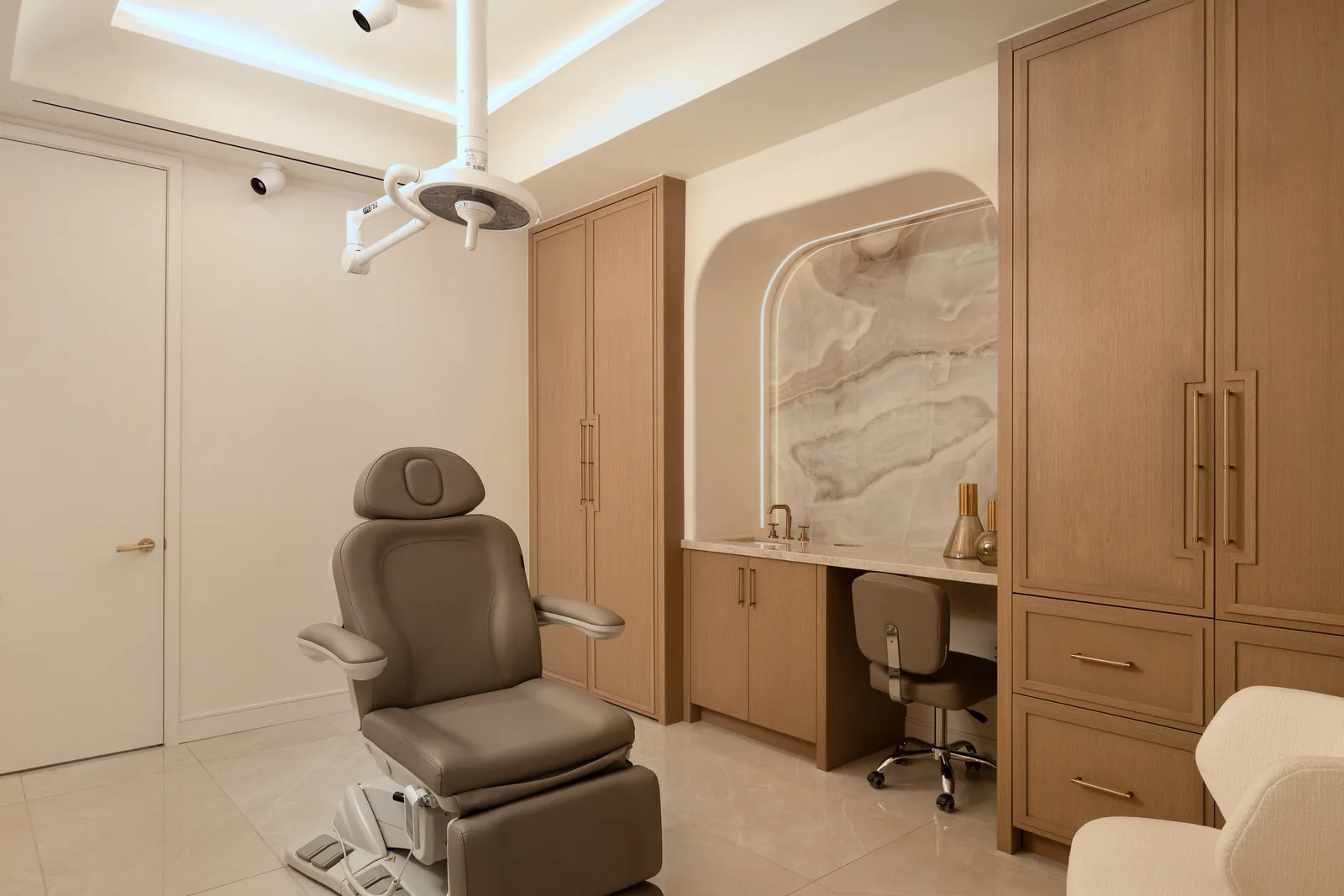
Your plan, confirmed with you.
The team reviews preparation, markings, the selected operation, and remaining questions.
Care matched to your anatomy.
Dr. Howarth performs the operation according to the individualized surgical plan.
Clear instructions and a direct next step.
Written instructions cover medications, activity, support, follow-up, and how to contact the practice.
INFORMED, PROPORTIONATE PLANNING
Brow Lift Safety, Risks, and Limitations
As with surgery generally, risks can include anesthesia complications, bleeding, infection, delayed healing, pain, scarring, asymmetry, and the possibility of additional treatment or revision.
Possible Complications Include
- Bleeding, infection, anesthesia complications, and delayed healing
- Numbness, itching, tightness, pain, or prolonged swelling
- Visible scarring or temporary or persistent hair loss near an incision
- Asymmetry, altered brow shape, or an unwanted change in expression
- Injury to a facial-nerve branch or weakness, which is uncommon
- An unsatisfactory result or need for additional treatment or revision
What Surgery Cannot Guarantee
- Guarantee exact brow symmetry
- Correct eyelid skin or fat when eyelid surgery is the more direct decision
- Erase every forehead or frown line
- Prevent future aging or movement-related change
- Promise a result shown in another patient’s photographs
HEALING HAPPENS IN STAGES
Brow Lift Recovery
Recovery varies with the brow-lift approach, incision placement, any coordinated eyelid procedure, work and caregiving demands, travel, and individual healing. Dr. Howarth’s instructions for your plan take priority over general expectations.
A deliberately quiet start
Early healing may include forehead or eye-area swelling and bruising, scalp tightness, itching, altered sensation, visible incisions, and temporary asymmetry.
Everyday activities, gradually
Hair and scalp care, driving, work, makeup, travel, and everyday routines resume as incisions heal, depending on the approach and any coordinated procedure.
Resume in stages
Exercise, lifting, and strenuous activity resume in stages according to the operation, healing, follow-up findings, and guidance from Dr. Howarth and her clinical team.
Healing continues
Swelling changes as tissues settle and scars mature. Final contour and scar visibility become easier to assess over time and vary among patients.
RESULTS WITH CONTEXT
How Should Brow Lift Results Be Reviewed?
Useful before-and-after photographs show a neutral, comparable expression and enough of the upper face to review brow position, hairline, eyelid contribution, asymmetry, and healing stage. The procedure and approach should be identified, and any coordinated eyelid surgery disclosed. Patient-authorized brow-lift examples may be reviewed privately when available.
Practice-wide patient reviews can offer useful context about communication, judgment, and care. They should not be interpreted as identifying a reviewer’s procedure or proving a brow-lift result.
BEFORE & AFTER GALLERIES
Private Brow Lift Before & After Gallery
Brow Lift before-and-after photographs can feel deeply personal. As both a woman and a surgeon, Ashley Howarth, MD, FACS, understands the trust involved in sharing them. Howarth Plastic Surgery in Scottsdale makes galleries of real patient results available by request through private before-and-after reviews.
Keeping brow lift before-and-after galleries off unrestricted public pages helps preserve patient dignity and clinical context while limiting casual viewing, unauthorized reposting, and collection by automated systems or AI agents.
During your private before-and-after review, you can see a range of brow lift results and discuss how starting anatomy, surgical choices, healing, and time influenced each outcome. These photographs can support an informed consultation, but individual results vary, and no image can predict your outcome.
PATIENT CASE SUMMARIES
Selected Brow Lift Case Summaries
These deidentified brow lift case summaries show how Ashley Howarth, MD, FACS, evaluates brow and forehead surgery at Howarth Plastic Surgery in Scottsdale, Arizona. Each case distinguishes brow position, upper-eyelid skin, forehead and hairline anatomy, asymmetry, facial movement, prior treatment, and patient goals before describing the procedure performed or recommendation made. To protect patient privacy, some nonclinical identifying details have been generalized or modified. Anatomy, procedures, healing, and results vary.
Case 01
LATERAL BROW DESCENT
Lateral brow descent was treated after the upper eyelids were evaluated separately
Patient presentation
The patient described heaviness at the outer upper eyes and a brow position that made her expression appear more tired than she felt. She wanted a subtle change rather than a high or surprised brow.
Clinical evaluation
Dr. Howarth evaluated medial and lateral brow position, forehead length, hairline, upper-eyelid skin, eyelid height, asymmetry, facial movement, eye closure, prior neuromodulator treatment, and the effect of gentle brow elevation.
Procedure performed
Dr. Howarth performed a brow lift tailored to the lateral descent and the patient's forehead and hairline anatomy.
Clinical rationale
The primary finding was brow position rather than isolated upper-eyelid skin. A restrained lift addressed the source while preserving the patient's natural expression.
Follow-up
Follow-up addressed incision healing, swelling, forehead sensation, brow movement and symmetry, hairline concerns, activity, and gradual settling of the brow position.
Case 02
BROW LIFT OR BLEPHAROPLASTY
Brow position and upper-eyelid skin both contributed to heaviness around the eyes
Patient presentation
The patient requested upper-eyelid surgery but also noticed that the brows had descended. She wanted to understand whether treating only the eyelids would leave part of the concern unchanged.
Clinical evaluation
Dr. Howarth assessed brow position, forehead movement, hairline, upper-eyelid skin and fat, eyelid crease and height, eye closure, asymmetry, and how simulated brow elevation changed the amount of apparent eyelid skin.
Procedure performed
Dr. Howarth performed a brow lift with conservative upper blepharoplasty, using separate tissue decisions for the brow and eyelids.
Clinical rationale
The brow and eyelid made independent contributions. Combining restrained treatment avoided asking either operation to correct anatomy outside its role.
Follow-up
The patient was followed for brow and eyelid swelling, incision healing, sensation, eye comfort, closure, symmetry, movement, and activity progression.
Case 03
HAIRLINE AND FOREHEAD ANATOMY
Forehead length and hairline position guided the brow lift approach
Patient presentation
The patient wanted improvement in brow descent but was concerned that surgery might make an already high forehead look longer.
Clinical evaluation
Dr. Howarth evaluated forehead length, hairline shape and density, brow position, skin mobility, prior scars, hair loss history, facial proportions, upper-eyelid anatomy, and the scar implications of different approaches.
Procedure performed
Dr. Howarth performed a brow lift using an approach selected to account for the existing hairline and forehead proportions.
Clinical rationale
Brow elevation cannot be planned independently of the hairline. The selected access and lift pattern balanced brow change with the patient's concern about forehead length and scar visibility.
Follow-up
Follow-up included incision and hairline healing, swelling, sensation, brow movement, asymmetry, hair growth near the incision, and scar maturation.
Case 04
BROW ASYMMETRY
Unequal brow position required side-specific planning rather than identical elevation
Patient presentation
The patient reported that one brow sat lower and created more upper-eye heaviness on that side. She wanted improved balance without expecting perfect symmetry.
Clinical evaluation
Dr. Howarth compared brow height and shape, forehead muscle activity, eyelid skin and height, hairline, skeletal asymmetry, prior treatment, and how the difference changed with facial expression.
Procedure performed
Dr. Howarth performed a brow lift with side-specific adjustments based on resting position, movement, and the starting asymmetry.
Clinical rationale
Equal treatment of unequal brows can preserve the difference. The plan addressed modifiable soft-tissue factors while counseling that skeletal and movement asymmetry would remain.
Follow-up
Both sides were monitored as swelling and muscle activity settled, with attention to incision healing, sensation, movement, and normal residual asymmetry.
Case 05
PRIOR EYELID OR FOREHEAD SURGERY
Previous upper-face surgery changed the brow lift evaluation and operative plan
Patient presentation
The patient had undergone prior eyelid or forehead surgery and later noticed recurrent upper-eye heaviness. She wanted to know whether additional eyelid skin should be removed.
Clinical evaluation
Dr. Howarth reviewed prior records when available, existing scars, brow position, forehead movement, hairline, remaining eyelid skin, eye closure, sensation, asymmetry, and tissue-safety considerations created by previous surgery.
Procedure performed
Dr. Howarth performed revision upper-face surgery focused on brow position, with the plan modified for prior scars and remaining eyelid tissue.
Clinical rationale
Removing additional eyelid skin without addressing the brow could increase closure risk and leave the primary problem untreated. Revision planning followed the altered anatomy.
Follow-up
Follow-up emphasized eye closure and comfort, brow movement, incision healing, sensation, asymmetry, and cautious activity progression after revision surgery.
Case 06
NO BROW SURGERY RECOMMENDED
Brow lift was not recommended when dynamic expression, not resting descent, created the concern
Patient presentation
The patient requested a brow lift because the brows appeared low in certain photographs and expressions. At rest, the brow and upper-eyelid relationship remained within a range that did not support the requested surgical change.
Clinical evaluation
Dr. Howarth evaluated resting and animated brow position, forehead muscle activity, eyelid skin and height, hairline, asymmetry, prior neuromodulator response, eye closure, expectations, and the risk of over-elevation.
Recommendation
Dr. Howarth did not recommend brow lift surgery and discussed observation or a restrained nonsurgical option if the patient wished to address dynamic movement.
Clinical rationale
Surgery for an expression-dependent concern could create an elevated or unnatural resting brow. The likely benefit did not justify the scar, sensory changes, recovery, and risk of overcorrection.
Follow-up
No operation was scheduled. The patient was advised to return only if the resting anatomy or concerns changed.
PLANNING WITH CLARITY
Brow Lift Cost, Financing, and Travel to Scottsdale
Brow Lift Cost
At Howarth Plastic Surgery in Scottsdale, brow lift surgery typically costs $10,000 to $13,000. Your final fee depends on the surgical approach, anesthesia, care setting, and whether another procedure is included. After consultation with Dr. Howarth, you will receive a personalized written estimate for the plan she recommends.
Financing Options
Howarth Plastic Surgery is a cash-pay practice and does not accept or bill insurance. Your patient care coordinator can review financing through PatientFi and CareCredit, subject to third-party approval.
Planning Care in Scottsdale
If you are traveling from elsewhere in Arizona or out of state, out-of-town patient information can help you plan around consultation, surgery, and follow-up. Required appointment dates, how long to remain nearby, and when travel may resume are individualized. An initial consultation may take place virtually, but an in-person examination is required before the operative plan is finalized.
Direct Answers
Brow Lift Frequently Asked Questions
Brow lift, forehead lift, and eyebrow lift are commonly used terms for surgery that repositions selected brow and forehead tissues. The terms do not identify one universal technique or incision; the approach and degree follow anatomy, asymmetry, history, and goals.
Eyelid surgery may fit when eyelid skin or fat is primary; a brow lift may be considered when brow position contributes. True ptosis and functional concerns require separate evaluation. Examination may lead to one procedure, a coordinated plan, another option, or neither.
It can change brow position and shape. Planning considers movement, asymmetry, eyelid relationship, and desired change. Surgery cannot promise a happier expression, exact symmetry, or one ideal shape.
Repositioning may affect selected lines, but muscle activity and skin quality can remain. A brow lift does not freeze expression or guarantee smooth skin. A nonsurgical or skin-focused option may fit better when those concerns are primary.
Forehead height, hairline and hair density, brow position, asymmetry, prior surgery, scar tolerance, and desired change guide selection. Dr. Howarth confirms the approach after examination; no named approach is universally better.
It can. Hairline position may change, and temporary or persistent hair loss can occur near an incision. Consultation considers hair density and history, styling preferences, scar visibility, and the proposed approach.
Scar location varies with the approach, forehead, hairline, and scalp. Scars are permanent and mature over time. Placement within hair is not guaranteed to be invisible or unaffected by hair change; a hairline scar has different visibility tradeoffs.
Recovery may include tightness, swelling, bruising, visible incisions, itching, numbness, and temporary asymmetry. Hair care, driving, work, exercise, and travel depend on the approach, any coordinated procedure, and individual healing rather than a universal timeline.
No exact number of years applies to every patient. A brow lift can create a lasting change, but surgery does not stop aging, and brow position may change over time with anatomy, approach, healing, and tissue changes. Dr. Howarth can discuss the expected tradeoffs of the recommended plan after examination.
At Howarth Plastic Surgery in Scottsdale, brow lift surgery typically costs $10,000 to $13,000. Your final fee depends on the surgical approach, anesthesia, care setting, and whether another procedure is included. After consultation with Dr. Howarth, you will receive a personalized written estimate for the plan she recommends.
Related Care
Related Facial Procedures
These pages explain options that may be considered separately depending on your anatomy, goals, and Dr. Howarth’s recommendation after examination.
- Eyelid Surgery For upper- or lower-eyelid skin, fat, contour, and support concerns.
- Facelift For cheek, lower-face, jawline, and connected face-neck tissue descent.
- Neck Lift For a neck-first concern involving skin, muscle, fullness, or jaw-neck definition.
- Facial Fat Grafting For selected facial-volume concerns rather than tissue descent.
- Face Procedures Compare the complete facial-surgery family when you are unsure where to begin.
BEGIN HERE
Request a Consultation
Tell us what you are considering. A member of our patient care team will follow up with consultation availability and next steps.

Megan S.
Patient Coordinator
Prefer to talk or text?