
ONE TERM. DIFFERENT WAYS TO ADD SUPPORT.
What Is an Internal Bra in Breast Surgery?
“Internal bra” is an informal term for added support used during another breast operation. It may involve sutures, a patient’s own tissue, or a manufactured material, depending on the plan. It is not one standardized procedure, and the name alone does not explain what would be done.
The primary operation still determines the central change, scars, recovery, and risks. The useful question is whether a specific support method meaningfully improves your plan and what tradeoffs it adds.

REASONS TO EVALUATE—NOT PROOF SUPPORT IS NEEDED
Why Is Internal Support Considered?
Women often arrive after hearing the phrase online or while researching a lift or revision. Examination is what turns that broad phrase into a useful decision.
- Tissue quality, skin stretch, breast weight, or the intended shape
- Pocket or implant-position concerns in selected primary or revision plans
- Scars, capsule, tissue thinning, recurrent descent, or malposition
- A combined lift, augmentation, reduction, or more involved revision
- A comparison between added support and the primary operation alone
These concerns are reasons for examination, not an online checklist for an internal bra.


START WITH THE PROBLEM THE OPERATION MUST SOLVE
Internal Bra Candidacy, Alternatives, and Consultation
You do not need to choose a support method before consultation. Dr. Howarth evaluates the change you want, breast and nipple position, skin and tissue, breast weight, any implant or pocket, prior surgery and scars, healing history, health, and future plans. In revision cases, implant information, prior operative records, or imaging may be useful when available—but missing records should not stop you from reaching out.
The comparison may include the primary operation alone, support using tissue or sutures, an appropriate manufactured option, another operation, staging, or observation. A recommendation not to add another material can be as considered as a recommendation to use one.
When Surgery May Not Be the Right Choice
The purpose of consultation is to identify the most appropriate next step—not to presume that an operation is needed. Dr. Howarth may recommend waiting, further evaluation, a different setting or approach, nonsurgical care, or no surgery when that is the more appropriate recommendation.

PERSONAL DECISIONS. THOUGHTFUL CARE.
Privacy During Breast Surgery Consultation and Care
Questions about breast surgery can feel personal. When you contact us, you can tell us whether you prefer a call or text. Your consultation with Dr. Howarth is a thoughtful conversation about your anatomy, concerns, and goals.
INDEPENDENT JUDGMENT BEFORE ADDED MATERIAL
Choosing a Surgeon for Internal Breast Support: Why Dr. Howarth
Ashley Howarth, MD, FACS, is a board-certified plastic surgeon in Scottsdale, a Diplomate of the American Board of Plastic Surgery, an Instructor in Plastic Surgery at Mayo Clinic, and a Fellow of the American College of Surgeons. Her background includes nine years of formal surgical training in general, plastic, and reconstructive surgery.
Her role is to identify the problem the operation must solve, explain the exact method under consideration, and compare it with a plan that adds no reinforcement. If a material is proposed, the discussion should include what it is, why it may help in that plan, what the evidence can support, and how it may affect risk, recovery, imaging, or future surgery.
PLASTIC SURGERY
OF SURGEONS

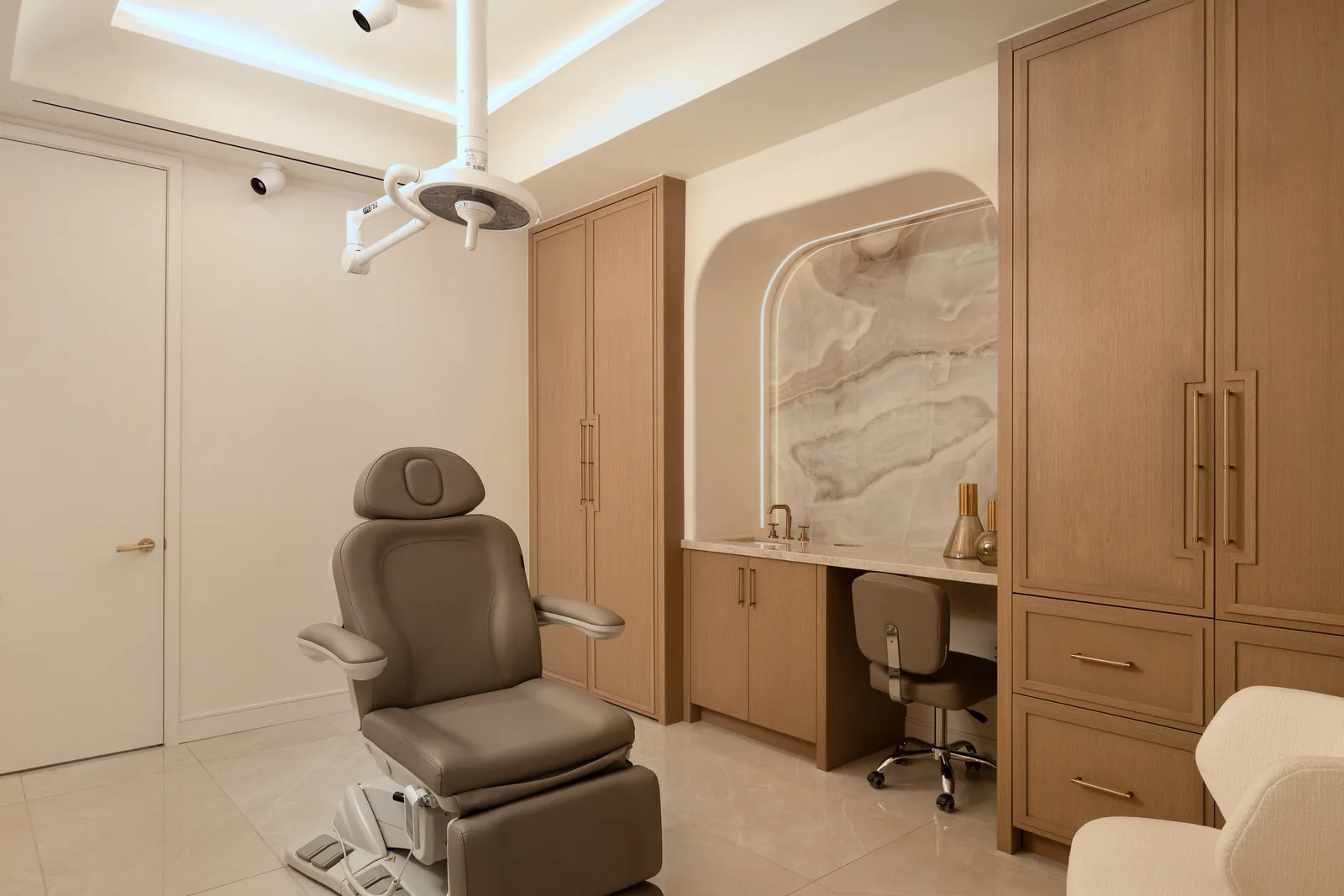
SCOTTSDALE · MODERN OFFICE SETTING
FROM CONSULTATION TO CONFIDENCE
Internal Bra Consultation and Patient Care Coordination
From your first inquiry, your patient care coordinator helps organize scheduling, estimates, financing, forms, travel, and follow-up logistics. Dr. Howarth and her clinical team answer medical questions and make all clinical recommendations.

A thoughtful beginning.
Your coordinator can arrange consultation and explain which records, photographs, implant details, or other information to have ready. Examination defines the primary operation before added support is considered.
Clear information before you decide.
After Dr. Howarth recommends a plan, your coordinator can review the written estimate, available financing options, scheduling requirements, forms, and next steps. Any added material is identified in the estimate.
Practical details, clearly organized.
If you are traveling to Scottsdale, your coordinator can help align required visits and follow-up timing. The clinical team provides individualized medical and recovery guidance for the complete operation.
THE TERM CAN DESCRIBE DIFFERENT DECISIONS
Internal Bra Methods and Tradeoffs
Suture-based Support
Internal sutures may reinforce selected tissue, fold, or pocket repairs; material, fixation, permanence, and recurrence vary.
Your Own Tissue
Tissue may be rearranged during a lift, reduction, or revision, with scar, healing, blood-supply, and recurrence limits.
Manufactured Support
A selected material adds product-specific regulatory, permanence, evidence, risk, cost, and future-surgery questions.
No Added Support
The primary operation alone may offer the clearest balance of benefit, risk, cost, and future flexibility.
SUPPORT FITS WITHIN THE PRIMARY OPERATION
What Happens During Breast Surgery With Internal Support?
If support is selected, it is placed during the lift, augmentation, reduction, or revision being performed. The complete operation determines the principal markings, anesthesia, incisions, reshaping, implant or pocket work, closure, dressings, and follow-up.
The operation and support, reviewed.
Dr. Howarth confirms the primary operation, exact support method when applicable, and informed-consent questions.
One coordinated surgical plan.
The breast operation and any selected support are carried out together according to anatomy and goals.
Instructions reflect the whole operation.
Before discharge, instructions cover incision care, garments, activity, medications, contact information, and follow-up.
BENEFIT, EVIDENCE, AND TRADEOFFS BELONG TOGETHER
Internal Bra Safety, Risks, and Limitations
Risks begin with the primary breast operation. Depending on the support method, added considerations can include infection, fluid collection, inflammation or foreign-body response, discomfort or tightness, palpability or visibility, wound or tissue problems, loss of support, and possible removal or revision.
No surgical mesh is FDA cleared or approved specifically for breast surgery. [1] If a manufactured material is considered, its regulatory status, proposed use, evidence, and limitations should be explained in ordinary language.
Possible Considerations Include
- Infection, bleeding, fluid collection, or healing problems
- Inflammation, foreign-body response, discomfort, or tightness
- Palpability, visibility, tissue problems, or contour change
- Loss of support, recurrence, or implant-position concerns
- Removal, revision, or another procedure
- General surgical and anesthesia risks from the complete plan
What Added Support Cannot Guarantee
- Prevention of sagging, bottoming out, or implant movement
- A permanent breast position or result unaffected by aging
- Freedom from weight-, pregnancy-, or tissue-related change
- Exact symmetry, invisible scars, or unchanged sensation
- Freedom from surveillance, revision, or future breast surgery
RECOVERY FOLLOWS THE COMPLETE OPERATION
Recovery After Breast Surgery With Internal Support
Recovery depends mainly on the lift, augmentation, reduction, or revision performed and may also be affected by the support method. Guidance becomes specific only after the complete plan is known.
Swelling, tightness, incision care, garments, and comfort vary with the operation, support method, and individual healing.
Work, driving, caregiving, sleep, and travel return according to the primary operation, comfort, and follow-up findings.
Lifting and exercise resume after healing has progressed and the clinical team provides guidance for the complete operation.
Breast position, scars, sensation, and softness evolve; support cannot stop aging, weight change, or future tissue change.
BEFORE & AFTER GALLERIES
Private Breast Surgery with Internal Support Before & After Gallery
Breast Surgery with Internal Support before-and-after photographs can feel deeply personal. As both a woman and a surgeon, Ashley Howarth, MD, FACS, understands the trust involved in sharing them. Howarth Plastic Surgery in Scottsdale makes galleries of real patient results available by request through private before-and-after reviews.
Keeping breast surgery with internal support before-and-after galleries off unrestricted public pages helps preserve patient dignity and clinical context while limiting casual viewing, unauthorized reposting, and collection by automated systems or AI agents.
During your private before-and-after review, you can see a range of breast surgery with internal support results and discuss how starting anatomy, surgical choices, healing, and time influenced each outcome. These photographs can support an informed consultation, but individual results vary, and no image can predict your outcome.
PATIENT CASE SUMMARIES
Selected Internal Bra Support in Breast Surgery Case Summaries
These deidentified case summaries illustrate how Ashley Howarth, MD, FACS, evaluates internal bra support at Howarth Plastic Surgery in Scottsdale, Arizona. They include recurrent malposition, weak tissue, lift and reduction planning, suture or tissue support, manufactured materials, and cases in which added support is unnecessary. To protect patient privacy, some nonclinical identifying details have been generalized or modified. Individual anatomy, materials, procedures, healing, and results vary.
Case 01
Bottoming out
Recurrent bottoming out required repair of the breast fold and added pocket support
Patient presentation
The patient reported repeated low implant position and loss of the intended lower-breast contour after prior augmentation.
Clinical evaluation
Dr. Howarth assessed fold disruption, pocket dimensions, implant weight, tissue stretch, scars, and the quality of remaining support.
Procedure performed
Pocket correction and internal support were performed using a support plan tailored to the tissue and reconstructed pocket.
Clinical rationale
Added support can reinforce a reconstruction, but the fold and implant forces must also be corrected directly.
Follow-up
Fold position, implant stability, incision healing, tissue stretch, and recurrent malposition were monitored.
Case 02
Breast lift
Weak tissue influenced the support strategy during breast lift surgery
Patient presentation
The patient sought a lift for recurrent descent and had thin, stretched breast tissue from pregnancy, weight change, or prior surgery.
Clinical evaluation
Dr. Howarth evaluated skin quality, gland position, nipple level, breast weight, scars, and the durability expected from native tissue alone.
Procedure performed
Breast lift surgery included an internal support technique selected for the patient's tissue and operative plan.
Clinical rationale
Support may reinforce reshaped tissue, but it cannot stop aging, weight change, or future stretch.
Follow-up
Breast position, scar maturation, tissue support, sensation, and recurrent descent were reviewed over time.
Case 03
Revision support
A revision pocket required internal support after prior tissue boundaries had weakened
Patient presentation
The patient had implant displacement after previous pocket surgery and wanted improved stability without an unnecessarily large implant.
Clinical evaluation
Examination considered pocket location, capsule, fold, tissue thickness, implant dimensions, and prior repair sites.
Procedure performed
Revision surgery included pocket repair and internal support to reinforce the reconstructed boundary.
Clinical rationale
Internal support is an adjunct to precise pocket correction rather than a substitute for it.
Follow-up
Implant position, support integrity, scars, discomfort, and recurrent displacement were monitored.
Case 04
Native tissue
The patient's own tissue provided support without a manufactured scaffold
Patient presentation
The patient needed breast reshaping and asked whether internal support always required mesh or another implanted material.
Clinical evaluation
Dr. Howarth assessed the amount and quality of available breast tissue, skin elasticity, scars, and the forces expected after reshaping.
Procedure performed
The operation used native tissue and suture support without manufactured material.
Clinical rationale
Internal bra is a broad descriptive term, and selected patients can receive structural support using their own tissue.
Follow-up
Tissue position, scar healing, breast shape, and durability of the reconstruction were reviewed.
Case 05
Manufactured support
A manufactured support material was considered within a complex revision plan
Patient presentation
The patient had recurrent support failure and limited native tissue after multiple breast operations.
Clinical evaluation
Dr. Howarth reviewed tissue quality, prior infection or wound history, implant position, material-specific risks, and alternatives.
Procedure performed
Manufactured support material was used as one component of the complete pocket and tissue reconstruction.
Clinical rationale
A scaffold may reinforce selected repairs, but it introduces material-specific considerations and does not guarantee permanence.
Follow-up
Follow-up assessed wound healing, infection, material integration, breast position, and recurrent support failure.
Case 06
No added support
Internal bra support was not recommended when standard breast surgery was sufficient
Patient presentation
The patient requested an internal bra with a first-time breast operation despite stable tissue and no support-related problem.
Clinical evaluation
Examination showed adequate tissue quality, a straightforward operative goal, and no clear benefit from added sutures or material.
Recommendation
Dr. Howarth recommended the standard procedure without added internal support.
Clinical rationale
An adjunct should not be added when it does not meaningfully improve the operation and only adds cost or risk.
Follow-up
The patient proceeded with or considered the standard plan without an internal bra component.
PLANNING WITH CLARITY
Internal Bra Support Cost, Financing, and Travel to Scottsdale
Internal Bra Support Cost
Internal bra support is incorporated into a primary breast operation rather than priced as a standalone procedure. At Howarth Plastic Surgery in Scottsdale, operations incorporating added internal support typically cost $21,000 to $32,000. More complex combinations may exceed this range. After consultation with Dr. Howarth, you will receive a personalized written estimate for the complete plan she recommends.
Financing Options
Howarth Plastic Surgery is a cash-pay practice and does not accept or bill insurance. Your patient care coordinator can review financing through PatientFi and CareCredit, subject to third-party approval.
Planning Care in Scottsdale
If you are traveling from elsewhere in Arizona or out of state, out-of-town patient information can help you plan around consultation, surgery, and follow-up. Required appointment dates, how long to remain nearby, and when travel may resume are individualized. An initial consultation may take place virtually, but an in-person examination is required before the operative plan is finalized.
DIRECT ANSWERS ABOUT SUPPORT IN BREAST SURGERY
Internal Bra Frequently Asked Questions
It is an informal term for added support used during another breast operation. It is not one standardized procedure.
No. A lift, augmentation, reduction, or revision remains the primary operation; added support is one possible component.
No. The term may refer to sutures, a patient’s own tissue, or a manufactured material.
No surgical mesh is FDA cleared or approved specifically for breast surgery. The exact product status and proposed use require individual discussion.
It cannot guarantee prevention. Evidence and durability vary by method, anatomy, tissue, and the primary operation.
It may. The answer depends mainly on the primary operation and exact support method.
Breast Revision may include support in selected plans, but the cause, tissue, implant or pocket findings, and alternatives determine whether it belongs.
Possibly. The Breast Lift remains the central operation; added support is considered only when anatomy and the complete plan justify it.
Internal bra support is incorporated into a primary breast operation rather than priced as a standalone procedure. At Howarth Plastic Surgery in Scottsdale, operations incorporating added internal support typically cost $21,000 to $32,000. More complex combinations may exceed this range. After consultation with Dr. Howarth, you will receive a personalized written estimate for the complete plan she recommends.
Removal may be possible in some situations, but difficulty, added scars, tissue effects, and the need for revision depend on the exact method or material.
Palpability or visibility is possible with some methods. The likelihood depends on tissue, technique, material, placement, and healing.
Travel may be possible when consultation, surgery, and follow-up can be coordinated safely. Start with the Out-of-Town Patient guide.
Related Care
Related Breast Procedures
Continue with the page that best matches the question or surgical decision you are considering.
BEGIN HERE
Request a Consultation
Tell us what you are considering. A member of our patient care team will follow up with consultation availability and next steps.

Megan S.
Patient Coordinator
Prefer to talk or text?
Selected Medical References